程瑶田
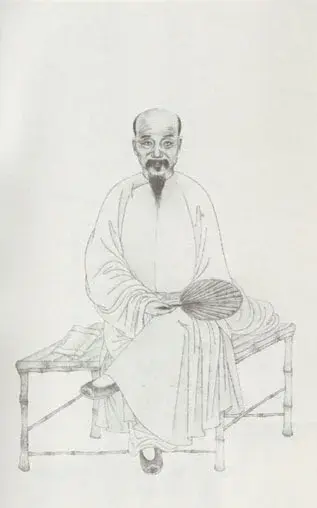
Historical portrait of Cheng Yaotian
Image credits叶公绰辑,杨鹏秋摹绘。 · Public domainImage source

Historical figure

Cheng Yaotian (程瑶田)

程瑶田

Cheng Yaotian (1725–1814), courtesy names Yitian and Yichou, art names Rangtang and Hermit of Shuizhu Village, was an eminent classical philologist, evidential scholar, phonologist, and pioneer of technological history during the Qianlong and Jiaqing reigns, originating from Censhandu, She County, Huizhou Prefecture, Anhui Province. He stood as a central luminary of the Huizhou Evidential School. In his youth, Cheng studied…

Era not stated

PROFILE

Cheng Yaotian (1725–1814), courtesy names Yitian and Yichou, art names Rangtang and Hermit of Shuizhu Village, was an eminent classical philologist, evidential scholar, phonologist, and pioneer of technological history during the Qianlong and Jiaqing reigns, originating from Censhandu, She County, Huizhou Prefecture, Anhui Province. He stood as a central luminary of the Huizhou Evidential School. In his youth, Cheng studied under Jiang Yong, the pioneering patriarch of the Huizhou evidential tradition, sharing tutelage with Dai Zhen, with whom he maintained a lifelong scholarly friendship. In 1770, Cheng attained the juren degree in the Shuntian provincial examinations. Later appointed as Instructor of Jiading County in Jiangsu, he dedicated two decades to local education, living in uncorrupted austerity and winning deep devotion from Jiangnan literati. Rejecting empty metaphysical speculation, Cheng deepened Jiang Yong and Dai Zhen's evidential maxim of "seeking truth from facts through textual and material analysis." Innovating in the empirical study of material artifacts recorded in Confucian rituals, he synthesized philology with field observation, botanical agriculture, and ancient architecture to produce his forty-volume magnum opus Records of Comprehensive Arts (Tongyi Lu). Comprising foundational monographs including Notes on Craft Creation, Treatise on Chariot Designs, Study of the Nine Grains, and Notes on Lineage Rules, his research was venerated by masters such as Ruan Yuan, Wang Niansun, and Duan Yucai as unmatched in Chinese history.

Courtesy Names
Yitian (易田), Yichou (易畴)
Art Names
Rangtang (让堂), Hermit of Shuizhu Village (水竹村人)
Ancestral Home
She County, Huizhou Prefecture, Anhui
Birth Date
1725
Death Date
1814
Age at Death
90
Highest Office
Instructor of Jiading County, Songjiang Prefecture, Jiangsu (江苏松江府嘉定县教谕)
Primary Identity
Celebrated Qing dynasty classicist, Qianjia evidential scholar, master of the Huizhou School of Evidential Research, and pioneer of ancient technological material philology

LIFE TIMELINE

Relationship graph

BIOGRAPHY

Chronology

  • 1725 (3rd year of Yongzheng) | Birth in Huizhou | Born into a classical lineage in Censhandu, She County, Anhui.
  • 1745 (10th year of Qianlong) | Tutelage under Jiang Yong | Entered the academy of Jiang Yong, studying ancient rituals and phonology alongside Dai Zhen.
  • 1770 (35th year of Qianlong) | Juren Degree | Passed the Shuntian provincial examination in Beijing, attaining the juren degree.
  • 1773 (38th year of Qianlong) | Material Philology in Capital | Assisted scholars at the Siku Quanshu Bureau in collating ancient architectural and chariot diagrams.
  • 1787 (52nd year of Qianlong) | Educational Post in Jiading | Appointed Instructor of Jiading County in Jiangsu, teaching classical scholarship for two decades.
  • 1800 (5th year of Jiaqing) | Publishing Tongyi Lu | Published his forty-volume academic compendium Records of Comprehensive Arts with imperial patronage.
  • 1808 (13th year of Jiaqing) | Retirement to Hometown | Retired to She County, residing at Shuizhu Cottage and tutoring younger scholars.
  • 1814 (19th year of Jiaqing) | Peaceful Passing | Died peacefully at home at the age of ninety; honored posthumously by disciples as Master Zhenjian.

Biography

Classical Formation under Jiang Yong

Cheng Yaotian was born in 1725 in Censhandu, She County, Huizhou Prefecture. The Cheng clan was an ancient Neo-Confucian family celebrated for moral decorum. Endowed with a calm, penetrating mind, Cheng mastered ancient rituals and Han dynasty lexicography in his youth.

In 1745, at age twenty, Cheng became a disciple of Jiang Yong, the preeminent founder of the Huizhou Evidential School. Jiang was a master of the Three Rites, ancient phonology, mathematics, and geography. In Jiang's academy, Cheng formed a lifelong bond with Dai Zhen. Jiang Yong's empirical approach—demanding that students verify textual descriptions against physical objects—profoundly shaped Cheng's career.

During his studies in Huizhou, Cheng ventured beyond library walls to observe traditional carpentry, ceramic firing, sericulture, and hydraulic irrigation. By comparing living craftsmanship with ancient texts, he developed unparalleled expertise in classical material culture.

Examination Tribulations and Scholarly Breakthroughs

Though Cheng's examination career was prolonged, he maintained equanimity. In 1770, at age forty-five, he attained the juren degree in Beijing. While subsequent attempts at the palace examinations were unsuccessful, his reputation as a master of material philology spread throughout metropolitan intellectual circles.

During the compilation of the Complete Library of the Four Treasuries, Cheng engaged in frequent academic debates with Dai Zhen, Wang Niansun, Ren Dachun, and Weng Fanggang, resolving obscure passages concerning ancient chariots and sacrificial vestments. Eminent philologists Wang Niansun and Duan Yucai expressed unreserved admiration for Cheng's precision.

Cheng dedicated decades to empirical monographs, writing Notes on Craft Creation, Study of the Nine Grains, Notes on Ancient Palaces, Phonological Treatise, and Notes on Lineage Rules. Demanding that every textual claim be supported by diagrams and verifiable artifacts, he established the foundation of modern Chinese scientific archaeology.

Educational Stewardship in Jiading

In 1787, at age sixty-two, Cheng was appointed Instructor of the County Academy in Jiading, Jiangsu Province. He remained in this post for over two decades.

In Jiading, Cheng lived simply, devoting his salary to subsidizing impoverished students and restoring the Confucian temple. He instructed students in evidential methods and moral self-cultivation, lecturing daily on canonical meanings. Scholars from across Jiangnan traveled to Jiading to study under him, catalyzing a cultural renaissance in the district.

In 1800, sponsored by Governor-General Ruan Yuan, Cheng published his forty-volume compendium Records of Comprehensive Arts (Tongyi Lu). Illustrated with hundreds of structural diagrams, the work became an instant classic of Qianjia evidential scholarship.

Rural Retirement and Academic Legacy

In 1808, at eighty-three years of age, Cheng retired from his educational post and returned to She County. Thousands of local citizens lined the canals to bid him farewell.

In Censhandu, he named his dwelling "Shuizhu Village," reading and annotating manuscripts daily. Possessing clear vision and sharp intellect into his late eighties, he revised Tongyi Lu and instructed young Huizhou scholars.

In the autumn of 1814, Cheng passed away peacefully at age ninety. His disciples conferred upon him the private posthumous name Zhenjian (Chaste and Unadorned) in tribute to his lifelong moral integrity and scholarly dedication.

Major Achievements

Records of Comprehensive Arts and Material Philology

Cheng's preeminent contribution was Records of Comprehensive Arts (Tongyi Lu) in forty volumes. Moving beyond dry linguistic exegesis, Cheng pioneered a rigorous evidential methodology integrating material archaeology, mechanics, and textual philology.

The compendium covers ancient engineering, agriculture, architecture, lineage institutions, and phonology. In Notes on Craft Creation and Treatise on Chariot Designs, he reconstructed the mechanical stress points and exact dimensions of pre-Qin chariots through structural drawings. In Study of the Nine Grains, he analyzed botanical specimens to trace the cultivation history of millet, rice, wheat, and soybeans, praised by Joseph Needham as a peak of pre-modern Chinese agricultural science.

Clarifying Ancient Kinship and Notes on Lineage Rules

In institutional history, Cheng's monograph Notes on Lineage Rules (Zongfa Xiaoji) stands as an evidential masterpiece.

Resolving ancient disputes regarding the ancestral lineage system of the Western Zhou dynasty, Cheng drafted structural diagrams based on ritual commentaries. He explicated the political mechanisms separating perpetual Senior Lineages (dazong) from five-generation Junior Lineages (xiaozong), resolving centuries of conflicting interpretations and providing an authoritative baseline for sociological studies of ancient Chinese clan structures.

Evidential Research in Ancient Phonology and Musical Pitch

Cheng made significant breakthroughs in ancient phonology and acoustics, authoring Phonological Treatise and Study of Ancient Lithophones.

Following Jiang Yong, he analyzed rhymes in the Classic of Poetry to trace vowel shifts in archaic Chinese. In acoustics, he examined the mineral density, angles, and resonant frequencies of ancient jade and stone chimes (qing), mathematically determining the exact angular geometry governing ancient pitches. By anchoring acoustics upon empirical measurement rather than mystical numerology, he infused musical studies with genuine scientific rigour.
Personal Relations

  • Mentor: Jiang Yong (Patriarch of the Huizhou Evidential School; Cheng's formative teacher).
  • Close Friend and Colleague: Dai Zhen (Leading giant of Qianjia evidential scholarship; lifelong intellectual partner).
  • Scholarly Ally: Wang Niansun (Eminent philologist who revered Cheng's material reconstructions).
  • Scholarly Ally: Duan Yucai (Leading phonetician who praised Cheng's empirical methodology).
  • Patron and Scholar: Ruan Yuan (Grand Secretary and classicist who sponsored the publication of Tongyi Lu).
  • Colleague: Weng Fanggang (Epigrapher and calligrapher who engaged in frequent scholarly exchanges).

Historical Evaluation

  • Dai Zhen remarked: "Yitian possessed penetrating insight into the intentions of ancient craft creators; he alone captured their exact structural rules, far beyond the reach of idle theorists."
  • Wang Niansun inscribed to Cheng: "Your verification of ancient objects through mutual textual and diagrammatic proof is extraordinary; no one since the Han and Tang has matched it."
  • Ruan Yuan recorded in his preface: "Master Cheng Yitian of She County investigated the Six Arts with relentless rigor; his forty-volume Tongyi Lu seeks truth from facts without a single unverified character, standing as an enduring model for future generations."
  • Draft History of Qing concluded: "Cheng studied under Jiang Yong alongside Dai Zhen. Deeply learned in the Three Rites, he excelled in material philology. His Tongyi Lu traced the primal origins of ancient craft creation through diagrams and dissertations, commanding deep reverence from scholars."

Related Entries

  • Dai Zhen
  • Jiang Yong
  • Wang Niansun
  • Duan Yucai
  • Ruan Yuan

FIGURES ASSOCIATED WITH THIS DYNASTY

Bibliography

  • Draft History of Qing, Volume 481, Biographies 268, Confucian Scholars 2, Biography of Cheng Yaotian
  • Biographies of the Qing Dynasty, Volume 67, Secondary Biographies of Confucian Scholars
  • Records of Comprehensive Arts, Prefaces by Ruan Yuan and Cheng Yaotian