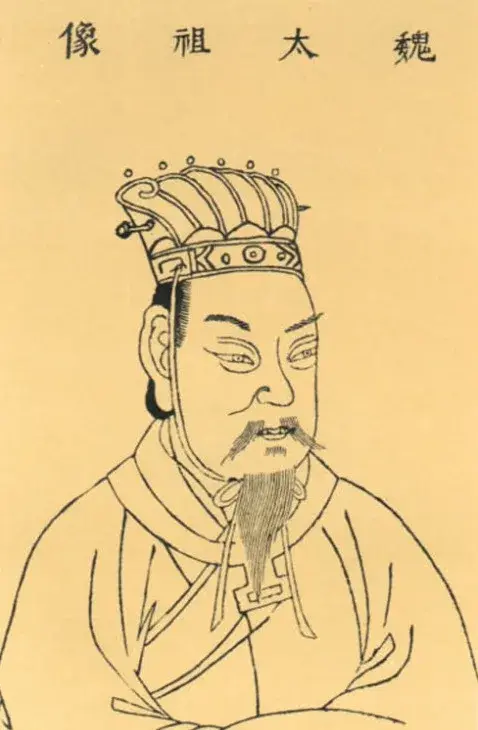
Life
Judicial Clerk and Yunyang Incarceration
Cheng Miao was born during the late Warring States period in Xiagui within the Qin homeland. From early youth, he demonstrated exceptional intellect, mastering classical paleography and the Great Seal scripts preserved in ancient bronze inscriptions. Reaching adulthood, he entered local commandery administration as a judicial scribe (yuli), drafting legal records on bamboo and wooden slips. Following the legalist reforms of Shang Yang, Qin legal codes were rigorous, generating mountainous administrative archives that clerks transcribed night and day.
After King Zheng of Qin assumed personal rule, strict legal codes governed all imperial institutions. Cheng possessed an unyielding, principled nature. In presiding over judicial inquiries, he insisted on meticulous adherence to statutes, refusing to bend rulings to satisfy the illicit demands of imperial prosecutors and powerful courtiers. Consequently, he was convicted and sentenced to penal labor, dispatched to the forbidding Yunyang Prison (northwest of modern Chunhua, Shaanxi), where he endured harsh confinement for ten years.
A Decade of Confinement and Three Thousand Characters
Deprived of liberty, Cheng remained intellectually undefeated. Helping prison wardens catalog archival rosters, he realized that while Chancellor Li Si's standardized Small Seal Script was elegant and symmetrical, its serpentine curves were exceedingly slow to carve onto hard bamboo slips. Across the Qin empire, imperial offices handled hundreds of pounds of documents daily, creating severe administrative bottlenecks. Among lower-ranking sentries and convicts, a simplified, angular folk shorthand was already circulating informally.
Cheng resolved to dedicate his confinement to standardizing a new writing system. He collected folk simplifications from Qin and eastern bamboo and wooden slips, systematically restructuring radical components: he flattened serpentine curves into straight horizontal lines, converted circular corners into sharp angular turns, and discarded rigid pictographic symmetry. Over ten years of rigorous collation, Cheng codified three thousand core Chinese characters into a square, balanced, and rapid writing system.
Imperial Favor and Elevation to Imperial Censor
In 221 BCE, Qin Shihuang unified China. Managing an empire spanning millions of square miles produced unprecedented archival burdens. Emperor Qin Shihuang personally reviewed over one hundred and twenty pounds of bamboo memorials daily, frustrated by the slow transcription speeds of Small Seal.
At this critical juncture, Cheng Miao submitted his three thousand clerical characters through prison authorities to the imperial court. Inspecting the manuscript, Qin Shihuang marveled at the balanced, dynamic strokes, realizing the script would accelerate imperial administrative efficiency. The emperor immediately issued an edict pardoning Cheng Miao, restoring his civic freedom, and elevating him to Imperial Censor (Yushi). Because Cheng had formulated the script as a convict (tuli) and because it was designed for bureaucratic scribes, the emperor formally designated the writing system "Clerical Script" (Lishu).
National Implementation and Paleographic Revolution
Serving as Imperial Censor, Cheng collaborated with Chancellor Li Si and Chamberlain Zhao Gao to promulgate nationwide orthographic standards. The Qin court instituted a dual-script system: formal commemorative steles, imperial sacrificial rites, and state seals retained the majestic Small Seal Script, while routine judicial files, military directives, and tax registers adopted Cheng's Clerical Script as the auxiliary working script (zuoshu).
Because Clerical Script was practical and swift to write, it spread rapidly across commanderies and counties. Cheng's invention doubled transcription speeds, providing vital structural support for centralized Qin administration. Cheng spent his later years instructing imperial scribes, creating the structural framework for the golden age of Han dynasty calligraphy.
Major Achievements
Launching the Clerical Transformation (Libian)
Cheng Miao's codification of Clerical Script is recognized by linguists as the foremost watershed in the history of Chinese writing. Prior to Cheng, archaic scripts—including oracle bones, bronze inscriptions, and Small Seal—retained strong pictographic contours. Cheng eliminated pictographic imitation, substituting abstract strokes and angular turns for fluid curves. This transformation marked the definitive transition of the Chinese script from ancient pictographic forms to abstract symbolic writing, constituting the greatest structural revolution in the language's history.
Accelerating Imperial Governance Through Dual Scripts
Cheng accurately diagnosed the logistical bottlenecks undermining centralized administration. By introducing Clerical Script as an auxiliary administrative standard, he enabled the efficient transmission of imperial directives across distant commanderies, providing the legalist state with an effective bureaucratic medium.
Providing the Architectural Foundation for Modern Scripts
The ancient Clerical Script codified by Cheng directly spawned the mature Han Clerical Script (Hanli). With the dynamic variation of the writing brush, Clerical Script subsequently diverged into draft cursive (Zhangcao), modern cursive, semi-cursive, and standard regular script (Kaishu). Calligraphic historians unanimously credit Cheng Miao with providing the structural matrix that enabled the monumental masterpieces of Zhong Yao, Wang Xizhi, and Yan Zhenqing.