Birth in Shexian
Born into an established family in Shexian, Huizhou; displayed quick intellect and passion for literature and travel.
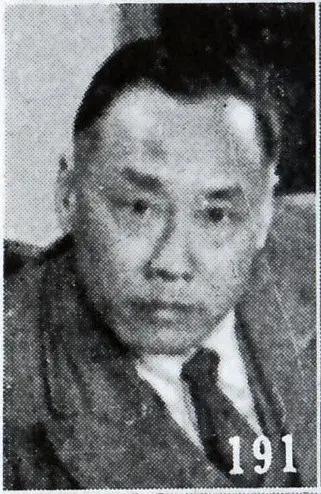
程君房
Cheng Junfang (程君房, 1541–1610), given name Dayue, courtesy names Junfang and Youbo, art names Master of Moyuan and Xuanxuanzi, was a native of Yansi Town, Shexian County, Huizhou Prefecture (modern Shexian, Anhui Province). He was an eminent master ink-maker and technological innovator of the Huizhou ink tradition during the mid-to-late Ming dynasty, holding the honorific office of Usher of the Court of State Ceremonial. Born…
Cheng Junfang (程君房, 1541–1610), given name Dayue, courtesy names Junfang and Youbo, art names Master of Moyuan and Xuanxuanzi, was a native of Yansi Town, Shexian County, Huizhou Prefecture (modern Shexian, Anhui Province). He was an eminent master ink-maker and technological innovator of the Huizhou ink tradition during the mid-to-late Ming dynasty, holding the honorific office of Usher of the Court of State Ceremonial. Born into a prominent mercantile and literati lineage in Huizhou, he studied the classics in his youth, but disdained the rigid formulas of the civil examinations, dedicating his life to refining the ancient art of ink manufacturing. Confident in his peerless craft, he famously declared that a century after his death, his ink would not only be worth its weight in gold, but would become as jade transformed from flesh. Cheng made historic technical breakthroughs in soot selection, lampblack distillation, animal glue preparation, and woodblock mold carving. Using refined tung oil, rapeseed oil, and natural lacquer, combined with musk, borneol, gold leaf, and rare medicinal botanicals, he produced inks of extraordinary density, deep glossy blackness, and unmatched permanence. During the Wanli reign, he engaged the renowned painter Ding Yunpeng to create exquisite illustrations, commissioning master carvers Huang Yingtai and Huang Yingdao from the celebrated Xin'an woodcut school to carve the molds, publishing the monumental twelve-volume woodcut catalog Cheng's Ink Garden (Cheng Shi Moyuan) over a decade of labor. Featuring over five hundred designs, the work pioneered Chinese multi-color woodblock printing (douban color printing) and notably incorporated four Western Christian copperplate engravings introduced by the Jesuit missionary Matteo Ricci, marking a milestone in East-West cultural exchange. In his later years, embroiled in commercial rivalries and a murder lawsuit with his former apprentice Fang Yulu, Cheng suffered imprisonment, eventually residing in Nanjing and Kaifeng before passing away at seventy.
Born into an established family in Shexian, Huizhou; displayed quick intellect and passion for literature and travel.
After failing provincial examinations, renounced bureaucratic ambitions to take over and reform the traditional family ink business.
Renowned across Beijing for his supreme ink quality, received the court honor of Usher of the Court of State Ceremonial.
Former pupil Fang Yulu published Fang's Ink Manual; Cheng vowed to produce a superior masterpiece to eclipse his rival.
Completed the twelve-volume Cheng's Ink Garden, featuring Ding Yunpeng's illustrations and master woodcut engraving.
Implicated in the suspicious death of a workshop artisan, orchestrated by commercial adversaries; endured severe prison trials.
Met Jesuit missionary Matteo Ricci in Nanjing; integrated four Christian copperplate engravings into the expanded Cheng's Ink Garden.
Lived his final years in Nanjing and Kaifeng before passing away in his native Huizhou at seventy.
Cheng Junfang was born in 1541 in Yansi Town, Shexian County, Huizhou Prefecture. Huizhou had been the preeminent center of Chinese ink manufacturing since the Song dynasty, and the Cheng family was an influential local lineage combining commerce with classical learning. In his youth, Cheng studied the Confucian classics and poetry, possessing an expansive personality and associating with prominent Jiangnan literati. However, amidst the intense competition of the Ming civil service examinations, he repeatedly failed to obtain higher degrees. Refusing to squander his life on eight-legged essays, he resolved to abandon official ambitions and dedicate his intellect to the technical perfection of ink manufacturing.
He exhaustively analyzed the ancestral ink methods of Five Dynasties master Li Tinggui, investigating ancient workshops across Mount Huangshan. Establishing an extensive workshop in Yansi Town, Cheng hired skilled craftsmen and conducted continuous experiments. Within a short time, his signature creations—such as Nine Blessings from Heaven, Essence of the Primal Void, and The Hundred Sons—gained widespread acclaim among calligraphers and court officials in Nanjing and Beijing, eventually being selected as official tribute inks for the imperial palace.
During the early Wanli era, Cheng's ink business achieved its peak prosperity. High-ranking court ministers and Grand Secretaries Shen Shixing and Wang Xijue avidly collected his works. Around 1582, honoring his technical mastery, the imperial court conferred upon him the rank of Usher of the Court of State Ceremonial. Traveling between Beijing, Nanjing, and Huizhou, Cheng moved in elite literati circles, famously boasting: A century after my death, there will be no Junfang, but Junfang's ink will remain; it will exchange for gold and transform like jade!
However, intense commercial competition provoked bitter personal enmity. A young local craftsman named Fang Yulu had come to Cheng's workshop in poverty. Recognizing his talent, Cheng took him as a favored disciple, teaching him secret compounding techniques and financing his marriage. After establishing an independent business, Fang achieved rapid success, collaborating with artists and carvers in 1588 to publish Fang's Ink Manual, which won imperial acclaim. Deeply offended by what he viewed as betrayal and theft of intellectual secrets, Cheng broke ties with Fang, igniting a decade-long commercial and artistic rivalry across Huizhou.
To definitively surpass Fang's Ink Manual, Cheng committed his entire family fortune to creating Cheng's Ink Garden. Drawing upon ancient bronze and stone inscriptions, folklore, Buddhism, Daoism, and classical poetry, he conceived 520 distinct ink shapes. To ensure the highest aesthetic quality, he spent vast sums to engage the eminent painter Ding Yunpeng to illustrate every design.
For block-cutting, Cheng recruited the paramount masters of the Xin'an woodcut tradition, including Huang Yingtai, Huang Yingdao, Huang Lin, and Huang Yingrui from Shexian. Using engraving knives with calligraphic fluidity, the Huang carvers rendered lines as delicate as silk threads, translating Ding's brushstrokes into wood. Completed in 1594, Cheng's Ink Garden spanned twelve volumes. Most significantly, Cheng pioneered multi-block color printing (douban printing) in the color-coded designs, layering cinnabar, yellow, blue, and green with exquisite alignment, opening a new era in Chinese woodblock print history.
At the height of his fame, catastrophe struck. In 1599, a workshop employee named Wu Cheng died under suspicious circumstances following an internal dispute. Exploiting the incident, Fang Yulu and commercial rivals reportedly encouraged the victim's family to accuse Cheng of murder. Arrested and thrown into prison, Cheng was subjected to brutal interrogations; corrupt bailiffs extorted much of his wealth, inflicting catastrophic damage on his workshop.
Through the intervention of influential scholar-officials in Beijing, Cheng was eventually exonerated and released. However, his estate was severely depleted. Disheartened, Cheng moved to Nanjing. In 1605, he met the Italian Jesuit missionary Matteo Ricci. Ricci presented him with four Western European copperplate engravings illustrating Biblical themes, accompanied by Latin and Chinese explanations. Displaying remarkable intellectual openness, Cheng had Ding Yunpeng and master engravers translate these Western engravings into traditional Chinese woodcut prints, publishing them in the heavenly studies section of an expanded edition of Cheng's Ink Garden. This became the first instance of Western pictorial art printed and circulated in imperial China. Cheng spent his remaining years traveling to Kaifeng and Nanjing before dying peacefully around 1610 at seventy.
Cheng Junfang's fundamental contribution to the history of chemical technology and Chinese material culture lay in his rigorous rationalization of ink compounding. Traditional pine-soot ink was intensely dark but tended to lack luminous depth. Cheng pioneered the use of pure tung oil, rapeseed oil, and natural tree lacquer, developing exceptionally dense, luminous oil-soot inks.
In soot harvesting, he established specialized kiln chambers, constantly replacing wicks to collect only the finest, lightest soot settling on the ceiling. In glue processing, he discarded dirty bone glues in favor of clear, refined cattle-hide glue, balancing pigment and binder to achieve the principle of light glue, ten thousand hammer strokes, pounding the mixture repeatedly in stone mortars to ensure diamond-like density. Incorporating musk, borneol, bear bile, gold leaf, and pearl powder, his inks released fragrant scents, repelled insects, and maintained rich, unfading blackness without feathering on absorbent Xuan paper, defining the technical zenith of Ming Huizhou ink craftsmanship.
The twelve-volume Cheng's Ink Garden edited and published by Cheng Junfang stands as a monument in the history of world book illustration and printmaking. Divided into six thematic divisions—Heavenly Visions, Daoist and Buddhist Figures, Human Culture, Famous Landscapes, Universal Nature, and Assembled Treasures—the work cataloged 520 ink cake designs, transforming physical craft into an encyclopedic visual museum of Chinese civilization.
In print production, Cheng and the Xin'an Huang carvers achieved unprecedented mastery through the early invention of multi-block color registration. Multiple designs were printed using separate color blocks registered with microscopic precision, anticipating the famous Ten Bamboo Studio Letter Paper by decades. Master connoisseur Dong Qichang praised the collection as an immortal artistic treasure, while later Qing scholars treasured surviving copies as the crown jewels of ancient Chinese woodcut illustration.
Within the pages of Cheng's Ink Garden, Cheng accomplished a historical feat of global significance. In 1605 in Nanjing, Cheng visited Matteo Ricci, who was using religious images to introduce Catholic doctrine to Chinese scholars. Ricci presented Cheng with four European Biblical engravings, including The Virgin of Faith, The Disciples at Emmaus, and The Passion of Christ.
Recognizing the novel artistic beauty of Western chiaroscuro and linear perspective, Cheng broke through cultural parochialism. He commissioned Ding Yunpeng and master carvers to render these Renaissance copperplates into delicate Chinese woodcuts, publishing them in the opening section of his compendium alongside Ricci's bilingual texts. These illustrations represented the earliest Western artworks reproduced and published in China, predating formal Jesuit Chinese book publications by decades, and are celebrated in global sinology as an extraordinary milestone in cross-cultural artistic transmission.
FIGURES ASSOCIATED WITH THIS DYNASTY