Birth in Xiuning
Cheng Dawei was born into a merchant family in Shuikou, Xiuning County, Huizhou Prefecture, studying classics, history, and arithmetic from an early age.
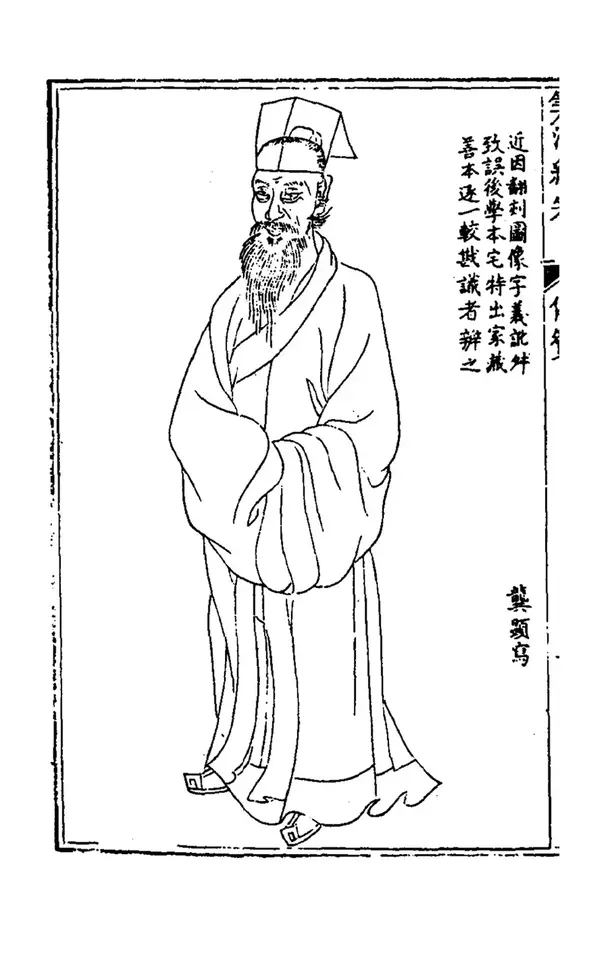
程大位
Cheng Dawei (May 3, 1533 – September 18, 1606), courtesy name Rusi and art name Binqu, was a native of Shuikou, Xiuning County, Huizhou Prefecture, South Zhili (present-day Tunxi District, Huangshan City, Anhui Province). An outstanding mathematician, abacus master, and inventor during the Jiajing and Wanli reigns of the Ming dynasty, he was the greatest synthesizer and popularizer of ancient Chinese abacus calculation…
Cheng Dawei (May 3, 1533 – September 18, 1606), courtesy name Rusi and art name Binqu, was a native of Shuikou, Xiuning County, Huizhou Prefecture, South Zhili (present-day Tunxi District, Huangshan City, Anhui Province). An outstanding mathematician, abacus master, and inventor during the Jiajing and Wanli reigns of the Ming dynasty, he was the greatest synthesizer and popularizer of ancient Chinese abacus calculation theory. He is widely honored by domestic and international scholars as the Father of Chinese Abacus Calculation and the Pioneer of the Modern Tape Measure. Born into a Huizhou merchant family, Cheng was widely read from childhood and demonstrated an intense passion for mathematics. At the age of twenty, he embarked on commercial travels throughout the Wu and Chu regions for two decades, exchanging knowledge with renowned scholars and seeking guidance from masters of arithmetic. At forty, weary of commercial journeys, he resolved to retire to his hometown, where he spent twenty years along the Shui River thoroughly studying mathematical treatises of successive dynasties. In 1592, he published the seventeen-volume monumental work Xinbian Zhizhi Suanfa Tongzong (Systematic Treatise on Arithmetic), followed in 1598 by the condensed four-volume Suanfa Zuanyao (Essentials of Arithmetic). His works systematically perfected the formulas of the four basic arithmetic operations and root extraction on the abacus, standardized the structure of the abacus, completed the historical transition in China from counting rods to the abacus, and spread widely to Japan, Korea, and Europe, exerting a decisive influence on the development of Japanese wasan mathematics.
Cheng Dawei was born into a merchant family in Shuikou, Xiuning County, Huizhou Prefecture, studying classics, history, and arithmetic from an early age.
Reaching adulthood, he traveled as an itinerant merchant throughout the middle and lower Yangtze River basin, collecting ancient mathematical texts wherever he went.
Retiring from commercial travel, he returned to the banks of the Shui River in Huizhou, built the Hall of Deep Meditation, and devoted himself exclusively to mathematical research.
Participating in the nationwide land survey launched by Grand Secretary Zhang Juzheng, he invented the reel-type bamboo measuring cart, the precursor of the modern tape measure.
After twenty years of research, he completed the seventeen-volume Systematic Treatise on Arithmetic, funded and printed by his own Binqu Inn, achieving nationwide fame.
To assist beginners, he simplified and condensed his work into the four-volume Essentials of Arithmetic, which became the most widely circulated textbook of mathematics.
On the seventeenth day of the eighth lunar month, he passed away at his Shuikou residence at the age of seventy-four, and was buried in the ancestral cemetery east of the canal.
Cheng Dawei was born on May 3, 1533 (the tenth day of the fourth lunar month in the twelfth year of the Jiajing reign) in Shuikou, Xiuning County, Huizhou Prefecture, South Zhili. Huizhou had long been renowned for its cultural prosperity and thriving commercial traditions, encapsulated in the popular saying that no market town could exist without Huizhou merchants. His family had engaged in trade for generations, providing an affluent household environment. Under these favorable circumstances, Cheng received a solid foundational education, studying not only classical Confucian texts and historical chronicles, but also exhibiting extraordinary talent and fascination with ancient mathematical treatises.
Around 1552 (the thirty-first year of the Jiajing reign), having reached the age of twenty, Cheng followed local Huizhou custom by packing his luggage and setting out on commercial endeavors. Over two decades of trading, he traveled back and forth between the Yangtze River Delta and the Jianghan Plain, covering bustling commercial centers in Jiangsu, Zhejiang, Jiangxi, Hubei, and Hunan. The intricate silver currency exchanges, commodity conversions, and real estate transactions of daily commerce made him acutely aware that the traditional counting rods commonly used by the populace were cumbersome, slow, and prone to errors. Alongside his commercial activities, he invested substantial sums to acquire rare ancient mathematical manuals and visited any scholar reputed for arithmetic expertise to seek instruction.
Around 1573 (the first year of the Wanli reign), having reached forty years of age, Cheng realized that mercantile pursuits were not his ultimate calling. He decisively abandoned commerce and returned to his native Shuikou in Xiuning, bringing with him a vast collection of mathematical works and surveying charts amassed over twenty years. Beside his ancestral home east of the canal, he constructed a study dedicated to intellectual creation named the Hall of Deep Meditation (Tansi Tang), diverted an artificial canal around the garden, and adopted the art name Binqu ("Guest of the Canal").
By the banks of the Shui River, Cheng closed his doors to guests and immersed himself in mathematical study for twenty years. He systematically examined China's mathematical legacy spanning from the pre-Qin Nine Chapters on the Mathematical Art down through the Song, Yuan, and early Ming dynasties, analyzing the treatises of Liu Hui, Zu Chongzhi, Li Ye, Qin Jiushao, Yang Hui, Zhu Shijie, and Wu Jing. Cheng observed that ancient mathematical manuals were often arcane and archaic, relying heavily on calculating rods, which could no longer satisfy the rapid commercial development of the Ming economy. He made a solemn vow to establish a comprehensive, accessible mathematical system centered on the abacus, illustrated with diagrams, set to rhythmic mnemonic rhymes, and capable of solving practical production and living problems.
During his years of secluded research, Cheng remained closely attuned to practical social affairs. In 1578 (the sixth year of the Wanli reign), Senior Grand Secretary Zhang Juzheng launched an unprecedented nationwide land resurvey to overhaul fiscal burdens and uncover hidden taxable acreage. Xiuning County was characterized by continuous mountains and fragmented agricultural plots; traditional measuring ropes and wooden rods easily stretched, shrank, or snapped across rugged terrain, resulting in major surveying errors and endless land boundary disputes.
Invited by local officials and gentry, Cheng personally participated in the local land survey. Addressing the defects of traditional measuring tools, Cheng repeatedly designed and experimented, creatively inventing the measuring step cart (Zhanliang Buche), composed of a wooden frame, a cross axle, an iron anchoring foot, and a flexible calibrated bamboo strip. This invention allowed a measuring strip dozens of meters long to be smoothly rolled inside a protective wooden box. Lightweight, wear-resistant, and immune to warping, it delivered highly accurate measurements and vastly enhanced surveying efficiency. This remarkable mechanical invention preceded the appearance of modern tape measures in the West by centuries.
Following twenty years of rigorous derivation and compilation, Cheng completed his monumental seventeen-volume work Xinbian Zhizhi Suanfa Tongzong (Systematic Treatise on Arithmetic) in 1592 (the twentieth year of the Wanli reign). Confronted with the slow publishing schedules and cumbersome official censorship of state printing, Cheng raised private funds and hired skilled woodblock artisans at his Binqu Inn to carve and print the work. The text contained 595 practical problems drawn from everyday life and engineering surveys, illustrated with clear abacus operation diagrams and rhyming mnemonic formulas.
Upon its publication, Suanfa Tongzong generated immense enthusiasm nationwide, with printshops in various provinces scrambling to reissue it. Scholars and practitioners of arithmetic across the realm kept a copy in their households. To facilitate arithmetic education further, Cheng in 1598 (the twenty-sixth year of the Wanli reign) condensed and pruned the work of obscure and difficult problems, compiling the four-volume Suanfa Zuanyao (Essentials of Arithmetic), which became the most popular and practical mathematics textbook of the Ming and Qing eras.
In his later years, Cheng led a tranquil and modest life. Despite enjoying widespread renown, he never sought imperial examinations or official honors. He continued refining his manuscripts in the Hall of Deep Meditation, instructing younger relatives and disciples in arithmetic calculations and structural mechanics. On September 18, 1606 (the seventeenth day of the eighth lunar month in the thirty-fourth year of the Wanli reign), this master mathematician passed away peacefully at his Shuikou residence at seventy-four, and was laid to rest in the ancestral cemetery east of the canal.
After his death, Cheng's writings not only circulated continuously throughout China for generations, but also crossed the seas through maritime trade routes and diplomatic missions. In the late Ming and early Qing periods, Suanfa Tongzong was introduced to Japan, where it directly stimulated the emergence of Japanese wasan mathematics during the Edo period. His methods were also transmitted to the Korean peninsula and Southeast Asia, standing as a brilliant eastern milestone in the global history of science and technology.
Prior to Cheng Dawei, Chinese mathematical calculations had long depended on counting rods. Made of small bamboo or wooden sticks, rods occupied significant physical space, operated slowly, and easily suffered disruption if jostled, failing to meet the demands of expanding commercial trade and taxation accounting in the Ming dynasty. Although the abacus had appeared in the late Yuan and early Ming dynasties, uniform computational rules and comprehensive theoretical treatises were lacking.
Cheng in his Suanfa Tongzong systematically established the operational rules of the abacus with unquestionable rigor. In volumes one and two, he provided detailed diagrams of abacus construction and standardized bead-manipulation fingering, codifying complete mnemonic formulas for addition, subtraction, multiplication, and division. Common counting rhymes known to subsequent generations in China were finalized and propagated through Cheng's work. This achievement brought an end to over a thousand years of calculating with rods, completing China's momentous historical leap from counting rods to the abacus.
Cheng did not confine his attention to basic arithmetic; he pushed the boundaries of the abacus into higher mathematics. In volume six of Suanfa Tongzong, he introduced the world's first systematic operational procedures for performing square root and cube root extraction on the abacus using division-based reduction algorithms.
He converted the complex polynomial root-extraction methods and positive-negative root algorithms of the Song and Yuan dynasties into intuitive bead-manipulation mnemonic formulas, accompanied by detailed calculation diagrams. This creative advance dramatically lowered the barrier to solving higher-order algebraic equations, allowing artisans, surveyors, and local clerks to compute roots quickly on the abacus, providing an exceptionally efficient computational tool for water conservancy, architecture, and astronomical calculations.
During the nationwide land resurvey of 1578, Cheng addressed the severe defects of conventional measuring ropes and wooden rods by designing and producing the earliest known prototype of the tape measure: the measuring step cart. In volume three of Suanfa Tongzong, under the section on land surveying, Cheng included complete exploded diagrams, assembly illustrations, and detailed manufacturing instructions for this cart.
The device consisted of a hardwood cross frame and an octagonal outer case fitted with an internal rotating iron spindle. The tape itself was made of durable bamboo strips from local Huizhou bamboo, engraved with precise graduations of zhang, chi, and cun. The end of the strip was equipped with an iron pull-ring and a pointed metal anchoring foot. During surveying, pulling the ring extended the strip smoothly; once finished, cranking the spindle handle rewound the dozens of meters of bamboo tape neatly into the case. Operating on the exact same mechanical principle as modern steel and cloth tape measures, it represents a landmark in the global history of mechanical measuring tools.
Cheng possessed remarkable educational foresight, recognizing that abstract numerical theory could not inspire broad public interest. In volumes thirteen through sixteen of Suanfa Tongzong, he gathered and reformulated 595 ancient arithmetic puzzles and folk calculation problems, framing questions and answers in popular classical poetic verse.
Famous problems such as estimating the number of monks from bowl counts, Li Bai purchasing wine, the hundred fowls problem, and proportional cup division were rendered in witty and vivid verse. Through engaging and accessible presentation, Cheng embedded modular arithmetic, indeterminate equations, and proportional distribution into everyday anecdotes, enabling women, children, and street vendors to recite and practice calculations, thereby profoundly elevating public mathematical literacy in late imperial China.
Shortly after its publication, Suanfa Tongzong reached neighboring Japan via maritime trade. In the early Edo period, the prominent Japanese mathematician Yoshida Mitsuyoshi studied Cheng's treatise extensively, using it as a blueprint to compile and publish Jinkōki in 1627, a work that transformed the history of Japanese science.
Jinkōki adopted Cheng's abacus formulas, calculating diagrams, and applied problems wholesale, accelerating the nationwide spread of the abacus in Japan and fostering the unique mathematical tradition of wasan. Japanese mathematicians subsequently revered Cheng as the God of Mathematics, erecting commemorative stele and abacus shrines in his honor across Japan. In his monumental Science and Civilisation in China, British historian of science Joseph Needham praised Cheng as the most notable mathematician of the Ming dynasty, affirming his enduring status in the global history of science.
FIGURES ASSOCIATED WITH THIS DYNASTY