程长庚
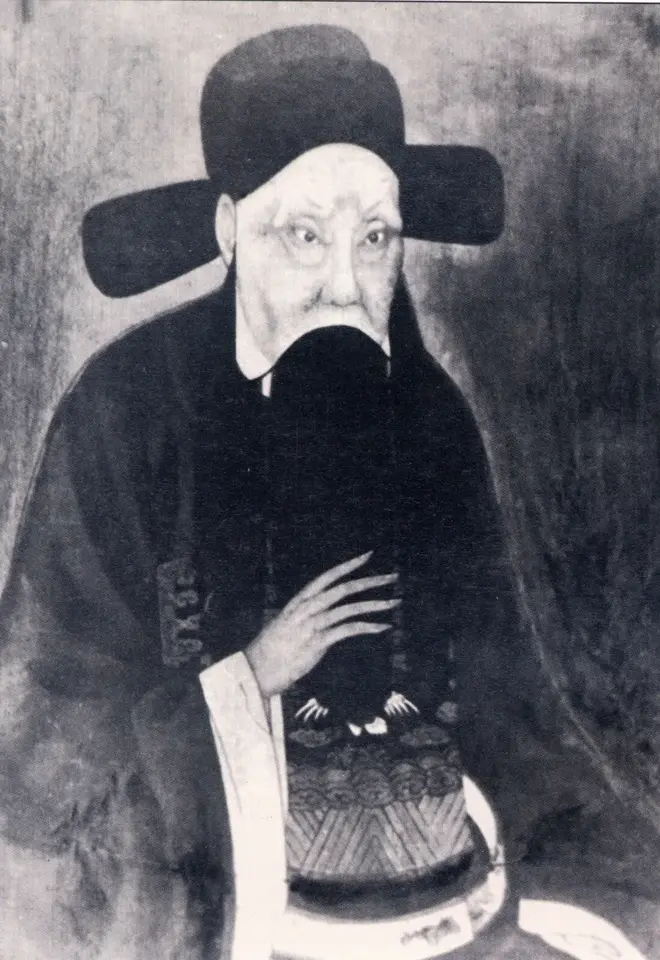
Historical portrait of Cheng Changgeng
Image credits清代宫廷画师 沈蓉圃 · CC BY-SA 4.0Image source

Historical figure

Cheng Changgeng (程长庚)

程长庚

Cheng Changgeng (程长庚, 1811–1880), given name Chun, courtesy name Yushan, and art name Changgeng, was a native of Qianshan in Anqing Prefecture, Anhui Province. He was an outstanding theatrical performer, educator, and director active during the Daoguang, Xianfeng, Tongzhi, and Guangxu reigns. Celebrated as the leader of the Sanqing Anhui Troupe and the founding patriarch of Peking Opera, he stood as the foremost among the…

Qing Dynasty

PROFILE

Cheng Changgeng (程长庚, 1811–1880), given name Chun, courtesy name Yushan, and art name Changgeng, was a native of Qianshan in Anqing Prefecture, Anhui Province. He was an outstanding theatrical performer, educator, and director active during the Daoguang, Xianfeng, Tongzhi, and Guangxu reigns. Celebrated as the leader of the Sanqing Anhui Troupe and the founding patriarch of Peking Opera, he stood as the foremost among the Thirteen Greats of the Tongzhi and Guangxu Eras and the leader of the Three Pillars of Laosheng, venerated by posterity as the Father of Peking Opera and Titan of the Anhui Troupes. Born into an operatic family in Anqing, Cheng accompanied his father to Beijing in youth, studying Kunqu, Anhui opera, and Hubei Han opera to build a formidable vocal foundation. During the Daoguang reign, he became leader of the Sanqing Troupe and served as head of the Jingzhong Temple Guild of the Beijing Pear Garden for three decades, guiding the entire capital theater community. Artistically, Cheng synthesized the Erhuang melodies of Anhui with the Xipi tunes of Hubei while incorporating the stage deportment of Kunqu and northern Zhongzhou phonetic pronunciation. This historic integration established the musical foundation of Pihuang, creating Peking Opera as a sovereign national genre. Performing old male roles with majestic presence and soaring enunciation, he nurtured luminaries such as Tan Xinpei, Wang Guifen, and Sun Juxian.

Courtesy Name
Yushan
Pseudonym
Changgeng
Native Place
Qianshan County, Anqing Prefecture, Anhui (Modern Qianshan, Anhui)
Dynasty
Qing Dynasty
Birth Date
1811 (Sixteenth Year of Jiaqing)
Death Date
1880 (Fifth Year of Guangxu)
Age at Death
70
Accurate Identity Positioning
Renowned Peking Opera Laosheng Performer during the Tongzhi and Guangxu Reigns, Leader of the Sanqing Troupe, Founding Patriarch of Peking Opera, Foremost of the Three Pillars of Laosheng

LIFE TIMELINE

Relationship graph

BIOGRAPHY

Chronology

  • 1811 (Sixteenth Year of the Jiaqing Reign) | Birth in Anhui | Born in Qianshan, Anqing, into an operatic lineage; initiated into theatrical training in childhood.
  • 1822 (Second Year of the Daoguang Reign) | Arrival in Capital | Moved to Beijing with his father, joining an Anhui troupe and studying Kunqu and regional vocal melodies.
  • 1845 (Twenty-Fifth Year of the Daoguang Reign) | Troupe Leader | Assumed overall leadership of the Sanqing Troupe, enacting institutional and musical reforms.
  • 1860 (Tenth Year of the Xianfeng Reign) | Guild Leader | Elected supreme head of the Beijing Pear Garden Guild at Jingzhong Temple, enforcing strict ethical conduct.
  • 1870 (Ninth Year of the Tongzhi Reign) | Artistic Synthesis | Completed the synthesis of Xipi and Erhuang tunes, recognized alongside Zhang Erkui and Yu Sansheng as the Three Pillars.
  • 1880 (Twelfth Month of Fifth Year of Guangxu) | Demise in Capital | Passed away in Beijing at the age of seventy, mourned by theater audiences across northern China.

Life and Career

Anhui Operatic Heritage and Early Training in the Capital

Cheng Changgeng was born in 1811 in Huangni Town, Qianshan County, Anqing Prefecture. The Anqing region had long served as the cultural epicenter of Anhui opera, and the Cheng lineage had furnished instrumentalists and performers for generations. Raised amid musical rehearsals, Cheng demonstrated exceptional pitch perception and a booming, resonant vocal timbre from youth. Around 1822, his father Cheng Xiangjiu brought him to Beijing, where he formally entered the prestigious Sanqing Troupe as an apprentice.

During his formative training in the capital, Cheng studied under veteran masters of both Anhui opera and classical Kunqu, engaging in rigorous physical tumbling and meticulous phonetic exercises. He analyzed the solemn dignity of Anhui Erhuang melodies while mastering the lyrical agility of Kunqu stagecraft and the vibrant drive of Hubei Xipi melodies. During his adolescence, he followed disciplined vocal hygiene, developing an extraordinary baritone voice characterized by soaring volume, bell-like clarity, and great acoustic projection that quickly captured public attention in commercial theaters.

Guiding the Sanqing Troupe and the Pihuang Synthesis

Around 1845, having attained widespread respect among his peers, Cheng was appointed manager of the Sanqing Troupe. Although Sanqing was among the original Four Great Anhui Troupes that had entered the capital in the late Qianlong era, its organizational structure had grown rigid by the mid-nineteenth century. Upon assuming leadership, Cheng enforced strict performance ethics, dismissed disorderly elements, and established systematic rehearsals, transforming Sanqing into the premier theatrical ensemble in Beijing.

This era coincided with profound transformations in northern Chinese performing arts, as performers of Anhui opera, Hubei Han opera, Qinqiang, and Kunqu shared capital stages and cross-pollinated styles. Cheng recognized the historical imperative for integration. Rejecting insular rivalry, he spearheaded the structural union of Anhui Erhuang modes with Hubei Xipi meters, establishing the unified Pihuang musical framework. Furthermore, he mandated the northern mandarin Zhongzhou rhyme system for dialogue and aria enunciation, combining ancient southern gravity with northern crispness. This structural breakthrough marked the birth of Peking Opera as a sovereign national theatrical art form, confirming Cheng status as its principal founder.

Patriarch of the Pear Garden and Pedagogical Legacy

Beginning in the late Xianfeng era, Cheng was unanimously chosen as leader of the Jingzhong Temple Guild, the regulatory association for all capital actors and musicians, a position he retained for thirty years. Renowned for integrity, he banned gambling and opium consumption within member troupes and maintained emergency funds to support indigent performers, commanding unmatched moral authority. On stage, Cheng specialized in upright mature male (laosheng) roles, portraying loyal ministers, sagacious strategists, and virtuous warriors. His signature repertoire included Wen Zhaoguan, The Battle of Changsha, Gathering of Heroes, and Tianshui Pass. In his performances, Wu Zixu burned with righteous anger, Zhuge Liang radiated calm intellectual authority, and Guan Yu displayed awe-inspiring dignity.

Beyond his acting mastery, Cheng was a far-sighted theatrical educator. He founded training academies and personally mentored promising youth. Luminaries including Tan Xinpei, Wang Guifen, Sun Juxian, and Yang Yuelou received extensive training under his tutelage in the Sanqing Troupe. Recognizing the distinct vocal attributes of each pupil, Cheng customized his instruction, fostering the flourishing multiplicity of subsequent laosheng styles. On January 24, 1880, Cheng passed away in Beijing at age seventy. In the historic painting Thirteen Greats of the Tongzhi and Guangxu Eras by Shen Rongpu, Cheng stands proudly in the central foreground clad in a red dragon robe, immortalized as the founding titan of Peking Opera.
Interpersonal Connections

  • Father: Cheng Xiangjiu (Anhui operatic musician and accompanist)
  • Pupil and Inheritor: Tan Xinpei (Founder of the Tan school of Peking Opera, mentored by Cheng)
  • Pupil and Accompanist: Wang Guifen (Founder of the Wang school, served as Cheng personal fiddle accompanist)
  • Pillar Peer: Yu Sansheng (Hubei Han opera master who joined Cheng in the early Three Pillars of Laosheng)
  • Pillar Peer: Zhang Erkui (Founder of the Kui school of laosheng and member of the early Three Pillars)

Historical Evaluations

  • Biographies of Worthies from the Imperial Capital recorded: "Cheng Changgeng, styled Yushan, was a native of Qianshan. He mastered Anhui and Hubei Pihuang and led the Pear Garden Guild at Jingzhong Temple for thirty years. Portraying righteous heroes, his stage presence was solemn and his voice rattled the roof tiles, truly standing foremost among performers of the era."
  • Qi Rushan in History of Chinese Peking Opera evaluated: "That Peking Opera could transcend local theater to become the sovereign national opera of China was due by half to the achievements of Cheng Changgeng. His standardization of melodic rhythm, synthesis of Anhui and Han styles, and training of masters like Tan and Wang make him an incomparable figure across the centuries."
  • Dramatist Weng Ouhong remarked: "Master Changgeng possessed a voice like a bronze bell and stagecraft of majestic solemnity; with pristine articulation and towering dignity, he represents the orthodox wellspring of Peking Opera laosheng."

Related Entries

  • Tan Xinpei
  • Wang Guifen
  • Yu Sansheng

FIGURES ASSOCIATED WITH THIS DYNASTY

Bibliography

  • Qi Rushan, History of Chinese Peking Opera: The Anhui Troupes and Cheng Changgeng.
  • Qing Imperial Household Department Shengping Bureau Annals: Stele Inscriptions of the Jingzhong Temple Pear Garden Guild.