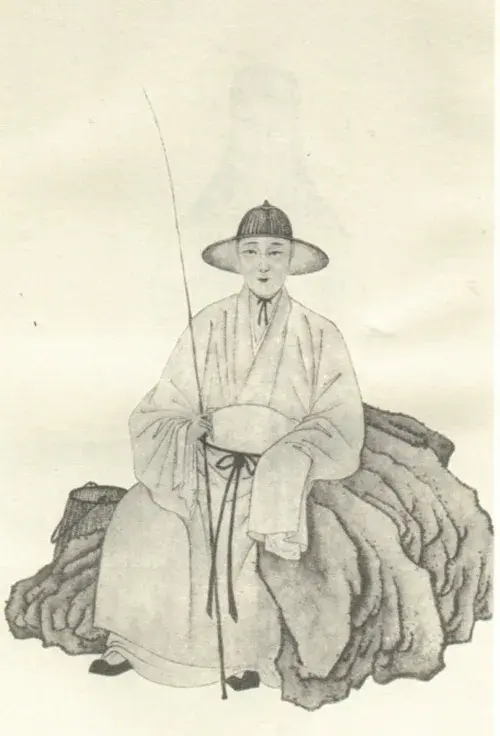
Biography
Prominent Lineage and Precocious Literary Talent
Chen Zhenhui was born in 1604 in Bocun, Yixing County, Changzhou Prefecture. The Chen family of Yixing had long been celebrated for Confucian learning and public integrity. His grandfather, Chen Yijing, authored the Complete Collection of the Four Books and was honored locally as the "Filial and Pure Scholar." His father, Chen Yuting, was an unyielding Donglin partisan who served as Censor-in-Chief and Junior Guardian of the Heir Apparent under the Chongzhen Emperor. His mother was the daughter of Minister of Personnel Tang Zhaojing.
Raised in a household dedicated to public duty, Chen Zhenhui displayed exceptional literary talent from his boyhood. Beyond mastering examination essays, he immersed himself in historical chronicles, ancient poetry, and institutional records. In 1620, at the age of seventeen, he became a licentiate. Generous and passionate by nature, he cared little for private accumulation, finding fulfillment in philosophical discourse with men of talent.
In 1629, when Zhang Pu and Zhang Cai established the Revival Society (Fushe) to unite literati societies across the empire, Chen Zhenhui was among its most enthusiastic early leaders. Utilizing his family wealth and prestige, he collaborated with scholars like Wu Weiye and Wu Yingji to coordinate activities across Jiangnan. In 1630, admiring the poetic genius of Chen Zilong, Chen Zhenhui invited him to his Bocun estate to serve as personal tutor to his eldest son Chen Weisong, forming an enduring friendship.
In 1632, his father was dismissed from office following policy clashes with Grand Secretaries Wen Tiren and Zhou Yanru. Returning with his father to Yixing, Chen Zhenhui used his resources to aid destitute scholars and the orphans of deceased Donglin martyrs. When his father died in 1635, Grand Secretary Zhou Yanru attempted to fabricate charges against the Chen household, but Chen Zhenhui stood firm, weathering the storm with the timely support of Grand Secretary Wen Zhenmeng.
The Nanjing Manifesto and Denunciation of Ruan Dacheng
During the mid-to-late Chongzhen period, internal peasant rebellions and external Manchu pressure deepened. Although the eunuch dictator Wei Zhongxian had been purged, his former partisans covertly sought to regain political power, led by the playwright and former official Ruan Dacheng.
In 1638, Ruan Dacheng lived in luxury in Nanjing, maintaining private theatrical troupes and armed retainers while cultivating inner eunuchs and disaffected literati to engineer his political rehabilitation. Jiangnan scholars viewed his maneuvers with intense alarm.
That autumn, Revival Society leaders Wu Yingji and Gu Gao traveled to Yixing to confer with Chen Zhenhui. Indignant, Chen Zhenhui declared: "Ruan Dacheng was condemned by imperial decree as a treasonous eunuch partisan! If we permit this sycophant to seize court power once more, we shall have no face to walk under heaven!"
The three scholars stayed up all night at Chen Zhenhui's home drafting the Public Declaration to Prevent Chaos in the Secondary Capital. Penned by Wu Yingji and refined by Chen Zhenhui, the manifesto enumerated Ruan Dacheng's historical crimes, denouncing his collusion with eunuchs and deceitful courtship of young scholars, carrying the signatures of over one hundred and forty Jiangnan literati.
In early 1639, Chen Zhenhui and his comrades arranged for thousands of copies of the manifesto to be posted across Nanjing's gates, academies, and thoroughfares. The publication provoked public demonstrations outside the examination halls. Thoroughly disgraced and terrified of mob violence, Ruan Dacheng retreated into his mansion and could only travel in disguise at night. The manifesto completely crushed Ruan's immediate hopes for office, and Chen Zhenhui's fame surged, establishing him alongside Hou Fangyu, Fang Yizhi, and Mao Pijiang as the "Four Gentlemen of the Late Ming."
That autumn, Chen Zhenhui traveled to Nanjing for the provincial civil examinations, securing the second rank on the supplementary list. Together with Wu Yingji, he founded the Guangye Society in Nanjing, hosting daily intellectual salons where scholars debated public affairs and literati ethics.
The Incarceration under the Hongguang Court and Miraculous Rescue
In the third lunar month of 1644, Beijing fell to Li Zicheng, and the Chongzhen Emperor committed suicide. In May, Southern Ming officials enthroned Zhu Yousong (the Hongguang Emperor) in Nanjing.
However, the Hongguang administration immediately deteriorated into bitter factional strife. Grand Secretary Ma Shiying formed an alliance with Ruan Dacheng, appointing him Minister of War.
Vindictive and vengeful, Ruan Dacheng used the Embroidered Uniform Guard to exact retribution against Revival Society scholars who had signed the Nanjing Manifesto. He compiled a blacklist titled The Locust Register, targeting his former critics for treason and subversion.
In late 1644, Ruan Dacheng dispatched armed guards to Yixing, arresting Chen Zhenhui and transporting him in heavy chains to the secret imperial prison in Nanjing. In the dungeons, wardens subjected Chen Zhenhui to severe torture under Ruan's orders, attempting to extract confessions of conspiracy. Chen Zhenhui endured the agony with stoic silence, refusing to incriminate his friends.
Alarmed by his arrest, Revival Society members mobilized to save him. Hou Fangyu campaigned tirelessly among military commanders, Shi Kefa wrote stern letters from the Yangzhou front, and Vice Minister of War Lian Guoshi openly confronted Ma Shiying at court, offering to resign his post to guarantee Chen Zhenhui's innocence. Facing fierce public outcry and military disquiet on the northern frontier, Ma Shiying finally yielded, ordering Chen Zhenhui's release shortly before the fall of Nanjing.
Loyalist Integrity and Reclusion at Bocun
In the fifth lunar month of 1645, Qing armies under Prince Dodo crossed the Yangtze River, overrunning Yangzhou and capturing Nanjing. As the Hongguang court disintegrated, many former Ming courtiers shaved their heads and defected to the Qing.
Faced with dynastic downfall, Chen Zhenhui maintained unbending moral defiance. Vowing never to serve the conquerors, he rejected all enticements from Qing collaborators and retired permanently to his rural estate in Bocun, adopting the hermit sobriquet "Xuecen."
Chen Zhenhui took a formal vow: "Never to set foot in a city for over ten years!" Clad strictly in the wide-sleeved robes of the Ming Dynasty, he lived in rustic cottages, subsisting on simple grains and vegetables. When local Qing officials sought to pay their respects, he instructed servants to decline on the grounds of grave illness.
During his ten years of rural seclusion, Chen Zhenhui devoted himself entirely to historical documentation. Drawing upon his encyclopedic memory and private archives, he compiled monumental historical memoirs under lamplight. He authored the fourteen-volume Sayings from the Imperial Ming, modeled after the classical New Account of the Tales of the World, preserving the wit and wisdom of Ming statesmen. He produced the celebrated Records of Shanyang, detailing the history of the Donglin Academy and vindicating martyrs like Yang Lian and Zuo Guangdou; and authored Miscellaneous Adornments of the Autumn Garden and Seven Historical Matters, documenting late Ming court politics and wartime atrocities.
In 1656, worn down by grief and illness, Chen Zhenhui passed away at his home in Bocun at the age of fifty-three. On his deathbed, he instructed his family to bury him in traditional Ming robes without an ornate tumulus. His eldest son Chen Weisong inherited his scholarship, rising to become the paramount lyricist of the early Qing Dynasty and founder of the Yangxian Lyric Poetry School. Through his unblemished moral integrity and indispensable historical writings, Chen Zhenhui left an enduring legacy in the annals of Chinese literature and late Ming historiography.
Major Achievements
Leadership of the Revival Society and the Nanjing Manifesto
During the late Chongzhen era, Chen Zhenhui served as a preeminent leader of the Revival Society, using his noble standing and wealth to unite reform-minded scholars across China.
When the disgraced eunuch partisan Ruan Dacheng attempted to resurrect his career in Nanjing, Chen Zhenhui took the lead in organizing the Public Declaration to Prevent Chaos in the Secondary Capital. Gathering over a hundred scholar signatures, he mobilized the literati to drive the corrupt courtier from public life, representing a peak of intellectual activism in late imperial China.
Unyielding Moral Rectitude Against Ma and Ruan
During the Hongguang reign, when Ma Shiying and Ruan Dacheng seized power and initiated brutal political purges, Chen Zhenhui was thrown into the imperial prison under heavy torture.
Facing the executioner's blade, he displayed uncompromising courage, refusing to yield or implicate his fellow scholars. His steadfast resistance rallied senior statesmen like Lian Guoshi and Shi Kefa to his defense, frustrating Ruan Dacheng's plot to annihilate the reformist leadership.
Solitary Loyalist Reclusion at Bocun
Following the fall of the Ming Dynasty, Chen Zhenhui rejected all overtures from the Qing conquerors, retreating to his rural estate in Bocun and observing a decade-long vow never to enter an urban center.
While many Jiangnan elites shaved their heads to seek office, Chen Zhenhui preserved his traditional Ming robes and rural poverty, standing as an exemplar of scholarly integrity and cultural resistance.
Preserving Late Ming Historical Memory Through Literary Chronicles
In his twilight years, Chen Zhenhui authored essential historical chronicles, including Sayings from the Imperial Ming, Records of Shanyang, Miscellaneous Adornments of the Autumn Garden, and Seven Historical Matters.
His works systematically recorded the Donglin controversies, Revival Society movements, and the social upheaval of the Ming-Qing transition, preserving authentic primary sources that established his enduring status as an eminent master of late imperial private historiography.