Birth in Putian
Born into the prestigious Yuhu Chen lineage in Xinghua, nurtured by ancestral traditions of incorruptible public service.
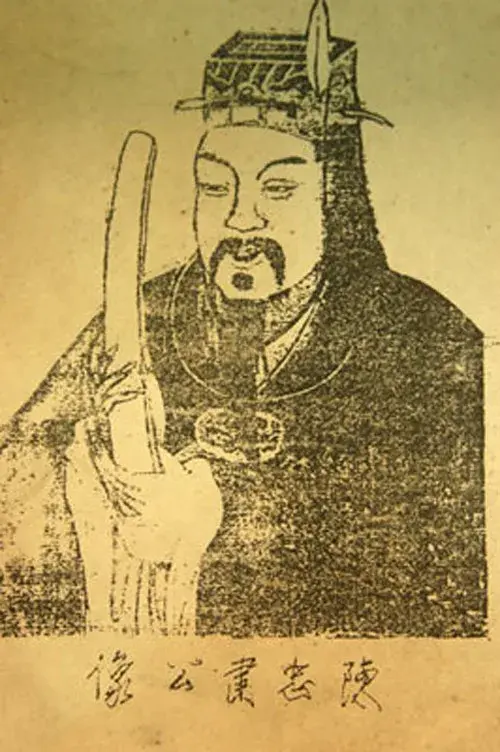
陈文龙
Chen Wenlong (陈文龙, 1232–1277), originally named Zilong, courtesy names Gangzhong and Junben (personally bestowed by Emperor Duzong), art name Ruxin, was a native of Putian, Xinghua. He was a fifth-generation descendant of Left Grand Councilor Chen Junqing and a monumental national hero, military commander, and statesman of the late Southern Song dynasty. In 1268, he clinched the first rank (zhuangyuan) in the palace…
Chen Wenlong (陈文龙, 1232–1277), originally named Zilong, courtesy names Gangzhong and Junben (personally bestowed by Emperor Duzong), art name Ruxin, was a native of Putian, Xinghua. He was a fifth-generation descendant of Left Grand Councilor Chen Junqing and a monumental national hero, military commander, and statesman of the late Southern Song dynasty. In 1268, he clinched the first rank (zhuangyuan) in the palace examinations, earning imperial praise and immediate assignment as Judicial Controller of the Zhendong Army. Though Grand Councilor Jia Sidao initially admired his genius, Chen steadfastly refused personal subservience. When Xiangyang and Fancheng fell to the Mongols, Chen boldly memorialized the throne condemning Jia Sidao for shielding incompetent favorites such as Fan Wenhu and Zhao Qian, resulting in his demotion to Fuzhou and removal from office. Imperial Academy scholars celebrated his integrity as the song of a celestial phoenix. In 1275, following the catastrophic Song defeat at Lugang, the court recalled him as Censor and Vice Grand Councilor. After the collapse of Lin'an, he served Emperor Duanzong in Fuzhou as Vice Grand Councilor and Pacification Commissioner, holding Xinghua against Mongol encirclement. He executed Mongol peace envoys twice and burned their surrender letters. When treasonous officers betrayed the gates, Chen pointed to his belly, defying his captors with unyielding moral courage. Transported toward Hangzhou, he went on a prolonged hunger strike and expired before Yue Fei's shrine in Hangzhou at the age of forty-five. Emperor Duanzong bestowed the posthumous name Zhongsu. Revered alongside Yue Fei and Yu Qian as the Three Zhongsu of West Lake, he was later deified as the Sea Calming King and Minister of Waterways.
Born into the prestigious Yuhu Chen lineage in Xinghua, nurtured by ancestral traditions of incorruptible public service.
Entered the imperial National University in Lin'an, excelling in institutional examinations and earning fame for master calligraphic artistry.
Triumphed as zhuangyuan in the palace examinations; Emperor Duzong personally renamed him Wenlong, conferred the courtesy name Junben, and appointed him Judicial Controller.
Served as Investigating Censor, fiercely opposing the aggressive implementation of the Public Field Law across western Zhejiang and calming public fury.
Assailed Jia Sidao for sheltering corrupt commanders after the fall of Xiangyang; banished to Fuzhou and subsequently stripped of office.
Recalled as Vice Grand Councilor following Jia Sidao's military collapse at Lugang, advocating resolute defense of the capital.
Reappointed Vice Grand Councilor and Pacification Commissioner under Emperor Duanzong in Fuzhou, pacifying regional revolts and fortifying Xinghua.
Executed Mongol surrender envoys twice on the city ramparts and incinerated their imperial letters, vowing never to betray the Song realm.
Captured after treacherous subordinates Lin Hua and Cao Chengsun opened the city gates to Mongol commander Dong Wenbing; declared an immediate hunger strike.
Transported under guard to Hangzhou; crawled before the altar of Yue Fei at West Lake and expired in martyrdom at age forty-five.
Chen Wenlong was born in 1232 in Yuhu, Putian, Xinghua Commandery, into one of the most celebrated scholar-official clans of southeastern China. His great-grandfather Chen Junqing had served as Left Grand Councilor under Emperors Gaozong and Xiaozong, renowned alongside Li Gang as a towering pillar of the early Southern Song. Chen Junqing's enduring dictum that thin soil nurtures resolute pines and poor homes cultivate scholars became the foundational motto for generations of Fujian intellectuals.
Nurtured in this strict ancestral discipline, Chen Wenlong demonstrated precocious intellectual depth from his earliest years, mastering canonical commentaries and poetic meter before reaching adulthood. In 1256, he entered the National University in Lin'an, repeatedly capturing first place in university trials. His running script captured the pristine structural strength of Zhong Yao and Wang Xizhi, establishing him as a foremost calligrapher of the capital.
In 1268, the thirty-six-year-old Chen achieved first place in the spring metropolitan examinations and proceeded to the palace hall. Confronting existential foreign crises, his policy essay offered trenchant strategies for bureaucratic cleansing and border fortification. Emperor Duzong was deeply moved, personally elevating him to first-ranked zhuangyuan and bestowing upon him the name Wenlong and the courtesy name Junben, symbolizing an imperial guardian. Duzong composed an imperial banquet poem in his honor and broke precedent by immediately conferring the post of Judicial Controller of the Zhendong Army in Yuezhou.
Upon entering administrative office, Chen despised bureaucratic servility, sycophancy, and bribery. In Yuezhou, he eliminated administrative abuses, rectified wrongful convictions, and protected commoners from predatory taxation, earning universal respect from regional commanders and civil colleagues.
At that time, Grand Councilor Jia Sidao wielded dictatorial power over the imperial court. Attracted by Chen's unrivaled literary and administrative gifts, Jia repeatedly promoted him to Lecturer of the Chongzheng Hall, Collator in the Palace Library, and Investigating Censor, seeking to bind Chen to his faction. However, Chen steadfastly maintained independent moral principles, refusing to compromise the public interest for private patronage.
In 1272, Fiscal Commissioner Hong Qiwei, acting under Jia Sidao's covert instructions, petitioned to enforce the predatory Public Field Law across six commanderies of western Zhejiang, bankrupting landed gentry and dispossessing tens of thousands of tenant farmers. As Investigating Censor, Chen submitted fiery memorials dissecting the catastrophic damage of the policy, demanding Hong Qiwei's severe punishment. His intervention forced the court to halt the scheme, prompting National University scholars to celebrate Chen as the celestial phoenix singing in the morning sun.
In 1273, after a six-year siege, the vital northern fortress of Xiangyang fell to the Mongols. Jia Sidao's son-in-law Fan Wenhu had fled without engaging the enemy, precipitating the catastrophe. Rather than executing Fan, Jia merely demoted him slightly and promoted sycophantic favorites Zhao Qian and Huang Wanshi to govern Jiankang and Lin'an. Outraged by this treasonous nepotism, Chen presented impassioned remonstrances to Emperor Duzong, demanding the immediate dismissal and trial of Fan, Zhao, and Huang. Enraged by this challenge, Jia banished Chen to Fuzhou and soon fabricated charges to strip him of all rank, forcing him to return home to Putian.
In early 1275, Jia Sidao's grand army of 130,000 men disintegrated at Lugang as Fan Wenhu and Zhao Qian fled the battlefield. In desperate terror, the court recognized the foresight of Chen's warnings, hastily reinstating him as Reminder of the Left and promoting him to Vice Grand Councilor. Before departing Fujian, his uncle Chen Zan suggested mass mobilization of regional militias; Chen sighed with tragic prescience, stating that while the strategy was sound, court appeasers would never adopt it and that he was embarking on a journey toward death.
Arriving in Lin'an, Chen found the northern passes breached and prime minister Chen Yizhong negotiating surrender. Alongside Wen Tianxiang and Zhang Shijie, Chen advocated a fight to the finish outside the capital walls, but the regent dowager chose unconditional surrender. In the fifth month of 1276, Prince Zhao Shi ascended the throne in Fuzhou as Emperor Duanzong. Chen was appointed Vice Grand Councilor and Pacification Commissioner of Fujian and Guangdong, concurrently governing Xinghua Commandery. Arriving at Putian, he crushed local rebellions, consolidated the city walls, accumulated provisions, and stood as an unyielding bulwark.
By late 1276, Mongol armies overwhelmed Fujian. Maritime superintendent Pu Shougeng betrayed Quanzhou, and Fuzhou surrendered. Xinghua remained an isolated bastion. Mongol commanders sent surrender envoys twice bearing imperial capitulation edicts. Chen assembled the garrison atop the ramparts, publicly incinerated the Mongol documents, and decapitated the enemy emissaries before the assembled army. When timid officers trembled, Chen shouted: "You men fear death alone, yet who among us can escape mortality? Having eaten the bread of the state, I shall never compromise my sacred honor!"
In the twelfth month of 1276, Mongol general Dong Wenbing laid siege to Xinghua. Vice Prefect Cao Chengsun and garrison commander Lin Hua secretly betrayed the city, opening the gates under cover of darkness. Chen attempted suicide by hanging in the government hall but was cut down and seized alongside his mother and family.
Dong Wenbing, eager to enlist the renowned scholar, offered premier appointments under the Yuan court. When Mongol guards drew blades to intimidate him, Chen pointed unflinchingly to his chest, proclaiming: "Within this belly resides only righteous devotion; how could you intimidate it with iron!" From that moment, Chen initiated a total hunger strike, closing his eyes in silent defiance as he was placed into an enclosed cart for transport to Hangzhou.
During the grueling overland journey, Chen refused every drop of water and morsel of grain. Arriving beside West Lake in Hangzhou, recognizing that his physical strength was exhausted, he requested permission to pay homage at the Tomb and Temple of Yue Fei. Crawling before Yue Fei's altar, Chen wept tears of blood, lamenting the destruction of the Song empire and his inability to expel the foreign invaders, expiring upon the stone pavement before the shrine at the age of forty-five.
News of his martyrdom drew inconsolable weeping across Hangzhou and Fujian. His mother, imprisoned in a Fuzhou nunnery, was mortally ill without medicine; hearing of her son's noble demise, she comforted her attendants with serene dignity, declaring that dying alongside her son was her supreme pride, subsequently fasting until death. Emperor Duanzong posthumously elevated Chen to Grand Preceptor and conferred the posthumous name Zhongsu.
Chen Wenlong achieved the pinnacle of civil examination success as the supreme graduate of 1268, consistently utilizing his office to defend the Confucian moral order. In an era dominated by bureaucratic decadence, he fearlessly challenged Grand Councilor Jia Sidao, halting the ruinous Public Field Law and saving countless tenant households across western Zhejiang.
His strategic foresight was remarkable: he accurately predicted the battlefield cowardice of court favorites such as Fan Wenhu and Zhao Qian. Amidst the silence of intimidated courtiers, Chen's unyielding candor preserved the dignity of the Song civil service, establishing him as an exemplar of the Confucian gentleman.
In 1276, as southeastern coastal cities surrendered en masse to the advancing Mongol forces, Chen transformed Xinghua into an impregnable bastion of patriotic defiance. Facing insurmountable odds, he twice burned imperial surrender edicts and executed enemy emissaries on the battlements, demonstrating uncompromising resolve.
The defense of Xinghua displayed the highest tradition of Chinese scholar-generals sacrificing their lives for the realm. His defiance tied down elite Mongol expeditionary armies for months, providing invaluable operational time for the Song court to reorganize resistance along the Guangdong coast.
Chen Wenlong's death before Yue Fei's shrine inextricably linked his memory with the immortal heroes of Hangzhou. Subsequent generations revered Chen alongside Yue Fei and Ming martyr Yu Qian as the Three Zhongsu of West Lake, constructing shrines beside West Lake to perpetuate their memory.
In the Ming and Qing dynasties, the imperial court formally integrated Chen into state sacrificial registers, appointing him City God of Fuzhou and elevating him to the divine titles Minister of Waterways and Sea Calming King. Across Taiwan, the Ryukyu Islands, and Southeast Asian diaspora communities, Chen remains venerated as an eternal guardian deity of maritime navigation, righteousness, and unyielding patriotic devotion.
Following Chen Wenlong's martyrdom, his unyielding patriotic spirit ignited a fierce popular uprising across Fujian. In Putian, Chen's cousin Chen Zan wept blood upon hearing the news, vowing to avenge his kin and defend the fallen realm. Chen Zan liquidated his private fortune to mobilize thousands of local volunteers, launching a surprise assault that recaptured Xinghua, executing the traitor Lin Hua and capturing collaborator Cao Chengsun to sacrifice before Chen Wenlong's spirit tablet.
Subsequently, Mongol grand commander Sodu mobilized overwhelming expeditionary units to besiege Xinghua. Chen Zan commanded the starving garrison through months of fierce bombardment until the city walls collapsed. Taken alive, Chen Zan cursed his captors without bowing, enduring the brutal punishment of being dismembered by five horses. During the Ming and Qing dynasties, the state established official dual shrines honoring Chen Wenlong in Fuzhou and Chen Zan in Xinghua, cementing the heroic legacy of uncle and nephew as an eternal monument of southern resistance.
Chen Wenlong was not merely a renowned martial statesman; he was an acclaimed master of prose and classical calligraphy. Inheriting the austere methods of Zhong Yao and Wang Xizhi, his running script displayed tremendous structural vigor. In his surviving calligraphic colophon reflecting on Yang Huizhi's poetry, he observed that divine ink should be dipped in heaven's pure dew to match true poetic spirit, earning universal admiration from contemporary connoisseurs.
Upon his zhuangyuan triumph, Emperor Duzong personally composed an imperial banquet poem celebrating Chen's profound classical learning and fearless loyalty. Throughout his career, Chen viewed classical scholarship as the foundation of political morality. When facing death and pointing to his belly to proclaim that it held only righteous prose, he united literary creation with existential martyrdom, epitomizing the ultimate Song Confucian ideal of upholding the moral way against imperial tyranny.
During the Ming and Qing dynasties, state and popular worship transformed Chen Wenlong's memory into an imperial patron deity of maritime navigation and territorial security. In 1370, Ming founder Zhu Yuanzhang decreed Chen as the City God of Fuzhou. In the Wanli era, following numerous maritime interventions credited to his spiritual protection, the court conferred the divine title Minister of Waterways.
In 1782, the Qianlong Emperor of the Qing dynasty officially elevated Chen to the dignity of Sea Calming King (Zhenhai Wang). For centuries, whenever imperial Chinese investiture missions sailed eastward across the perilous ocean to crown the kings of Ryukyu, the ambassadors held solemn sacrifices at Chen's temple in Fuzhou to pray for safe passage across the Black Stream trench. This spiritual veneration spread throughout the Ryukyu Kingdom, Taiwan, and Southeast Asia, establishing Chen as a supreme guardian of the maritime Silk Road.
FIGURES ASSOCIATED WITH THIS DYNASTY