Birth in Jiangnan
Born into a scholar-gentry lineage in Liyang, excelling in classical prose from childhood.
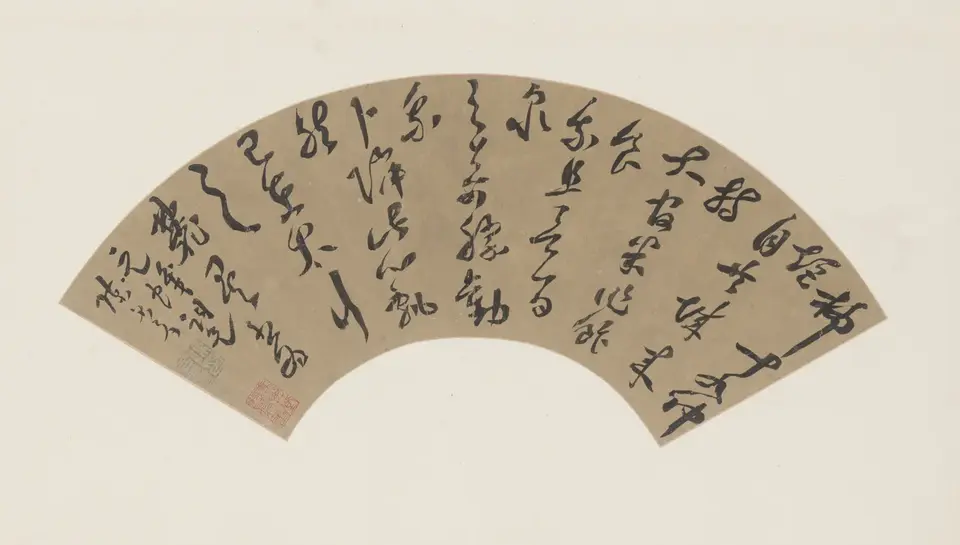
陈名夏
Chen Mingxia (陈名夏, 1601–1654), courtesy name Baishi (also written Boshi), pseudonym Shiyun Jushi, was a native of Liyang, Changzhou Prefecture, Jiangnan (modern Liyang, Changzhou, Jiangsu Province). He was a preeminent literatus, grand secretary, and factional leader during the Ming-Qing transition. In his early years, Chen joined the renowned Restoration Society (Fushe), signing the famous *Nanjing Anti-Corruption…
Chen Mingxia (陈名夏, 1601–1654), courtesy name Baishi (also written Boshi), pseudonym Shiyun Jushi, was a native of Liyang, Changzhou Prefecture, Jiangnan (modern Liyang, Changzhou, Jiangsu Province). He was a preeminent literatus, grand secretary, and factional leader during the Ming-Qing transition. In his early years, Chen joined the renowned Restoration Society (Fushe), signing the famous Nanjing Anti-Corruption Manifesto and winning nationwide acclaim for his examination prose and poetry. In 1643 (the sixteenth year of the Chongzhen reign), he placed third (Tanhua) in the imperial palace examination, receiving appointment as Senior Compiler in the Hanlin Academy and Supervising Censor of the Office of Scrutiny for War. When Li Zicheng captured Beijing in 1644, Chen briefly submitted to the Shun regime. Following Li's defeat, he surrendered to the Qing dynasty at Daming in 1645, where Prince Regent Dorgon extraordinarily promoted him to Vice Minister of Personnel and Academician of the Hanlin Academy. Under the direct personal rule of the Shunzhi Emperor, Chen enjoyed deep imperial favor, being elevated to Grand Secretary of the Hongwen Hall and Minister of Personnel. He emerged as the undisputed leader of the "Southern Faction" (Nan Dang) of Han Chinese civil officials, clashing bitterly with the "Northern Faction" led by Feng Quan and entrenched Manchu conservative nobles. In March 1654 (Shunzhi 11), Manchu Grand Secretary Ning Wanwo submitted a secret memorial accusing Chen of factional conspiracy and subversion, alleging that Chen had stated in private: "If we only preserve our hair and restore our traditional Ming dress and caps, the empire will naturally be at peace." This direct challenge to the fundamental Qing edict of shaving the head and wearing Manchu attire was treated as high treason. The Council of Deliberative Princes and Ministers convicted him, and the Shunzhi Emperor ordered Chen executed by strangulation in April 1654 at the age of 54.
Born into a scholar-gentry lineage in Liyang, excelling in classical prose from childhood.
Allied with Zhang Pu and southern intellectuals, signing the Nanjing Anti-Corruption Manifesto.
Attained the rank of Tanhua in the imperial palace examination; appointed Hanlin Senior Compiler.
Submitted to Li Zicheng's Shun regime upon the fall of Beijing, serving as Academician of Hongwenguan.
Surrendered to Qing authorities at Daming, gaining Dorgon's patronal promotion to Vice Minister of Personnel.
Promoted to Academician of the Secretariat and Vice Minister of Rites, drafting foundational state statutes.
Elevated to Grand Secretary of the Hongwen Hall and Minister of Personnel, leading the Southern Han Faction.
Conferred the rank of Grand Secretary of the Wuying Hall and Minister of War, advising the Emperor on statecraft.
Accused by Manchu Grand Secretary Ning Wanwo of subversion regarding traditional Chinese clothing and hairstyle.
Convicted of high treason by the Deliberative Council and executed by strangulation at the age of 54.
Chen Mingxia was born in 1601 in Liyang into a prominent scholarly household. In his youth, he immersed himself in classical philosophy and contemporary statecraft, joining Zhang Pu's Fushe (Restoration Society) and becoming one of its most eloquent spokesmen in the Jiangnan literary circles.
In 1643, during the final civil examinations of the Ming dynasty, Chen achieved third place (Tanhua) in the imperial palace examination. He was commissioned as Senior Compiler in the Hanlin Academy and concurrently appointed Supervising Censor for War, advising the Chongzhen Emperor on military logistics.
When Li Zicheng's peasant armies stormed Beijing in April 1644, Chen chose survival and accepted office as Academician in the Shun government's Hongwenguan. Following the defeat of Li Zicheng by allied Qing and Wu Sangui forces at Shanhai Pass, Chen fled south to Daming in Hebei.
In 1645, sponsored by local Qing officials, Chen offered his submission to the Qing court. Prince Regent Dorgon recognized Chen's exceptional literary authority and influence over southern literati, immediately elevating him to Vice Minister of Personnel and Hanlin Reader-in-Waiting.
Following the Shunzhi Emperor's assumption of personal imperial rule in 1651, Chen's career reached its zenith. Appointed Grand Secretary of the Hongwen Hall and Minister of Personnel, he directed the appointment, evaluation, and promotion of civil officials throughout the empire. Enjoying profound imperial confidence, Chen became widely recognized as the literary arbiter of the realm and the undisputed political leader of southern Han bureaucrats ("Southern Faction").
In his personnel authority, Chen vigorously promoted southern scholars and former Fushe colleagues to civil offices, seeking to restore traditional civil service norms. His patronage of southern literati provoked acute resentment among early Liaodong Han bannermen ("Old Servants") and northern Han officials, who accused Chen of factional exclusivity and nepotism.
The intense bureaucratic struggle in the early Shunzhi court pitted Chen Mingxia's "Southern Faction" against the "Northern Faction" led by Grand Secretary Feng Quan and Liu Zhengzong, interwoven with power struggles among conservative Manchu banner aristocrats. Although the Shunzhi Emperor favored Han classical governance, Manchu grandees resented the expanding influence of southern civil officials.
In 1651, Censor Zhang Xuan impeached Chen for forming a faction, while Chen Zhilin accused him of flattering the late Prince Regent Dorgon. Although Chen was briefly dismissed following Dorgon's posthumous disgrace, the Shunzhi Emperor prized his vast erudition in dynastic history and recalled him in 1653 as Grand Secretary of the Mishu Hall and Minister of Personnel. Chen's uncompromising temperament and sharp tongue, however, alienated northern officials and intensified court enmities.
The political conflict culminated in the third month of the eleventh year of the Shunzhi era (1654). Chinese bannerman Grand Secretary Ning Wanwo, an early Liaodong collaborator who had remained politically silent for two decades, submitted a devastating formal impeachment accusing Chen Mingxia of monopolizing state appointments, deceiving the emperor, and secretly harboring disloyalty toward the dynasty.
Ning's memorial charged that Chen used his ministerial power to advance southern partisans while marginalizing northern and bannermen candidates. Most dangerously, Ning alleged that Chen covertly obstructed imperial policies, using his factional network to manipulate state deliberations and subvert the authority of the throne.
Most lethally, Ning Wanwo testified that Chen had declared in private council: "To restore peace under heaven, one need only allow the people to preserve their hair and restore the ancient caps and robes." In the tense political climate of early Qing rule, this statement directly attacked the compulsory Manchu tonsure and dress edicts (Tifa Yifu), which symbolized absolute submission to Qing sovereignty.
The Shunzhi Emperor interrogated Chen in person at court on April 19, 1654. When Chen vehemently interrupted the reading of Ning's memorial to defend himself, the emperor was infuriated by his breaches of court decorum and ordered him to kneel during cross-examination. Though censors Liu Yumo and Chen Bingyi pleaded for leniency, the emperor stripped them of office. On April 27, 1654, the Ministry of Personnel recommended decapitation, which the throne commuted to death by strangulation. Before his execution, Chen remained composed, remarking to his guest Liu Sheng: "My expression has not changed at all." His son Chen Yechen was flogged forty strokes and banished to the northeast.
FIGURES ASSOCIATED WITH THIS DYNASTY