Birth
Born into a modest rural scholarly farming family in Lingui, Guangxi
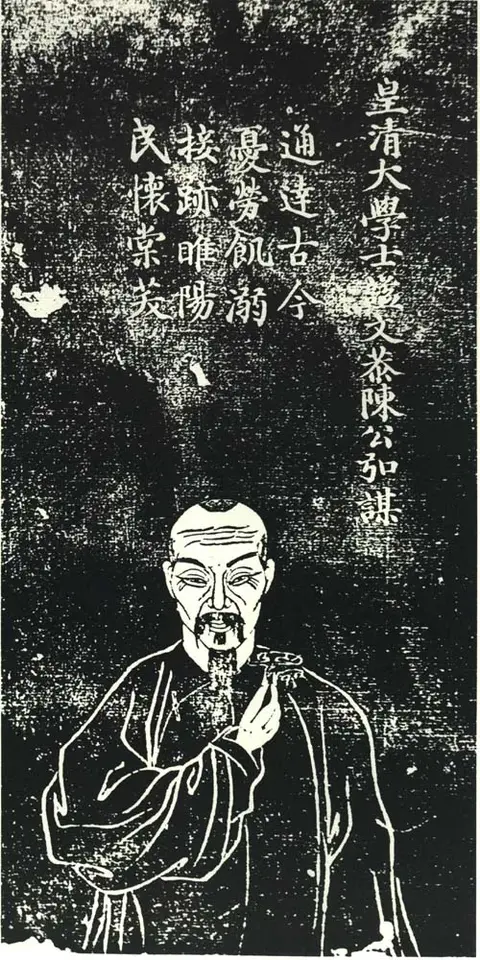
陈宏谋
Chen Hongmou (陈宏谋; 1696–1771), courtesy name Ruzi and art name Rongmen, was a native of Lingui in Guangxi. He was a towering high minister, distinguished Neo-Confucian philosopher, and universally revered as the foremost model administrator (Xunli) of the Qing Dynasty across the Yongzheng and Qianlong reigns. Passing the metropolitan examinations in 1723, he served as Hanlin Compiler, Investigating Censor, and Prefect of…
Chen Hongmou (陈宏谋; 1696–1771), courtesy name Ruzi and art name Rongmen, was a native of Lingui in Guangxi. He was a towering high minister, distinguished Neo-Confucian philosopher, and universally revered as the foremost model administrator (Xunli) of the Qing Dynasty across the Yongzheng and Qianlong reigns. Passing the metropolitan examinations in 1723, he served as Hanlin Compiler, Investigating Censor, and Prefect of Yangzhou. Over thirty years of provincial service, he governed eight separate provinces as Governor (Gansu, Jiangxi, Shaanxi, Hubei, Henan, Fujian, Hunan, and Jiangsu) and directed four paramount viceroyalties (Shaan-Gan, Liangguang, Liangjiang, and Huguang), holding twenty-one high provincial governorships—a record unmatched in Qing history. Summoned to Beijing in 1763, he culminated his career as Grand Secretary of the Eastern Cabinet and Minister of Works. A dedicated practitioner of Zhu Xi's philosophy, Chen emphasized water conservation, agrarian productivity, and moral education, compiling the classic five-volume ethical anthology Five Bequests (Wu Zhong Yi Gui), which became essential reading for late Qing statesmen like Zeng Guofan and Lin Zexu. He died while returning home in 1771 and was awarded the posthumous title Wengong.
Born into a modest rural scholarly farming family in Lingui, Guangxi
Obtained the Jinshi degree in the accession grace examination and entered the Hanlin Academy
Appointed Investigating Censor for Zhejiang, submitting petitions on coastal salt and monetary reforms
Served as Prefect of Yangzhou, curbing elite commercial luxury and establishing public schools
Governed Shaanxi and Gansu, constructing irrigation canals and famine granary systems
Compiled and published the influential moral compendium Five Bequests
Governed Jiangxi, Henan, Fujian, and Hunan before promotion to Viceroy of Liangguang
Elevated to Viceroy of Liangjiang, repairing Huai River dykes and rooting out administrative embezzlement
Recalled to Beijing and appointed Grand Secretary of the Eastern Cabinet and Minister of Works
Granted retirement with honors; died aboard his return boat in Hanzhuang, Shandong at seventy-six
Chen Hongmou was born in Hengshan Village in Lingui, Guangxi. Despite humble familial means, he applied himself relentlessly to Confucian antiquity, embracing the Cheng-Zhu school's doctrines of personal cultivation and pragmatic statecraft.
In 1723, during the accession grace examination of the Yongzheng Emperor, Chen Hongmou placed in the metropolitan Jinshi class and was selected as a Hanlin Bachelor, later becoming a Senior Compiler. In 1729, he was appointed Investigating Censor of the Zhejiang Circuit. Unflinching in his moral duty, he submitted exhaustive memorials detailing reforms for the salt monopoly, coastal maritime defense, and currency regularization. His penetrating administrative logic impressed Emperor Yongzheng, who appointed him Prefect of Yangzhou in 1733. In this lavish commercial metropolis, Chen lived frugally, disciplined fraudulent salt brokers, founded free academies for impoverished students, and established benevolent granaries.
Throughout the Qianlong era, Chen Hongmou spent nearly three decades directing provincial administrations. He served as Governor across eight key provinces—Gansu, Jiangxi, Shaanxi, Hubei, Henan, Fujian, Hunan, and Jiangsu—and held the supreme viceregal seal in Shaan-Gan, Liangguang, Liangjiang, and Huguang. Across twenty-one governorship appointments, he traveled extensively, personally inspecting flood dykes, remote border villages, and judicial prisons.
In Shaanxi, he mobilized regional labor to dig dozens of stone canals along the Han and Xu rivers, converting vast tracts of arid soil into lush paddy fields. In arid Gansu, he promoted drought-resistant crops, dug mountain catchment basins, and reorganized the Ever-Normal Granary reserves to buffer against perennial famine. In Henan and Hunan, he abolished illegal clerical surcharges. As Viceroy of Liangguang, he fortified coastal fortifications and reformed native chieftain administration. In Liangjiang, he supervised the reinforcement of Hongze Lake's Gaojiayan dyke. Revered for his practical approach, he never sought personal fame, winning the universal affection of millions who termed him the mother of the people.
Beyond his immense governmental accomplishments, Chen Hongmou was a seminal Neo-Confucian thinker. Throughout decades of taxing provincial governance, he spent late nights compiling and synthesizing classical texts. In 1742, he published the famous Five Bequests (Wu Zhong Yi Gui), comprising five instructional manuals: Rules for Cultivating Youth, Rules for Reforming Customs, Rules for Educating Women, Rules for Administrative Officials, and Exemplary Records for Public Servants.
Written in clear, forceful, and accessible language, this masterwork articulated the practical execution of Confucian ethics from childhood up to the highest ministerial office. It served not only as a mandatory administrative guidebook for Qing magistrates but became the foundational lifelong manual of self-discipline for later giants of modern Chinese history, including Lin Zexu, Zeng Guofan, and Zuo Zongtang.
In 1763, the Qianlong Emperor summoned Chen Hongmou back to the imperial capital, elevating him to Grand Secretary of the Eastern Cabinet and Minister of Works. In high state councils, Chen advocated unwavering prudence, urging the reduction of palace waste and the lowering of agricultural land taxes.
In 1771, aged seventy-six and suffering from debilitating physical fatigue, Chen submitted repeated retirement petitions. Revering his lifelong devotion, Emperor Qianlong granted his retirement with full grand secretarial rank, added the supreme title Grand Preceptor to the Heir Apparent, and ordered regional governors along his route to provide ceremonial escort. In June 1771, while traveling south along the Grand Canal, Chen passed away peacefully aboard his vessel at Hanzhuang in Shandong. The Emperor mourned his passing with deep sorrow, granted state funeral honors, and conferred the posthumous name Wengong.
Governing eight provinces and four viceroyalties, Chen Hongmou constructed dozens of irrigation networks across Shaanxi and Gansu, built coastal sea walls and Grand Canal dykes in Jiangnan, and established the gold-standard four-column auditing system for empire-wide grain reserves.
Chen Hongmou authored and compiled the Wu Zhong Yi Gui, a landmark encyclopedic manual of Confucian moral governance, child-rearing, domestic ethics, and public administration, profoundly shaping the moral compass of nineteenth-century Chinese literati.
Chen Hongmou established over a thousand free public schools across multiple provinces, rebuilt famous institutions like Yuelu Academy, and enacted community compacts that eradicated violent clan feuds and harmful superstitions.
During his tenures as Governor of Shaanxi and Gansu, Chen Hongmou addressed the arid, barren environment of the northwest through pioneering agrarian and hydraulic administration. In Gansu, he instituted the regional policy of storing grain according to local soil, filling granaries with drought-resilient millet and pulses. Around Lanzhou and Pingliang, he systematically popularized rainwater catchment cellars and spring-diverting channels, building extensive irrigation canals across mountain valleys that significantly elevated regional grain yields and provided a durable defense against recurrent droughts.
Steeped in Cheng-Zhu Neo-Confucian jurisprudence, Chen maintained the foundational principle of 'seeking truth in litigation, exercising benevolence in punishment.' Across his eight provincial governorships, he personally inspected prison wards and reviewed case rolls, strictly banning unauthorized torture instruments and the abuse of detainees by corrupt bailiffs. He overturned dozens of delayed capital convictions where corrupt underlings had fabricated charges, and formulated the standard Regulations on Case Trial Records to enforce procedural fairness and eliminate judicial backlogs.
FIGURES ASSOCIATED WITH THIS DYNASTY