Lineage in Shaxian
Born into a respected scholar-official family in Shaxian; both grandfather Chen Shiqing and father Chen Cheng were famed for benevolent local governance.
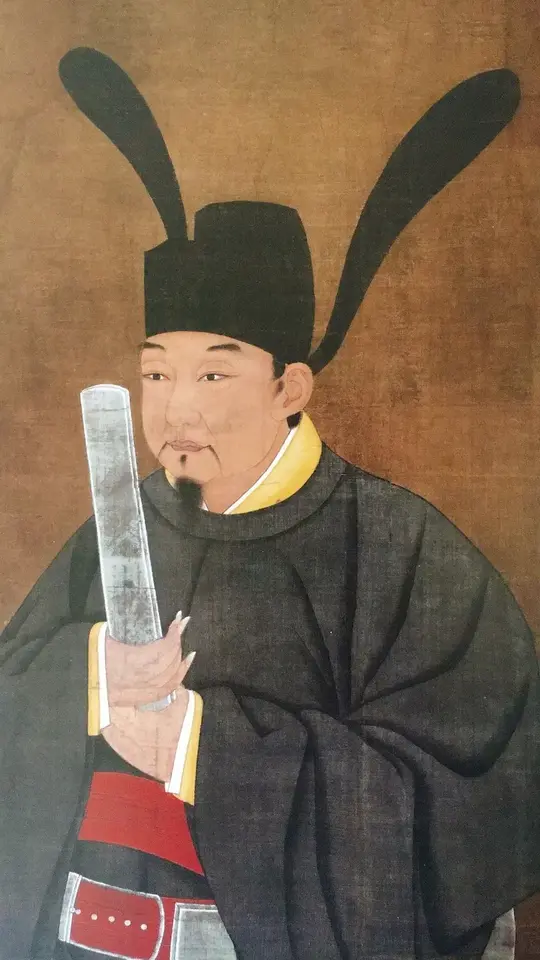
陈瓘
Chen Guan (陈瓘, 1057–1124), styled Yingzhong (莹中) with the literary appellations Liaozhai (了斋) and later Huayan Jushi, was a native of Shaxian, Nanjianzhou (present-day Shaxian District, Sanming, Fujian Province). Grandson of Sacrificial Court Erudite Chen Shiqing and son of Prefect Chen Cheng, Chen was a preeminent upright censor, philosopher, and Yijing master across the reigns of Emperor Zhezong and Emperor Huizong of the…
Chen Guan (陈瓘, 1057–1124), styled Yingzhong (莹中) with the literary appellations Liaozhai (了斋) and later Huayan Jushi, was a native of Shaxian, Nanjianzhou (present-day Shaxian District, Sanming, Fujian Province). Grandson of Sacrificial Court Erudite Chen Shiqing and son of Prefect Chen Cheng, Chen was a preeminent upright censor, philosopher, and Yijing master across the reigns of Emperor Zhezong and Emperor Huizong of the Northern Song Dynasty. In 1079, he passed the palace examination with third highest honors (tanhua), serving successively as Secretarial Receptionist of Huzhou, Assistant Prefect of Yuezhou and Mingzhou, Erudite of the Directorate of Education, Right Policy Monitor, Right Remonstrant, Investigating Officer in the Institute of Veritable Records, and Vice Director of the Right Bureau concurrently Acting Palace Remonstrance Official. Endowed with austere moral integrity and profound comprehension of the Book of Changes, Chen Guan dedicated his career to upholding imperial justice and combating factionalism, refusing to patronize powerful cliques. During the Yuanyou era in Yuezhou, he resolutely rejected the political inducements of Cai Bian; during the Shaosheng era, he confronted Grand Councilor Zhang Dun directly, using the allegory of an unevenly weighted boat to plead against partisan purges while boldly defending Sima Guang against charges of treason. As Erudite of the Directorate of Education, he vehemently rebuked Xue Ang and Lin Zi, invoking Emperor Shenzong's imperial preface to rescue the printing blocks of the Comprehensive Mirror from being burned. Serving as a remonstrance official under Emperor Huizong, Chen Guan risked his life to submit numerous memorials exposing Cai Jing's treasonous conspiracies and collusion with the imperial harem. When Grand Councilor Zeng Bu sought to bribe him with promotions, Chen Guan boldly presented an indictment to his face, calmly retrieving the document when Zeng hurled it to the floor. Following Cai Jing's total ascendancy and the erection of the Yuanyou Faction Stele, Chen Guan was stripped of all offices and endured more than two decades of harsh banishment across Lianzhou, Chenzhou, Tongzhou, and Taizhou. Throughout his exile, he composed Zun Yao Ji and Liaozhai Yishuo to champion orthodox statecraft. Passing away in Chuzhou in 1124 at age sixty-eight, he was posthumously honored as Grand Master of Remonstrance in 1126 and granted the posthumous name Zhongsu in 1156 by Emperor Gaozong. His scholarship directly presaged Yang Shi and Zhu Xi, earning him the historical reputation of an immaculate statesman of the Northern Song.
Born into a respected scholar-official family in Shaxian; both grandfather Chen Shiqing and father Chen Cheng were famed for benevolent local governance.
Placed third in the palace examination, receiving the tanhua honor; appointed Secretarial Receptionist of Huzhou.
Appointed Assistant Prefect of Yuezhou; Prefect Cai Bian attempted to recruit him, but Chen pleaded illness repeatedly and transferred to Mingzhou.
Responded to Zhang Dun's inquiries on governance by urging the abolition of factional purges; boldly argued that Sima Guang was an upright statesman.
Appointed Erudite of the Directorate of Education; thwarted Xue Ang's scheme to burn the printing blocks of the Comprehensive Mirror.
Appointed Right Policy Monitor and Right Remonstrant upon Huizong's accession; submitted dozens of memorials denouncing Cai Jing's treachery.
Promoted to Vice Director of the Right Bureau; rejected Zeng Bu's bribes, delivered a direct indictment, and was banished to Prefect of Taizhou.
Cai Jing erected the Yuanyou Faction Stele; Chen Guan was stripped of office and banished to Lianzhou, later moved to Chenzhou.
Authored Zun Yao Ji; when his son reported Cai Jing's treason, Chen was implicated, maintaining absolute moral defiance during interrogation in Taizhou.
Passed away peacefully in Chuzhou at age sixty-eight; scholars and citizens across the realm wept bitterly for his loss.
Following the fall of the Six Bandits, Emperor Qinzong posthumously conferred upon him the title Grand Master of Remonstrance.
Emperor Gaozong validated all his past warnings, granting the posthumous name Zhongsu and imperial burial in Yangzhou.
Chen Guan traced his ancestral lineage to Shaxian, Nanjianzhou, where his family had long been celebrated for Confucian virtue and philanthropic benevolence. His grandfather Chen Shiqing served as Sacrificial Court Erudite, and his father Chen Cheng served as Prefect of various jurisdictions, establishing community granaries in Shaxian to relieve impoverished peasants. Reared in an austere household, Chen Guan demonstrated precocious intellect and ascetic self-discipline from childhood, secluding himself inside a small study where he read day and night beside a simple oil lamp. Completely indifferent to material wealth, he lived in voluntary frugality, embodying the spirit of a true scholar.
In 1079, at the age of twenty-three, Chen Guan traveled to Kaifeng to sit for the imperial examinations, capturing the prestigious third-place ranking (tanhua) in the first tier of jinshi graduates through his profound mastery of classical statecraft. His initial appointment was as Secretarial Receptionist of Huzhou, where he distinguished himself by painstakingly reviewing criminal records and rectifying wrongful judicial sentences. In 1089, he was assigned as Assistant Prefect of Yuezhou. At that time, Cai Bian, son-in-law of former grand councilor Wang Anshi, presided over Yuezhou as prefect. Aware of Chen Guan's soaring intellectual reputation, Cai Bian hosted lavish banquets to recruit him into his political circle. Disdaining Cai Bian's duplicity, Chen Guan refused all political compromise, repeatedly submitting medical leaves to step down before securing a transfer to Assistant Prefect of Mingzhou. Throughout his tenure in Yuezhou, Chen Guan remitted his entire official land stipend into the public treasury, winning immense renown across East Zhejiang.
In 1094, Emperor Zhezong commenced his direct personal rule, appointing New Policies leader Zhang Dun as Grand Councilor to launch sweeping political purges against the conservative Yuanyou faction. Seeking to legitimize his factional crusade, Zhang Dun summoned Chen Guan to solicit his perspective on national priorities. Chen Guan offered unyielding remonstrance: "The supreme priority of statecraft is to eliminate factional strife. Governing the empire is like steering a boat across turbulent waters; shifting weight excessively to the left or to the right will inevitably capsize the vessel. Only absolute impartiality can preserve the state." Zhang Dun reacted with fury, shouting: "Sima Guang betrayed the ancestral system and reversed the late emperor's reforms! If this is not treason, what is?"
Facing the grand councilor's fury, Chen Guan stood firm, replying with calm conviction: "To judge a man's character by suspicious inferences without evidence is unjust; to invent crimes and brand upright ministers as traitors is the true ruin of the state! If you indulge in factional vengeance, you will forfeit the trust of the empire." Although infuriated by his defiance, Zhang Dun was compelled to respect Chen Guan's moral courage. When Zhang arrived in the capital, he recommended Chen Guan for appointment as Erudite of the Directorate of Education; learning that Zhang and Cai Bian had allied to persecute upright ministers, Chen Guan adamantly refused the post.
In 1095, the court issued a strict command obliging Chen Guan to assume his post as Erudite of the Directorate of Education. At that moment, Cai Bian's extremist partisans Xue Ang and Lin Zi conspired to incinerate the printing blocks of the Comprehensive Mirror (Zizhi Tongjian), the monumental chronicle compiled by Sima Guang, seeking to obliterate the historical legacy of the Yuanyou scholars. Hearing of this vandalism, Chen Guan stormed into the educational bureau, loudly denouncing Xue Ang and Lin Zi: "The Comprehensive Mirror bears the sacred imperial preface personally brushed by Emperor Shenzong! Do you dare burn the late emperor's sacred calligraphy?" Stunned and terrified by the charge of desecrating imperial calligraphy, Xue Ang and Cai Bian abandoned the plot, concealing the printing blocks in high storage. Through Chen Guan's courage, this irreplaceable monument of world historiography was preserved for posterity.
In 1100, following Emperor Huizong's accession, Empress Dowager Xiang held audience behind the curtain, soliciting impartial counsel. Chen Guan was summoned to court, appointed Right Policy Monitor and soon elevated to Right Remonstrant. At that time, Censor Gong Guai was summarily dismissed and expelled from the capital for indicting Cai Jing. As an official of remonstrance, Chen Guan presented a historic memorial: "Within the brief span of seven years since the Shaosheng era, the court has dismissed remonstrance officials five times! Chang Anmin, Sun E, Dong Dunyi, Chen Cisheng, and Zou Hao were all expelled for daring to criticize Cai Jing. Now that Gong Guai has spoken out and is banished, where is imperial justice?"
Chen Guan followed this protest with dozens of blistering memorials, exposing Cai Jing's treasonous conspiracies, illicit bribery, and covert infiltration of the imperial harem. Chen Guan went so far as to admonish Empress Dowager Xiang for interfering in state affairs after professing to return power to the throne, leaving the empress dowager weeping in distress. Alarmed by the public outcry, the court temporarily banished Cai Jing from the capital, while reassigning Chen Guan to oversee the Grain Tax Bureau in Yangzhou. Chen Guan declared that unless Cai Jing's crimes were published to the empire, he would rather die than accept the transfer, compelling the court to appoint him Prefect of Wuwei.
In 1101, Chen Guan was recalled to the capital as Vice Director of the Right Bureau and Acting Palace Remonstrance Official. Grand Councilor Zeng Bu dominated the administration, treating Chief Councilor Han Zhongyan with contempt. Desiring to silence Chen Guan, Zeng Bu sent an intimate emissary offering to immediately secure him the permanent rank of Palace Remonstrance Official if he cooperated with his faction. Chen Guan laughed in disdain, declaring to his son Chen Zhenghui: "If I accept official rank as a bribe, public justice is dead!" Chen drafted an indictment detailing Zeng Bu's abuses and presented it in person. Enraged, Zeng Bu hurled the memorial to the floor. Chen Guan serenely gathered the scattered sheets from the carpet, reprimanding the grand councilor: "These words concern imperial affairs; as grand councilor, you must observe court dignity and refrain from reckless tantrums!" Humiliated, Zeng Bu orchestrated Chen Guan's banishment to Prefect of Taizhou.
In 1103, Cai Jing achieved supreme executive authority with the backing of eunuch Tong Guan, erecting the Yuanyou Faction Stele to purge his enemies. Chen Guan was branded a principal criminal, stripped of all official ranks, and banished into exile at Lianzhou in Guangdong. In the tropical wilderness, Chen Guan remained calm, dedicating his days to parsing the Book of Changes and adopting the sobriquet Liaofuweng. Moved to Chenzhou in 1105, he was pardoned in 1106, yet he continued his intellectual crusade by authoring Zun Yao Ji in eight volumes to expose Cai Jing's distortion of Shenzong's policies.
In 1110, his son Chen Zhenghui discovered that Cai Jing's faction was plotting against the Crown Prince and submitted an official report in Hangzhou. Cai Jing's partisans fabricated counter-charges, arresting both father and son. Palace eunuch Huang Jingchen personally interrogated Chen Guan regarding whether he directed his son's actions. Chen Guan responded with unshakable defiance: "Zhenghui heard on the road that Cai Jing plotted treason; how could I know from far away? But as for Cai Jing's treachery, I indicted him countless times when I served as remonstrator; why would I need to wait until today?" Huang Jingchen was moved to tears by his rectitude and reported the truth to Huizong. While his son was banished to Shamen Island, Chen Guan was confined to Taizhou and later Tongzhou, spending five years practicing Buddhist contemplation and Tiantai meditation. In 1124, Chen Guan passed away peacefully in official lodgings in Chuzhou at age sixty-eight. In 1126, Emperor Qinzong posthumously honored him as Grand Master of Remonstrance, and in 1156, Emperor Gaozong conferred the posthumous name Zhongsu, granting him an official burial in Yangzhou.
Chen Guan holds an exalted place in Chinese intellectual history for his pioneering doctrine of dissolving factionalism through absolute moral impartiality. In early Shaosheng, when Zhang Dun launched vicious purges, Chen used his famous allegory of an evenly balanced boat to illustrate that extreme partisan swings would inevitably capsize the state. Defending Sima Guang before the grand councilor, he established the legal principle that punishing ministers on fabricated charges without evidence was the true cause of national ruin. By elevating constitutional justice above partisan loyalty, he demonstrated the highest standard of Confucian moral courage.
In 1095, while serving as Erudite of the Directorate of Education, Chen Guan single-handedly thwarted an extremist cultural purge. Partisans Xue Ang and Lin Zi sought to incinerate all existing printing blocks of the Comprehensive Mirror (Zizhi Tongjian), compiled by Sima Guang. Chen Guan confronted the conspirators in their bureau, shouting that the masterpiece bore the sacred preface personally brushed by Emperor Shenzong, daring them to commit the sacrilege of burning the late emperor's imperial calligraphy. Paralyzed by fear, Cai Bian and his partisans preserved the printing blocks in high storage, ensuring that this monumental historical chronicle survived intact for world civilization.
Chen Guan was the most resolute and formidable censor of the mid-Northern Song. During Huizong's early reign, while other courtiers flattered Cai Jing, Chen Guan submitted dozens of detailed indictments exposing Cai Jing's treasonous conspiracies, cementing his legacy as a fearless censor. When Grand Councilor Zeng Bu attempted to bribe him with permanent ministerial rank, Chen Guan rejected the overture with absolute contempt, presenting his critique in person and suffering twenty years of tropical exile without compromising his principles. His treatise Zun Yao Ji systematically destroyed the ideological pretexts used by Cai Jing to justify his dictatorship, serving as an intellectual beacon for the loyalist resistance.
FIGURES ASSOCIATED WITH THIS DYNASTY