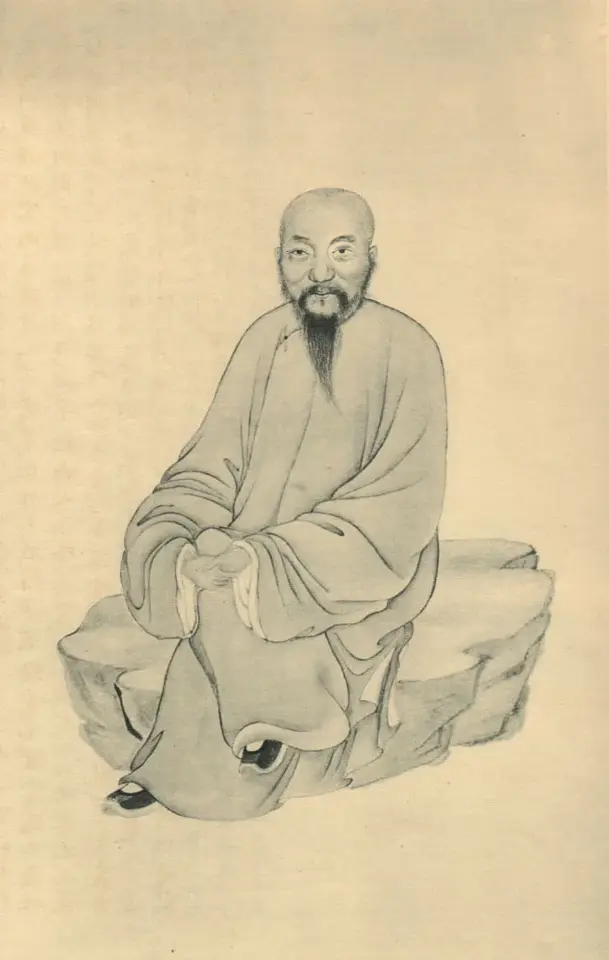
PROFILE
Chen Gongyin (1631–1700), courtesy name Yuanxiao, early art name Banfeng, later styled Dulu Zi or Luofu Buyi (Commoner of Mount Luofu), was a native of Longshan Village, Shunde County, Guangzhou Prefecture, Guangdong Province (present-day Longjiang Town, Shunde District, Foshan City, Guangdong). He was an illustrious patriotic poet, scholar, and master calligrapher of the early Qing dynasty, celebrated alongside Qu Dajun and Liang Peilan as one of the "Three Masters of Lingnan." Born into an illustrious loyalist family, his father Chen Bangyan was a supreme anti-Qing commander of the Southern Ming who was captured and executed after defeat; several members of Chen Gongyin's family were slaughtered, while Chen Gongyin himself narrowly escaped. Although the Southern Ming Yongli court conferred upon him the hereditary rank of Assistant Commander in the Embroidered Uniform Guard to honor his father's martyrdom, he declined the post, steadfastly refusing to serve the Qing and living as an uncompromised Ming loyalist commoner. In his youth, he took refuge across Mount Luofu and Mount Xiqiao; in his late years, he built the Dulu Studio (Dulu Tang) in Guangzhou, dedicating his life to writing, lecturing, and classical research. His poetry was noted for tragic solemnity and profound resonance; his regulated verse combined strict antithetical parallelism with deep patriotic lamentation, elevating the cultural stature of Guangdong. Renowned as the foremost master of clerical script in early Qing Guangdong, he authored the Dulu Tang Ji.
- Courtesy Name
- Yuanxiao
- Literary Name
- Banfeng, Dulu Zi, Luofu Buyi
- Ancestral Home
- Longshan Village, Shunde County, Guangzhou Prefecture, Guangdong Province (present-day Shunde District, Foshan City, Guangdong)
- Date of Birth
- October 20, 1631 (Chongzhen 4, 9th lunar month, 25th day)
- Date of Death
- May 2, 1700 (Kangxi 39, 3rd lunar month, 14th day)
- Age at Death
- 70
- Highest Office
- Commoner (declined Southern Ming title of Assistant Commander in the Embroidered Uniform Guard)
- Historical Identity
- Poet, man of letters, calligrapher, Ming loyalist scholar, one of the "Three Masters of Lingnan"
BIOGRAPHY
Chronology
- 1631 (Chongzhen 4) | Birth in Shunde | Born into an illustrious lineage in Shunde; son of Chen Bangyan; studied Confucian classics from early childhood.
- 1647 (Yongli 1) | Family Tragedy | His father was executed following anti-Qing resistance; his family was massacred; sixteen-year-old Gongyin fled alone.
- 1648 (Yongli 2) | Seclusion in Xiqiao | Sheltered by his father's former associates at Mount Xiqiao; concealed his identity while studying the classics.
- 1651 (Yongli 5) | Declining Imperial Rank | The Yongli Emperor granted him the rank of Assistant Commander in the Imperial Guard; he declined the appointment.
- 1656 (Shunzhi 13) | Reburying Family Remains | Returned to Guangzhou after warfare subsided; recovered his father's remains and conducted a filial burial in Longshan.
- 1678 (Kangxi 17) | Imprisonment in Guangzhou | Falsely implicated during the Revolt of the Three Feudatories and imprisoned in the Guangzhou prefectural jail for over two hundred days.
- 1679 (Kangxi 18) | Release from Prison | Cleared and released through the efforts of respected regional officials; resolved never to engage with officialdom.
- 1686 (Kangxi 25) | Building Dulu Studio | Established the Dulu Studio at Yuxianfang in Guangzhou, forming a prominent poetry society with Qu Dajun and Liang Peilan.
- 1698 (Kangxi 37) | Dean of Southern Letters | Resided peacefully in Guangzhou, universally revered by Guangdong scholars as the foremost literary authority of the south.
- 1700 (Kangxi 39) | Peaceful Passing | Passed away peacefully at his Guangzhou residence at age seventy; buried at the foot of Baiyun Mountain.
Biography
Illustrious Lineage and Catastrophic Upheaval
On October 20, 1631 (the 25th day of the 9th lunar month in the 4th year of the Chongzhen reign), Chen Gongyin was born in Longshan Village, Shunde County, Guangzhou Prefecture, Guangdong Province. The Chen clan was an established family in the Lingnan region; his father, Chen Bangyan, was an erudite scholar, statecraft thinker, and prominent minister of the Southern Ming Hongguang and Longwu courts. Described as possessing a dignified bearing, full beard, and solemn temperament, young Chen Gongyin mastered the Confucian classics and historical treatises under his father's rigorous tutelage, gaining early renown for literary talent.
In the winter of 1646, Qing cavalry swept southward and captured Guangzhou. Chen Bangyan sacrificed his personal estate to raise loyalist troops in Shunde, joining Chen Zizhuang and Zhang Jiayu to resist Qing forces across southern Guangdong; the three leaders were collectively venerated as the "Three Loyalists of Lingnan." In the autumn of 1647, Qing armies besieged Sanshui. Chen Bangyan was captured following defeat and was executed by dismemberment in Guangzhou, dying a martyr.
Following his death, Qing forces carried out brutal retaliations, slaughtering his stepmother, younger brothers, and sisters, and confiscating all family property. The sixteen-year-old Chen Gongyin, who had been dispatched by his father on an external liaison mission, miraculously eluded the massacre. Confronted with the catastrophic loss of his country and family, Chen Gongyin swore a solemn vow never to enter official service under the new regime.
Miraculous Escape and Seclusion in Luofu
Following the slaughter, Qing authorities posted bounty notices across Guangdong to apprehend the surviving descendants of Chen Bangyan. Concealing his identity, Chen Gongyin was sheltered by former comrades and trusted friends of his father, moving between Bitang in Nanhai, remote rural hamlets in Shunde, and deep ravines of Mount Xiqiao.
When the Southern Ming Yongli regime was established in Zhaoqing, Emperor Yongli sought to honor Chen Bangyan's heroic martyrdom by granting Chen Gongyin the hereditary post of Assistant Commander in the Embroidered Uniform Guard. Recognizing that the Southern Ming military situation was beyond repair and unwilling to accept hereditary honors founded on his father's blood, Chen Gongyin declined the appointment, choosing to remain a commoner in reclusion.
In 1656, as regional fighting subsided, the twenty-five-year-old Chen Gongyin slipped back into Guangzhou. With the aid of local loyalist gentry, he recovered his father's scattered remains and those of his slaughtered relatives, conducting proper burial rites in his native Longshan and mourning beside the grave. Once mourning concluded, he traveled to Zengcheng and Boluo, dwelling at the foot of Mount Luofu, farming for subsistence and adopting the title "Luofu Buyi" (Commoner of Mount Luofu).
Literary Society in Guangzhou and Widespread Renown
In the early Kangxi reign, as Qing imperial administration stabilized in Guangdong, regional authorities initiated reconciliation policies, repeatedly inviting prominent loyalist scholars like Chen Gongyin to participate in examinations or join gubernatorial secretariats. Firm in his moral stance as a Ming loyalist, Chen Gongyin pleaded chronic illness and rejected all overtures.
In 1672, Chen Gongyin moved to western Guangzhou, forming intimate bonds with fellow native poet Qu Dajun and Nanhai scholar Liang Peilan. Sharing profound grief over the fallen dynasty, the three scholars met frequently at Yuexiu Mountain, Baiyun Mountain, and on boats along the Pearl River to compose verse and debate historical chronicles, earning imperial recognition as the "Three Masters of Lingnan." Chen Gongyin's gravitas and solemn, resonant poetic style made him the spiritual core of Guangdong's loyalist literati.
During this period, Chen Gongyin engaged in deep classical scholarship and collected ancient Han and Wei stone inscriptions. He infused his profound patriotic mourning into classical clerical script, creating an archaic, vigorous calligraphic style that became celebrated across southern China.
Unjust Imprisonment and Serene Twilight Years
In 1674, Shang Zhixin, son of the Prince of Pingnan Shang Kexi, joined Wu Sangui's Revolt of the Three Feudatories in Guangzhou. Long admiring Chen Gongyin's literary fame, Shang Zhixin exerted immense pressure to compel him into his rebel administration, but Chen steadfastly refused. In 1677, Shang Zhixin surrendered to Qing forces, prompting imperial authorities to launch widespread purges.
In 1678, envious individuals secretly denounced Chen Gongyin to imperial officials, alleging that he had corresponded with Shang Zhixin's officers and that his poetry concealed seditious nostalgia for the Ming. Qing magistrates arrested Chen Gongyin and threw him into death row in Guangzhou, where he remained incarcerated for over two hundred days. Facing harsh interrogations, Chen Gongyin displayed calm composure, reaffirming his loyalty through verse. Convinced of his filial integrity, Governor-General Jin Guangzu and other regional officials investigated the allegations and exonerated him, releasing him the following year.
Following this ordeal, Chen Gongyin became even more detached from worldly ambitions. He purchased a property in Yuxianfang, Guangzhou, establishing the "Dulu Studio" (Dulu Tang), derived from an ancient ballad line describing muddy waters, and styled himself Dulu Zi. In his twilight years, he lived quietly, teaching students and collating historical texts. On May 2, 1700, Chen Gongyin passed away peacefully at his Guangzhou home at the age of seventy.
Major Achievements
Elevating Lingnan Literature as Foremost Master
In the literary history of the early Qing dynasty, Chen Gongyin was the central pioneer who elevated Lingnan literature to rival the established poetic circles of Jiangnan.
Prior to the late Ming, Guangdong had been perceived by central literati as a remote and culturally underdeveloped frontier. During the Ming-Qing transition, the emergence of the "Three Masters of Lingnan"—Chen Gongyin, Qu Dajun, and Liang Peilan—transformed this landscape. Among the three, Chen Gongyin's poetry was recognized for its metrical precision, classical discipline, and robust structural vigor, establishing him as the anchor of southern literature.
Centering their activities in Guangzhou, Chen Gongyin and his peers initiated extensive dialogues with northern and Jiangnan literary giants including Zhu Yizun and Wang Shizhen. Their poetry societies offered solace to surviving Ming loyalists while infusing Lingnan verse with the solemnity and grand resonance of the High Tang, making Guangdong a prominent center on the national literary map.
Preserving Loyalist History and Expressing National Grief
The artistic power of Chen Gongyin's verse stemmed from his lifelong moral integrity as a Ming loyalist and his tragic historical awareness.
As the surviving son of the martyred general Chen Bangyan, Chen Gongyin bore the profound burden of familial tragedy and national ruin. His poetry served as a lyrical chronicle of the anti-Qing struggles in Guangdong and the spiritual anguish of surviving loyalists. In his Nigu sequence, he wrote heroic declarations urging courageous service to the realm, while his regulated verses visiting the Yamen battlefield and commemorating the fall of Guangzhou channeled Du Fu's mournful intensity to express subtle, deep-seated grief for the fallen dynasty.
His five-character and seven-character regulated verse exhibited masterful balance, combining polished diction with authentic emotional resonance. Contemporary critics praised his verse for capturing the spiritual essence of Du Fu without pedantic rigidity, establishing his work as a pinnacle of early Qing loyalist literature.
Master of Clerical Script in Early Qing Guangdong
Beyond his literary accomplishments, Chen Gongyin achieved immense renown in the history of Chinese calligraphy, widely acknowledged as the foremost master of clerical script (lishu) in early Qing Guangdong.
While late Ming calligraphy was dominated by the fluid, delicate running and cursive styles of Zhao Mengfu and Dong Qichang, the ancient clerical script tradition had largely languished. Chen Gongyin broke away from prevailing fashion, turning to ancient Han and Wei steles. By practicing rubbings of the Confucius Temple Stele, Shichen Stele, and Cao Quan Stele, and combining them with his own proud, unyielding character, he forged the distinctive Dulu Studio clerical style.
His clerical script was characterized by expansive architecture, antique gravity, and powerful brushwork, free from the mechanical stiffness common among contemporary practitioners. Qing connoisseurs lauded his calligraphy as rivaling ancient Han models, unmatched in the south for two centuries, and providing crucial inspiration for the later revival of stele scholarship in Lingnan.
Preserving Regional Documents in the Dulu Studio
In his twilight years, Chen Gongyin dedicated himself to salvaging and compiling local historical records, transforming his Dulu Studio into a vital repository of early Qing southern culture.
Within the studio, Chen Gongyin systematically edited his father Chen Bangyan's military writings, calligraphy, and official memorials, composing detailed family biographies to ensure that the heroism of the Three Loyalists of Lingnan was preserved accurately. Furthermore, he collected regional historical accounts, records of prominent figures, and folk songs across Guangdong, authoring the twenty-nine-volume Dulu Tang Ji (comprising fifteen volumes of poetry, fourteen volumes of prose, and supplements).
He opened the Dulu Studio to young scholars, teaching Confucian ethics and poetic composition, thereby establishing a rich intellectual lineage that laid foundational roots for the cultural and academic flourishing of Guangdong in the mid-Qing period.
Relationships
- Father: Chen Bangyan (1603–1647), courtesy name Huiji, Southern Ming Left Vice Minister of War and anti-Qing commander, one of the "Three Loyalists of Lingnan," martyred upon capture.
- Close Friend and Literary Peer: Qu Dajun (1630–1696), courtesy name Wengshan, prominent early Qing patriotic scholar and poet, one of the "Three Masters of Lingnan."
- Close Friend and Literary Peer: Liang Peilan (1629–1705), courtesy name Zhiwu, renowned early Qing poet and scholar, one of the "Three Masters of Lingnan."
- Revered Precursor: Chen Zizhuang (1596–1647), courtesy name Jisheng, Southern Ming grand secretary and resistance leader, one of the "Three Loyalists of Lingnan."
- Revered Precursor: Zhang Jiayu (1615–1647), courtesy name Xuanzi, Southern Ming general, one of the "Three Loyalists of Lingnan," died in battle at Zengcheng.
Historical Evaluations
- Wang Shizhen, Yuyang Shihua: "Lingnan has always revered Yuanxiao; his seven-character regulated verse possesses majestic parallelism and solemn resonance, truly in the direct lineage of Du Fu."
- Pan Lei, Preface to Dulu Tang Ji: "Sir Chen possessed a dignified appearance and lofty spirit; his prose surged with mature vigor and his calligraphy rivaled the Han and Wei. He stood solitary as the giant of Lingnan."
- Qu Dajun, Poem Presented to Chen Yuanxiao: "Master Dulu possessed pure moral strength; the Commoner of Mount Luofu is famous across the four seas. A leader of letters consummate in loyalty and filial piety, he sheds brilliance upon the mountains and rivers."
- Draft History of Qing, Volume 484: "As the surviving son of a martyr, Chen Gongyin upheld ancient integrity. Skilled in regulated verse with grand and nuanced elegance, he was honored with Qu Dajun and Liang Peilan as the Three Masters of Lingnan, known for family integrity and declining office throughout his life."
Related Entries
- Three Masters of Lingnan
- Three Loyalists of Lingnan
- Chen Bangyan
- Qu Dajun
- Liang Peilan
- Dulu Tang Ji