Birth in the Jianghuai Region
Born during the Wang Anshi New Policies; immersed himself in classical treatises, medicine, and philosophy in youth.
陈旉
Chen Fu (陈旉, 1076–1154), styled with the self-chosen sobriquets Western Mountain Recluse (西山隐居) and Quanzhenzi (全真子), lived as a hermit farmer in the Western Mountains of Zhenzhou (present-day Yizheng, Jiangsu Province) across the Northern and Southern Song transition. A preeminent agronomist, philosophical thinker, and practicing scholar-farmer of the Southern Song Dynasty, Chen Fu was the foundational master of ancient…
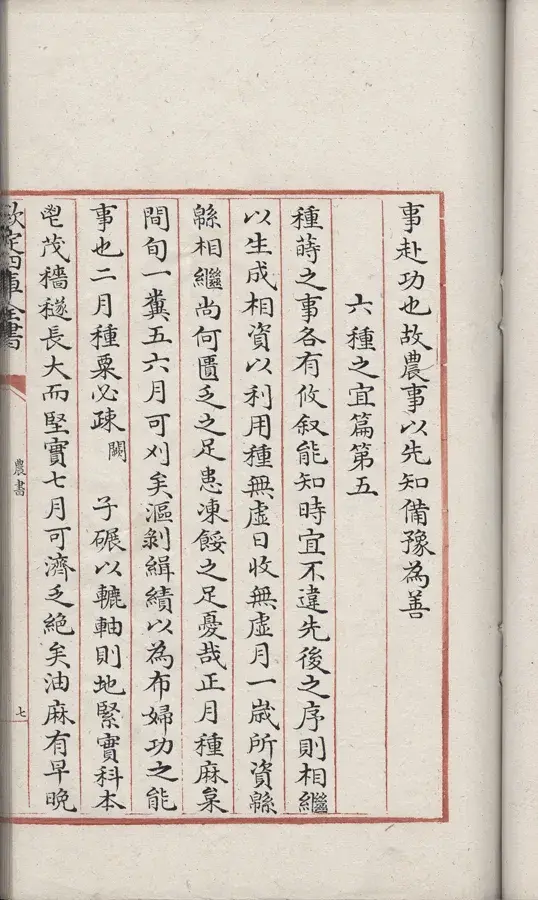
Chen Fu (陈旉, 1076–1154), styled with the self-chosen sobriquets Western Mountain Recluse (西山隐居) and Quanzhenzi (全真子), lived as a hermit farmer in the Western Mountains of Zhenzhou (present-day Yizheng, Jiangsu Province) across the Northern and Southern Song transition. A preeminent agronomist, philosophical thinker, and practicing scholar-farmer of the Southern Song Dynasty, Chen Fu was the foundational master of ancient China's southern wetland ecological agriculture. Living through the turbulent warfare that marked the fall of the Northern Song and the court's southern relocation, he immersed himself in the Confucian Six Classics, Daoist philosophy, medical lore, and the metaphysical principles of the Book of Changes. Rejecting official careerism and worldly profit, Chen Fu dedicated himself to Fan Chi's agrarian learning, embracing the identity of an experienced farmer. Dwelling in the Western Mountains of Zhenzhou, he reclaimed hillside wetlands, combining classical philosophy with rigorous empirical farming practice. In 1149, at the age of seventy-four, Chen Fu synthesized decades of empirical fieldwork and ancient agronomic lore into the groundbreaking three-volume Agricultural Book (Chen Fu Nongshu). This work stands as China's first systematic agricultural treatise dedicated specifically to intensive wet-rice fields in the humid south. The treatise pioneered classification systems for upland, lowland, and floating fields, introduced an early multi-tiered ecological cycle combining hillside mulberry cultivation, pond fish breeding, and wet-rice irrigation, and established the revolutionary principle of manuring to sustain soil fertility indefinitely. He also provided exhaustive scientific instructions for managing working cattle and sericulture. Prefect of Zhenzhou Hong Xingzu praised the manuscript, composed an official exhortation, and sponsored its woodblock printing. Preserved in the Yongle Dadian during the Ming Dynasty and the Siku Quanshu during the Qing Dynasty, the treatise reached Japan in the eighteenth century, profoundly shaping East Asian agricultural science.
Born during the Wang Anshi New Policies; immersed himself in classical treatises, medicine, and philosophy in youth.
Traveled across the Yangtze and Huai basins, observing soil variations and studying agricultural applications of the Book of Changes.
Evading wartime turmoil during the southern flight, he settled in the Western Mountains of Zhenzhou, dedicating his life to Fan Chi's agrarian learning.
Reclaimed hillside ponds and wet-rice fields in Zhenzhou, experimenting with manuring and collaborating with experienced local farmers.
At age seventy-four, he completed his three-volume masterpiece Agricultural Book, formalizing southern wetland farming systems.
Prefect of Zhenzhou Hong Xingzu sponsored official printing and appended the Yizhen Exhortation to Agriculture.
Collated and corrected typographical errors in the woodblocks before passing away peacefully in Zhenzhou at age seventy-nine.
Chen Fu was born during the mid-Xining reign of Emperor Shenzong, when the Northern Song court was engaged in sweeping socio-economic reforms. From his youth, he demonstrated exceptional scholarly dedication, mastering the commentaries on the Confucian Six Classics and reading widely in pre-Qin philosophical treatises, Daoist philosophy, and classical medicine attributed to the Divine Farmer Shennong. Among these disciplines, Chen Fu developed a profound mastery of the Book of Changes, discerning how cosmological cycles of yin and yang directly governed seasonal plant growth and climatic rhythms.
During the collapse of the Northern Song, Jurchen armies swept through the Central Plains, reducing the Jianghuai and Jiangnan circuits to devastation. Witnessing rampant famine and rural abandonment, Chen Fu recognized that the foundational stability of the realm rested upon food production. At that time, scholar-gentry elites pursued civil service prestige and disdained manual agricultural labor as vulgar toil. Rejecting this prejudice, Chen Fu drew inspiration from Confucius's disciple Fan Chi, who sought instruction in growing crops. He embraced the sage's admission that he was less knowledgeable than an experienced farmer, resolving to elevate farming to a noble statecraft discipline. Moving south across the Yangtze, he secluded himself in the Western Mountains of Zhenzhou, styling himself the Western Mountain Recluse and Quanzhenzi, setting aside bureaucratic ambitions to master the cultivation of wet-rice fields.
During his decades in the Western Mountains of Zhenzhou, Chen Fu lived a simple life of farming and study. Far from being a passive romantic recluse, he rolled up his trousers and worked barefoot in the muddy paddies, experimenting with plows and irrigation equipment. Zhenzhou occupied a strategic position on the northern bank of the Yangtze River, featuring diverse topographies ranging from hilly slopes and natural depressions to low marshlands and alluvial lake flats.
Chen Fu collaborated closely with veteran local farmers, testing ancient agronomic texts against the moist conditions of southern paddy agriculture. Addressing issues of waterlogged soils, low soil temperatures in mountain valleys, and seasonal flooding, Chen observed paddy rice across all growth cycles. He formulated rigorous techniques for deep plowing, soil weathering, temperature enhancement via canal water, and regulated drainage. Departing from northern dry-land manuals like Qimin Yaoshu, he established a classification system for upland fields, lowland fields, hillside terracing, and early and late paddies. Crucially, he integrated reservoir water storage, dike-top mulberry planting, and paddy irrigation, transforming barren slopes into fertile rice paddies.
In 1149, at the advanced age of seventy-four, Chen Fu gathered his decades of empirical farming notes in his mountain cottage. Blending ancient agricultural lore with the transformative philosophy of the Book of Changes, he authored the three-volume Agricultural Book. In his postface, he argued that successful governance depended upon people adhering to moral constant principles, which required securing independent livelihoods and stable agricultural property. He asserted that diligent cultivation of the soil was the foremost duty of wise sovereigns.
Upon completion, Prefect of Zhenzhou Hong Xingzu read the manuscript repeatedly with immense admiration, recognizing it as an indispensable guide for regional livelihood. Hong composed the Yizhen Exhortation to Agriculture to append to the volume, allocating official prefectural funds to carve wooden printing blocks for public distribution. In 1154, shortly before his death, Chen Fu personally re-collated the blocks to correct errata. He passed away peacefully in Zhenzhou later that year at age seventy-nine. In 1214, Wang Gang reissued the work in Anhui, and the Agricultural Book was later copied into the Yongle Dadian and the Siku Quanshu. Transmitted to Japan in the eighteenth century, it became celebrated as an East Asian classic of wetland agronomy.
Chen Fu's Agricultural Book represented a historic breakthrough in Chinese agronomy, shifting scholarly focus from northern dry-farming to intensive wetland paddy cultivation. The first volume, comprising fourteen chapters, provided exhaustive instructions for managing upland fields, draining lowland swamps, constructing floating raft fields, and improving cold-spring soils. He formalized the complete life-cycle protocol for wet-rice cultivation: seed selection, optimal timing, soaking, sprouting, dense transplanting, weeding, and baking fields (sun-drying paddies). His scientific guidelines on mid-season weeding and paddy baking to curb unproductive tillering and foster deep root systems elevated Chinese rice farming from extensive labor into precision science.
In the fields of soil chemistry and agro-ecology, Chen Fu made extraordinary contributions that preceded modern agronomy by centuries. Combating the fatalistic ancient belief that continuous cropping inevitably exhausted the soil, Chen Fu articulated the revolutionary principle: "When manuring is properly managed, soil fertility remains perpetually fresh and vigorous." He demonstrated that systematic application of compost and manure, combined with deep sun-curing of plowed clods, continuously regenerated soil nutrients. Furthermore, he pioneered a multi-tiered ecological cycle: planting mulberry trees along embankment slopes, cultivating fish in retention reservoirs, and channeling nutrient-rich pond water to irrigate paddy fields, creating a integrated model of forestry, aquaculture, and grain production.
In the second and third volumes of his treatise, Chen Fu provided scientific guidelines for draft power and household sericulture. His treatise on working cattle (Niu Shuo) analyzed physiological conformation, balanced forage feeding, winter warmth, summer cooling, labor-rest rotations, and herbal veterinary remedies for common bovine diseases, emphasizing compassionate care of cattle to maintain plowing efficiency. In his sericulture volume, he detailed mulberry grafting, pruning, layering, silkworm egg incubation, temperature control, and silk reeling, while strongly recommending the intercropping of hemp and grain between mulberry rows to maximize land productivity.
FIGURES ASSOCIATED WITH THIS DYNASTY