Birth in Jishui
Born into a scholarly family in Jishui, Jiangxi, mastering the Book of Rites under master Liang Yin.
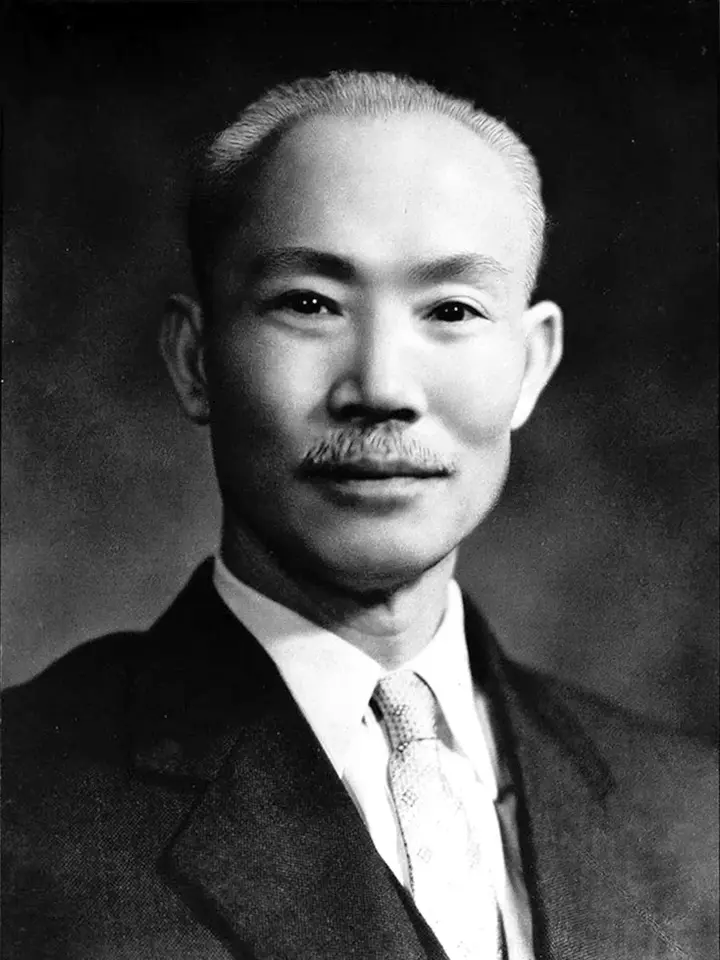
1365 CE–1457 CE
陈诚
Chen Cheng (陈诚, 1365–1457), courtesy name Zilu and pseudonym Zhushan, was an illustrious diplomat, geographer, and explorer of the Ming Dynasty from Jishui County, Ji'an Prefecture, who served across the reigns of Hongwu, Jianwen, Yongle, Hongxi, and Xuande. Passing the metropolitan examination in 1394, he was appointed Messenger in the Messenger Office, early demonstrating extraordinary diplomatic acumen by resolving border…
Chen Cheng (陈诚, 1365–1457), courtesy name Zilu and pseudonym Zhushan, was an illustrious diplomat, geographer, and explorer of the Ming Dynasty from Jishui County, Ji'an Prefecture, who served across the reigns of Hongwu, Jianwen, Yongle, Hongxi, and Xuande. Passing the metropolitan examination in 1394, he was appointed Messenger in the Messenger Office, early demonstrating extraordinary diplomatic acumen by resolving border demarcations with Annam. In 1406, he participated in compiling the Yongle Encyclopedia in the Wenyuan Chamber, subsequently rising to Vice Director in the Ministry of Personnel. In the grand geopolitical strategy of the Yongle Emperor, while Admiral Zheng He opened maritime sea lanes across the Indian Ocean, Chen Cheng was dispatched overland on five monumental diplomatic embassies to Central Asia starting in 1413. Traversing the Gobi Desert and the Pamir Mountains, he traveled thousands of miles across seventeen Central Asian realms, reaching Samarkand and the Timurid capital of Herat. Promoting peace, mutual trade, and dynastic prestige, Chen induced over one hundred tributary missions from Central Asian principalities, earning recognition alongside Zheng He as the "Twin Pillars of Ming Land and Sea." Along his journeys, Chen recorded meticulous eyewitness accounts of terrain, city planning, and customs, authoring the landmark geographic classics Record of the Journey to the Western Regions (Xiyu Xingcheng Ji) and Gazetteer of the Foreign States of the Western Regions (Xiyu Fanguo Zhi). Retiring as Right Administration Vice Commissioner of Guangdong, he lived to the venerable age of ninety-three.
Born into a scholarly family in Jishui, Jiangxi, mastering the Book of Rites under master Liang Yin.
Passed the jinshi examination and appointed Messenger in the Messenger Office to carry imperial decrees.
Dispatched to Annam to negotiate border disputes at Qiuwen, successfully compelling the return of annexed territory.
Participated in compiling the Yongle Encyclopedia, subsequently promoted to Vice Director in the Ministry of Personnel.
Appointed chief scribe of an imperial embassy crossing the Jade Gate and the Pamirs to reach the Timurid capital at Herat.
Returned to Beijing to submit his landmark geographic records Xiyu Xingcheng Ji and Xiyu Fanguo Zhi to Emperor Yongle.
Dispatched on third and fourth missions to escort Central Asian emissaries and negotiate treaties of peaceful coexistence.
Reached Gansu on his fifth mission when news arrived of the Yongle Emperor's death; recalled by Emperor Hongxi.
Promoted to Right Administration Vice Commissioner of Guangdong before retiring to his rustic estate in Jishui.
Passed away peacefully at his Yilaotang retreat at age ninety-three, leaving a peerless overland exploration legacy.
Chen Cheng was born in 1365 in Jishui County, Ji'an Prefecture, Jiangxi. Immersed in the rich cultural milieu of Luling, he studied the Book of Rites under the noted scholar Liang Yin. In 1394, Chen passed the palace examination, earning appointment as a Messenger in the Messenger Office (Xingren Si), the imperial agency responsible for imperial proclamations, foreign investitures, and foreign diplomacy.
In March 1396, Emperor Hongwu dispatched Chen to establish frontier military commissions in the northwest to shield the Hexi Corridor. Later that year, when the ruler of Annam encroached upon the frontier district of Qiuwen, Chen was sent as imperial envoy to negotiate. Confronting Annamese grandees with unwavering poise, Chen famously declared that while the realm was vast, boundaries possessed fixed limits. Struck by his dignity and legal logic, the Annamese monarch ceded the disputed territory, establishing Chen's reputation as a diplomat of extraordinary caliber.
During the Jianwen reign, Chen served as Assistant Administration Commissioner in Guangdong. Following the Jingnan Campaign, he was briefly rusticated due to peripheral connections with Fang Xiaoru, but returned to favor under the Yongle Emperor in 1405. Appointed Secretary in the Ministry of Personnel, he was assigned to the Wenyuan Chamber to participate in compiling the monumental Yongle Encyclopedia, working on the project for five years.
In 1412, Chen was promoted to Vice Director. Following the death of the Central Asian conqueror Timur, Sultan Shahrukh established his capital at Herat, while his son Ulugh Beg ruled Samarkand. In September 1413, the Yongle Emperor assembled an expansive embassy to accompany Central Asian envoys returning westward, appointing palace official Li Da as envoy and Chen Cheng as chief scribe and diplomatic advisor.
Departing from Jiayuguan, the embassy braved trackless salt wastes, crossed the Taklamakan Desert, and traversed the freezing heights of the Tianshan and Pamir ranges. Passing ancient sites such as Turpan and Gaochang, the mission arrived in Herat in October 1414, having traversed seventeen sovereign states.
At the royal palace in Herat, Chen presented the Yongle Emperor's state letters and imperial poetry alongside silk, porcelains, and jade treasures. Chen articulated the Ming court's doctrine of peaceful co-prosperity: that all civilizations under Heaven should enjoy reciprocal trade and harmony without coercion. His diplomacy cleared away suspicions that had lingered since Timur's earlier planned invasion of China, cementing lasting peaceful relations between the two great Eurasian empires.
In October 1415, the mission returned triumphantly to Beijing. Throughout the arduous overland journey, Chen had carried writing tablets, daily recording geographic landmarks, river courses, distances, climates, flora, fauna, and local customs. Upon his return, he synthesized his records into two foundational treatises: Record of the Journey to the Western Regions (Xiyu Xingcheng Ji) and Gazetteer of the Foreign States of the Western Regions (Xiyu Fanguo Zhi).
Xiyu Xingcheng Ji adopted a strict daily diary format, documenting the precise itinerary, compass bearings, stages, and water sources across ten thousand leagues from Jiayuguan to Herat, providing the world with its first modern geographic chart of the early fifteenth-century Silk Road. Xiyu Fanguo Zhi provided detailed ethnographic surveys of eighteen Central Asian realms, describing urban defenses, bazaars, currency systems, and social customs in Herat, Samarkand, Bukhara, and Andkhui. His descriptions offered indispensable primary accounts utilized by the Grand Secretariat and subsequent Qing imperial geographers.
Recognizing the effectiveness of Chen's overland diplomacy, the Yongle Emperor commissioned him to lead subsequent embassies in 1416, 1418, and 1420. Over thirty years, Chen traversed the continental interior five times, crossing snowfields and salt flats to maintain diplomatic ties. Through his personal facilitation, Central Asian states dispatched more than one hundred and twenty tributary delegations to Beijing during the Yongle reign, reviving overland trade in silks, horses, jade, and medicines on an unprecedented scale.
In 1424, while leading his fifth mission across Gansu, Chen received news of Emperor Yongle's death. The newly enthroned Hongxi Emperor adopted a policy of retrenchment, ordering all foreign missions cancelled. In 1425, Chen returned to his native Jishui, constructing his retreat named Naiyuan and his study Yilaotang. In 1428, he officially retired with the rank of Right Administration Vice Commissioner of Guangdong.
Chen lived in peaceful retirement in Jishui, composing poetry and compiling his writings into the Collected Works of Zhushan (Zhushan Wenji). In 1457, Chen passed away at his home at the venerable age of ninety-three. A quiet scholar who braved the deserts with an iron will, Chen Cheng carved his name indelibly into the history of world exploration and global intercultural diplomacy.
In early Ming foreign relations, Chen Cheng shouldered the historical mission of revitalizing the ancient overland Silk Road. Overcoming formidable geographical obstacles across Central Asia, he completed five major continental embassies. Consistently advancing a policy of reciprocal goodwill and non-coercive diplomacy, he won the trust of regional monarchs. Through his missions, the Ming court established durable peace and thriving tribute commerce with the Timurid Empire, eliminating frontier tensions across thousands of leagues.
Beyond diplomacy, Chen was a pioneer of empirical geography. His works Xiyu Xingcheng Ji and Xiyu Fanguo Zhi broke decisively with ancient mythic exaggerations, presenting strictly verified firsthand observations. His meticulous descriptions of Central Asian urban fortifications, illuminated sheepskin texts, culinary traditions, and Islamic institutional ceremonies provided vital geopolitical intelligence for the Ming court and remain authoritative historical sources for modern global scholars.
FIGURES ASSOCIATED WITH THIS DYNASTY