Birth in Scholarly Clan
Born into the prominent Chao house in Juye, Jizhou, dedicating himself from boyhood to classical exegesis and philology.
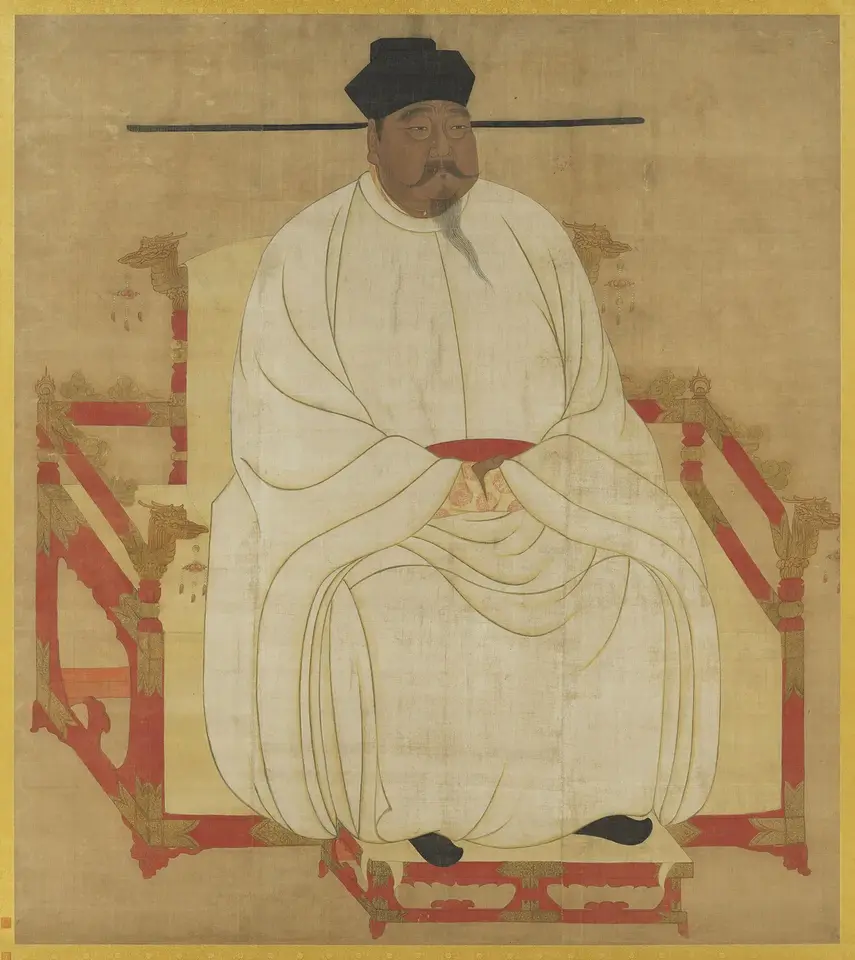
晁说之
Chao Shuozhi (晁说之, 1059–1129), courtesy name Yidao and art name Jingyu Sheng, was a native of Juye in Jizhou (present-day Juye County, Shandong). He was an illustrious late Northern Song and early Southern Song classical scholar, Neo-Confucian philosopher, literatus, and senior court official, as well as an eminent figure of the prominent Chao clan of the Central Plains. Chao obtained the jinshi degree in 1082 during the…
Chao Shuozhi (晁说之, 1059–1129), courtesy name Yidao and art name Jingyu Sheng, was a native of Juye in Jizhou (present-day Juye County, Shandong). He was an illustrious late Northern Song and early Southern Song classical scholar, Neo-Confucian philosopher, literatus, and senior court official, as well as an eminent figure of the prominent Chao clan of the Central Plains. Chao obtained the jinshi degree in 1082 during the Yuanfeng era. Endowed with vast erudition across the Classics and historical texts, his scholarly depth was celebrated by Su Shi as possessing profound originality that expounded the inner meaning of the Five Classics with sublime rationality and magnificent prose. Senior statesmen Zeng Gong and Fan Zuyu similarly submitted memorials warmly recommending him for central court appointments. In 1100, during his tenure as Magistrate of Wuji County, Chao answered an imperial summons by submitting a comprehensive memorial detailing ten urgent state matters, advocating reverence for ancestral frugality, fiscal relief for the agrarian population, cessation of aggressive border warfare, expansion of avenues for remonstrance, and elimination of vanity in governance. He subsequently held peripheral posts, including Supervisor of the Jijin Granary in Shanzhou, Supervisor of the Mingzhou Shipyards, Vice Prefect of Langzhou, and Prefect of Chengzhou. During the Jingkang era, Emperor Qinzong summoned him as Junior Lord of the Palace Library and Secretariat Drafter concurrently Director of the Heir Apparent's Household. Chao advocated resolute resistance against the Jurchen Jin, fiercely opposing the cession of the three northern commanderies and remonstrating against Emperor Qinzong abandoning the capital. Under Emperor Gaozong in the early Southern Song, he was appointed Waiting Academician of the Huiyou Hall and Imperial Lecturer. Synthesizing the teachings of Sima Guang, Shao Yong, Zhang Zai, and Sun Fu, Chao founded the Jingyu School, rigorously critiqued Wang Anshi's New Learning, and authored Jingyu sheng ji and Songshan wenji.
Born into the prominent Chao house in Juye, Jizhou, dedicating himself from boyhood to classical exegesis and philology.
Attained the jinshi degree in Kaifeng, earning profound praise and high recommendations from Su Shi, Zeng Gong, and Fan Zuyu.
Addressed ten urgent matters to Emperor Huizong, calling for fiscal moderation, relief of commoners, and cessation of warfare.
Marginalized by Cai Jing's faction due to outspoken moral principles, supervising the Jijin Granary and Mingzhou Shipyards.
Served as Vice Prefect of Langzhou and Prefect of Chengzhou, promoting agrarian production, sericulture, and Confucian schooling.
Summoned by Emperor Qinzong as Junior Lord of the Palace Library and elevated to Secretariat Drafter concurrently Director of the Heir Apparent's Household.
Strongly opposed the cession of Taiyuan, Zhongshan, and Hejian, kneeling before the palace to urge Qinzong not to abandon Kaifeng.
Joined Emperor Gaozong's southern administration, appointed Waiting Academician of the Huiyou Hall and Imperial Lecturer.
Lectured on dynastic statecraft at the imperial seminars, surrounded by prominent disciples who embraced the Jingyu tradition.
Succumbed to illness while accompanying the imperial entourage in Jianghuai at the age of seventy-one, mourned by contemporary scholars.
Chao Shuozhi was born in the fourth year of the Jiayou era (1059) in Juye, Jizhou. The Chao family of Juye, tracing their prominence to the early Song statesman Chao Jiong, had earned empire-wide renown for generational mastery of classical texts and unyielding moral dignity. From early youth, Chao displayed a reflective and disciplined disposition, immersing himself in ancient canonical literature, commentaries, and pre-Qin philosophical treatises. Unlike ordinary literati who focused exclusively on poetic diction and ornamental prose, he dedicated his intellect to philological precision, historical geography, and ethical principles, examining the evolutionary origin of every classical concept.
In 1082, the fifth year of the Yuanfeng era under Emperor Shenzong, the twenty-four-year-old Chao passed the metropolitan examinations in Kaifeng to attain the jinshi degree. His deep grounding in classical exegesis immediately attracted the attention of leading statesmen and literary luminaries. After examining Chao's scholarly writings, literary titan Su Shi commended his original learning, stating that Chao fully illuminated the Five Classics with sublime insight and dignified prose, submitting a special memorial to recommend him to court. Renowned prose master Zeng Gong and imperial censor Fan Zuyu also presented memorials praising Chao's vast erudition and unwavering moral integrity, advising that he be placed in the imperial academy to oversee state historical records.
In January 1100, following the death of Emperor Zhezong, Emperor Huizong ascended the throne while Grand Empress Dowager Xiang held the regency, issuing decrees soliciting candid remonstrance. At that time, Chao was serving as Magistrate of Wuji County in Zhending Prefecture. Having witnessed the heavy fiscal extractions and widespread social dislocation caused by New Policies implementation at the grassroots level, Chao drafted a sweeping ten-point memorial addressing core governance defects: first, practicing reverence for ancestral frugality; second, curbing burdensome tax codes; third, resolving administrative ambiguities; fourth, returning commercial profits to agrarian producers; fifth, restoring commoners to their fundamental occupations; sixth, terminating aggressive border campaigns; seventh, guiding scholars toward practical learning; eighth, broadening avenues for candid criticism; ninth, honoring broadly educated statesmen; and tenth, eliminating reckless pursuit of hollow prestige. His petition struck directly at the heart of contemporary political extravagance.
When Emperor Huizong assumed direct authority and appointed Cai Jing as Grand Councilor, the new administration aggressively marginalized upright remonstrators. Chao's uncompromising critiques offended court leaders, leading to his exclusion from central appointments for over two decades. He was relegated to lower-ranking administrative duties, such as Supervisor of the Jijin Granary in Shanzhou and Supervisor of the Mingzhou Shipyards, before serving as Vice Prefect of Langzhou and Prefect of Chengzhou. Throughout decades of provincial displacement, Chao remained serene and resolute, dedicating his leisure to writing and teaching.
In 1126, the first year of the Jingkang era, the Jurchen Jin armies launched a massive invasion of the Central Plains, pushing toward Kaifeng and plunging the Song dynasty into mortal peril. Upon ascending the throne, Emperor Qinzong sought out upright scholars, appointing Chao Junior Lord of the Palace Library and elevating him to Secretariat Drafter concurrently Director of the Heir Apparent's Household. When defeatist ministers proposed ceding the strategic northern commanderies of Taiyuan, Zhongshan, and Hejian to appease the invaders, Chao stood forward at palace audiences, arguing passionately that the three commanderies formed the vital northern defense shield of the Central Plains, without which Kaifeng would be defenseless. When Emperor Qinzong vacillated and considered fleeing Kaifeng on a supposed imperial tour, Chao prostrated himself before the palace steps, remonstrating that the sovereign was the foundation of the state, and that imperial departure would shatter dynastic defense and demoralize the populace.
Following the fall of Kaifeng, Prince Kang Zhao Gou ascended the throne in Shangqiu to inaugurate the Southern Song. In 1127, Emperor Gaozong appointed Chao Waiting Academician of the Huiyou Hall and Imperial Lecturer, commissioning him to deliver imperial seminar lectures during the court's southern crossing. Chao utilized classical seminars to urge moral restraint, geopolitical clarity, and strategic defense. In 1129, enduring the hardships of wartime evacuation, Chao passed away in Jianghuai at the age of seventy-one.
Chao Shuozhi occupies a distinguished position in the history of Song Neo-Confucianism and Classical Studies as the founder of the Jingyu School. Adopting the sobriquet Jingyu Sheng, he synthesized diverse traditions rather than adhering to a single master: he studied the Taixuan jing (Classic of Supreme Mystery) under Chancellor Sima Guang, acquiring deep understanding of numerology; he received the Xian tian (Earlier Heaven) cosmological system under Yang Xianbao, a foremost disciple of Shao Yong, to unravel the Yijing hexagrams; he entered the school of Sun Fu of Mount Tai, studying the Great Plan (Hongfan) of the Book of Documents under Jiang Zhi; and he traveled to Guanzhong to master Zhang Zai's Guan school philosophy. Chao synthesized the intellectual rigor of Northern Song thought into an unpretentious philosophical system, establishing the influential Jingyu School. Disciples such as the loyalist statesman Zhu Bian and the scholar Wang Anzhong carried on his teachings.
Southern Song philosopher Lü Zuqian observed in the Song-Yuan xue'an that although Chao's sources were diverse, his methodology was solid, grounded, and free from forced contrivance. His synthesis provided a vital intellectual bridge connecting early Northern Song thought to the mature Neo-Confucianism of Zhu Xi.
In philosophical debates, Chao displayed fierce critical independence and unwavering dedication to Confucian moral orthodoxy. Drawing upon Zhang Zai's distinction between sensory perception and innate moral knowledge, he revered the Doctrine of the Mean and emphasized that sincerity, loyalty to superiors, and benevolence toward subordinates formed the bedrock of virtue. When Wang Anshi and his son established the New Learning as state dogma through the Three Classics New Meanings, enforcing intellectual uniformity, Chao mounted a comprehensive and courageous philosophical critique.
Chao condemned Wang Anshi's radical doctrines—which dismissed celestial omens, moral traditions, and public opinion—as detrimental doctrines that undermined the fundamental ethical bonds of human society. He submitted petitions arguing that Wang Anshi should be stripped of his posthumous place in the ancestral temple of Emperor Shenzong and excluded from sacrifices in the Confucian Temple. Furthermore, adhering to Sima Guang's critical stance toward the Mencius, Chao advocated that scholarship should prioritize the Book of Changes and the Spring and Autumn Annals, criticizing contemporary scholars who indulged in Daoist or Legalist sophistry while neglecting historical ethics. He held that scholars must steadfastly uphold moral right regardless of personal consequence.
Throughout his life, Chao dedicated himself to canonical scholarship, producing an extensive body of commentaries on the Confucian Classics. His recorded treatises include Zhouyi Taiji zhuan, Taiji waizhuan, Yi Shang Qu da zhuan, Shangqu Yizhuan, Qinshi Yishi, Yixuan xingjipu, Yigui, Chaoshi Shuzhuan, Shulun, Hongfan xiaozhuan, Yaodian xingri suikao, Chaoshi Shizhuan, Shixulun, Chaoshi Chunqiu zhuan, Chunqiu bianwen, Chunqiu nianbiao, Zhongyong zhuan, Lunyu jiangyi, Renyin Xiaojing, and Jingyu sheng ji.
In his philological research, Chao strictly followed Han and Tang standards established by Xu Shen's Shuowen jiezi and Lu Deming's Jingdian shiwen, warning that claiming absolute certainty without acknowledging textual gaps constituted intellectual dishonesty. In his later years, he deepened his engagement with Buddhist thought, chanting the Lotus Sutra daily and achieving profound serenity. His collected writings, preserved in Songshan wenji and Jingyu sheng ji, remain indispensable historical sources for the intellectual history of the Song transition.
FIGURES ASSOCIATED WITH THIS DYNASTY