Birth in Notable Lineage
Born into the prominent Chao literati family of Qingfeng, educated from boyhood in the Confucian Classics and traditional metrics.
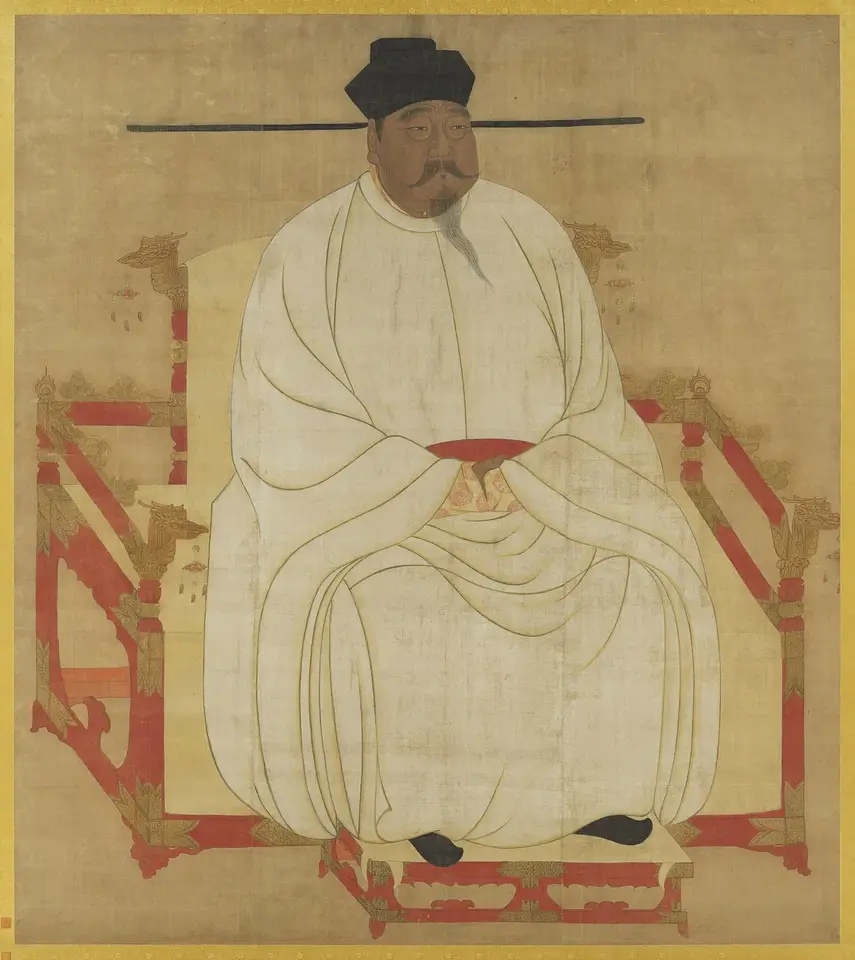
晁端礼
Chao Duanli (晁端礼, 1046–1113), courtesy name Ciying, was a native of Qingfeng in Kaifeng Superior Prefecture (present-day Qingfeng County, Henan). A prominent member of the renowned scholarly Chao clan of the Central Plains, he earned his jinshi degree in 1073 during Emperor Shenzong's Xining era. In his early bureaucratic career, he served in local administrative posts, including Registrar of Chengwu County in Shanzhou,…
Chao Duanli (晁端礼, 1046–1113), courtesy name Ciying, was a native of Qingfeng in Kaifeng Superior Prefecture (present-day Qingfeng County, Henan). A prominent member of the renowned scholarly Chao clan of the Central Plains, he earned his jinshi degree in 1073 during Emperor Shenzong's Xining era. In his early bureaucratic career, he served in local administrative posts, including Registrar of Chengwu County in Shanzhou, Defense Judicial Commissioner of Yingzhou, Magistrate of Ping'en County, and Magistrate of Shen County in Daming Superior Prefecture. Possessing an unbending moral character, he refused to compromise administrative principles to flatter superior officials, which resulted in his abrupt dismissal and an exile-like wandering existence among the common populace for nearly thirty years. In 1113, the third year of the Zhenghe era, Chancellor Cai Jing recommended him to Emperor Huizong on account of his literary and musical renown. Upon his arrival at court, twin-blossomed lotuses bloomed in the imperial pond; Chao promptly presented his newly composed lyric titled Twin Lotus Blossoms, which was lavishly praised by the emperor. Huizong bestowed upon him the rank of Gentleman for Managing Affairs and appointed him Music Harmonizer of the Dasheng Music Bureau to oversee seasonal ritual compositions alongside the famed lyricist Wansi Yong. However, before he could officially assume duties, he died of illness at the age of sixty-eight. His ci poetry, acclaimed for melodic charm and rhythmic precision, is preserved in Xianzhai qinqu waipian.
Born into the prominent Chao literati family of Qingfeng, educated from boyhood in the Confucian Classics and traditional metrics.
Traveled to Kaifeng and attained the jinshi degree, formally launching his official career.
Appointed Registrar of Chengwu County and subsequently Defense Judicial Commissioner of Yingzhou, handling civil records and judicial reviews.
Promoted to Magistrate of Ping'en County, adopting benevolent fiscal governance to lighten burdens on the populace.
Transferred as Adjudicator of Taining Military Commission and subsequently appointed Magistrate of Shen County.
Stripped of his administrative appointment after clashing with commanding superiors over institutional regulations.
Wandered among lakes and rivers for nearly three decades, channeling his solitary reflections into musical lyrics.
Recommended to court by Chancellor Cai Jing and summoned to Kaifeng, presenting his Twin Lotus Blossoms lyric to Emperor Huizong.
Appointed Gentleman for Managing Affairs and Music Harmonizer of the Dasheng Music Bureau.
Passed away suddenly in Kaifeng before formally assuming active office, mourning by contemporary scholars at the age of sixty-eight.
Chao Duanli was born in the sixth year of the Qingli era (1046) into the prominent Chao clan of Qingfeng. Throughout the Northern Song dynasty, the Chao family was renowned for exceptional scholarship, rigorous morality, and extensive literary output. Nurtured by rigorous domestic schooling from early youth, Chao Duanli displayed exceptional intellectual gifts, mastering classical histories while demonstrating profound sensitivity to poetic musicality and pitch systems.
In 1073, the sixth year of the Xining era under Emperor Shenzong, Chao passed the provincial and metropolitan examinations in Kaifeng, securing the jinshi degree. His initial appointment was as Registrar of Chengwu County in Shanzhou, where he oversaw agrarian tax ledgers and household registers. Thanks to his administrative meticulousness, he was promoted to Defense Judicial Commissioner of Yingzhou, adjudicating judicial disputes with notable impartiality on the northern frontier.
Subsequently, Chao was appointed Magistrate of Ping'en County, where his administrative philosophy prioritized public relief and moderate taxation, earning warm gratitude from local residents. After fulfilling his tenure, he was assigned as Adjudicator of the Taining Military Commission and shortly thereafter reassigned as Magistrate of Shen County in Daming Superior Prefecture. Daming served as the northern secondary capital of the Song Empire, characterized by complex administrative entanglements and prominent aristocratic influences. Chao steadfastly maintained integrity, refusing to pander to local military and civil superiors. This friction culminated in false accusations that led to his summary dismissal from office.
Following his ouster, Chao was completely cut off from bureaucratic reappointment. For nearly three decades, spanning from the late Yuanfeng era through the early years of Emperor Huizong's reign, he lived as an unrecognized scholar along the Yellow River basin and the Bian-Luo region. During this prolonged period of rustication, he found solace in musical composition and poetic verse, befriending itinerant scholars and musicians while meticulously investigating lyrical meters, producing numerous moving expressions of inner fortitude.
During the Chongning and Daguan eras, Emperor Huizong actively promoted classical musicology, founding the Dasheng Music Bureau to establish pitch-pipes and compose courtly hymns. In 1113, the third year of the Zhenghe era, Chancellor Cai Jing, cognizant of Chao's musical erudition and literary reputation, recommended him to the throne. Chao answered the imperial summons and traveled to the capital Kaifeng. At that time, twin lotus flowers blossomed together in the palace pond, an occurrence regarded by Emperor Huizong as a propitious omen.
Chao immediately composed the celebrated lyric Twin Lotus Blossoms upon imperial command. His work was characterized by elegant imagery, rhythmic harmony, and dignified cadence, capturing both the imperial spectacle and the auspicious atmosphere of the realm. Deeply impressed, Huizong issued an imperial decree appointing Chao as Gentleman for Managing Affairs and Music Harmonizer of the Dasheng Music Bureau, placing him alongside Wansi Yong to craft monthly palace songs. However, decades of wandering had undermined his vitality; before he could take up his active duties, Chao passed away in a Kaifeng lodge at the age of sixty-eight.
Chao Duanli's presentation lyric Twin Lotus Blossoms in 1113 represents the crowning achievement of his late-period poetry and a quintessential model of Song courtly songcraft. Emperor Huizong was himself an accomplished master of music, calligraphy, and painting, possessing exacting aesthetic standards. Chao deftly intertwined the visual elegance of the twin blossoms with celebrations of dynastic prosperity, showcasing masterful prosody and elevation from decades of obscurity to an honored position within imperial music administration.
Later Song literary critics consistently observed that Chao demonstrated consummate structural discipline and expressive refinement in this lyric. Its melodic cadence conformed perfectly to the rigorous pitch specifications enforced by the Dasheng Music Bureau, securing his lasting reputation in Huizong's literary circle.
Within Northern Song poetry, Chao Duanli was celebrated for his profound grasp of musical notation and melodic modes. In the Zhenghe era, he was ranked alongside Wansi Yong as one of the two premier literary masters capable of composing lyrics that strictly adhered to monthly modal shifts. Unlike poets who focused merely on verbal rhetoric, Chao possessed mastery of the traditional gongche notation and the modal transitions of Yanyue banqueting music.
His long-form lyric to the tune Lü Touya (Green-headed Duck) depicted the crisp clarity of the Mid-Autumn moon with extraordinary spaciousness and emotional purity. The prominent southern critic Hu Zi in Tiaoxi yuyin conghua specifically praised his poetry for being delightfully crisp and refined, exemplifying the harmonious integration of musical accompaniment and poetic verse.
Throughout his life, Chao Duanli produced a substantial corpus of ci poetry. He originally compiled a collection titled Xianshi ji (Leisure Collection), which was unfortunately lost amidst the wartime turmoil of the Song-Jin transition. During the Ming dynasty, the bibliophile Mao Jin searched for extant Song manuscripts and assembled Chao's scattered surviving lyrics into the six-volume Xianzhai qinqu waipian (Outer Lyrics on Qin Melodies from the Leisure Studio), ensuring the preservation of his literary legacy.
His extant lyrics encompass courtly odes, autobiographical travelogues, and refined emotional narratives. They document the transition of Northern Song lyrics from popular folk songs toward the refined, state-sanctioned musical art of the Dasheng style, possessing enduring value for Chinese literary history.
FIGURES ASSOCIATED WITH THIS DYNASTY