Birth in Notable Lineage
Born into the prominent Chao literati house in Juye, Jizhou, demonstrating extraordinary memory and composing essays from age seven.
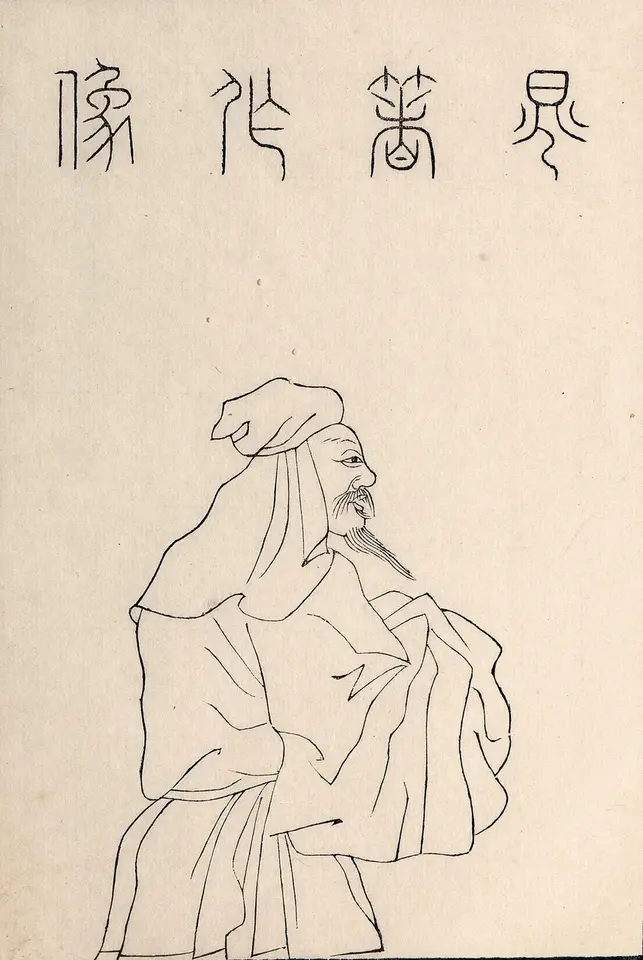
晁补之
Chao Buzhi (晁补之, 1053–1110), courtesy name Wujiu and art name Guilai Zi, was a native of Juye in Jizhou (present-day Juye County, Shandong). He was a renowned Northern Song literatus, classical scholar, ci lyricist, and prominent statesman. Born into the illustrious Chao family of the Central Plains, he demonstrated remarkable intellectual gifts in youth. At the age of seventeen, while traveling with his father in Hangzhou,…
Chao Buzhi (晁补之, 1053–1110), courtesy name Wujiu and art name Guilai Zi, was a native of Juye in Jizhou (present-day Juye County, Shandong). He was a renowned Northern Song literatus, classical scholar, ci lyricist, and prominent statesman. Born into the illustrious Chao family of the Central Plains, he demonstrated remarkable intellectual gifts in youth. At the age of seventeen, while traveling with his father in Hangzhou, he composed the expansive rhapsody Qishu (Qishu), which earned immense admiration from Vice Prefect Su Shi, leading to his formal admission as Su's disciple. Alongside Huang Tingjian, Qin Guan, and Zhang Lei, he was celebrated as one of the Four Scholars of Su Shi. In 1079, he passed the metropolitan civil service examinations, achieving first place in both the Kaifeng Prefectural Examination and the Ministry of Rites Separate Examination, prompting Emperor Shenzong to praise his profound grounding in Classical Studies and his ability to reform superficial literary trends. During the Yuanyou era, Chao served as Director of the National University, Senior Proofreader in the Palace Library, Collator at the Imperial Library, Gentleman Compiler, and Junior Compiler of the Historiography Institute, contributing to the compilation of the Veritable Records of Emperor Shenzong. Amidst the intense factional purges of the Shaosheng era, he was repeatedly demoted as a core member of the Yuanyou faction, governing Qizhou before being banished to supervise remote wine monopolies in Chuzhou and Xinzhou. Following Emperor Huizong's ascension, he was recalled to court as Vice Director in the Ministry of Personnel and Director in the Ministry of Rites. However, with the erection of the Yuanyou Stele of Partisans by Cai Jing, he was stripped of capital office and dispatched to administer Hezhong, Huzhou, Mizhou, and Guozhou, before spending years in nominal temple sinecures in Juye, where he built the Guilai Garden. Appointed Prefect of Sizhou in 1110, he passed away from illness shortly after arrival at the age of fifty-eight. His monumental literary legacy is preserved in Jilei ji, Xu Chuci, and Bian Lisao.
Born into the prominent Chao literati house in Juye, Jizhou, demonstrating extraordinary memory and composing essays from age seven.
Accompanied his father to Hangzhou and presented Qishu to Su Shi, who praised his genius and accepted him as a disciple.
His father passed away in office with no wealth; Chao returned home to sustain the family and educate his younger siblings.
Placed first in both Kaifeng prefectural exams and the Ministry of Rites exams, earning praise from Emperor Shenzong.
Appointed Professor at the National University in Northern Capital Daming, rigorously lecturing on Confucian canonical treatises.
Summoned to the capital on Li Qingchen's recommendation, passing palace tests and becoming Senior Proofreader and Collator.
Dispatched as Secretarial Archive Adjudicator and Vice Prefect of Yangzhou; reunited with Su Shi the following year.
Dispatched to govern Qizhou following Zhang Dun's political purge of the Yuanyou faction, eradicating notorious local bandit rings.
Degraded to supervise wine taxes in Chuzhou; suffered the loss of his mother en route and later transferred to Xinzhou.
Recalled to court upon Emperor Huizong's accession, appointed Gentleman Compiler, Vice Director in Personnel, and Director in Rites.
Listed on Cai Jing's Yuanyou Stele of Partisans, demoted to Hezhong, Huzhou, and Mizhou, and subsequently assigned to temple sinecures.
Reassigned to govern Sizhou, passing away from exhaustion within months of arrival at the age of fifty-eight.
Chao Buzhi was born in the fifth year of the Huangyou era (1053) in Juye, Jizhou, into the prestigious Chao family of the Central Plains. Since the early Song when his ancestor Chao Jiong attained high ministerial honors, the Chao lineage had been celebrated across the empire for deep classical scholarship and uncompromising official integrity. His father, Chao Duanyou, was an incorruptible official who served as Bureau Director in the Ministry of Works while maintaining refined literary skills. Chao Buzhi exhibited exceptional talent from boyhood, possessing an upright bearing and lofty ambitions. By age seven, he was capable of composing well-structured prose and memorizing over a thousand words daily. When accompanying his father to Kaifeng at age ten, his early compositions earned widespread acclaim from elder scholars.
In 1069, during the second year of the Xining era, the seventeen-year-old Chao accompanied his father to his official post in Hangzhou. Inspired by the majestic waterways and verdant landscapes of West Lake, he composed the expansive rhapsody Qishu (Qishu). At that time, literary titan Su Shi was serving as Vice Prefect of Hangzhou and had contemplated drafting a work on local topography. After reading Chao's manuscript, Su was so awestruck by its sweeping momentum and poetic brilliance that he declared his own intended work unnecessary and warmly accepted Chao as his disciple, establishing the foundation for the Four Scholars of Su Shi.
In 1071, Chao studied in Hangzhou under the renowned scholar Lü Muzhong, exploring ancient prose techniques. In 1072, he journeyed to Puyang for the qualifying examinations and arranged a betrothal with the family of Du Chun. In 1075, his father died in office. Having spent his career in modest poverty without accumulating private wealth, Chao Duanyou left the family in extreme financial distress. As the eldest son, the twenty-three-year-old Chao escorted the coffin back to Juye, bearing sole responsibility for providing food and education for his siblings. Despite destitution, he remained steadfast, delving deeply into the Confucian Classics and pre-Qin literature.
In 1079, the twenty-seven-year-old Chao traveled to Kaifeng for the imperial examinations. In the highly competitive Kaifeng Prefectural Examination, his elegant and erudite arguments won first place; in the subsequent Ministry of Rites Separate Examination, he triumphed again, securing the jinshi degree with double first honors. Emperor Shenzong reviewed his examination papers and commended him to senior ministers, observing that his profound mastery of classical scripture and robust prose would effectively purge superficial ornament from contemporary literary circles. Chao was initially commissioned as Civil Administrator in Kaifeng, and in 1081 he was appointed Professor at the National University in the Northern Capital (Daming), where he instituted rigorous curricula based on moral practice.
In 1086, following Emperor Zhezong's accession and Grand Empress Dowager Xuanren's regency, Chancellor Sima Guang initiated the Yuanyou reforms. Recommended by Academician Li Qingchen, Chao excelled in palace examinations and was promoted to Senior Proofreader in the Palace Library, subsequently becoming Collator at the Imperial Library. In Kaifeng, Chao gathered with Su Shi, Huang Tingjian, Qin Guan, and Zhang Lei, inspecting imperial archives, correcting ancient manuscripts, and exchanging poetry. In 1091, Chao was assigned as Vice Prefect of Yangzhou. The next year, Su Shi was appointed Prefect of Yangzhou, and the two scholars reunited, managing civil affairs and composing verses at Pingshan Hall. In late 1092, Chao was recalled to Kaifeng as Gentleman Compiler and Junior Compiler of the Historiography Institute, working on the Veritable Records of Emperor Shenzong.
Following Emperor Zhezong's personal assumption of authority in 1093, Chancellor Zhang Dun took power in 1094 and aggressively revived the New Policies while purging Yuanyou statesmen. Targeted as an influential partisan of Su Shi, Chao was dismissed from court and exiled to govern Qizhou. Upon arrival, he confronted lawlessness where armed bandit gangs openly murdered and looted merchants in broad daylight. Chao eschewed noisy troop mobilizations, donning plain robes to conduct undercover investigations in urban teahouses and alleys to locate their hideouts and fencing networks. Once sufficient intelligence was gathered, he deployed elite constables to encircle the bandits, executing the ringleaders and swiftly restoring civic peace.
Political retaliation intensified. In 1097, the court initiated an extensive partisan blacklist targeting historians who compiled the Veritable Records of Emperor Shenzong. Chao was stripped of administrative authority and demoted to supervise the wine monopoly in Chuzhou. Tragedy struck during the journey south when his mother Yang died of exhaustion. Grief-stricken, Chao escorted her casket home to Juye for mourning, suffering physical collapse. After concluding the mourning period in 1099, he was reassigned to supervise wine taxes in Xinzhou, arriving in late autumn. In Xinzhou, Chao maintained equanimity, navigating waterways and composing poetry despite penury.
In early 1100, Emperor Zhezong passed away and Emperor Huizong ascended the throne. Grand Empress Dowager Xiang held the regency and recalled purged Yuanyou officials. In July 1100, Chao received imperial summons to Kaifeng, arriving in late December to assume office as Assistant Gentleman Compiler. In 1101, he was elevated to Vice Director of a Bureau in the Ministry of Personnel and Director of a Bureau in the Ministry of Rites, concurrently serving as Junior Compiler of the Historiography Institute. However, following Empress Dowager Xiang's death, factional strife resumed and Chao was attacked by censors. In 1102, Chancellor Cai Jing erected the Yuanyou Stele of Partisans, inscribing Chao's name among blacklisted ministers and demoting him to govern Hezhong.
At Hezhong, Chao raised substantial funds to reconstruct the chronically damaged floating pontoon bridge spanning the Yellow River, eliminating treacherous crossing perils for regional commerce. Nevertheless, Cai Jing's associates pushed further, removing Chao from Hezhong to govern Huzhou, Mizhou, and Guozhou, before divesting him of executive office and relegating him to nominal supervisor posts at Jiangzhou Taiping Daoist Temple, the West Capital Chongfu Palace, and the South Capital Hongqing Palace. Living in rural retreat in Juye, he constructed Guilai Garden, styled himself Guilai Zi, and devoted his days to textual scholarship. In spring 1110, he was summoned as Prefect of Dazhou, shortly altered to Prefect of Sizhou. Taking office despite severe illness, he passed away in the government quarters at age fifty-eight. Early in the Shaoxing era, Emperor Gaozong posthumously granted him the rank of Grand Master for Court Audiences and Auxiliary in the Hall of the Dragon Diagram.
Although famed primarily as a literary giant, Chao Buzhi distinguished himself as a highly capable and pragmatic civil administrator. During his tenure as Prefect of Qizhou in 1094, the region was plagued by rampant banditry where criminals openly terrorized commercial thoroughfares. Previous magistrates had hesitated out of fear of retribution. Recognizing that premature military maneuvers would alert the gangs, Chao dressed in ordinary civilian attire to conduct discreet inquiries throughout local marketplaces, uncovering their safe houses and fences. Coordinating ambushes with trusted law officers, he apprehended the entire gang in a single coordinated raid, executing the leaders according to law and earning widespread popular acclaim.
In 1102, as Prefect of Hezhong, Chao tackled the vital yet precarious pontoon bridge across the Yellow River. Swirling currents and annual ice floes frequently severed the mooring lines, causing deadly sinkings and paralyzing overland transit between Qin and Jin. Chao personally inspected the riverbed, consulted veteran boatmen, and replaced fragile single-cable moorings with deep-seated stone anchors and reinforced iron chain linkages. The reconstructed bridge withstood torrential flood crests without damage, transforming a dangerous crossing into a permanent highway and prompting locals to erect a commemorative stele honoring his achievement.
While serving as Vice Prefect of Yangzhou in 1092, Chao displayed unbending adherence to statutory law and institutional integrity. A soldier who had deserted from the capital's Bureau of Military Affairs had used significant bribes to obtain commutation of punishment, securing an imperial transfer to Yangzhou accompanied by private letters from high-ranking court grandees requesting special exemptions from hard labor. Many local officials, intimidated by powerful capital interests, prepared to grant the exemptions.
Chao intervened decisively, declaring that military discipline formed the foundation of dynastic defense and that permitting deserters to evade punishment through elite patronage would subvert military authority across the realm. Standing firm against aristocratic intimidation, he strictly applied the provisions of the Song Penal Code, personally presiding over the penal caning and tattooing before sending the offender into frontline garrison service. His uncompromising devotion to judicial equity became an admired model throughout the Song bureaucracy.
Chao Buzhi holds a pivotal place in classical Chinese poetics and the development of the ci genre. As the most innovative member of the Four Scholars of Su Shi, he formulated the aesthetic doctrine that ci must possess its own inherent character (dangxing bense). He argued that while lyric verse should preserve subtle musical charm and suggestive restraint, it must never degenerate into shallow decadence, but should instead absorb the profound reflections and heroic spirit of the scholar-official class. His lyrics effectively combined exquisite elegance with sweeping grandeur, as seen in his reflective Linjiangxian composed at Xinzhou.
His crowning masterpiece in the heroic mode was Mofang'er (Buying an Embankment Pond to Plant Willows), which conveyed vast historical consciousness and resolute fortitude. In Yigai, Qing critic Liu Xizai celebrated the monumental architectural scale of Chao's lyrics, demonstrating that Xin Qiji's famous patriotic masterpiece Mofang'er (How Much More Wind and Rain Can It Endure) directly inherited its conceptual progression and structural rhythm from Chao's pioneering verse. By infusing poetic gravitas into song lyrics, Chao laid the aesthetic groundwork for the rise of the southern patriotic school of poetry.
In poetic technique, Chao was a consummate master of metric balance, layout, and diction. He frequently synthesized verses from classical masters into his lyrics without artificiality, incorporating over thirty poetic allusions from Tang greats like Li Bai and Du Mu with consummate ease. Simultaneously, Chao broke through scholar-official taboos by integrating lively northern colloquial expressions and urban speech into his song meters, lending his lyrics vibrant warmth while maintaining classical sophistication.
Structurally, Chao utilized temporal progression and layered spatial contrasts to heighten emotional intensity. In his descriptive stanzas, the opening section typically depicted expansive panoramic landscapes, while the second stanza pivoted toward personal fate and philosophical contemplation. Whether gazing across autumn rivers, ascending towers, or parting with comrades, his carefully calibrated transitions elevated the ci form from entertainment songs into an expressive vehicle for high art and personal reflection.
Chao's poetry demonstrated profound command of classical allusions, spanning thirty-nine historical events, thirty poetic quotations, and twenty-one biographical archetypes. Rather than confining himself to standard dynastic histories, he incorporated folk lore and Tang romance narratives, focusing on the moral resilience, political tribulations, and enduring friendships of the literati. Having endured extensive factional persecution, Chao frequently evoked the figure of Wang Zhaojun to lament court slander, referenced Jiang Ziya and He Zhizhang to articulate overlooked talent, and drew upon Liu Yuxi's defiance in southern exile to dispel inner melancholy.
In his biographical allusions, Chao was drawn toward the untrammeled elegance of the Wei-Jin period, particularly Ruan Ji and Ruan Xian's disdain for worldly convention. When confronting factional purges, he sought spiritual kinship with ancient recluses, using detached self-possession to withstand political adversity. His seamless deployment of historical paradigms transformed transient banquet verses into moving testaments to literati integrity.
Beyond his poetic fame, Chao was an exceptional prose stylist. Of the seventy volumes of his collected works Jilei ji, nearly fifty volumes comprise prose and rhapsodies, encompassing almost seven hundred memorials, prefaces, inscriptions, and travel accounts. In his policy treatises and court memorials, Chao anchored his arguments in classical scripture to critique administrative redundancy, military fiscal overspending, and examination defects, displaying remarkable political vision.
In his miscellaneous prose and travel writing, Chao developed an unmistakable voice, seamlessly integrating descriptive clarity with philosophical insight. His celebrated travel essay Record of an Excursion to the Northern Mountain in Xincheng employed concise unadorned prose to depict mountain cloudscapes and travelers' moods, concluding with the famous observation that extraordinary vistas reside in remote and hazardous peaks rarely traversed by mortals. Infused with Su Shi's expansive essayistic rhythms, his writings are regarded as classic masterpieces of Song prose.
During his years at Guilai Garden, Chao achieved breakthrough scholarly contributions in the study of Chuci rhapsodies. Earlier compilations by Liu Xiang and Wang Yi suffered from arbitrary categorization and editorial disorganization. Chao compiled the fifteen-volume Chongbian Chuci, pioneering the first rigorous thematic and ideological classification of the Chuci corpus. He divided the texts into two grand sections: the first part gathered Qu Yuan's works categorized under political remonstrance, shamanistic religion, philosophical retreat, and martyrdom; the second part arranged subsequent Han works according to official court ranks, establishing an unprecedented standard of bibliographic precision.
Crucially, Chao overturned ancient conventions established by Ban Gu and Liu Xie that judged Qu Yuan through the narrow moral constraints of the Classic of Poetry. In his preface to Xu Chuci, Chao evaluated Qu Yuan through historical contextualization, arguing that his unwavering devotion to his sovereign and ultimate sacrifice aligned fundamentally with the core ethics of Confucius and Mencius, securing Qu Yuan's orthodox status in Confucian lineage. This revolutionary thesis directly inspired Zhu Xi's Chuci jizhu in the Southern Song. Furthermore, Chao compiled the twenty-volume Xu Chuci and two-volume Bian Lisao, assembling one hundred and fifty-six rhapsodic works across sixteen centuries and establishing the first comprehensive anthology of Sao-style literature in Chinese history.
In practicing his foundational theory of poetic authenticity (danghang bense), Chao Buzhi developed an artistic style harmonizing delicate lyric grace with somber, unvarnished depth. Upholding restraint and subtle resonance as core lyrical values, his earlier parting poems such as Hao Shi Jin and Lin Jiang Xian absorbed classical poetic idioms into vernacular meters. Blending scenic beauty, banquet farewells, and wistful melancholy, these works exhibited natural prosodic fluidity and meticulous structural coherence.
In his later years, enduring four successive exiles and the turbulence of factional purges, his poetic voice acquired tragic resonance. In celebrated masterpieces like Mi Shen Yin composed during his exile along the Yu River, Chao channeled his political grievances and isolated wanderings into sweeping tableaus of setting suns, surging rivers, and calling gibbons. Comprising roughly one-fourth of his surviving lyrical corpus, these verses imbued Northern Song heroic ci poetry with profound Confucian moral gravitas and somber emotional depth.
Chao was also celebrated as an accomplished landscape painter and calligrapher. He mastered ink landscape traditions, capturing tranquil forest springs and secluded gullies with atmospheric brushwork that reflected high literati detachment. His paintings were recorded in Deng Chun's Huaji, Zhang Chou's Qinghe shuhuafang, and Shigu tang shuhua huikao, with his Laozi Riding an Ox and Leisurely Fishing surviving as prized works. In calligraphy, Chao sought fluid spontaneity over rigid antiquarian imitation; when critics carped that his script was neither ancient nor modern, Huang Tingjian defended him, observing that genuine beauty transcends formulaic conventions.
Chao's life output spanned every major literary and philosophical branch. His rhapsodies and essays were lucid and profound, providing a comprehensive record of mid-Northern Song literati culture. His seventy-volume Jilei ji, alongside his Chuci anthologies, stands as an enduring monument to the intellectual depth and aesthetic elegance of the Northern Song civilization.
Chao Buzhi's poetic corpus in Jilei ji contains over six hundred extant poems reflecting a wide array of social concerns and aesthetic dimensions. His verse engaged deeply with contemporary governance, the hardships of the agrarian peasantry, and the warmth of literati camaraderie. Chao drew upon vast historical erudition, incorporating classical citations with effortless naturalness. His narrative masterpiece Lament of Fangyi chronicled the sorrowful fate of the southern princess of Southern Tang who was dispersed into the northern borderlands after dynastic collapse, achieving extraordinary tragic resonance through layered emotional cadence.
Applying his pictorial training to verse, Chao rendered seasonal vistas with sharp perceptual sensitivity, infusing poetic imagery with the spatial depth and tranquil tones of ink painting. In his stylistic inheritance, Chao avoided dogmatic imitation of any single predecessor, synthesizing Tao Yuanming's pastoral serenity, He Xun and Yin Keng's crystalline landscape descriptions, Du Fu's formal precision, and Han Yu's vigorous syntactic dynamism. This eclectic synthesis produced a balanced, muscular poetic voice that embodied Tang aesthetic spirit within Song intellectual rigor.
Addressing the long-standing debate over the evolution of Sao-style rhapsodies, Chao established an innovative historiographical perspective. Whereas Ban Gu and Liu Xie viewed the Lisao as an irregular departure from classical poetic canons, Chao argued in his Bian Lisao preface that the Sao mode traced its roots back to ancient scriptural traditions in the Book of Documents, the Rites, and the Spring and Autumn Annals. He demonstrated that works like the Song of the Five Sons and the Leopard Head were early instances of righteous political complaint that gave birth to the expanded rhapsodic form.
Chao's scholarly investigations culminated in the compilation of the forty-volume Xu Chuci and Bian Lisao, gathering works across two millennia from Xunzi and Song Yu through Yan Ji, Dongfang Shuo, Huainan Xiaoshan, Zhang Heng, Cai Yong, Ji Kang, Ruan Ji, Liu Zongyuan, Han Yu, and his peer Wang Ling. By tracing the chronological progression and generic diversification of these works, Chao demonstrated that the Sao form remained a vibrant and independent genre throughout imperial history, vastly enriching classical literary historiography.
In the realms of calligraphy colophons and painting theory, Chao displayed sophisticated connoisseurship that anticipated later southern literati thought. His Jilei ji preserves dozens of insightful colophons evaluating masterpieces by Wang Wei, Li Sixun, Dong Yuan, and Juran. Chao consistently prioritized spiritual resonance and moral transcendence over mechanical mimesis, championing the principle that artistic intention must precede the brush and transcend physical form.
In his personal calligraphy, Chao prioritized expressive originality over rigid conformity. When conservative contemporaries criticized his hand for diverging from strict archaic models, Huang Tingjian invoked Chao's own critical doctrine, insisting that true aesthetic beauty lies in pleasing natural balance rather than unyielding imitation. Chao's critical exchanges with Su Shi, Huang Tingjian, and Mi Fu significantly refined the intellectual foundations of the literati painting movement, later providing indispensable historical documentation for Deng Chun's Huaji.
In his final years, after surviving decades of factional persecution and displacements, Chao found profound spiritual solace in Buddhist philosophy and Chan contemplation. Born into a pious family that had revered Buddhist teachings for generations, Chao had studied the Buddhist canon from his youth. During his retirement at Guilai Garden and his stewardship of the Chongfu and Hongqing Palaces, he immersed himself in the doctrines of the Tiantai, Caodong, and Yunmen traditions, maintaining close spiritual dialogues with prominent Buddhist masters.
This meditative discipline deeply colored his late writings, suffusing his pastoral poetry with luminous quietude and contemplative detachment. Recurring motifs such as emptiness, silence, seclusion, and dreamlike transience dominated his later verse, replacing early factional anxieties with serene equanimity. In dissolving personal political misfortune into solitary forests and moonlit waters, Chao attained a harmonious transcendence of worldly tribulation, exemplifying the enduring spiritual resilience of the Song scholar-official class.
FIGURES ASSOCIATED WITH THIS DYNASTY