Imperial Birth and Sovereign Favor
Born in the imperial palace of Chang'an to the legendary beauty Lady Li, receiving boundless affection as Emperor Wu's cherished younger prince.
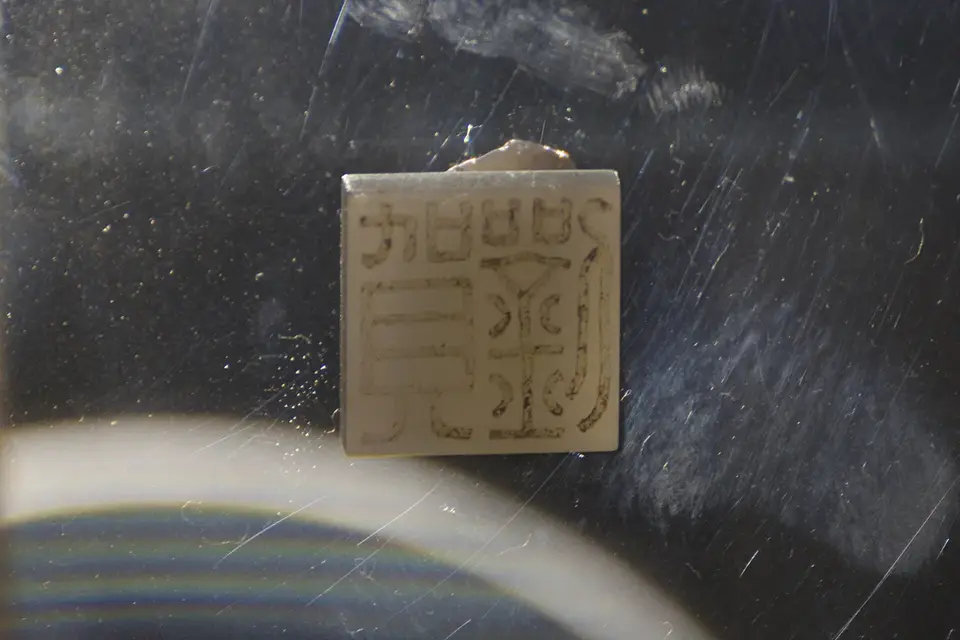
刘髆
Liu Bo (刘髆, ? – 88 BCE) was the fifth son of Emperor Wu of Han (Liu Che) and the beloved Lady Li (Empress Xiaowu Li, sister of Li Yannian and Li Guangli). He was the first King of Changyi of the Western Han dynasty and the biological father of Liu He, who briefly reigned as emperor before being deposed and later enfeoffed as the Marquis of Haihun. During the Taichu era, Liu Bo was deeply favored by Emperor Wu as a young…
Liu Bo (刘髆, ? – 88 BCE) was the fifth son of Emperor Wu of Han (Liu Che) and the beloved Lady Li (Empress Xiaowu Li, sister of Li Yannian and Li Guangli). He was the first King of Changyi of the Western Han dynasty and the biological father of Liu He, who briefly reigned as emperor before being deposed and later enfeoffed as the Marquis of Haihun. During the Taichu era, Liu Bo was deeply favored by Emperor Wu as a young imperial prince. Emperor Wu specially selected the renowned Confucian master Xiahou Shichang, an expert in the Book of Documents and the Qi Poetry, to serve as his royal tutor and instruct him in classic statecraft. In 97 BCE (the fourth year of the Tianhan era), Emperor Wu converted the fertile Shanyang Commandery around the Juye Marsh into the Kingdom of Changyi and officially enfeoffed Liu Bo as its first king. The Kingdom of Changyi encompassed twenty-three counties, over 170,000 registered households, and a population exceeding 800,000. It was also granted exceptional authority over a state iron office, making it an extraordinarily wealthy and populous feudatory, reflecting Emperor Wu's profound affection for Lady Li and her son. In 91 BCE, the catastrophic Witchcraft Calamity erupted in Chang'an, leading to the tragic deaths of Empress Wei Zifu and Crown Prince Liu Ju, leaving the imperial succession vacant. In 90 BCE, Liu Bo's maternal uncle, General Li Guangli (General of Ershi), met secretly at the Wei River Bridge with Chancellor Liu Qumi, who was married into Li's family, plotting to submit a memorial urging Emperor Wu to install Liu Bo as the new crown prince. However, the secret plot was soon exposed. Palace official Guo Rang denounced Chancellor Liu's wife for hiring sorceresses to curse Emperor Wu with witchcraft and uncovered secret prayers conducted by Liu Qumi and Li Guangli at altars praying for Liu Bo's ascension. Enraged by the conspiracy, Emperor Wu ordered Chancellor Liu Qumi executed by waist chopping in the public marketplace, his wife beheaded, and their clan exterminated. Hearing of his family's downfall, Li Guangli hastily surrendered to the Xiongnu while on campaign, resulting in the execution of his entire clan in Chang'an. Although Liu Bo was spared execution because he was not directly involved in the conspiracy, his hopes of succession were completely destroyed, and his political situation became exceedingly perilous. In 88 BCE, Liu Bo succumbed to illness and grief in his palace, receiving the posthumous title King Ai after an eleven-year reign, succeeded by his five-year-old only son, Liu He.
Born in the imperial palace of Chang'an to the legendary beauty Lady Li, receiving boundless affection as Emperor Wu's cherished younger prince.
Emperor Wu appointed the prominent Five Classics scholar Xiahou Shichang as his tutor to instruct him in Confucian rites and classics.
Emperor Wu issued an imperial edict establishing the Kingdom of Changyi from Shanyang Commandery, granting him twenty-three counties.
The witchcraft disaster erupted in Chang'an; Crown Prince Liu Ju and Empress Wei died, leaving the imperial succession open.
Maternal uncle Li Guangli and Chancellor Liu Qumi secretly agreed at the Wei River Bridge to push for Liu Bo's installation as crown prince.
The witchcraft conspiracy was exposed; Liu Qumi was executed by waist chopping, Li Guangli defected to the Xiongnu, and both clans were destroyed.
Liu Bo died of illness and anxiety at approximately age seventeen after reigning for eleven years; he was granted the posthumous name King Ai.
His five-year-old only son, Liu He, inherited the title and vast estate as the second King of Changyi.
Following the death of Emperor Zhao, Liu He was enthroned by Huo Guang, deposed after twenty-seven days, and later enfeoffed as Marquis of Haihun.
Liu Bo was the fifth of the six sons of Emperor Wu of Han. His mother was the legendary Consort Li, one of the most celebrated figures in Western Han court history. Originally from a family of performers in Zhongshan, her elder brother Li Yannian composed a renowned song before Emperor Wu: "In the northern land there lives a fair lady, surpassing the world and standing alone. With one glance she topples cities; with another glance she topples states." Captivated by the melody, Emperor Wu welcomed Lady Li into the inner palace upon the recommendation of Princess Pingyang. Possessing extraordinary grace and talent in dance, she became the emperor's most cherished consort.
Around 104 BCE, Lady Li gave birth to prince Liu Bo. His arrival marked the pinnacle of glory for the Li maternal clan. Li Yannian was appointed Chief Commandant of Harmony with a salary rank of two thousand bushels, while Li Guangli was named General of Ershi to lead an expedition to Dayuan for heavenly horses, eventually being enfeoffed as Marquis of Haixi.
However, Lady Li fell mortally ill shortly after childbirth. When the grieving emperor visited her sickbed, she covered her face with a quilt, refusing to let him see her emaciated appearance, weeping as she explained: "Women who serve with beauty find affection wane when beauty fades, and favor ends when affection wanes. I conceal my face so that my youthful memory remains forever in Your Majesty's heart, that you may protect my son and brothers after I am gone." Following her death, Emperor Wu was inconsolable, burying her with empress honors and hanging her portrait in Ganquan Palace. He directed this lifelong tenderness toward her young son, Liu Bo.
Before the birth of Prince Liu Fuling (later Emperor Zhao), Liu Bo remained Emperor Wu's youngest and dearest prince. Seeking to mold him into an exemplary feudal prince, Emperor Wu selected the celebrated Confucian scholar Xiahou Shichang, an authority on the Book of Documents and Qi Poetry, to serve as grand tutor to Liu Bo, instructing him in classical ethics and governance.
In June 97 BCE, Emperor Wu formally issued an imperial edict creating Prince Liu Bo as the King of Changyi.
The selection of his fiefdom reflected unprecedented imperial generosity. Emperor Wu converted the entirety of Shanyang Commandery into the Kingdom of Changyi, with its capital at Changyi City (present-day Juye and Jinxiang in Shandong). Situated at the heart of the Central Plains beside the Juye Marsh, the kingdom controlled vital water transport routes along the Si and Zhu rivers, commanding fertile agricultural lands and thriving commercial markets. Crucially, the kingdom encompassed twenty-three counties, 172,847 households, and more than 801,200 subjects.
Furthermore, Emperor Wu permitted the establishment of an official state iron office within the Kingdom of Changyi, granting the royal court direct revenues from iron smelting and salt commerce. Under Emperor Wu's nationwide state monopolies, such private fiscal privilege was virtually unprecedented for a feudal king. Modern historians note that Changyi's territory, wealth, and population far exceeded standard feudal realms of the era, illustrating how Emperor Wu transformed his enduring sorrow for Lady Li into an unassailable financial foundation for her son.
Throughout his tenure, Liu Bo remained primarily under imperial protection in the capital at Weiyang and Ganquan palaces rather than administering his domain in distant Shandong. Under the continuous guidance of Tutor Xiahou Shichang, he maintained a reserved and scholarly disposition, avoiding outer-court intrigues during his youth.
In 91 BCE, the devastating political storm known as the Witchcraft Calamity shook the Western Han empire to its foundations. Ruthless inquisitors, led by Jiang Chong and the eunuch Su Wen, exploited Emperor Wu's aging paranoia and failing health, concocting false evidence of wooden effigies to implicate Crown Prince Liu Ju in sorcery against his father.
Driven to desperate measures, Crown Prince Liu Ju mobilized troops to kill Jiang Chong and battled government armies under Chancellor Liu Qumi in Chang'an for five bloody days. After his defeat, Liu Ju fled to Hu County and hanged himself, while Empress Wei committed suicide. The demise of the crown prince and his sons shattered the three-decade-old succession structure, creating an acute power vacuum at the center of the imperial government.
Among Emperor Wu's surviving sons, Crown Prince Liu Ju was dead; the second son, King Hong of Qi, had died young without heirs; the third son, King Dan of Yan, and the fourth son, King Xu of Guangling, were disliked by Emperor Wu for their deceit and unruly arrogance; while the youngest son, Liu Fuling, was still a toddler. Consequently, in the eyes of the court and external factions, King Liu Bo of Changyi—backed by an exalted maternal lineage, unparalleled fiefdom resources, and the emperor's personal favor—emerged as the foremost candidate for crown prince.
This alluring prospect spurred the Li maternal clan into bold action. In spring 90 BCE, Emperor Wu appointed General Li Guangli to lead an expedition against the Xiongnu. At the time, Chancellor Liu Qumi was married to Li Guangli's sister, uniting the military commander and the head of civil administration in a powerful alliance.
On the day of Li Guangli's departure, Chancellor Liu hosted a grand banquet at the Wei River Bridge outside Chang'an. As they parted, Li Guangli held Liu Qumi's hand and urged him in private: "Our expedition embarks on a distant campaign with uncertain fortune. The Eastern Palace is vacant and His Majesty grows aged. May you seize the right moment at court to urge His Majesty to designate King Liu Bo of Changyi as crown prince! If the King of Changyi ascends the throne, what further worries could you have as uncle and chief minister?" Liu Qumi agreed and pledged his support, initiating the fateful Wei Bridge succession pact that thrust young Liu Bo into the deadly center of dynastic competition.
However, treacherous undercurrents lay beneath the imperial surface. Having uncovered the fabricated nature of Jiang Chong's allegations, the aged Emperor Wu deeply regretted the tragedy of his son's suicide, building the Palace of Longing for My Son and the Platform of Maternal Tears, while maintaining severe vigilance against any faction exploiting the vacant succession for selfish gain.
In summer 90 BCE, Guo Rang, an official in the palace internal office, had a bitter dispute with the chancellor's chief clerk and revealed a shocking conspiracy to Emperor Wu. Guo Rang reported that Chancellor Liu Qumi's wife had engaged female sorceresses to perform witchcraft curses against Emperor Wu before the altar of the Earth God, uttering treasonous words; moreover, she and General Li Guangli had conducted secret sacrificial rituals praying for Emperor Wu's early death and Liu Bo's prompt ascension.
The revelations provoked incandescent fury from Emperor Wu. Imperial investigators and judicial officers raided the chancellor's residence, extracting confessions and unearthing unmistakable physical evidence of curses and prayer tablets. Emperor Wu issued an uncompromising edict condemning Chancellor Liu Qumi to waist chopping in the public western marketplace, his wife to decapitation on Huayang Street, and their entire family to execution.
Far away in the Mongolian steppe with seventy thousand troops, Li Guangli received news of his sister's decapitation and his family's extermination. Desperate to redeem himself with military triumph, he advanced recklessly into Xiongnu territory, only to fall into an ambush near the Yanran Mountains. Facing total defeat, Li Guangli surrendered to Chanyu Hulugu. Outraged, Emperor Wu ordered the extermination of Li Guangli's entire clan in Chang'an.
The sudden annihilation of both the Li and Liu maternal clans struck King Liu Bo like a cataclysm. Although Emperor Wu recognized that the teenage prince had played no role in the secret plots of his uncles and spared him from prosecution, the complete purge of his maternal family stripped Liu Bo of any realistic possibility of inheriting the throne, reducing him from imperial favorite to a vulnerable and isolated figure at court.
Shattered by the violent destruction of his maternal relatives, the cold hostility of court factions, and paralyzing anxiety over his personal safety, Prince Liu Bo fell seriously ill under constant mental distress.
In the first month of 88 BCE, shortly after Emperor Wu issued the historic Repentant Edict of Luntai, the first King of Changyi died in his bedchamber at approximately seventeen years of age, concluding an eleven-year reign.
In accordance with classical posthumous naming rules—where dying young and orphan-like is termed Ai—the Han imperial court conferred upon him the posthumous title King Ai (Changyi Aiwang). Following his untimely demise, his five-year-old son, Liu He, inherited the royal title as the second King of Changyi. Emperor Wu died the following year (87 BCE), having settled the succession upon his youngest son, Liu Fuling (Emperor Zhao), guided by General Huo Guang.
In 74 BCE, Emperor Zhao died without an heir. Regent Huo Guang selected Liu Bo's eighteen-year-old son, Liu He, to ascend the throne in Chang'an. However, after reigning for only twenty-seven days, Liu He was deposed by Huo Guang and Empress Dowager Shangguan for ceremonial improprieties, and the Kingdom of Changyi was dissolved into Shanyang Commandery. In 63 BCE, Emperor Xuan of Han granted Liu He the lesser title of Marquis of Haihun, resettling him in Yuzhang Commandery (present-day Nanchang, Jiangxi). Born of an imperial romance, swept into deadly succession struggles, and cut down in his youth, Liu Bo and the dramatic fortunes of his descendants serve as an enduring mirror of Western Han dynastic politics.
As the cherished son of Emperor Wu and Consort Li, Liu Bo was raised under exceptional sovereign favor. Emperor Wu selected Xiahou Shichang, a master of Qi Poetry and Confucian statecraft, to serve as his royal tutor.
This honor provided Liu Bo with elite classical training and distinguished prestige among Emperor Wu's sons, setting a benchmark for princely education in the mid-Western Han.
In 97 BCE, Emperor Wu transformed Shanyang Commandery into the Kingdom of Changyi, enfeoffing Liu Bo with twenty-three counties, over 170,000 households, and 800,000 subjects, along with special privileges over a state iron office.
The extraordinary affluence of his realm reflected Emperor Wu's devotion to Lady Li, bequeathing immense wealth to his lineage—a historical legacy later corroborated by the massive gold hoard discovered in the tomb of his son, the Marquis of Haihun.
During the Witchcraft Calamity between 91 and 90 BCE, Liu Bo was thrust into the vortex of national succession politics by his uncle Li Guangli and Chancellor Liu Qumi.
The exposure of their secret pact and witchcraft rituals led to the execution of both powerful clans and Li Guangli's defection. Though spared from death, Liu Bo endured the ruthless elimination of his entire maternal backing.
Dying prematurely at seventeen, Liu Bo left his five-year-old son Liu He to inherit his title. This royal lineage would later witness Liu He's brief twenty-seven-day reign as emperor, deposition by Huo Guang, and final demotion to Marquis of Haihun.
As the sole patriarchal forebear of Lady Li's line, Liu Bo's life and historical legacy form a crucial documentary bridge connecting the annals of Western Han to the remarkable modern archaeological excavations of the Haihun cemetery.
FIGURES ASSOCIATED WITH THIS DYNASTY