Birth in Jiangyuan
Born into the prominent Chang scholarly lineage of Jiangyuan, Shu Commandery; cultivated early dedication to classical learning.
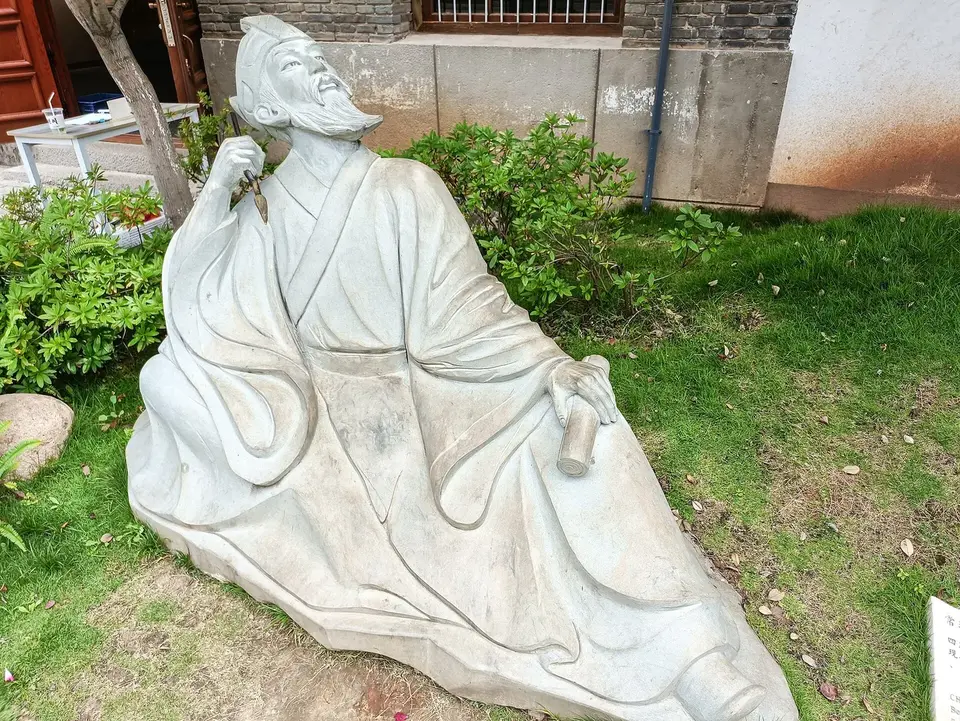
常璩
Chang Qu (常璩, c. 291–361), courtesy name Daojiang (道将), was a native of Jiangyuan County, Shu Commandery (present-day southeast of Chongzhou, Sichuan Province). He was an illustrious historian, historical geographer, and the founding father of the Chinese local gazetteer tradition spanning the Cheng Han and Eastern Jin dynasties. Born into the prominent Jiangyuan Chang scholarly lineage, Chang Qu endured the turbulent…
Chang Qu (常璩, c. 291–361), courtesy name Daojiang (道将), was a native of Jiangyuan County, Shu Commandery (present-day southeast of Chongzhou, Sichuan Province). He was an illustrious historian, historical geographer, and the founding father of the Chinese local gazetteer tradition spanning the Cheng Han and Eastern Jin dynasties. Born into the prominent Jiangyuan Chang scholarly lineage, Chang Qu endured the turbulent collapse of the Western Jin when refugee leader Li Te launched an uprising across Sichuan. While other prominent families fled eastward, the young and impoverished Chang Qu remained behind with relatives, seeking shelter under Fan Changsheng, the Daoist spiritual patriarch of Mount Qingcheng. Following the founding of the Cheng Han dynasty by Li Xiong, peace and agricultural prosperity were restored to the Chengdu plain, enabling Chang Qu to immerse himself in classical and historical archives. He entered Cheng Han official service, serving successively as court historiographer and Cavalier Attendant-in-Ordinary, authoring early regional works including Shu Ji, Ba Han Ji, Nanzhong Zhi, and the dynastic history Shu Han Shu. In 347, Eastern Jin general Huan Wen mounted a massive amphibious campaign into Sichuan and laid siege to Chengdu, setting the city gates ablaze. Confronted with panic and impending slaughter, Chang Qu and Palace Secretariat Director Wang Gu intervened, persuasively counseling Cheng Han sovereign Li Shi to surrender to Eastern Jin forces, thereby sparing the populace of Shu from catastrophic destruction. Recognizing his administrative and intellectual stature, Huan Wen appointed Chang Qu as Senior Staff Counselor and brought him to the Eastern Jin capital of Jiankang. Confronted with the entrenched arrogance of northern aristocratic emigres who scorned Sichuan natives as provincial barbarians, Chang Qu abandoned all desire for bureaucratic advancement. Retiring to humble lodgings in Jiankang, he spent years synthesizing his extensive regional manuscripts into the monumental twelve-fascicle historical geography Huayang Guo Zhi (Records of the States South of Mount Hua). Huayang Guo Zhi established the classic trinity format of Chinese regional gazetteers—integrating administrative geography, annalistic regional history, and biographies of regional worthies into a coherent whole. Spanning prehistoric origins through the mid-fourth century across the vast southwestern domains of Ba, Shu, Hanzhong, and Nanzhong (modern Sichuan, Chongqing, Yunnan, Guizhou, and southern Shaanxi), the work illuminated the profound civilizational unity and distinct cultural wealth of China's southwest. Later canonical historians, including Fan Ye in Book of the Later Han, Pei Songzhi in annotating Records of the Three Kingdoms, Li Daoyuan in Commentary on the Water Classic, and Liu Zhao in Xu Han Zhi, relied extensively on Chang Qu's research. Celebrated by Tang historian Liu Zhiji as meticulous, encyclopedic, and immortal, Huayang Guo Zhi survives as China's earliest and most complete extant local gazetteer, securing Chang Qu's place as a pioneer of Chinese historiography.
Born into the prominent Chang scholarly lineage of Jiangyuan, Shu Commandery; cultivated early dedication to classical learning.
Following widespread unrest, took refuge with clan members under Daoist master Fan Changsheng at Mount Qingcheng; later enjoyed stability under Cheng Han ruler Li Xiong.
Following Cheng Han recovery of Ningzhou and return of displaced clansmen, conducted extensive interviews on distant geography, drafting Shu Ji and Ba Han Ji.
Served as official court historiographer under Li Shou; compiled the ten-fascicle annalistic history Shu Han Shu, which circulated widely across northern China.
Promoted to Cavalier Attendant-in-Ordinary under Li Shi; observed the moral decay of Cheng Han and privately aligned his sympathies with the Eastern Jin dynasty.
As Huan Wen's forces reached Chengdu, persuaded Li Shi to capitulate peacefully; recruited by Huan Wen as Counselor and migrated east to Jiankang.
Living in proud seclusion in Jiankang amid aristocratic prejudice, synthesized decades of research into the 12-fascicle masterpiece Huayang Guo Zhi.
Passed away peacefully in Jiankang at approximately seventy years of age, leaving an immortal historiographical model for subsequent generations.
Chang Qu was born during the late Western Jin period in Jiangyuan County, Shu Commandery (present-day southeast of Chongzhou, Sichuan Province). He belonged to the Jiangyuan Chang clan, an illustrious intellectual lineage renowned across Sichuan for generations of classical scholarship and literary composition. Chang Qu's great-uncle, Chang Kuan, was a consummate scholar who mastered the Mao Poetry, the Three Ritual Canons, and the Classic of Changes. Under the Western Jin, Chang Kuan held offices including Regional Inspector's Secretary, Attendant Censor, and Magistrate of Fan County. After migrating to the south, Chang Kuan authored Shu Hou Zhi, Hou Xian Zhuan, and continued Chen Shou's work with the Liang-Yi Chapter, bequeathing a rich historiographical tradition to his kin.
In 301, during the Yongning era of Western Jin, displaced refugee chieftain Li Te launched an armed rebellion across Sichuan, plunging Yizhou into prolonged chaos. Local aristocratic families organized their clans and retainers to flee southward toward Jingzhou, Xiangzhou, and Jiaozhou. Led by Chang Kuan, the elder branch of the Chang clan joined this exodus. Chang Qu was still a boy and his immediate family was impoverished, making long-distance migration impossible. Consequently, he remained behind in Shu, joining kinfolk who fortified defensive compounds and placed themselves under the spiritual protection of Fan Changsheng, the venerable patriarch of the Celestial Masters Daoist community at Mount Qingcheng.
In 304, Li Te's son, Li Xiong, captured Chengdu and established the Cheng Han state (initially named Da Cheng). Li Xiong revered Fan Changsheng as Grand Master of Heaven and Earth, instituting policies of light taxation, low corvee labor, and agricultural restoration. Under this benevolent administration, Sichuan experienced decades of uninterrupted peace and bountiful harvests. Reaching maturity in this tranquil environment, Chang Qu studied indefatigably, reading all available classical manuscripts and ancestral writings, developing a wide reputation for literary eloquence and historical erudition.
In 333, Li Xiong dispatched Li Shou to conquer Ningzhou (modern Yunnan and Guizhou) and issued edicts inviting displaced Sichuan refugees to return home. Scholars and commoners who had taken refuge in Jiaozhi, Nanzhong, and the middle Yangtze valley gradually migrated back to the Chengdu plain, with Chang Kuan and other clan members returning as well. By then, Chang Qu had reached the age of forty. Possessing substantial scholarly prestige, newly returned relatives and displaced scholars flocked to his household.
Endowed with boundless curiosity and an inquiring mind, Chang Qu seized this exceptional opportunity to interview returning travelers, merchants, and officials. He recorded detailed firsthand accounts concerning the rugged mountain passes, river navigation routes, indigenous tribal customs, local tribute goods, and survival experiences across the vast southwest. Drawing upon Qiao Zhou's Sanba Ji and Zhu Gui's Hanzhong Zhi, and corroborating them with oral testimonies, Chang Qu authored Shu Ji and Ba Han Ji, which circulated with wide acclaim.
During the subsequent reigns of Li Qi and Li Shou, Chang Qu served as official court historiographer, gaining unrestricted access to official census registers, cadastral surveys, topographical maps, and imperial edicts. Following Li Shou's accession and renaming of the realm to Han, Chang Qu utilized archival materials to compose a 9-fascicle dynastic history modeled after Chen Shou's Records of the Three Kingdoms, titled Shu Han Shu (ten fascicles including his autobiographical preface). When Li Shou severed diplomatic relations with the Eastern Jin court in Jiankang and formed an alliance with Emperor Shi Hu of Later Zhao, he presented Chang Qu's Shu Han Shu as an official state gift. Scholars across northern China eagerly transcribed the manuscript, making Chang Qu's fame as a historian resound across the Yellow River valley.
Following Li Shi's accession, the Cheng Han regime fell into administrative paralysis, marked by internal fratricide and moral decadence. Promoted to Cavalier Attendant-in-Ordinary, Chang Qu found himself at the political center but unable to halt dynastic ruin. Prominent regional intellectuals such as Gong Zhuang of Baxi secretly advocated submission to the Eastern Jin court; Chang Qu deeply respected Gong Zhuang's integrity and privately yearned for national reunification under legitimate Chinese rule.
In the spring of 347, Eastern Jin general Huan Wen commanded an amphibious expedition up the Yangtze River to conquer Sichuan. In the third lunar month, Huan Wen crushed the defense forces at Pengmo and advanced light units directly to Chengdu, setting fire to the primary city gates. Dense smoke darkened the sky as Cheng Han forces collapsed. Amid widespread panic, Li Shi and his ministers abandoned hope of defense.
At this critical turning point, Chang Qu and Palace Secretariat Director Wang Gu boldly sought an audience with Li Shi, passionately urging: "The Jin forces advance with irresistible momentum and Heaven's mandate has turned. If we stubbornly defend an isolated stronghold, the city will inevitably fall, and millions of innocent souls across Shu will suffer massacre and ruin. It is far better to submit gracefully to the Jin sovereign, thereby preserving the ancestral altars and shielding our people from calamity." Li Shi yielded to their counsel, bound his hands, loaded a coffin onto a carriage, and surrendered to Huan Wen, bringing a peaceful conclusion to the Cheng Han state.
Upon entering Chengdu, Huan Wen restored civil order, visited local scholars, and recruited distinguished local figures into his administration. He appointed Chang Qu, along with former Cheng Han Vice Director of the Master of Writing Wang Shi, Secretariat Director Wang Yu, and General Deng Ding, as Senior Staff Counselors in his headquarters, winning wide praise among the local populace. In the fourth lunar month, Huan Wen withdrew his forces, and Chang Qu accompanied the imperial clan and migrating households eastward to the Eastern Jin capital of Jiankang.
Upon arriving in Jiankang, Chang Qu encountered a harsh social reality. The Eastern Jin court was monopolized by emigre northern lineages (the Wang, Xie, Yu, and Huan clans) and established southern families, who viewed Sichuan scholars with condescending disdain, branding them as unrefined rustics from a fallen borderland.
Now over sixty years of age, Chang Qu felt profound indignation at the aristocratic arrogance and cultural ignorance of the Jiangnan elite. Refusing to flatter court magnates or solicit official patronage, he withdrew to modest living quarters, resolving to vindicate his homeland through historiographical achievement. Working indefatigably through winter and summer, Chang Qu gathered, revised, and expanded his earlier treatises—Shu Ji, Ba Han Ji, Nanzhong Zhi, Shu Han Shu, and Eulogies of Eminent Worthies of Yi Province—into the monumental 12-fascicle Huayang Guo Zhi.
Through rigorous factual evidence and refined prose, Chang Qu demonstrated that the southwest had been an integral part of Chinese civilization since high antiquity, boasting a glorious heritage, formidable landscapes, virtuous heroes, and material abundance that fully rivaled the Central Plains and surpassed Jiangnan. The work won immediate acclaim and was transcribed widely throughout the southern and northern realms. Chang Qu passed away in Jiankang around 361 at the age of seventy, leaving behind an enduring cultural fortress for China's southwest.
Chang Qu's preeminent historical achievement was creating the integrated structural model for Chinese local gazetteers in his twelve-fascicle Huayang Guo Zhi, revered by posterity as the fountainhead of Chinese gazetteer literature.
Prior to Chang Qu, regional historical writing was fragmented into isolated categories—mythological geographies like the Classic of Mountains and Seas, compilations of regional exotica like Yiwu Zhi, local biographical records like Yibu Qijiu Zhuan, or administrative registers like the Book of Han Treatise on Geography. Chang Qu harmonized these disparate genres, creating a tripartite framework:
The first section comprised regional geographic treatises (Fascicles 1–4: Ba Zhi, Hanzhong Zhi, Shu Zhi, and Nanzhong Zhi), exhaustively surveying the terrain, river courses, commandery administrative evolution, ancient city sites, customs, mining, agriculture, and local tributes across Liang, Yi, and Ning provinces.
The second section encompassed annalistic and chronological regional history (Fascicles 5–9: Records of Gongsun Shu and the Two Liu Governors, Annals of First Sovereign Liu Bei, Annals of Later Sovereign Liu Shan, Biographies of Worthies, and Records of Later Worthies), recounting regional statecraft from the late Han through the Three Kingdoms, with Fascicle 9 serving as an irreplaceable primary record of the Cheng Han dynasty.
The third section presented biographies of local worthies and the author's preface (Fascicles 10–12: General Praise of Forebears and Notable Women, Records of Later Worthies, and Author's Preface), systematically celebrating loyal ministers, filial sons, virtuous women, and classical scholars to promote moral rectitude.
Encompassing over 110,000 characters, Huayang Guo Zhi established the enduring tripartite methodology—geography, history, and biography—that guided regional gazetteer compilers for over sixteen centuries.
Chang Qu maintained strict evidential standards and a critical approach to sources. When drafting Shu Zhi and Ba Zhi, he consulted eight distinct versions of ancient Shu Annals, cross-referencing them against the Records of the Grand Historian, Book of Han, Continuation of the Book of Han, and Records of the Three Kingdoms. While purging absurd superstitions, he preserved invaluable historical memories of early Shu rulers Cancong, Boguan, and Bieling.
In compiling Nanzhong Zhi, he critically utilized Yang Zhong's Ailao Zhuan, Qiao Zhou's Nanzhong Yiwu Zhi, and Wei Wan's Nanzhong Zhi, enriching them with fresh reports gathered from returning refugees after the reconquest of Ningzhou.
When examining late Shu Han political controversies, Chang Qu demonstrated keen critical independence. Noting Sun Sheng's claim in Yitong Ji that Zhuge Zhan and Dong Jue sought to curb Jiang Wei's military authority, Chang Qu interviewed elderly survivors of the Shu court, revealing that Chen Shou had once served as Zhuge Zhan's subordinate and suffered personal humiliation, which motivated Chen Shou to place blame for Shu's fall upon eunuch Huang Hao while disparaging Zhuge Zhan's political capacity. This fearless pursuit of historical truth set Huayang Guo Zhi apart from contemporary writings.
In compiling Ba Han Ji, Chang Qu incorporated Zhu Gui's Hanzhong Zhi, treatises by Zheng Jin and Chen Shu, and archival memories from the Three Eastern Commanderies (Weixing, Shangyong, Xincheng) alongside Zitong and Yinping. In the final compilation of Huayang Guo Zhi, he split these into distinct treatises for Ba and Hanzhong, providing a remarkably granular institutional portrait of the upper Han and Jialing river basins.
Chang Qu exhibited consummate mastery of historical geography and field investigation. He surveyed the complex topography and river networks of the southwest, recording navigation perils along the Qingyi, Dadu, Min, Jialing, and Yangtze Gorges, providing essential guidance for hydraulic engineering and transport.
Equally significant was his inclusive ethnographic perspective. In Nanzhong Zhi and Ba Zhi, Chang Qu documented the ancestral origins, clan structures, social customs, and administrative integration of numerous indigenous peoples, including the Ailao, Bailang, Dian, Yelang, Di, Qiang, and Sou. He recorded Zhuge Liang's southern campaign, the strategy of winning hearts, and the pacification of indigenous leaders such as Meng Huo, chronicling the historical process by which southwestern peoples coalesced into the multiethnic Chinese civilization.
When Northern Wei geographer Li Daoyuan composed Commentary on the Water Classic, his descriptions of the Yangtze, Han, and Min rivers drew verbatim from Huayang Guo Zhi. Modern historical geographer Ren Naiqiang dedicated decades to annotating the work, praising Chang Qu as a pioneer in integrating historical geography with ethnography.
Chang Qu authored Huayang Guo Zhi with an explicit sense of cultural defense. Following the southward retreat of the Jin court, emigre northern clans claimed civilizational orthodoxy and dismissed the southwest as a barbaric hinterland.
Chang Qu systematically reconstructed southwestern civilizational antiquity, tracing prehistoric dynasties that preceded the Qin and Han, and highlighting the towering contributions of regional intellectual masters such as Sima Xiangru, Yan Junping, Yang Xiong, Wang Bao, Qiao Zhou, and Chen Shou. He demonstrated that southwestern literature, philosophical inquiry, and administrative talent were fully equal to those of the Central Plains.
His writing challenged narrow northern ethnocentrism, affirming that southwestern culture formed a foundational pillar of Chinese civilization. As Qing scholar Zhang Siwei observed, Chang Qu's exploration of geography and biographies clarified misunderstandings and bolstered moral propriety, binding the southwestern frontier to the Chinese cultural core for future generations.
Since its completion, Huayang Guo Zhi has served as an inexhaustible documentary treasure for imperial historians.
Fan Ye quoted extensively from it when composing the biographies of Gongsun Shu and southwestern peoples in the Book of Later Han. Pei Songzhi cited it dozens of times in his commentary on Records of the Three Kingdoms, illuminating the social and political dynamics of the Shu Han rear. Cui Hong's Spring and Autumn Annals of the Sixteen Kingdoms derived its Cheng Han section almost entirely from Chang Qu's writings, while Liu Zhao used it to annotate the geography of the Later Han. Preserved through successive dynasty printings, Huayang Guo Zhi remains a universally acknowledged masterpiece of Chinese historical literature.
FIGURES ASSOCIATED WITH THIS DYNASTY