Birth in Changshu
Born into a prominent scholarly gentry family in Changshu, reading widely from youth.
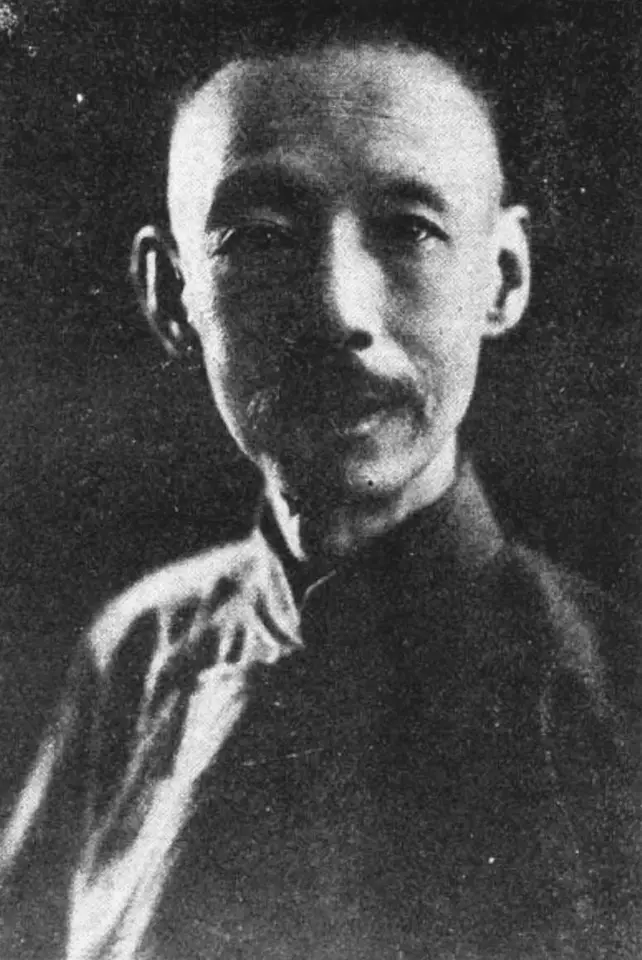
曾朴
Zeng Pu (曾朴, March 1, 1872 – June 23, 1935), courtesy name Mengpu, pen name Sick Man of East Asia (Dongya Bingfu), was a native of Changshu, Jiangsu Province, and an eminent novelist, literary translator, and publisher of the late Qing and early Republican eras. Born into an elite Changshu lineage, Zeng passed the provincial examination in 1891 and purchased the rank of secretary in the Grand Secretariat in Beijing.…
Zeng Pu (曾朴, March 1, 1872 – June 23, 1935), courtesy name Mengpu, pen name Sick Man of East Asia (Dongya Bingfu), was a native of Changshu, Jiangsu Province, and an eminent novelist, literary translator, and publisher of the late Qing and early Republican eras. Born into an elite Changshu lineage, Zeng passed the provincial examination in 1891 and purchased the rank of secretary in the Grand Secretariat in Beijing. Disdaining the mechanical eight-legged essay curriculum, he turned toward modern Western learning, studying French and European literature under the seasoned diplomat Chen Jitong. In creative writing, Zeng spent three decades crafting the monumental novel Flower in a Sea of Sins (Niehai Hua). Lauded by Lu Xun in A Brief History of Chinese Fiction as possessing refined structure and brilliant literary style, it was ranked alongside The Bureaucracy Exposed, Bizarre Happenings Eyewitnessed over Two Decades, and The Travels of Lao Can as one of the Four Great Castigatory Novels of the Late Qing. The novel uses the experiences of scholar-diplomat Jin Wenqing and courtesan Sai Jinhua to depict thirty years of political intrigue, foreign diplomacy, the Sino-Japanese War, and the Hundred Days' Reform, portraying over two hundred historical figures. Zeng was a pioneer of modern Chinese publishing and the earliest systematic translator of French literature into Chinese. In Shanghai, he established the Forest of Fiction Publishing House and issued the monthly magazine Forest of Fiction (Xiaoshuo Lin), promoting a revolution in literary fiction. In his later years, he co-founded the True, Beautiful, and Good Bookstore with his eldest son, Zeng Xubai, publishing translations of Victor Hugo's Ninety-Three, The Hunchback of Notre-Dame, Hernani, and The Man Who Laughs, alongside works by Moliere and Guy de Maupassant. In the Republic, he served as provincial finance director of Jiangsu, refusing extortionate warlord taxes and contributing personal funds to anti-Yuan Shikai campaigns before retiring to the Xukuoyuan garden in Changshu.
Born into a prominent scholarly gentry family in Changshu, reading widely from youth.
Passes the provincial civil service examination; soils his examination paper in Beijing the next year.
Meets diplomat Chen Jitong in Beijing and Shanghai, systematically studying French and Western literature.
Associates with Tan Sitong and Lin Xu in Shanghai, actively participating in reform activities.
Expands Jin Tianhe's draft and founds the Forest of Fiction Publishing House, issuing the first twenty chapters.
Launches the literary journal Forest of Fiction, serializing the novel up to chapter twenty-five.
Elected to the Jiangsu Provincial Assembly, later serving as provincial Director of Finance and Political Affairs.
Strongly opposes Yuan Shikai's imperial restoration, donating private family funds to military campaigns.
Opens the True, Beautiful, and Good Bookstore in Shanghai, serializing Flower in a Sea of Sins to chapter thirty-five.
Retires to Xukuoyuan in Changshu to translate Victor Hugo, passing away on June 23 at age sixty-three.
Zeng Pu was born into an aristocratic family in Changshu, Jiangsu Province, whose members had served as imperial officials for generations. His father, Zeng Zhizhuan, retired from his post in the Ministry of Revenue in middle age, spending twenty years constructing the magnificent Xukuoyuan garden in Changshu. His father harbored high hopes that Zeng would achieve success through the civil service examinations. Although Zeng read the required Neo-Confucian textbooks, he spent nights immersing himself in classical historical romances, poetry, and unofficial histories.
In 1891, twenty-year-old Zeng passed the Jiangxi provincial examination. The following spring, he traveled to Beijing to sit the metropolitan examination. Having grown disillusioned with an examination system that treated scholars like suspects and rewarded pedantic conformity, Zeng deliberately spilled ink over his examination paper, composed an indignant poem on the margin, and walked out of the hall, declaring that true honor could not be attained through such avenues.
To shield him from family embarrassment, his father purchased for him the rank of secretary in the Grand Secretariat. While Zeng enjoyed the cultural circles of Beijing, he grew tired of bureaucratic sycophancy, resigning his post to return south to Shanghai.
Following the catastrophic defeat of the Qing Empire in the First Sino-Japanese War in 1895, Zeng met Chen Jitong, a diplomat who had served as counselor in the Chinese legation in Paris. Fluent in French and conversant with Western political philosophy, Chen introduced Zeng to the thought of Montesquieu, Rousseau, and Victor Hugo, while teaching him the French language. Under Chen's guidance, Zeng read French literature in the original, broadening his literary perspective.
On the eve of the Hundred Days' Reform in 1898, Zeng resided in Shanghai, associating with reformers such as Tan Sitong, Lin Xu, and Tang Caichang. When the coup d'etat erupted and the Six Gentlemen were executed, Zeng escaped arrest because he had returned to Changshu to arrange his father's funeral. He composed satirical verses mocking Empress Dowager Cixi's reliance on eunuch Li Lianying and lamenting Emperor Guangxu's imprisonment on Yingtai Island.
In 1900, when Jiangnan official Jing Yuanshan gathered over a thousand signatures petitioning Cixi not to depose the Emperor, Zeng signed his name. He also sheltered local scholar Shen Beishan in his home after Shen petitioned for the removal of conservative ministers, demonstrating personal courage.
Recognizing that literary fiction could educate the public, Zeng embraced novel writing. In 1903, the revolutionary journal Jiangsu in Tokyo published the first two chapters of Flower in a Sea of Sins, penned by Jin Tianhe. Due to failing health, Jin entrusted the manuscript to Zeng. Excited by the material, Zeng agreed on a sixty-chapter outline and undertook a complete rewriting of the work.
Working through the night, Zeng completed the first twenty chapters in three months. In 1904, he established the Forest of Fiction Publishing House in Shanghai, printing the first two installments under the pseudonym Sick Man of East Asia. The novel became an immediate sensation, running through dozens of reprints.
In 1907, Zeng launched the monthly magazine Forest of Fiction (Xiaoshuo Lin), serializing the novel through chapter twenty-five while translating European realistic and romantic fiction. The journal became a cornerstone of the late Qing Fiction Revolution, elevating vernacular fiction into an instrument of cultural modernization.
Following the 1911 Revolution, Zeng supported the Republic, winning election to the Jiangsu Provincial Assembly and serving as Director of the Bureau of Public Estates, Director of Finance, and Director of Political Affairs. In government, he maintained strict integrity, resisting warlord demands for increased land taxes and defending funding for public schools. When warlord Sun Chuanfang attempted to levy arbitrary agricultural surcharges, Zeng resigned in protest.
During Yuan Shikai's monarchical restoration, Zeng allied with General Cai E and funded anti-Yuan revolutionary efforts led by Chen Qimei, donating his family savings to provide military supplies.
In 1927, fifty-five-year-old Zeng and his eldest son, Zeng Xubai, founded the True, Beautiful, and Good Bookstore in Shanghai, launching the journal The True, Beautiful, and Good (Zhen Mei Shan). He revised earlier chapters of Flower in a Sea of Sins and published chapters twenty-six through thirty-five, completing thirty years of composition. In 1931, he retired to Xukuoyuan in Changshu, focusing on translating Victor Hugo. On June 23, 1935, Zeng passed away at his residence at age sixty-three.
Zeng Pu's crowning literary achievement was his thirty-year composition of the extended historical novel Flower in a Sea of Sins (Niehai Hua). Using the partnership between the imperial top scholar Jin Wenqing (modeled on diplomat Hong Jun) and the courtesan Fu Caiyun (modeled on Sai Jinhua) as its narrative thread, the novel sweeps across thirty turbulent years from the Tongzhi era to the Hundred Days' Reform.
The work broke away from the narrow conventions of romantic fiction, incorporating the Sino-French War, the naval disaster in the Yellow Sea, the Ili border negotiations with Tsarist Russia, and early revolutionary underground plots. Zeng painted a canvas featuring more than two hundred historical personalities, capturing the vanity of traditional scholars, the decay of the Qing court, and the idealism of young reformers.
Lu Xun praised the novel in A Brief History of Chinese Fiction for its refined structure and literary elegance, ranking it alongside The Bureaucracy Exposed, Bizarre Happenings Eyewitnessed over Two Decades, and The Travels of Lao Can as one of the Four Great Castigatory Novels of the Late Qing. Translated into Japanese, French, and English, it remains an important literary portal into late imperial China.
Zeng was an influential figure in the late Qing transformation of popular print culture. In 1904, alarmed by the proliferation of sensationalist publications, he founded the Forest of Fiction Publishing House in Shanghai to promote enlightened vernacular literature.
In 1907, he founded the monthly literary periodical Forest of Fiction (Xiaoshuo Lin). Under his direction, the journal serialized realist fiction and introduced modern Western critical theory. Through its publications, the press popularized vernacular prose and transformed fiction from a marginalized genre into an instrument of social critique and civic enlightenment.
Zeng was among the earliest Chinese translators to introduce French romantic and realist literature directly from original French editions, rather than through English or Japanese intermediaries. Benefiting from Chen Jitong's tutoring, he translated works with fidelity and literary polish.
Over several decades, Zeng translated more than a dozen classic French texts, focusing on the works of Victor Hugo. His publications included Hugo's novels Ninety-Three, The Hunchback of Notre-Dame, and The Man Who Laughs, along with verse dramas such as Hernani and Ruy Blas. He also translated Moliere's comedy The Miser, psychological plays by Paul Hervieu, and short stories by Guy de Maupassant and Emile Zola.
In The True, Beautiful, and Good, Zeng published critical essays analyzing the French Enlightenment and Hugo's humanitarian philosophy. His translations introduced French literature to Chinese intellectuals, paving the way for the May Fourth literary generation.
FIGURES ASSOCIATED WITH THIS DYNASTY