Born in Xilin
Born on the 23rd day of the 3rd lunar month into an eminent bureaucratic family in Guangxi; showed early boldness and independent spirit.
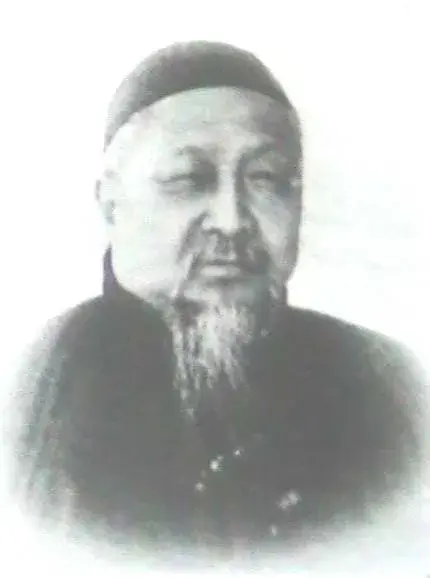
岑春煊
Cen Chunxuan (岑春煊, May 2, 1861 – April 27, 1933), courtesy name Yunjie (云阶), art name Jiongtang Laoren (炯堂老人), was a native of Xilin County, Guangxi. Descended from a prominent Zhuang hereditary chieftain lineage and the third son of Viceroy Cen Yuying, he was an eminent statesman, military commander, and administrative reformer of the late Qing and early Republican eras. Cen entered officialdom through hereditary privilege,…
Cen Chunxuan (岑春煊, May 2, 1861 – April 27, 1933), courtesy name Yunjie (云阶), art name Jiongtang Laoren (炯堂老人), was a native of Xilin County, Guangxi. Descended from a prominent Zhuang hereditary chieftain lineage and the third son of Viceroy Cen Yuying, he was an eminent statesman, military commander, and administrative reformer of the late Qing and early Republican eras. Cen entered officialdom through hereditary privilege, volunteered for frontline defense during the First Sino-Japanese War, and actively supported the Hundred Days' Reform. In 1900, during the Boxer Rebellion and Eight-Nation Alliance invasion, he marched his troops night and day to relieve the court, escorting Empress Dowager Cixi and the Guangxu Emperor to Xi'an. For this service, he was promoted to Governor of Shaanxi and subsequently Governor of Shanxi, where he co-founded Shanxi University, one of modern China's earliest national collegiate institutions. Subsequently appointed Governor-General of Sichuan and Governor-General of Liangguang, Cen gained imperial renown for his aggressive anti-corruption campaigns, impeaching and cashiering over 1,400 venal officials and earning the popular title "Official Butcher" (Guan Tu). During the Dingwei Political Crisis of 1907, he aligned with Grand Councillor Qu Hongji to purge corrupt cliques under Prince Qing and Yuan Shikai, only to be framed by doctored photographic propaganda and forced into temporary retirement. Following the 1911 Xinhai Revolution, Cen championed the Second Revolution, was acclaimed Generalissimo of the Anti-Yuan forces, and led the National Protection War across Liangguang to bring about the downfall of Yuan Shikai's imperial regime. In 1918, he was elected Presiding Director of the Constitutional Protection Military Government in Guangzhou. Retiring from politics in 1920, he spent his final years in Shanghai, authoring his memoir Lezhai Manbi before his death in 1933 at seventy-two.
Born on the 23rd day of the 3rd lunar month into an eminent bureaucratic family in Guangxi; showed early boldness and independent spirit.
Passed the Guangxu provincial examination as a juren; obtained rank as department director in the Ministry of Works.
Submitted successive memorials requesting military service at the front during the Sino-Japanese War; joined Liu Kunyi's field headquarters.
Promoted to Provincial Administration Commissioner of Guangdong, eliminating redundant agencies; reassigned to Gansu and successfully impeached Viceroy Tan Zhonglin.
Led two thousand troops to relieve the capital; met the imperial court at Huailai, restored order, and was promoted to Governor of Shaanxi.
Reassigned as Governor of Shanxi; resolved Boxer aftermath disputes and collaborated with Timothy Richard to establish Shanxi University.
Appointed Governor-General of Liangguang; prosecuted infamous corruption figures Zhou Rongyao and Pei Jingfu, earning the sobriquet "Official Butcher".
Supported imperial constitutional preparations, donating ten thousand silver taels to patronize the Association for the Preparation of Constitutional Government.
Appointed Minister of Posts and Communications; joined Qu Hongji in attacking corrupt factions, but was framed by photomontages and forced to retire.
Backed Sun Yat-sen in the Second Revolution against Yuan Shikai's dictatorship; nominated Generalissimo of the allied provincial forces.
Assumed command of the Liangguang Military Headquarters and Military Council, issuing manifestos that forced Yuan Shikai to rescind his imperial monarchy.
Elected Presiding Director of the Guangzhou Military Government, heading the southwestern constitutional coalition.
Resigned executive offices amidst inter-warlord conflicts, withdrawing permanently from political life to reside in Shanghai.
Died of heart failure at his Shanghai residence on April 27 at the age of seventy-two.
Cen Chunxuan was born on May 2, 1861, in Nalao Village, Xilin County, Sicheng Prefecture, Guangxi. His family traced its ancestry to Cen Peng, one of the twenty-eight founding generals of the Eastern Han dynasty; in the Song period, descendants followed General Di Qing south to suppress regional rebellions and became hereditary chieftains (tusi) of Shanglin. His father, Cen Yuying, was a distinguished military leader who served as Governor of Yunnan and Viceroy of Yun-Gui during the late Qing era. Cen Chunxuan was his father's third son, known affectionately as "Cen the Third"; owing to his mercurial temperament and audacious conduct, contemporaries in capital salons and provincial academies also nicknamed him "Mad Cen the Third" (Dian San).
Tutored in classical academies across Lingyun and Guilin, Cen immersed himself in Confucian historiography, martial arts, and military logistics. By virtue of his father's viceregal rank, he entered imperial administration through ancestral privilege as a student of the Imperial Academy, purchasing clerical rank in the Ministry of Works. In 1885, he passed the Guangxu provincial civil service examination as a juren. In 1888, after donating funds toward naval expansion, he was designated a substantive department director (langzhong) awaiting vacancy, gradually establishing an influential network across capital official circles.
In 1894, the First Sino-Japanese War broke out. In the face of imperial hesitation and ministerial reluctance, Cen boldly submitted two memorials requesting immediate assignment to the fighting front. The throne granted his request, assigning him to the field headquarters of Imperial Commissioner Liu Kunyi. Although Liu did not entrust him with critical operational commands due to his reputation for youthful impetuosity, this wartime experience deepened Cen's conviction that the Qing dynasty faced systemic ruin without urgent institutional overhaul.
Following China's disastrous defeat, Cen allied himself with leading reformers. He contributed funds to the Qiangxuehui in Shanghai and the Baoguohui in Beijing. In February 1897, he collaborated with Kang Youwei's associates in Guilin to inaugurate the "Shenghueihui" (Sacred Study Society), the most influential reformist association in southwestern China, demanding modern schools, military modernization, and administrative restructuring.
In August 1898, during the Hundred Days' Reform, the Guangxu Emperor appointed Cen Provincial Administration Commissioner of Guangdong. Upon reaching Guangzhou, Cen initiated sweeping bureaucratic cuts, abolishing sinecures and dismissing corrupt functionaries throughout the provincial administration, directly challenging the conservative Viceroy Tan Zhonglin. When the conservative coup of September 1898 crushed the reform movement, Cen narrowly escaped arrest through the protective intervention of Grand Councillor Ronglu, who arranged for his transfer to Gansu. Even while stationed on the northwestern frontier, Cen submitted a scathing impeachment against Viceroy Tan Zhonglin for administrative paralysis, successfully forcing Tan's removal—an unprecedented occurrence of a provincial commissioner bringing down an imperial viceroy.
In the summer of 1900, the Boxer uprising reached its zenith, precipitating the Eight-Nation Alliance invasion. While regional viceroys across central and southern China formed the "Mutual Defense Pact of the Southeastern Provinces" to maintain neutrality, Cen, then serving as Gansu administration commissioner, rallied two thousand cavalry and infantry troops, marching day and night to relieve the throne.
Arriving in Zhili, Cen discovered that Beijing had fallen and the imperial family had fled westward in disguise. Leading a selected flying column, Cen overtook the royal procession in Huailai County. County Magistrate Wu Yong, who had been appointed by Cixi to organize transit supplies, had struggled amidst starvation and disorder, and yielded the duty to Cen. Cen restored order with absolute decisiveness, summarily executing mutinous soldiers and dishonest eunuchs while compelling magistrates along the route to supply grain, tents, and transport. Empress Dowager Cixi wept in gratitude, declaring: "Without your timely arrival, how could we have survived this calamity!" Upon reaching Xi'an, Cixi rewarded his loyalty by promoting him to Governor of Shaanxi.
In 1901, Cen was reassigned as Governor of Shanxi, where Boxer rampages had resulted in massive foreign missionary casualties and staggering indemnity claims. Cen investigated abuses impartially, suppressed local bandits, and resolved contentious missionary disputes. More significantly, believing that popular enlightenment was the sole shield against imperialist aggression, he negotiated with British missionary Timothy Richard to allocate five hundred thousand silver taels from Boxer indemnity funds to found Shanxi University, establishing one of China's earliest modern provincial collegiate institutions.
In July 1902, Cen was designated Governor of Guangdong, but was diverted to Chengdu as Acting Governor-General of Sichuan to quell extensive Gelaohui secret society insurgencies. Cen swiftly pacified the province, founded modern police departments, and dismissed dozens of corrupt officers who had provoked popular unrest.
In 1903, amidst chronic rebellion throughout Guangxi, the throne transferred Cen to Guangzhou as Governor-General of Liangguang. Cen deployed disciplined armies to secure the Guangxi borderlands while launching a ferocious anti-corruption crusade across the southern bureaucracy. He relentlessly targeted high-profile venal officials, including Maritime Customs Superintendent Zhou Rongyao and Nanhai Magistrate Pei Jingfu. During his three-year administration, Cen impeached and purged over 1,400 civil and military officials, purging entrenched administrative rot. His uncompromising severity terrorized corrupt bureaucrats, earning him the nationwide moniker "Official Butcher" (Guan Tu).
During his governance of Sichuan and Liangguang, Cen demonstrated pioneering talent in modern public administration. Serving as Acting Governor-General of Sichuan amid widespread banditry and Gelaohui secret society uprisings, Cen rejected reliance solely on bloody suppression, combining severity with clemency. Analyzing the root causes of unrest, he recognized that many peasants and artisans were driven into secret societies by official extortion and punitive tax surcharges. Accordingly, while sternly executing unrepentant rebel ringleaders, he promulgated benevolent rehabilitation regulations, successfully pacifying and reintegrating tens of thousands of coerced followers to restore order across Sichuan.
More fundamentally, Cen founded the earliest modern police system in western China. Recognizing that traditional Green Standard and postal-station garrison troops were ill-disciplined, corrupt, and in collusion with local ruffians, Cen drew upon models from Tianjin and the West to create the Chengdu Police Headquarters (Xunjing Zongju). He recruited physically robust youths, hired Japanese instructors and modernized officers to provide training in investigation, patrol, and firefighting, and instituted strict police codes. This disciplined, uniformly attired police force rapidly suppressed street crime and established a modern municipal security benchmark for southwestern China.
Upon transferring to Liangguang, Cen replicated these administrative innovations across southern China. He established the Guangdong Provincial Police Headquarters, creating branch bureaus across prefectures and counties to systematically replace obsolete Green Standard garrisons. Simultaneously, Cen restructured provincial finances and currency. Confronting chaotic private minting, market depreciation, and counterfeit silver dollars that hampered regional commerce, Cen personally reorganized the Guangdong provincial mint, severely punished corrupt managers, audited treasury ledgers, and recalled debased coinage, restoring fiscal credibility and providing a stable financial environment for coastal commerce and industry.
Cen firmly believed that national survival against foreign encroachment depended on enlightening the citizenry and training modern technical talent. Throughout his viceregal career, he consistently prioritized the expansion of modern education. Beyond his landmark achievement in founding Shanxi University, his contributions to institutionalizing modern education in southern China were profound.
During his tenure in Guangdong, Cen utilized confiscated assets from corrupt officials and allocated specialized provincial revenues to establish specialized colleges in Guangzhou. He founded the Guangdong Higher Institute, the Liangguang Institute of Foreign Languages, the Agricultural College Attached to the Experimental Farm, and the Liangguang Advanced Normal College. To meet the urgent demands of judicial and administrative reforms, Cen also established the Liangguang College of Law and Politics and the Police-Prison Academy, hiring scholars educated in Europe, America, and Japan to systematically teach modern constitutional law, criminal law, administrative law, and international public law. These modern institutions replaced obsolete rote memorization of the Confucian classics, producing thousands of specialized graduates in jurisprudence, education, and public administration.
Concurrently, Cen maintained deep devotion to the cultural development of his native Guangxi. His father, Cen Yuying, had founded Nanyang Academy in Nalaozhai, Xilin County. Throughout his regional governorships, Cen regularly remitted substantial portions of his personal salary to expand the academy's lecture halls and dormitories, purchasing thousands of modern volumes and scientific instruments, hiring distinguished instructors, and providing scholarships for impoverished Miao and Zhuang youths to pursue education. The academy later evolved into a modern school, serving as a vital cradle of cultural enlightenment on the western Guangxi frontier.
In September 1906, the Qing court issued an imperial rescript proclaiming "Preparations for Constitutional Government." Cen enthusiastically endorsed the proclamation, sending personal emissaries to Shanghai to provide ten thousand silver taels to constitutionalist leader Zhang Jian, facilitating the legal founding of the Association for the Preparation of Constitutional Government.
However, Cen's uncompromising anti-corruption drives severely threatened the dominant court syndicate headed by Prince Qing (Yikuang) and Zhili Viceroy Yuan Shikai. To combat this corrupt alliance, reformist leader Qu Hongji formed a political partnership with Cen. In the spring of 1907, Cen was summoned to the capital and appointed Minister of Posts and Communications.
Cen immediately filed grave corruption charges against Yikuang's son Zai Zhen and his associate Duan Zhigui over bribery and the sale of public offices, resulting in Duan's dismissal and Zai Zhen's resignation. Cornered, Yuan Shikai and Prince Qing struck back through deceit: utilizing Western composite photography techniques, they fabricated a montage depicting Cen Chunxuan conferring with exiled reformist leaders Kang Youwei and Liang Qichao. Presenting this forgery to Empress Dowager Cixi, they alleged that Cen was secretly plotting rebellion. Cixi was duped, grew suspicious of Cen, and transferred him back to the Liangguang viceroyship. Recognizing the court's toxic political atmosphere, Cen claimed illness upon reaching Shanghai and stepped down from office. This episode, known as the Dingwei Political Crisis of 1907, ended with the purge of Qu Hongji and Cen's retirement. Yuan Shikai later attempted to frame Cen by forging treasonous letters to Zhejiang Governor Zengyun, but Zengyun returned the letters to Cen, foiling the plot.
In the autumn of 1911, the Sichuan Railway Protection Movement ignited open revolution. Desperate to restore order, the Qing court appointed Cen Governor-General of Sichuan. Assessing the dynasty's inevitable doom, Cen lingered in Hankou and declined to proceed. The Wuchang Uprising soon followed, leading to the collapse of the Qing Empire and the founding of the Republic of China.
In 1912, Yuan Shikai sought to co-opt Cen by offering him the commissionership of Guizhou, which Cen curtly refused. He later accepted directorship of the Canton-Hankow-Sichuan Railway to focus on practical industrial construction. However, following the assassination of Song Jiaoren in March 1913, Cen broke irrevocably with Yuan. When Li Liejun launched the Second Revolution in July, General Huang Xing and the allied commanders at Nanjing elected Cen Generalissimo of the Anti-Yuan Armies. Cen assumed office in Nanjing and traveled to Guangzhou with Li Genyuan to rally southern forces. Following the campaign's defeat, Yuan issued a warrant for Cen's arrest, forcing him into overseas exile.
In late 1915, Yuan Shikai proclaimed himself Emperor of China. In response, Cai E and Tang Jiyao launched the National Protection War in Yunnan. Confronting severe weapon and fund shortages, Tang cabled Cen to assume leadership in fundraising. Cen traveled to Japan with Zhang Yaozeng, securing critical weapons and finance, before slipping into Hong Kong in March 1916.
Cen utilized his profound prestige in the south to compel Guangdong Governor Long Jiguang and Guangxi Governor Lu Rongting to declare independence. In May 1916, the southwestern provinces established the Zhaoqing Military Council (Junwuyuan), electing Cen as Chief Director (Fujunzhang), with Liang Qichao serving as chief of political affairs. Cen issued a blistering manifesto detailing Yuan's fourteen treasonous crimes, unifying military operations across the southern provinces and forcing Yuan to rescind his monarchy shortly before his death.
In 1917, after northern warlords dismantled parliamentary governance, Sun Yat-sen established the Constitutional Protection Military Government in Guangzhou. Cen returned to politics, joining southern leaders in seeking constitutional restoration and national reconciliation.
In May 1918, parliament reorganized the military government into a seven-member presidium, electing Cen as Presiding Director (Zhuxi Zongcai). Cen directed southern civil administration and conducted peace negotiations with northern authorities under Feng Guozhang. However, escalating factional warfare between Guangdong and Guangxi military cliques paralyzed the government. In 1920, Tang Jiyao released Cen's secret northern peace communications, and Cantonese general Chen Jiongming launched an offensive against Guangxi forces in Guangzhou. Cen resigned his leadership and withdrew permanently to Shanghai.
In his final years, Cen lived quietly in Shanghai, enjoying classical guqin music with Daoist Master Han Taichu and dictating his memoir Lezhai Manbi. He died on April 27, 1933, at the age of seventy-two, instructing his heirs to practice integrity and leave no personal fortune.
Cen Chunxuan's foremost historical legacy was his unsparing crusade against official corruption. In an era when bureaucratic graft was pervasive, Cen pursued venal officials without hesitation. Contemporary observers noted that whenever Cen took charge of a province, the entire administrative apparatus trembled in fear.
During his Liangguang administration, Cen broke two monumental corruption rings. The first involved Zhou Rongyao, a former customs clerk who embezzled millions in public silver, bribed Prince Qing to purchase second-rank honors, and secured appointment as minister to Belgium to escape prosecution. Cen audited the customs ledgers, secured damning evidence, and successfully petitioned the throne to strip Zhou of his diplomatic office and order his nationwide arrest.
The second case targeted Nanhai Magistrate Pei Jingfu, who had extorted over two hundred thousand taels from local merchants. When Pei fled to Portuguese Macau with embezzled funds, Cen exercised diplomatic pressure to secure his extradition, subsequently banishing him to Xinjiang. By impeaching over 1,400 officials during his southern tenure, Cen struck a historic blow against late Qing corruption, earning everlasting fame as the "Official Butcher."
Cen was a preeminent institutional architect of modern Chinese higher education. As Governor of Shanxi in 1901, following the devastation of the Boxer Rebellion, he recognized that national humiliation stemmed from widespread scientific ignorance.
Negotiating with British missionary Timothy Richard, Cen arranged for five hundred thousand silver taels from Boxer indemnity allocations to be repurposed into an educational endowment. In the spring of 1902, Shanxi University was founded in Taiyuan, integrating traditional Chinese classics with modern Western natural sciences, engineering, and international jurisprudence. This initiative prevented the flight of imperial silver abroad and placed Shanxi University alongside Peking University and Peiyang University as one of China's three earliest national universities. In Guangdong, Cen established Guangdong University, police academies, and legal institutes, advancing modern education across southern China.
During the crisis of 1900, when imperial power collapsed under foreign assault, Cen was the sole provincial leader who rushed two thousand troops over a thousand miles to defend the court.
Reaching the emperor and empress dowager at Huailai, Cen restored order through strict discipline. He executed mutinous soldiers, curtailed the abuses of palace eunuchs, and secured transport and provisions for the imperial entourage throughout their journey to Xi'an. His decisiveness prevented the total dissolution of dynastic authority at its most precarious moment, securing Empress Dowager Cixi's profound confidence for the remainder of her reign.
Cen's political evolution from an imperial viceroy into a republican leader demonstrated his dedication to national progress over personal privilege. In 1913, he refused Yuan Shikai's lucrative blandishments to lead the Second Revolution.
In 1915, Cen joined the National Protection War, mobilizing military forces in Liangguang to oppose Yuan's monarchical ambitions. His manifestos rallied domestic and international opinion, playing an indispensable role in crushing the imperial restoration. During the Constitutional Protection Movement, as Presiding Director of the Guangzhou Military Government, he worked persistently to defend constitutional principles and seek a negotiated unification for China.
FIGURES ASSOCIATED WITH THIS DYNASTY