Birth in Jin Era
Born amidst the collapse of the Jin dynasty into a hereditary physician household; trained in medicine and classical scholarship.
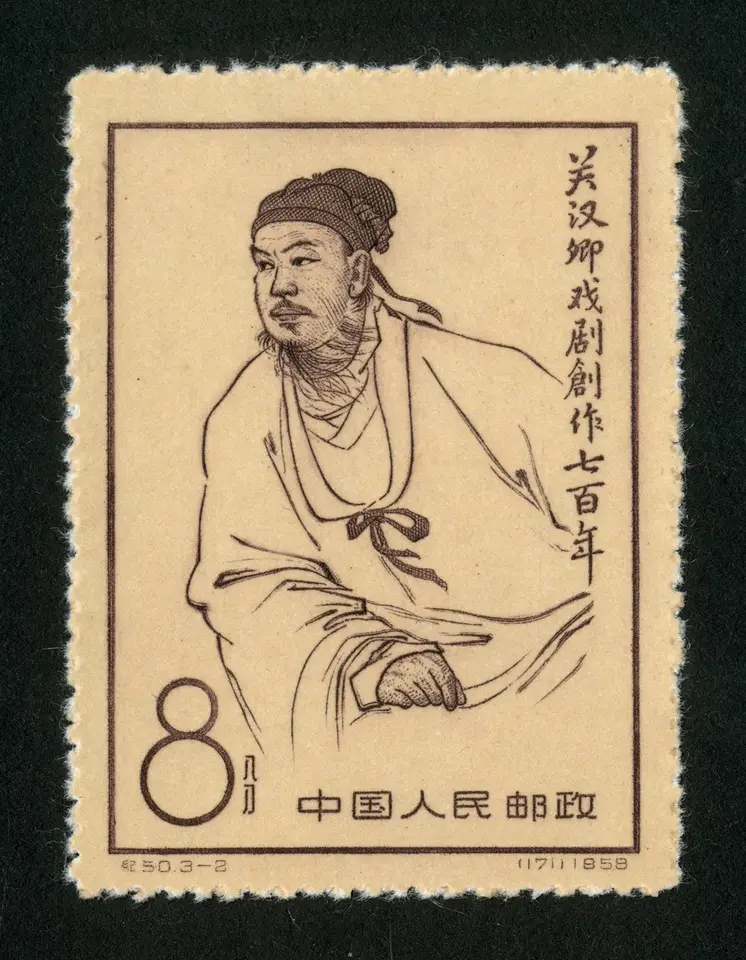
关汉卿
Guan Hanqing (关汉卿), styled Hanqing (汉卿), sobriquet Yi Zhaisou (已斋叟), was a native of Dadu (modern Beijing, with alternative traditions pointing to Anguo, Hebei or Yuncheng, Shanxi). He was an outstanding dramatist, founding master of northern zaju theater, and sanqu poet of the Yuan dynasty, universally revered as the foremost among the Four Great Yuan Dramatists (alongside Bai Pu, Ma Zhiyuan, and Zheng Guangzu). He is…
Guan Hanqing (关汉卿), styled Hanqing (汉卿), sobriquet Yi Zhaisou (已斋叟), was a native of Dadu (modern Beijing, with alternative traditions pointing to Anguo, Hebei or Yuncheng, Shanxi). He was an outstanding dramatist, founding master of northern zaju theater, and sanqu poet of the Yuan dynasty, universally revered as the foremost among the Four Great Yuan Dramatists (alongside Bai Pu, Ma Zhiyuan, and Zheng Guangzu). He is celebrated as the supreme pioneer of classical Chinese drama and recognized internationally as the Shakespeare of the East. Born into a hereditary physician household during the transition from Jin to Yuan rule, he received rigorous education in classical literature and medicine, acquiring comprehensive insight into everyday urban society. Following the Mongol conquest, the suspension of the imperial civil examinations for decades closed the traditional path of bureaucratic advancement, reducing the northern literati to marginalized social status. Rather than lamenting his fate in aloof seclusion, Guan cast aside scholar pretension to immerse himself in urban entertainment quarters (washi goulan), associating with actors, singers, and folk performers. He organized the Yujing Book Society, Dadu's renowned guild of playwrights, writing, directing, and performing upon the stage, dedicating his genius to creating mature northern zaju dramas that championed the oppressed and condemned tyranny. Over his lifetime, Guan authored over sixty zaju plays (eighteen of which survive), including the world-renowned tragedy The Injustice to Dou E, the sparkling romantic comedies Saving a Courtesan and The Riverside Pavilion, the martial historical drama Lord Guan Goes to the Feast Alone, and the domestic drama The Moon-Worship Pavilion. His works combine acute social critique with compassionate humanism; dramaturgically, they exhibit tight structural unity, intense dramatic conflict, vivid characterization, and natural, colloquial poetry. In his celebrated sanqu sequence A Spray of Flowers: Not Bowing to Old Age, he styled himself as an indestructible, uncrackable, resonant copper pea that neither boiling nor hammering could alter, epitomizing the defiant integrity of Chinese popular literature. In 1958, the World Peace Council commemorated him as a world cultural figure, and his works continue to be staged globally.
Born amidst the collapse of the Jin dynasty into a hereditary physician household; trained in medicine and classical scholarship.
Settled in the bustling metropolis of Dadu alongside northern scholars; engaged directly with popular theater quarters.
Led the Yujing Book Society, Dadu's preeminent playwright guild; associated with Wang Heqing and Yang Xianzhi.
Authored the monumental tragic masterpiece The Injustice to Dou E, expressing outrage against bureaucratic corruption.
Directed stage companies and performed diverse stage roles in makeup; formed close artistic partnerships with actresses such as Zhu Lianxiu.
Authored Saving a Courtesan and The Riverside Pavilion, creating heroic and resourceful female protagonists such as Zhao Pan'er.
Composed Lord Guan Goes to the Feast Alone, celebrating legendary martial heroism across the waters of the Yangtze.
Traveled south to Hangzhou, collaborating with southern playwrights and fostering the integration of northern and southern theater.
Penned the famous sanqu sequence A Spray of Flowers: Not Bowing to Old Age, proclaiming his unyielding spirit as a copper pea.
Passed away in Dadu around age seventy; actors and theatrical circles across the capital mourned the loss of the theatrical patriarch.
Guan Hanqing was born in the final years of the Jin dynasty. Historical sources contain diverging accounts concerning his exact birthplace: the Yuan work Register of Ghosts records him as a native of Dadu; the Xijin Record lists him as a man of Yan; while Ming and Qing gazetteers suggest Qizhou (modern Anguo, Hebei Province) or Xiezhou (modern Yuncheng, Shanxi Province). Under the Mongol registration system that divided populations into military, civilian, artisan, and medical households, Guan's family was classified as a medical household due to generations of medical practice.
During the catastrophic wars of the Mongol conquest, northern China was devastated by relentless conflict. However, families registered as physicians enjoyed relative security compared to destitute serfs, possessing practical medical skills essential to both rulers and commoners. This circumstance allowed the young Guan Hanqing to receive an extensive classical education despite turbulent times. Guan thoroughly studied the Confucian classics and historical treatises while mastering traditional pharmacology, acupuncture, and diagnostic medicine. This synthesis of Confucian ethics, empirical medical science, and intimate acquaintance with ordinary life provided fertile ground for his later dramatic art.
Following the total unification of China under the Mongol Yuan dynasty, the imperial government instituted a rigid four-tier ethnic hierarchy (Mongols, Semu, Han, and Southerners) and abolished the imperial civil examinations for several decades. The traditional avenue of social advancement for educated scholars was severed overnight. Derided in folk proverbs as ranking just above beggars, northern scholars found their political aspirations shattered and their economic livelihoods precarious.
Concurrently, Yuan Dadu (modern Beijing) emerged as a thriving commercial metropolis of global renown, populated by merchants, artisans, and diverse peoples. To cater to the leisure demands of this burgeoning citizenry, the capital established numerous commercial entertainment districts known as washi goulan. Confronted with dynastic upheaval, the charismatic, uninhibited Guan Hanqing cast off the rigid pretensions of traditional literati. Instead of withdrawing into brooding seclusion, he turned his creative energies directly toward the public stage, embracing the emerging art of northern zaju theater.
Within the capital, Guan emerged as the undisputed leader of northern theatrical creation. He gathered prominent playwrights and lyricists to establish the Yujing Book Society, acting as its chief organizer and mentor. Within this guild, Guan maintained close creative relationships with celebrated writers including Wang Heqing, Yang Xianzhi, Fei Junxiang, Liang Jinzhi, and Wang Shifu, debating poetic phrasing, dramatic plotting, and melodic pacing.
Unlike conventional scholars who composed texts exclusively in their studies, Guan was a consummate man of the theater. He was thoroughly versed in vocal technique, musical percussion, choreography, and costuming. To ensure that his dialogue resonated with ordinary audiences, he spent his days behind the scenes with traveling troupes and performing actresses, sharing their joys and hardships. In numerous productions, Guan personally applied stage makeup and donned theatrical robes, performing diverse roles across male and female stock types. This rare synthesis of literary genius and direct theatrical experience endowed his scripts with unmatched dramatic vitality, rhythmic momentum, and stage presence.
In early Yuan society, the absence of an effective legal system permitted noble magnates and corrupt officials to seize property, extort taxes, and execute commoners with impunity. Confronting widespread misery, Guan employed his dramatic brush as a devastating weapon against injustice, sympathizing profoundly with vulnerable women who suffered under patriarchal tyranny and official oppression.
Around 1276 AD, drawing upon regional folktales and contemporary legal outrages, Guan composed the monumental tragedy The Injustice to Dou E. In the drama, the young widow Dou E observes filial duty and moral innocence, yet is framed for murder by the local scoundrel Zhang Lvr'er. The corrupt Chuzhou prefect Taowu subjects her to brutal torture, forcing a false confession to save her elderly mother-in-law, and condemns her to execution. Before the headsman's blade, Dou E proclaims three miraculous vows: that her blood shall fly upward to stain a white banner, that heavy snow shall fall in midsummer, and that a severe drought shall afflict the region for three years. In her heart-rending aria, she curses Heaven and Earth: "Earth, if you cannot distinguish good from bad, why be the Earth! Heaven, if you mistake the worthy for the foolish, in vain do you act as Heaven!" The drama provoked profound weeping and indignation among audiences, establishing itself as the most powerful indictment of bureaucratic tyranny in classical Chinese drama.
Concurrently, Guan created celebrated social comedies highlighting the courage of lower-class women. In Saving a Courtesan, he depicted the resourceful courtesan Zhao Pan'er, who utilizes quick wit and feigned affection to outsmart the abusive aristocrat Zhou She, successfully rescuing her friend Song Yinzhang from bondage. In The Riverside Pavilion, the young widow Tan Ji'er disguises herself as an ordinary fisherwoman on the Mid-Autumn Festival, using charm and wine to steal the execution tokens carried by the predatory official Yang Yani, preserving her marriage and personal dignity. In these works, women are depicted not as passive victims, but as heroic, intelligent protagonists capable of mastering their own destinies.
Beyond domestic tragedies and comedies, Guan demonstrated sweeping epic power in his historical dramas. In Lord Guan Goes to the Feast Alone, depicting the three kingdoms general Guan Yu attending Lu Su's banquet in enemy territory, Guan Hanqing captured the supreme majesty of the solitary hero sailing across the Yangtze. Standing in the prow of his boat, Guan Yu sings of the thousand surging waves of the river, proclaiming that the waters are not mere river runoff, but the unceasing heroic blood shed across twenty years of warfare. This heroic spirit provided powerful solace and defiance to Han Chinese populations enduring foreign subjugation.
Around 1292 AD, the aging dramatist traveled south to Hangzhou, the former Southern Song capital. In Jiangnan, he formed close ties with southern writers including Bai Pu and Chou Yuan, alongside celebrated actresses such as Zhu Lianxiu. Through his prestige and craftsmanship, Guan facilitated the deep fusion of northern zaju with southern theatrical traditions, transforming zaju from a regional genre into a nationwide cultural phenomenon.
Returning to Dadu in his final years, Guan retained his unyielding, bohemian spirit despite advancing age and hardship. In response to moralizing Confucian hypocrites who ridiculed him for frequenting theaters and consorting with courtesans, Guan composed his immortal sanqu suite A Spray of Flowers: Not Bowing to Old Age.
In the triumphant finale, the elderly master proclaimed his defiance against the dark times: "I am a copper pea that cannot be steamed soft, boiled tender, pounded flat, or fried until it bursts, resounding with a bright chime... Who taught you youngsters to lure me? I shall not turn back midway! I have enjoyed the moon in Liangyuan, drunk wine in Dongjing, admired blossoms in Luoyang, and walked among the willows of Zhangtai. I can play chess, kick footballs, hunt, play the flute, sing, dance, and recite... Youngsters, do not heed their preachings; they say these romance quarters have no end, yet little do they know that I simply refuse to bow to old age!"
This famous work served as an autobiographical manifesto, capturing the indomitable individuality of Yuan intellectuals who refused to compromise with tyranny. Around 1300 AD (the early Dade era), Guan Hanqing passed away peacefully in Dadu at approximately seventy years of age. Actors and theaters across the capital mourned his passing with public grief. In The Rhythms of Great Peace, early Ming critic Zhu Quan praised Guan's compositions as supreme among Yuan dramatists, likening his poetry to an honored guest at a jade banquet, ensuring his eternal place in the pantheon of world literature.
Guan Hanqing is universally recognized as the founding master of Chinese classical theater. Prior to his work, Chinese theatrical arts were confined to fragmented comic sketches and narrative storytelling. Guan synthesized vernacular dialogue, melodic singing, intricate dramatic tension, and complete literary scripts, formally establishing the four-act structure of northern zaju. Composing over sixty plays across legal tragedies, comedies of manners, and historical epics, his corpus defined the golden age of Yuan drama and earned him the preeminent position among the Four Great Yuan Dramatists.
Guan Hanqing's The Injustice to Dou E occupies a revered rank in global dramatic literature. Employing realistic satire alongside romantic mythology, Guan transformed an ordinary peasant widow's wrongful execution into a cosmic rebellion against feudal autocracy. The dramatic vows of blood staining white silk and midsummer snow demonstrated the ultimate resonance between human justice and natural order. Modern scholar Wang Guowei acclaimed the play as rivaling the greatest Greek and Elizabethan tragedies, marking classical Chinese drama's entrance into world literature.
Guan was classical China's foremost literary champion of marginalized women. In an age of severe patriarchal subjugation, he elevated singing girls, widows, and bonded maidservants into noble, intelligent heroines. Characters such as Zhao Pan'er in Saving a Courtesan and Tan Ji'er in The Riverside Pavilion demonstrate tactical resourcefulness and moral solidarity, rejecting passive submission to assert control over their lives. His portrayals established a progressive standard of human dignity centuries ahead of contemporary literature.
Beyond drama, Guan was an unmatched master of sanqu poetry. Blending conversational urban idioms with classical poetic meters, he created a vigorous, colloquial aesthetic. His iconic suite Not Bowing to Old Age, with its famous metaphor of the indestructible copper pea, erected a monument to personal autonomy, intellectual freedom, and defiance of autocratic convention that continues to inspire Chinese culture.
FIGURES ASSOCIATED WITH THIS DYNASTY