Joining the Prince of Qin
Entered the personal retinue of Li Shimin, fighting in reunification campaigns as Left Scout Officer.
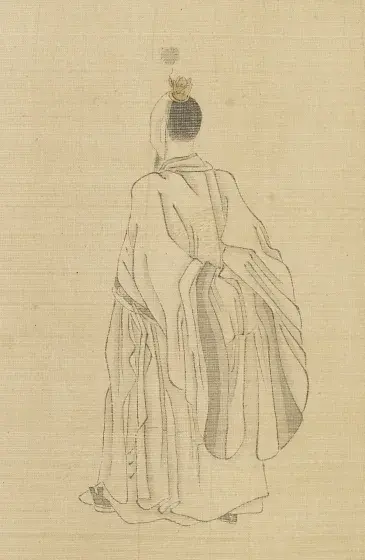
侯君集
Hou Junji (侯君集, ?–643) was an eminent military general, commander-in-chief, and senior statesman of the early Tang Dynasty during the Zhenguan era. Ranked seventeenth among the twenty-four meritorious officials depicted in the Lingyan Pavilion, he rose from the military retinue of Li Shimin (the Prince of Qin) during the late Sui civil wars, distinguishing himself in campaigns against rival warlords across the Central…
Hou Junji (侯君集, ?–643) was an eminent military general, commander-in-chief, and senior statesman of the early Tang Dynasty during the Zhenguan era. Ranked seventeenth among the twenty-four meritorious officials depicted in the Lingyan Pavilion, he rose from the military retinue of Li Shimin (the Prince of Qin) during the late Sui civil wars, distinguishing himself in campaigns against rival warlords across the Central Plains. In the Xuanwu Gate Incident of 626, Hou Junji operated as a paramount strategic architect alongside Yuchi Jingde, urging Li Shimin to launch a preemptive strike and directing elite troops to secure the palace perimeter, thereby securing Li Shimin's succession as Emperor Taizong. During the Zhenguan era, Hou Junji held senior ministerial posts including Minister of War and Minister of Personnel, actively engaging in administrative governance and military strategy. In 635, he served as a key field commander under Li Jing during the campaign against the Tuyuhun, spearheading a high-altitude winter pursuit across frozen deserts to crush Khan Fuyun and tracing the headwaters of the Yellow River. In 640, appointed Grand Area Commander of Jiaohe March, Hou Junji commanded an expeditionary force that crossed two thousand leagues of desert to conquer the Kingdom of Gaochang, establishing the Prefecture of Xizhou and the Anxi Protectorate to secure the Silk Road. However, his illicit appropriation of royal treasures led to brief imprisonment upon return, nurturing deep-seated disaffection. In 643, he allied with Crown Prince Li Chengqian in a treasonous coup plot; upon discovery, Emperor Taizong ordered his execution while pardoning his wife and son, exiling them to Lingnan.
Entered the personal retinue of Li Shimin, fighting in reunification campaigns as Left Scout Officer.
Urged Li Shimin to eliminate Crown Prince Li Jiancheng, directing guard units during the coup; created Duke of Lu.
Appointed Minister of War, applying himself to the study of history and classical statecraft.
Accompanied Li Jing deep into the Qinghai highlands, routing Khan Fuyun and reaching the sources of the Yellow River.
Elevated to Duke of Chen and appointed Minister of Personnel, overseeing civil examinations and promotions.
Appointed Grand Area Commander of Jiaohe March to lead over one hundred thousand troops against King Qu Wentai of Gaochang.
Overran Gaochang using advanced siege engines, establishing Xizhou and the Anxi Protectorate to safeguard the western territories.
Jailed in the Court of Judicial Review for embezzling palace treasures; released following remonstrance by Cen Wenben.
Painted by Yan Liben as the seventeenth meritorious statesman in the Hall of Lingyan Pavilion.
Implicated in the armed insurrection of deposed Crown Prince Li Chengqian; executed with his family spared from execution.
Hou Junji belonged to a respectable gentry house in Sanshui County within Binzhou. In his early years, he was known for a boastful demeanor, practicing archery with mediocre results while loudly advertising his martial courage. During the turbulent collapse of the Sui Dynasty, he recognized the exceptional leadership of Li Shimin, the Prince of Qin, and enlisted in his private military household. Impressed by his boldness and operational resourcefulness, Li Shimin appointed him Left Scout Officer and later promoted him to General of Chariots and Cavalry. Hou Junji participated in successive campaigns against Xue Renguo, Liu Wuzhou, Wang Shichong, and Dou Jiande, gradually entering Li Shimin's innermost circle of tactical confidants.
By the end of the Wude era, the succession struggle between Crown Prince Li Jiancheng and Li Shimin escalated toward violent confrontation. When Li Jiancheng failed to suborn general Yuchi Jingde and attempted assassinations against Qin household retainers, senior advisors Zhangsun Wuji, Fang Xuanling, Du Ruhui, and Hou Junji concluded that immediate preemptive action was imperative. Hou Junji forcefully urged Li Shimin to strike before the crown prince could mobilize imperial detachments. On the fourth day of the sixth month in 626, Li Shimin initiated the Xuanwu Gate Incident. Hou Junji was entrusted with directing elite shock forces to seal inner palace corridors and control court officials, preventing royal guard detachments from intervening. Following Li Shimin's enthronement as Emperor Taizong, Hou Junji was rewarded with appointment as General of the Left Guard and ennobled as Duke of Lu.
In the early Zhenguan era, Hou Junji served as Senior General of the Right Guard. In 630, he was elevated to Minister of War, formally joining the supreme policymaking council of the Tang court. Having risen from military ranks without formal literary education, Hou Junji recognized his intellectual shortcomings and applied himself to classical studies. He mastered administrative statutes, contributed to civil official evaluations, and successfully combined military leadership with civil governance, earning high prestige among both scholars and generals.
In 635, Khan Fuyun of the Tuyuhun launched destructive border raids against Longyou. Emperor Taizong appointed senior statesman Li Jing as Grand Area Commander of the Western Sea March, with Hou Junji and Prince Li Daozong serving as regional field commanders. Following initial defeats, the Tuyuhun forces burned pastures and fled into the trackless sands of the western desert, attempting to trap the imperial expedition through environmental attrition.
While most commanders hesitated to venture into the arid wastes, Hou Junji advocated dividing the army into two mobile columns to execute a relentless high-speed pursuit. Accompanying Li Jing with the southern column, Hou Junji marched over two thousand leagues despite freezing summer blizzards, lack of water, and extreme altitude. His vanguard repeatedly smashed Tuyuhun divisions at Luozhen Valley, Hankushan, and Wuhai, pursuing the remnants to Mount Jiyu and reaching the actual geographic headwaters of the Yellow River. This decisive victory eliminated the nomadic threat to the Hexi Corridor. In 637, Hou Junji was created Duke of Chen; the following year, he rose to Minister of Personnel.
The Kingdom of Gaochang occupied an essential oasis hub along the middle Silk Road. Relying on its alliance with the Western Turks, King Qu Wentai obstructed tributary envoys from Western kingdoms and launched raids against Hami. When Emperor Taizong summoned him to the imperial court, Qu Wentai feigned illness and boasted that the vast desert of two thousand leagues would destroy any Tang invading army within twenty days.
In late 639, Emperor Taizong appointed Hou Junji as Grand Area Commander of Jiaohe March, commanding over one hundred thousand soldiers against Gaochang. As the expedition approached the frontier desert, Qu Wentai died of shock, and his son Qu Zhisheng inherited the throne. In the autumn of 640, Hou Junji arrived at Liugu. Scouts reported that Qu Wentai's funeral was underway and that the city was defenseless. When officers urged an immediate ambush, Hou Junji refused, asserting that the sovereign's armies must never strike a grieving nation.
Advancing with formal battle formations, Hou Junji laid siege to Tiandi. Mobilizing veteran siege artisans from Shandong, he used heavy carts to batter breaches into the battlements and constructed ten-story wooden siege towers to overlook the interior. Heavy catapults showered boulders upon the ramparts, forcing the defenders into underground cellars. Tiandi fell with seven thousand captives, and Hou Junji rapidly advanced to encircle the royal capital at Jiaohe. Terrified by Tang military technology, the Western Turkic cavalry fled a thousand leagues westward, leaving Qu Zhisheng isolated. The king surrendered unconditionally. Hou Junji pacified the entire realm, capturing the royal court and inscribing memorial stone inscriptions to commemorate the triumph. Emperor Taizong established Xizhou and the Anxi Protectorate in the former kingdom, cementing Chinese administrative dominance over Central Asian trade routes.
Despite his glorious conquest of Gaochang, Hou Junji committed grave transgressions in the aftermath of victory. Without imperial authorization, he enslaved innocent civilians and personally looted priceless gold and jade from the Gaochang royal treasuries. His subordinate officers followed suit, pillaging local wealth. Because Hou Junji was compromised by his own graft, he dared not enforce disciplinary law upon his troops. Upon returning to Chang'an, imperial censors impeached him, and Emperor Taizong ordered his incarceration in the Court of Judicial Review. Although released after Secretariat Drafter Cen Wenben remonstrated that supreme generals should not suffer light disgrace, Hou Junji harbored bitter resentment over his humiliation.
When Governor of Luoyang Zhang Liang received an external assignment, Hou Junji rolled up his sleeves and openly sounded him out: "I conquered an entire empire, yet the emperor raged against me. If things become unbearable, could you join me in an uprising?" Zhang Liang quietly reported the dialogue to the throne. Taizong, weighing Hou Junji's immense past contributions and the absence of tangible acts, dismissed the matter without prosecution, even naming him seventeenth among the twenty-four heroes painted in the Lingyan Pavilion in 643.
Meanwhile, Crown Prince Li Chengqian, terrified that Prince Li Tai was displacing him in imperial favor, secretly orchestrated a military coup. Aware of Hou Junji's smoldering anger and with Hou Junji's son-in-law Helan Chushi serving in the East Palace, the prince repeatedly summoned Hou Junji to plan the overthrow of the emperor. Hou Junji agreed to serve as internal military confederate. Plagued by anxiety, Hou Junji suffered chronic insomnia; his wife suspected treason and urged him to confess before the throne, but he stubbornly refused. In the fourth month of 643, following the suppression of Prince Li You's rebellion, Helan Chushi confessed Hou Junji's involvement in the crown prince's plot.
Emperor Taizong interrogated Hou Junji personally, weeping over his treason. Desiring to spare his life out of gratitude for his foundational services, Taizong surveyed his court, but the assembled ministers unanimously declared that high treason could never be forgiven under imperial statutes. Reluctantly confirming the death sentence, Taizong granted Hou Junji's final dying plea to preserve one male heir to continue ancestral sacrifices. The emperor spared his wife and son from capital punishment, exiling them to Lingnan. Hou Junji's life remains a tragic illustration of exceptional military brilliance destroyed by unchecked ambition and moral frailty.
Hou Junji was among the foremost strategic instigators of Li Shimin's ascension to the imperial throne. During the life-and-death struggle between rival princely factions at the close of Gaozu's reign, Hou Junji displayed sharp political acumen, repeatedly convincing Li Shimin to strike preemptively.
During the operational execution of the coup on the fourth day of the sixth month in 626, Hou Junji held operational responsibility for sealing off the imperial gates and containing the civil bureaucracy. His cold-blooded efficiency prevented the imperial bodyguard from mobilizing in defense of the crown prince, providing the essential operational security that established the Zhenguan era.
The Tuyuhun campaign of 635 demonstrated Hou Junji's mastery of large-scale cavalry maneuvers under extreme climatic conditions. Rejecting conservative advice to retreat before the arid expanses of Qinghai, he spearheaded an offensive that penetrated two thousand leagues across frozen highlands.
Overcoming altitude sickness, blizzards, and scorched-earth tactics, Hou Junji routed nomadic forces in rapid succession. His expedition reached Mount Jiyu and surveyed the geographical source of the Yellow River, permanently subduing the Tuyuhun threat and securing the southern branch of the Silk Road for decades.
The fall of Gaochang in 640 represented a transformative projection of Tang imperial power into the Western Regions. In the face of formidable logistical barriers and formidable oasis defenses, Hou Junji orchestrated an integrated combined-arms offensive utilizing advanced engineering, artillery towers, and heavy assault vehicles.
By neutralizing Western Turkic interference and compelling King Qu Zhisheng to surrender, he eradicated an obstinate hostile bastion along the Silk Road. His victory directly enabled the founding of Xizhou and the Anxi Protectorate, initiating more than a century of Tang cultural, economic, and military hegemony across Central Asia.
FIGURES ASSOCIATED WITH THIS DYNASTY