Biography
Cultural Heritage and Mentorship under Lin Zexu
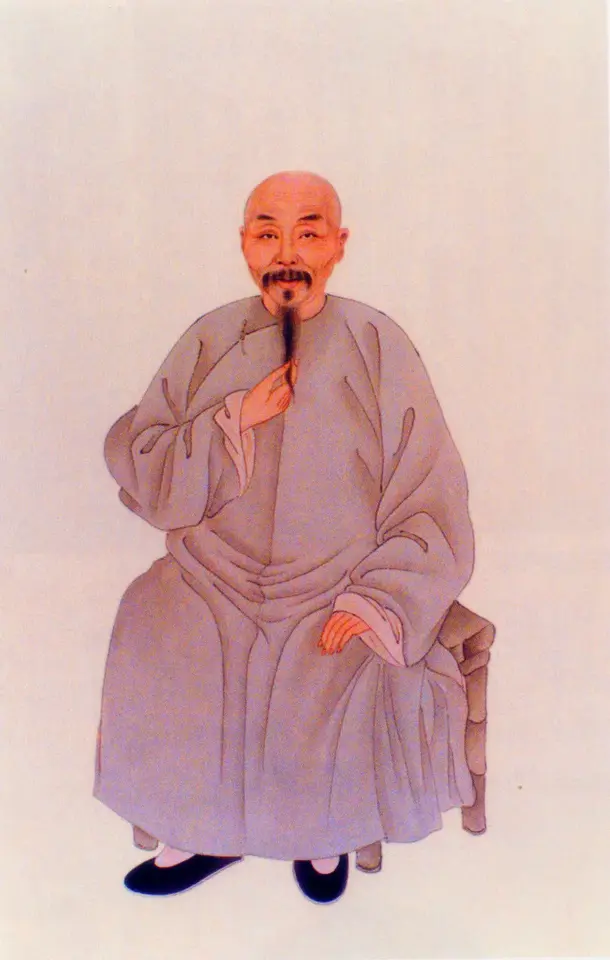
Feng Guifen, courtesy name Linyi, also styled Jingting, and art name Dengwei Shanren, was born on October 4, 1809 (the twenty-fifth day of the eighth lunar month in the fourteenth year of the Jiaqing reign), in Xinqiao Lane near Panmen in the southwestern sector of Wu County, Suzhou Prefecture, Jiangsu Province. The Feng family was an illustrious lineage of long standing in Suzhou. His eighth-generation ancestor, Feng Hui, had moved from Changshu to Changzhou in the late Ming period, prospering through commercial acumen and establishing a solid landed estate. By the mid-Qing period, the family had produced generations of scholars and degree holders. Born when sweet osmanthus was in full autumn bloom, he was given the name "Guifen" by his father, symbolizing integrity and literary excellence.
Quiet, disciplined, and deeply contemplative from childhood, Feng began formal schooling at eight and could compose structured essays and classical prose by ten. Beyond orthodox Confucian classics, he exhibited an intense interest in astronomy, mathematics, trigonometry, and historical geography. He immersed himself in classical treatises such as the Elements of Geometry (Jihe Yuanben), Qin Jiushao's Mathematical Treatise in Nine Sections, and the geographical treatises of Gu Yanwu and Gu Zuyu, mastering surveying methods and building an empirical foundation in practical statecraft.
In 1827, at nineteen, Feng passed the preliminary examinations to become a licentiate (xiucai), his essays impressing Provincial Director of Education Xin Congyi. In 1832, at twenty-four, he passed the Jiangnan provincial examination, achieving the juren degree. That autumn, the renowned statesman Lin Zexu was appointed Governor of Jiangsu, establishing his headquarters in Suzhou. Lin was deeply committed to river conservancy, maritime grain transport, and the suppression of the opium trade, actively seeking men of practical ability. Reviewing the provincial examination scripts, Lin was captivated by Feng's clear-headed, realistic policy proposals and recruited him into his personal secretariat. Working under Lin's direct guidance for several years, Feng acquired hands-on experience in flood control, tax administration, judicial adjudication, and coastal defense, absorbing Lin's patriotic devotion and global curiosity.
Metropolitan Honors and Central Archival Service
In the spring of 1840, Feng traveled to Beijing to sit for the metropolitan examinations. In the palace examination before Emperor Daoguang, on the eve of the First Opium War, Feng submitted a policy memorial addressing internal administrative corruption and border defenses, presenting concrete proposals for maritime preparedness and fiscal reform. Deeply impressed, the emperor personally awarded him the rank of bangyan (first class, second rank), conferring the metropolitan graduate degree and appointing him Compiler in the Hanlin Academy.
During his tenure in the Hanlin Academy, Feng served successively as assistant compiler and chief compiler in the Wuying Hall, as well as Proofreader in the Wenyuan Chamber. In 1845, he was promoted to Right Companion of the Right Spring Secretariat in the Supervisorate of Imperial Instruction, becoming an advisor to the heir apparent. For eight years in Beijing, Feng enjoyed access to the imperial libraries and state archives, examining dynastic chronicles, court records, and fiscal ledgers. In his scholarship, he rejected superficial literary fashions, revering Ming-Qing practical scholar Gu Yanwu. He embraced the moral code that "neither immense wealth nor thousands of horses can alter my integrity," unfailingly visiting Gu Yanwu's shrine outside Xuanwu Gate whenever he arrived in the capital.
In 1848, upon the death of his father, Feng resigned his post to return home to Suzhou to observe mourning. After completing the mourning period, as floods struck the region and his mother grew elderly, Feng chose not to return to Beijing, accepting the directorship of Zhengyi Academy in Suzhou. Lecturing on practical statecraft and classical philosophy, he attacked abstract Neo-Confucian dogmas, earning high renown throughout the Yangzi Delta.
Refugee in Shanghai and Huai Army Counselor
In 1853, the Taiping Army captured Nanjing and established their capital there. The Qing court ordered provincial gentry to organize local defense forces. Feng was commissioned to coordinate militia corps in Suzhou, assisting Jiangsu Governor Xu Naizhao in fortifying city defenses and enlisting local recruits. In April 1860, Taiping General Li Xiucheng launched a massive eastward offensive, capturing Changzhou and Suzhou. As the provincial yamen collapsed, Feng evacuated his elderly mother and fled to Shanghai, which was protected by Western military forces.
His two years in the Shanghai international concessions marked a profound intellectual turning point. Walking along the Huangpu River, Feng observed foreign ironclad steamships, orderly paved streets, modern telegraph lines, and the efficiency of Western commerce. In sharp contrast, Qing imperial forces had suffered repeated collapses, burdened by obsolete weaponry and administrative inertia. This contrast shattered any lingering sense of traditional superiority. Setting aside classical prejudices, Feng engaged in dialogue with Western scientists, diplomats, and missionaries, reading translated manuals on geometry, mechanics, ballistics, and surveying to analyze the sources of Western wealth and power.
In 1862, Zeng Guofan assumed supreme command over military operations in the lower Yangzi. Li Hongzhang organized the Huai Army in Anqing and sailed downriver to reinforce Shanghai. Recommended by local gentry, Feng joined Li Hongzhang's secretariat as chief strategic advisor. He advised Li on defense strategy, coordinated with Western forces, and utilized his knowledge of regional geography and tax registers to manage supply lines, providing essential logistical backing for the retaking of southern Jiangsu.
Authoring Personal Protests and Initiating Self-Strengthening
Amidst the turmoil of war and military planning, Feng devoted himself to systematic writing. In 1861, at fifty-three, he completed his masterwork, Personal Protests from the Study of Jiao Bin (Jiaobinlu Kangyi), comprising forty political essays. Drawing inspiration from Han scholar Zhongchang Tong's Frank Words (Changyan), the essays delivered an incisive critique of late-Qing administrative, military, fiscal, educational, and diplomatic structures.
In Personal Protests, Feng formulated the foundational principle of China's modern reform: "Adopt Western learning, manufacture foreign machinery, and pursue wealth and power, while taking Chinese moral principles and Confucian ethics as the fundamental basis." He argued that while Confucian morality anchored social order, China lagged behind the West in science, industrial manufacture, maritime navigation, and public administration. He insisted that China must cast aside hollow arrogance and systematically study Western technology. His formulation was adopted by Zeng Guofan and Li Hongzhang as the guiding doctrine of the Self-Strengthening Movement, establishing Feng as the intellectual father of the "Chinese Learning as Substance, Western Learning for Application" philosophy.
Translating theory into reality, Feng urged Li Hongzhang in 1863 to petition the throne to establish the Shanghai Guang Fangyan Guan, a modern government language school. Appointed its first director, Feng designed a modern curriculum integrating English, French, astronomy, mathematics, navigation, and engineering. Furthermore, he urged Li to acquire the American-owned Flag Ironworks in Shanghai, which formed the foundation of the Jiangnan Arsenal, China's largest modern military-industrial enterprise. Through these initiatives, Feng played an indispensable role in launching China's early modern industrialization.
Tax Reduction and Final Years in Mudu
In late 1862, on the eve of the Huai Army's recapture of Suzhou and Changzhou, Feng made a historic proposal to Li Hongzhang: petitioning the throne to permanently reduce the exorbitant land taxes of southern Jiangsu.
Since the early Ming dynasty, when Zhu Yuanzhang imposed punitive tax rates on Suzhou, Songjiang, and Taicang for supporting rival Zhang Shicheng, southern Jiangsu had endured land taxes more than ten times higher per acre than other provinces. In 1862, Feng wrote On Heavy Taxation (Zhongfu Shuo), utilizing fiscal calculations and historical cadastral records to demonstrate that regional poverty and peasant unrest stemmed directly from this centuries-old tax inequality. Convinced by his analysis, Li Hongzhang submitted a memorial requesting tax relief. The imperial court granted the petition, permanently reducing land taxes in Suzhou, Songjiang, and Taicang by one-third, and in Changzhou and Zhenjiang by one-tenth. This reform lifted a five-hundred-year economic burden, winning the lasting gratitude of regional farmers.
After the pacification of Jiangnan, Feng declined imperial appointments and retired to the historic town of Mudu, west of Suzhou. Constructing his studio, Xianzhitang, he directed prestigious academies, including Xiyin Academy in Nanjing and Ziyang Academy in Suzhou, mentoring thousands of young scholars in practical sciences.
In 1869, at the invitation of Jiangsu Governor Ding Richang, Feng established a compilation bureau at Mudu to revise the Suzhou Prefectural Gazetteer. Applying rigorous evidentiary standards, he devoted five years to compiling 153 volumes of exemplary local history, documenting water conservancy, silk textile industries, market towns, and fiscal systems. On May 28, 1874 (the thirteenth day of the fourth lunar month), Feng passed away at Xianzhitang at sixty-six, interred at Mount Dengwei. His reformist ideas bridged traditional Confucian statecraft with modern institutional enlightenment.
Major Achievements
Formulating Chinese Substance and Western Application
In the intellectual history of modern China, Feng Guifen's greatest achievement was his authorship of Personal Protests from the Study of Jiao Bin (1861), which provided the earliest systematic philosophical framework for modern institutional modernization.
Spanning politics, military organization, finance, education, and foreign affairs, the collection introduced the landmark thesis: "Adopt Western learning, manufacture foreign machinery, and pursue wealth and power, while taking Chinese moral principles and Confucian ethics as the fundamental basis." He asserted that while traditional ethical relationships maintained moral order, China was profoundly deficient in military technology, scientific research, and commercial vitality, requiring comprehensive technological adoption from the West.
Feng articulated four points of comparison: "In utilizing human talent, we are inferior to the Westerners; in exploiting natural wealth, we are inferior; in maintaining communication between sovereign and people, we are inferior; in matching reality to nominal regulations, we are inferior." This critique punctured traditional complacency, expanding reform from military hardware toward administrative efficiency and public education. The treatise was later printed and distributed to provincial governors by order of Emperor Guangxu during the 1898 reforms.
Land Tax Reduction in Southern Jiangsu
In fiscal policy, Feng achieved a historic tax reform that relieved southern Jiangsu of an inequitable economic burden lasting nearly five centuries.
Under Ming founder Zhu Yuanzhang, the prefectures of Suzhou, Songjiang, and Taicang were subjected to retaliatory agricultural taxes. Despite fertile soil, exorbitant quotas and administrative exactions impoverished peasant households and triggered chronic social unrest.
In 1862, Feng composed his treatise On Heavy Taxation, demonstrating with statistical precision that regional economic recovery required decisive tax cuts. Backed by Li Hongzhang and Zeng Guofan, the proposal secured imperial approval, permanently eliminating one-third of the agrarian tax quota in Suzhou, Songjiang, and Taicang. This reform revitalized agriculture and stimulated the development of commerce, silk handicrafts, and early industrial enterprise across the Yangzi Delta.
Founding Guang Fangyan Guan and Promoting Modern Industry
In education and industrial development, Feng was directly responsible for establishing China's earliest modern technical schools and industrial plants.
In 1863, recognizing that diplomatic and military setbacks stemmed from a shortage of personnel versed in foreign languages and applied sciences, Feng drafted the regulations for the Shanghai Guang Fangyan Guan. Rejecting rote eight-legged essay training, the academy offered courses in foreign languages, world geography, mathematics, chemistry, and shipbuilding, pioneering government-sponsored technical education.
Concurrently, Feng advocated that China must establish autonomous manufacturing capacity. He urged Li Hongzhang to purchase foreign machinery facilities, creating the Jiangnan Arsenal. Beyond manufacturing modern rifles, artillery, and steamships, the arsenal housed a translation bureau that published nearly two hundred Western scientific works, introducing modern science into nineteenth-century China.
Overhauling Classical Prose and Compiling the Suzhou Gazetteer
In literature and historiography, Feng achieved lasting preeminence as an innovator in political prose and local gazetteer compilation.
Rejecting the rigid stylistic formulas of the reigning Tongcheng School, Feng declared his independence from their pedantic rules in his Letter in Reply to Zhuang Weisheng. He advocated that prose must express practical thoughts directly to serve real-world statecraft, creating a lucid, logical, and incisive political essay style that influenced late-Qing journalism.
In historiography, his 153-volume Suzhou Prefectural Gazetteer established an enduring benchmark for local historical scholarship. Avoiding superficial compilations, he integrated detailed primary records concerning irrigation projects, rural taxation, handicraft production, and commercial market centers, producing an indispensable documentary source for the socioeconomic history of Jiangnan.