Joining Taizu's Camp
Submitted strategies to Emperor Taizu upon the pacification of Liaodong, appointed to compose imperial rescripts.
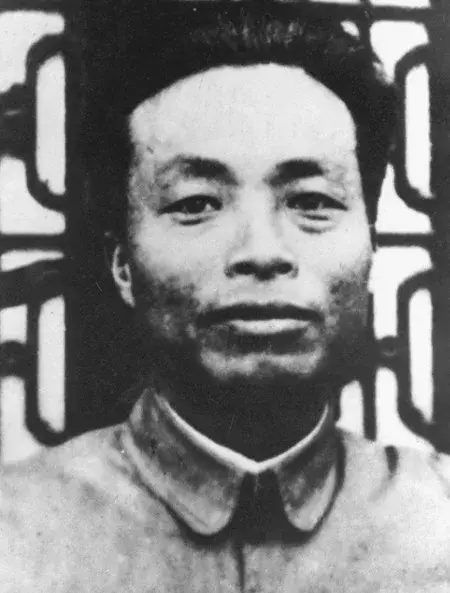
张浩
Zhang Hao (张浩, died 1163), posthumously honored as Wenxian (文宪), was a native of Liaoyang (modern Liaoyang City, Liaoning Province). Originally descended from the Bohai aristocratic Gao lineage of the ancient Goguryeo royal house, his great-grandfather Zhang Ba adopted the Han surname Zhang while serving as a senior military commander under the Khitan Liao Empire. Zhang Hao was a preeminent chancellor, civil strategist,…
Zhang Hao (张浩, died 1163), posthumously honored as Wenxian (文宪), was a native of Liaoyang (modern Liaoyang City, Liaoning Province). Originally descended from the Bohai aristocratic Gao lineage of the ancient Goguryeo royal house, his great-grandfather Zhang Ba adopted the Han surname Zhang while serving as a senior military commander under the Khitan Liao Empire. Zhang Hao was a preeminent chancellor, civil strategist, and master architectural planner who served across five successive reigns of the Jurchen Jin dynasty—Emperor Taizu, Emperor Taizong, Emperor Xizong, Prince Hailing (Wanyan Liang), and Emperor Shizong. Following Taizu's conquest of Liaodong in 1118, Zhang submitted strategies to the sovereign, being recruited to draft imperial military decrees and civil announcements. Under Taizong and Xizong, he participated in formulating the fundamental institutional statutes, ancestral sacrifices, and bureaucratic ranks that guided the Jurchen empire's sinicization, while supervising the construction of the imperial palace in Liaoyang. In 1151 (the 3rd year of the Tiande era), when Prince Hailing resolved to transfer the dynastic capital southward to Yanjing, Zhang was appointed director-general of capital construction. Modeling the urban layout upon the Northern Song capital of Kaifeng, Zhang planned and constructed the magnificent palaces, concentric walls, waterways, and central north-south axis of Jin Zhongdu (modern Beijing), laying the spatial foundation for Beijing's role as a national capital over the subsequent eight centuries. Elevated to Right Chancellor and Left Chancellor, he was ennobled as Prince of Lu and Duke of Lu. During Prince Hailing's catastrophic southern invasion of Song in 1161, Zhang offered prudent remonstrances urging peaceful border consolidation. Following Emperor Shizong's enthronement, the new monarch revered Zhang's elder statesmanship, appointing him Grand Preceptor and Director of the Department of State Affairs (Shangshu Ling, the supreme bureaucratic rank), ennobled as Prince of Nanyang. Passing away in 1163, he received the posthumous name Wenxian.
Submitted strategies to Emperor Taizu upon the pacification of Liaodong, appointed to compose imperial rescripts.
Advised Emperor Taizong on court ceremonies, bureaucratic protocols, and ancestral rites modeled on Han traditions.
Appointed vice minister of revenue, directing the construction of the imperial palaces at the eastern capital of Liaoyang.
Promoted to Minister of Revenue and Participant in Determining Governmental Affairs, supervising imperial fiscal registers.
Commissioned by Prince Hailing to direct the construction of Jin Zhongdu, designing modern Beijing's imperial palaces and ramparts.
Completed the construction of Zhongdu, facilitating the relocation of the court and being elevated to Right Chancellor.
Advanced to Left Chancellor and Director of the Chancellery, ennobled as Prince of Lu and Duke of Lu.
Following Prince Hailing's assassination, stabilized the central capital and submitted petitions supporting Emperor Shizong.
Appointed Grand Preceptor and Director of the Department of State Affairs (Shangshu Ling), ennobled as Prince of Nanyang.
Passed away peacefully in Zhongdu; Emperor Shizong suspended court for three days, conferring the posthumous name Wenxian.
Zhang Hao was descended from a Bohai family in Liaoyang, tracing his ancestry to the royal house of Goguryeo. During the Khitan Liao dynasty, his great-grandfather Zhang Ba served as senior general of the Jinwu Guard, adopting the surname Zhang. Zhang Hao was intellectually gifted from childhood, becoming fluent in Khitan, Jurchen, and classical Chinese. He possessed an imposing physical presence and encyclopedic knowledge of administrative precedence.
In 1118 (the 2nd year of the Tianfu era), the Jurchen founder Emperor Taizu (Wanyan Aguda) swept through Liaodong, capturing Liaoyang. The youthful Zhang Hao presented memorials analyzing frontier logistics and civil stabilization. Highly impressed by his practical insight, Emperor Taizu recruited him to compose confidential imperial letters and administrative decrees. During the brutal campaigns southward into northern China, Zhang authored many of the founding military manifestos and surrender edicts issued by Taizu and Taizong.
During the Tianhui era, the Jurchen state transitioned rapidly from tribal confederation to centralized empire. Collaborating closely with chancellor Wanyan Zonggan and scholar Wanyan Xiyin, Zhang helped formulate the court sacrificial codes, temple rituals, and the tripartite departmental administration, laying the structural foundation for early Jurchen bureaucratic governance.
During the reign of Emperor Xizong, Zhang served as vice minister of revenue and associate director of the Xuanhui Academy, directing the construction of the imperial palaces in Liaoyang. His harmonious spatial planning and rigorous logistical oversight earned widespread praise.
In 1150, Prince Hailing (Wanyan Liang) usurped the throne. Intensely attracted to Chinese classical culture, Hailing resolved to transfer the primary imperial capital southward from the frozen northern plains of Shangjing Huining (modern Acheng, Heilongjiang) to Yanjing (modern Beijing) to facilitate control over the central plains.
In 1151 (the 3rd year of the Tiande era), Hailing appointed Zhang Hao director-general of capital construction. Drawing direct inspiration from the Northern Song capital of Kaifeng and the classical architectural manual Building Standards (Yingzao Fashi), Zhang surveyed the terrain and watercourses of Yanjing. He mobilized hundreds of thousands of artisans and soldiers over two years, erecting expansive triple-walled ramparts, the monumental Danzhi terraces, and the Chonghua Palace halls. He diverted the waters of Mount Yuquan into city lakes, establishing an imposing central north-south axis.
In 1153, the capital was formally inaugurated as Zhongdu Daxing Prefecture. Zhang Hao's architectural masterpiece represented a milestone in world urban history, firmly establishing Beijing as the imperial political center of China for the subsequent eight centuries.
Following the completion of Zhongdu, Prince Hailing rewarded Zhang by appointing him Right Chancellor and Director of the Secretariat, ennobling him as Prince of Lu. In executive governance, Zhang focused on stabilizing agricultural taxation, enforcing uniform laws, and encouraging civil Confucian administration across northern China.
In 1158 (the 3rd year of the Zhenglong era), Zhang was promoted to Left Chancellor and Director of the Chancellery, ennobled as Prince of Shu and Duke of Lu. Prince Hailing was despotic and paranoid, executing dozens of imperial princes and senior generals upon slight suspicion. Zhang maintained absolute impartiality, lived modestly, and avoided factional cliques, successfully surviving decades of violent court purges.
In 1161, Prince Hailing launched his reckless invasion of Southern Tang and Song with six hundred thousand troops. During the final council, while court ministers trembled in terror, Zhang calmly remonstrated: "Emperor Gaozong of Song has no biological sons; dynastic rivalries will inevitably erupt in the south. Your Majesty would do better to train border garrisons and nurture our own populace; when internal strife occurs in the south, they will submit without war." Although Hailing insisted on the campaign, he respected Zhang's wisdom, placing him in supreme charge of the rear capital at Zhongdu.
When Prince Hailing was murdered by his own officers on the Yangtze River and Emperor Shizong (Wanyan Yong) was proclaimed emperor at Liaoyang, Zhang Hao acted decisively. Mobilizing garrison troops in Zhongdu, he organized the civil administration to submit formal allegiance to Shizong, averting widespread urban warfare.
Emperor Shizong held immense deference for Zhang's four-decade record of imperial service. Meeting him in Zhongdu, Shizong embraced him, saying: "You are truly the venerable elder statesman of our dynasty!" In 1162 (the 2nd year of the Dading era), Shizong appointed Zhang Grand Preceptor and Director of the Department of State Affairs (Shangshu Ling), the supreme head of the civil bureaucracy, ennobled as Prince of Nanyang.
Shizong granted Zhang the extraordinary privilege of riding in a carriage into the inner palace and being exempted from reciting his name during audiences. In the autumn of 1163 (the 3rd year of the Dading era), Zhang passed away peacefully in his Zhongdu residence at an advanced age. Emperor Shizong suspended court for three days, personally leading mourning sacrifices and conferring the posthumous name Wenxian.
Zhang Hao was the supreme architectural planner and engineer who constructed Jin Zhongdu, transforming Yanjing from a regional frontier stronghold into the magnificent capital of an empire.
Integrating the grand axial symmetry of Northern Song Kaifeng with north-Chinese geography, his design established the triple-city enclosure and imperial palace layout that served as the direct precursor to Kublai Khan's Yuan Dadu and the Ming-Qing Forbidden City.
Serving as secretarial and administrative advisor under Emperors Taizu and Taizong, Zhang was instrumental in translating classical Chinese governance into Jurchen imperial administration.
His codification of ancestral rites, state council functions, and taxation registers enabled the Jin dynasty to transition smoothly from an illiterate tribal coalition into an institutionalized bureaucratic empire.
Surviving fifty years of dangerous court politics across five imperial reigns, Zhang consistently advocated strategic moderation and agrarian recovery.
His courageous attempt to dissuade Prince Hailing from his catastrophic southern invasion demonstrated profound strategic vision, while his stabilization of Zhongdu during the 1161 dynastic transition preserved northern China from civil collapse.
FIGURES ASSOCIATED WITH THIS DYNASTY