Born in India
Born into a noble family in North India (or Sri Lanka); exhibited early linguistic and spiritual intelligence.
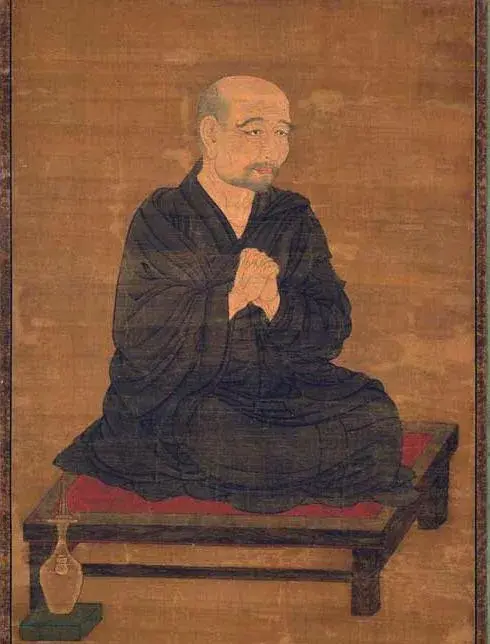
不空
Amoghavajra (不空, 705 – July 28, 774), Sanskrit name Amoghavajra (meaning Unfailing Diamond), Buddhist name Bukongzhi, was an eminent Indian monk in China. He was a monumental translator of Buddhist scriptures and the master synthesizer of Chinese Esoteric Buddhism (Tangmi). In Buddhist historiography, he is celebrated alongside Kumarajiva, Paramartha, and Xuanzang as one of China's "Four Great Buddhist Translators," and…
Amoghavajra (不空, 705 – July 28, 774), Sanskrit name Amoghavajra (meaning Unfailing Diamond), Buddhist name Bukongzhi, was an eminent Indian monk in China. He was a monumental translator of Buddhist scriptures and the master synthesizer of Chinese Esoteric Buddhism (Tangmi). In Buddhist historiography, he is celebrated alongside Kumarajiva, Paramartha, and Xuanzang as one of China's "Four Great Buddhist Translators," and venerated alongside Subhakarasimha and Vajrabodhi as one of the "Three Great Masters of the Kaiyuan Era." Operating across the reigns of Emperors Xuanzong, Suzong, and Daizong, he was revered as National Preceptor across three reigns, appointed Commander Unequalled in Honor, enfeoffed as Duke of Su, and posthumously honored as Minister of Works, representing one of the few Buddhist monks in Chinese history to attain ministerial rank and a ducal title. In his youth, Amoghavajra accompanied his merchant uncle across the Indian Ocean, arriving in Luoyang at age twelve, where he became the foremost disciple of the esoteric pioneer Vajrabodhi. He studied Sanskrit grammar, phonology, and Buddhist epistemology, receiving full monastic ordination at age twenty at Guangfu Monastery in Luoyang. Following Vajrabodhi's death in 741, Amoghavajra fulfilled his master's testament by leading disciples on a maritime voyage to Sri Lanka and India, receiving the complete eighteen assemblies of the Vajrasekhara Sutra and secret mandalas from Master Samantabhadra, while collecting over five hundred Sanskrit manuscripts. In 746, he returned to Chang'an, where Emperor Xuanzong granted him the title Zhizang and installed him at Daxingshan Monastery to establish an esoteric consecration platform. During the catastrophic An Lushan Rebellion, when Chang'an fell to rebel forces, Amoghavajra remained trapped in the capital, maintaining loyalty by sending secret messengers across the mountains to Emperor Suzong at Lingwu and conducting clandestine state-protection rituals. Following the restoration of the capital, Emperor Suzong installed him at Daxingshan Monastery as head of the imperial translation bureau. Under Emperor Daizong, he received supreme honors: he was created Duke of Su and elevated to Commander Unequalled in Honor. Presiding over Daxingshan Monastery for nearly three decades, he translated 110 esoteric texts in 143 volumes, standardizing the ritual and doctrinal foundations of Esoteric Buddhism and building the Golden Pavilion Monastery on Mount Wutai, which established Wutai as the supreme pilgrimage center for Manjusri. In July 774, Amoghavajra passed away at Daxingshan Monastery at age sixty-nine.
Born into a noble family in North India (or Sri Lanka); exhibited early linguistic and spiritual intelligence.
Arrived in Luoyang at age twelve; met newly arrived master Vajrabodhi and was accepted as a primary monastic disciple.
Received full monastic vows at Guangfu Monastery in Luoyang, mastering Vinaya discipline alongside Sanskrit translation.
Following Vajrabodhi's death, led disciples southward to Sri Lanka to search for complete esoteric Sanskrit manuscripts.
Received the eighteen assemblies of the Vajrasekhara Sutra from Master Samantabhadra, gathering five hundred Sanskrit treatises.
Arrived in Chang'an with manuscripts; received by Emperor Xuanzong, granted the title Zhizang, and performed court initiations.
Remained in occupied Chang'an during the An Lushan Rebellion, transmitting military intelligence and conducting rituals for imperial restoration.
Following the restoration of the capital, Emperor Suzong established Amoghavajra at Daxingshan Monastery as chief translator.
Following the peaceful dispersal of Tibetan and Uighur forces, Emperor Daizong appointed him Commander Unequalled in Honor and Duke of Su.
Passed away at Daxingshan Monastery on July 28 at age sixty-nine; Emperor Daizong suspended court audiences and posthumously conferred the title Minister of Works.
Amoghavajra was born into a Brahmin household in North India. Losing his parents in early childhood, he was raised by his maternal uncle. According to Tang epigraphs and Zanning's Song Biographies of Eminent Monks, Amoghavajra exhibited remarkable intellectual gifts, accompanying his uncle on maritime voyages through maritime Southeast Asia, visiting Java and Sumatra. During these sea journeys, he acquired facility in multiple languages and developed deep reverence for esoteric Buddhist mantras.
In 716, at age twelve, Amoghavajra arrived with trading ships in Luoyang, the eastern capital of the Tang dynasty. At the time, South Indian master Vajrabodhi had just arrived in the Central Plains to propagate esoteric teachings. Meeting the foreign master, the young Amoghavajra knelt and requested to be accepted into the order. Recognizing the boy's spiritual capacity, Vajrabodhi proclaimed: "This youth is a dragon-elephant in the ocean of Dharma!" and accepted him as an intimate novice.
Under Vajrabodhi's guidance, Amoghavajra mastered Siddham scripts, Sanskrit phonology, and Buddhist sciences. He grasped Sanskrit manuscripts and dharani syllables, mastering Indian linguistic sciences within years. In 724, upon reaching age twenty, he received full monastic ordination at Guangfu Monastery in Luoyang under Vinaya master Ruzhi. Over the following decade, Amoghavajra served as Vajrabodhi's chief translation assistant at Great Cien Monastery, Great Jianfu Monastery, and Zisheng Monastery.
In 741, Vajrabodhi fell ill and died at Guangfu Monastery in Luoyang. On his deathbed, the master lamented that the Sanskrit text of the foundational Vajrasekhara Sutra available in China was only an abridged version, grasping Amoghavajra's hand and entreating him: "The esoteric treasury is vast; the full eighteen assemblies of the Vajrasekhara Sutra and secret dharanis exist in the southern seas and Sri Lanka. Swear an oath to return south and retrieve these sacred texts to illuminate the eastern realm!" Amoghavajra wept and accepted the mission.
In 742, Amoghavajra set sail from Guangzhou with disciples Hanguang and Huibian, voyaging across the South China Sea. Encountering violent typhoons and pirates, the crew panicked, but Amoghavajra remained calm, holding a five-pronged vajra and chanting the Mahapratisara Dharani, calming the seas.
The expedition reached Sri Lanka, where King Silamegha welcomed the Tang pilgrim with honors, housing him in the royal palace. In Sri Lanka, Amoghavajra located Master Samantabhadra, a foremost disciple of Nagarjuna's lineage. Samantabhadra erected an altar, transmitting to Amoghavajra the eighteen assemblies of the Vajrasekhara Sutra, the Garbhadhātu mandala, and the rituals of the five esoteric divisions. Amoghavajra traveled throughout southern India and Sri Lanka, collecting over five hundred Sanskrit Mahayana treatises.
In 746, Amoghavajra returned to Chang'an bearing manuscripts and relics. Delighted, Emperor Xuanzong summoned him to the palace, praising his fortitude and granting him the title "Zhizang of the Great Tang." The emperor installed him at Jingying Monastery, subsequently inviting him into the palace chapels to confer longevity and state-protection consecrations upon the sovereign, Crown Prince Li Heng, and court ministers.
In 749, Amoghavajra petitioned to return to India, and Xuanzong granted permission, ordering post stations along the route to provide escorts. However, when the master reached Shaozhou in Guangdong, Xuanzong reconsidered, issuing an imperial decree retaining him in the empire at Dafan Monastery. In 753, Hexi Military Commissioner Geshu Han petitioned Xuanzong to invite Amoghavajra to Liangzhou. At Kaiyuan Monastery in Liangzhou, Amoghavajra constructed altars, conferring initiations on frontier garrisons and Central Asian merchants.
In late 755, the An Lushan Rebellion erupted, with rebel forces overrunning Hebei and capturing Luoyang. In June 756, Tongguan fell, prompting Emperor Xuanzong to flee to Sichuan, while Crown Prince Li Heng fled to Lingwu to ascend the throne as Emperor Suzong. In July, rebel forces sacked Chang'an, pillaging monasteries and massacring officials. While many courtiers defected, Amoghavajra remained trapped in the capital, maintaining unyielding loyalty.
Stationed at Daxingshan Monastery under surveillance by rebel garrisons, Amoghavajra dispatched trusted disciples across mountain paths to Emperor Suzong's court at Lingwu, providing intelligence regarding military deployments in Chang'an. Concurrently, Amoghavajra maintained secret altars for the Humane Kings Sutra and Acala, chanting day and night for the restoration of the imperial dynasty.
Receiving Amoghavajra's secret dispatches at Lingwu, Emperor Suzong expressed gratitude, sending imperial couriers back through enemy lines with handwritten letters thanking the master. In late 757, when imperial and Uighur forces liberated Chang'an, Emperor Suzong honored Amoghavajra for his wartime fidelity, installing him at Daxingshan Monastery as the empire's supreme state esoteric sanctuary.
Following the accession of Emperor Daizong, Amoghavajra's prestige reached its peak. The emperor had received mantras from Amoghavajra in youth and placed trust in his abilities. In 765, when rebel commander Pugu Huai'en allied with hundreds of thousands of Tibetan and Uighur cavalry to encircle Chang'an, panic gripped the capital. Daizong summoned Amoghavajra to conduct protection rituals in the palace; soon after, Pugu Huai'en died suddenly, causing the coalition to disintegrate, with Tibetans retreating and Uighurs submitting. Deeply impressed, Daizong appointed Amoghavajra Specially Promoted Probationary Chamberlain for the Court of Imperial Entertainments and enfeoffed him as Duke of Su, with an estate of three thousand households.
During the Dali era, Daizong elevated Amoghavajra to Commander Unequalled in Honor, granting him the right to open a formal bureaucratic administrative office in the capital, equal in rank to imperial chancellors. In the history of the Tang dynasty, Amoghavajra stood as the sole Buddhist monk to be appointed Commander Unequalled in Honor and granted a ducal title. Nevertheless, Amoghavajra regarded worldly honors with detachment, donating all imperial stipends, lands, and silks to fund monastery construction, feed famine refugees, and print Buddhist scriptures.
During this period, Amoghavajra petitioned the throne to construct Golden Pavilion Monastery and Yuhua Monastery on Mount Wutai in Shanxi, casting gilded bronze statues of Manjusri. Furthermore, he secured imperial decrees ordering all government offices and monastic dining halls across the empire to enshrine Manjusri as the supreme patron, establishing Mount Wutai as an international pilgrimage sanctuary across East Asia.
Presiding over the imperial translation bureau at Daxingshan Monastery from the Qianyuan era under Suzong through the Dali era under Daizong, Amoghavajra oversaw translation work for two decades. Emperor Daizong assigned senior chancellors and literati, including Wang Jin, Chang Gun, and Du Huangshang, to serve as stylistic editors to polish translations into classical Chinese prose. Amoghavajra produced 110 esoteric treatises in 143 volumes, standardizing the ritual system, pantheon, and philosophical tenets of Chinese Esoteric Buddhism.
In the summer of 774, the seventy-year-old master perceived that his earthly life was ending. In May, he petitioned the throne to resign his title as Commander Unequalled in Honor and his ducal enfeoffments. Emperor Daizong declined the resignation, sending palace physicians to attend his bedside. On July 28, 774, Amoghavajra assembled disciples Huiguo, Huilang, Hanguang, and Yuanjiao at Daxingshan Monastery, urging them to preserve the Dharma, and passed away peacefully lying on his right side.
Grief swept the court and capital, and Emperor Daizong suspended court audiences for three days. The emperor posthumously conferred upon him the high ministerial office of Minister of Works and the posthumous name "Great Eloquent, Correct, and Expansive Wisdom Master of Tripitaka." His funeral was escorted by imperial guards to Shaoling Heights outside Chang'an, where an imperial pagoda was erected, and Chancellor Yan Ying composed his formal biographical stele inscription.
Amoghavajra occupies an unshakeable position in the history of Buddhist translation. His 110 works translated at Daxingshan Monastery include canonical masterworks such as the three-volume Vajrasekhara Sutra, the Guhyasamaja Tantra, the two-volume Humane Kings Sutra, and the Prajnaparamita Sutra of Great Bliss.
His translations preserved fidelity to Sanskrit originals while establishing standard transcription rules for Sanskrit mantras into Chinese characters. He introduced the mature fivefold yoga framework of Indian esoteric Buddhism to China, elevating Chinese Esoteric Buddhism from fragmented incantations into an integrated doctrinal system.
Amoghavajra synthesized Mahayana compassion with imperial statecraft, creating a system of "State-Protection Esoteric Buddhism." During the crises of the An Lushan Rebellion and foreign invasions, he organized grand ceremonies at Daxingshan Monastery, mobilizing esoteric rituals to sustain imperial morale.
Promoting the Humane Kings Sutra, he advocated that monarchs govern with moral benevolence while performing esoteric practices to protect national boundaries. This statecraft deeply influenced Emperors Xuanzong, Suzong, and Daizong, institutionalizing the role of National Preceptor in imperial Chinese politics and influencing religious developments in medieval Japan and Korea.
Amoghavajra established Mount Wutai as the supreme international sanctuary of the bodhisattva Manjusri. Citing esoteric sutras, he demonstrated to Emperor Daizong that Mount Wutai was the sacred earthly dwelling of Manjusri.
Financed by imperial revenues, he constructed the Golden Pavilion Monastery and Yuhua Monastery on Mount Wutai, casting colossal gilded bronze statues. Through his petitions, the Tang court decreed that shrines to Manjusri be established across all state offices and monasteries throughout the empire, elevating Mount Wutai into the preeminent pilgrimage destination of East Asia.
Amoghavajra established hundreds of consecration altars, initiating tens of thousands of disciples across three decades.
Among his students, the "Six Philosophers" attained eminence: Huiguo inherited leadership at Qinglong Monastery, synthesizing the dual realms and transmitting the lineage to Kukai; Hanguang oversaw Golden Pavilion Monastery on Mount Wutai; Huilang directed translation work at Daxingshan Monastery; and Yuanjiao, Juechao, and Feixi propagated esoteric teachings across Luoyang and southern provinces. These masters formed the intellectual backbone of mid-Tang Esoteric Buddhism.
FIGURES ASSOCIATED WITH THIS DYNASTY