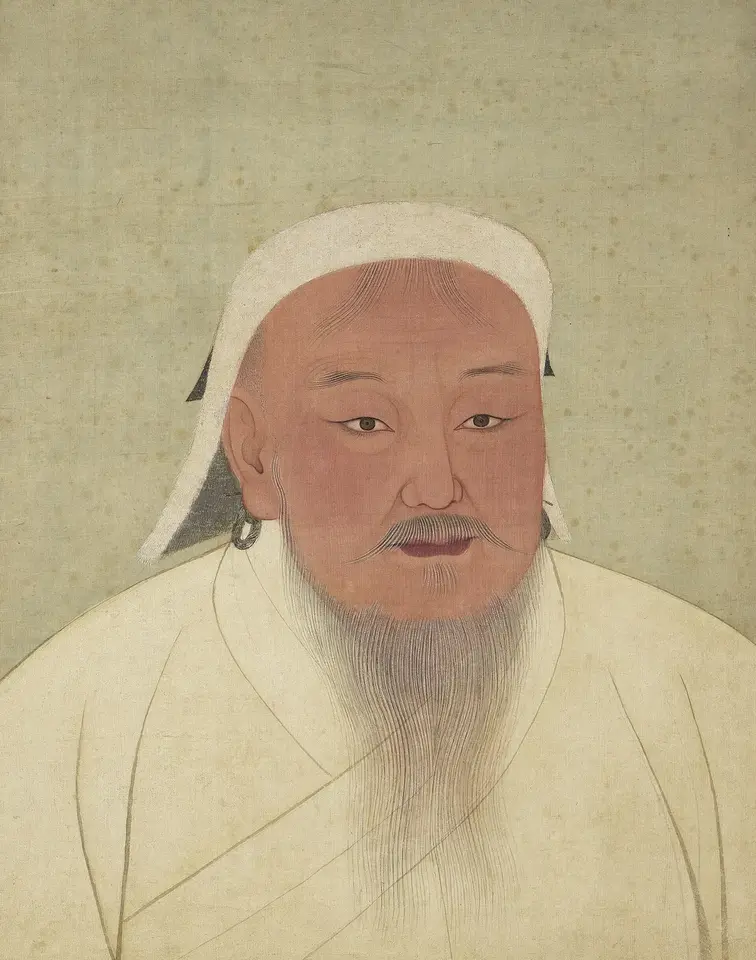
Biography
Steppe Betrothal and the Gift of the Black Sable
Borte was born into an esteemed Onggirat aristocratic family south of Lake Baikal, renowned for generations of marital alliances with the Mongol Borjigin clan. Her father, Dei Sechen, was an enlightened chieftain. In 1171, Yesugei Baghatur traveled with his nine-year-old son Temujin to arrange a marriage alliance. Meeting near Mount Chekcher, Dei Sechen was struck by Temujin's fiery eyes and luminous countenance, inviting him home to meet his ten-year-old daughter Borte. The two families concluded a formal betrothal. Tragic misfortune struck on Yesugei's return journey when he was poisoned by Tatars, plunging Temujin's family into seven years of destitute isolation.
The Onggirat tribe was renowned across the steppe for producing virtuous, noble women. When betrothing Borte, Dei Sechen sang the legendary Sparrow Song, prophesying that Temujin would become supreme master of the world. Despite seven years of total silence during which Temujin's family was reduced to foraging, Borte and her father steadfastly rejected all rival suitors, honoring the solemn pledge made on the Onon River.
In 1178, accompanied by his half-brother Belgutei, Temujin navigated perilous trails to find Borte on the Kerulen River. Dei Sechen joyfully celebrated their wedding. Borte's mother, Chotan, gifted her an exceptionally luxurious black sable coat. Recognizing Temujin's desperate need for powerful patronage, Borte urged him to present this invaluable coat to Toghrul (Ong Khan), ruler of the Keraites and sworn brother of Yesugei. Delighted by the gift, Ong Khan pledged full military support, providing Temujin with the indispensable political shield required for his rise.
The Merkit Ordeal and the Birth of Jochi
Shortly after the wedding, the three Merkit chiefs launched a dawn raid against Temujin's camp at Burkhan Khaldun to avenge Yesugei's abduction of Hoelun decades earlier. As horsemen fled, Borte displayed extraordinary selflessness, yielding the last mount to young Temulun and concealing herself inside a wooden cart. Discovered by Merkit warriors, she was abducted to the Selenga River and given to Chilger Boko. Throughout nine months of captivity, Borte preserved her dignity, praying daily toward Burkhan Khaldun for Temujin's deliverance.
Temujin rallied twenty thousand warriors from Ong Khan and twenty thousand from his sworn brother Jamukha. In 1184, their forty-thousand-strong host executed a night assault against the Merkit camp along the Buur Steppe. In the chaotic moonlit battle, Temujin galloped through the burning tents shouting Borte's name; hearing his voice, Borte leaped from a moving cart, and the lovers embraced amid the embers of war.
During the journey homeward, Borte gave birth to a son in a traveling carriage. Temujin named him Jochi ('Guest'). Aware of malicious gossip questioning Jochi's paternity, Genghis Khan assembled his commanders at a grand victory feast, raised Borte's hands, and proclaimed: 'Jochi is born of Borte, and he is my true eldest son! Whoever slanders his bloodline shall answer to martial execution!' This magnanimous decree safeguarded Borte's honor and established Jochi's paramount status among the imperial princes. Borte subsequently bore Chagatai, Ogedei, and Tolui, forging the four founding lineages of the world empire.
Strategic Counsel and the Separation from Jamukha
Following the defeat of the Merkit, Temujin and Jamukha pastured their herds together at Khorqonaq for a year and a half. As Temujin's retinue expanded, Jamukha grew envious. In April 1189, during seasonal migration, Jamukha uttered a cryptic remark: 'If we camp near the mountains, our horseherders will find shelter; if we camp near the rivers, our shepherds will find grazing.' Perplexed, Temujin sought Borte's counsel.
Borte immediately discerned the hidden peril: 'I have heard that Jamukha tires of old friends. His words conceal a plot to divide our followers! We must not halt near the mountains. Let us break away tonight!' Temujin followed her advice, leading his forces southward under cover of darkness. By dawn, numerous tribal chieftains, impressed by Temujin's independence, abandoned Jamukha to swear allegiance to Temujin. Borte's decisive counsel freed Temujin from subordination, paving the way for his election as Khan of the Mongols.
Borte's political contributions extended far beyond seasonal migrations. Facing coalitions of Naimans, Tatars, and Tayichi'ud, Borte cultivated broad civilian support. She personally supervised the tailoring of warm fur coats and the preparation of nourishing broth for arriving warriors, while adopting wounded mounts and war orphans into the First Ordo. Steppe nomads venerated her kindness, saying that gazing upon Borte was like feeling the warmth of the winter sun.
Governing the Ordo and Suppressing the Theocrat
Upon founding the Mongol Empire in 1206, Genghis Khan invested Borte as Grand Empress, granting her the grand First Ordo at Avarga on the Kerulen River. Throughout decades of imperial campaigns across China, Central Asia, and the Middle East, Borte governed domestic administration, overseeing tribal registries, livestock breeding, grain storage, and supply lines, ensuring uninterrupted logistics for the armies.
As supreme ruler of the First Ordo, Borte established an immaculate nomadic logistical system. Her palace complex encompassed hundreds of golden yurts, tens of thousands of pastoral subjects, and hundreds of thousands of horses and camels. She selected incorruptible stewards to manage royal storehouses holding silks, gold, and armaments, guaranteeing logistical support across thousands of miles.
During the empire's formative years, the chief shaman Teb Tenggeri (Kokochu) abused his spiritual prestige to challenge monarchical authority, publicly beating royal brother Qasar. Genghis Khan was deceived into preparing sanctions against his brother. Entering the imperial bedchamber at dawn, Borte wept and warned: 'Qasar is your own brother who shared every battlefield hardship! The sons of Monglik dare to humiliate him today; when your majestic years are passed, how will those wolves allow our four young sons to survive?' Her piercing counsel awakened Genghis Khan to the threat of theocratic rebellion, prompting him to authorize Prince Temuge to eliminate the shaman, consolidating secular imperial sovereignty.
Beyond her four illustrious sons, Borte engineered strategic marriages for her five daughters. Coqjin married into the Ikires, Checheyikhen into the Oirats, Alakhai into the Ongud, Tumelun into the Onggirat, and Altalun into the Olkhonud. Through these capable princesses commanding border garrisons, she created the 'Cordon of Daughters,' fortifying the nomadic heartland.
Imperial Succession and Eternal Renown
Borte's four sons displayed distinct temperaments: Jochi was magnanimous and daring, Chagatai strictly legalistic, Ogedei benevolent and balanced, and Tolui a peerless field marshal. Prior to the Western Campaign, Chagatai clashed fiercely with Jochi over succession, deriding him as a Merkit foundling. Learning of the dispute, Borte personally intervened, sternly reprimanding Chagatai: 'You issued from the same womb! The earth is vast enough for all; why tear each other apart before the Khan and the army?' Shamed by her tears, Chagatai knelt in repentance, and the brothers unanimously endorsed the moderate Ogedei as designated successor, averting a catastrophic civil war.
Following Genghis Khan's death in 1227, Borte was revered with supreme filial piety by Ogedei Khan and Prince Tolui. In 1230, she passed away peacefully at her Ordo palace at age seventy. In 1266, Kublai Khan enshrined her in the Imperial Ancestral Temple as Empress Guangxian, and in 1310, Emperor Wuzong elevated her title to Empress Guangxian Yisheng.
Major Achievements
The Black Sable Alliance Securing Imperial Foundations
Borte's selfless surrender of her only precious dowry—the black sable coat—enabled the vital political alliance between young Temujin and Ong Khan. This pivotal diplomatic breakthrough provided Temujin with military protection, securing his survival during his most vulnerable years.
Strategic Counsel Catalyzing Independent Khanate Rule
At a decisive juncture, Borte's political acumen deciphered Jamukha's cryptic warning, compelling Temujin to separate his host by night. This maneuver averted absorption and attracted steppe aristocracy, initiating Temujin's independent accession as Khan.
Eliminating Theocratic Threats to Secular Sovereignty
Confronted by the growing arrogance of the shaman Kokochu, Borte delivered her famous dawn remonstrance, alerting Genghis Khan to the existential threat posed to imperial succession. Her counsel catalyzed the elimination of theocratic usurpation, securing absolute imperial authority.
The First Ordo and Wartime Logistical Supremacy
Commanding the great First Ordo at Avarga, Borte orchestrated the wartime logistical apparatus of the Mongol Empire. Managing vast herds, regional tribute, and artisanal production, she maintained unbroken supply lines across Eurasia, serving as the unsung architect of imperial military triumphs.
Nurturing Four Imperial Dynasties and the Cordon of Daughters
Borte's four sons founded the Golden Horde, the Chagatai Khanate, the Great Khanate under Ogedei, and the Yuan Dynasty and Ilkhanate under Tolui's line. Her strategic placement of five daughters among frontier border tribes established the defensive bulwark that safeguarded the empire for centuries.