Scholarly Heritage and Recluse Teaching
Born in Huayin, Hongnong; studied the Book of Documents under Huan Yu, establishing a famous academy in Hucheng where scholars hailed him as the "Confucius of the Western Pass."
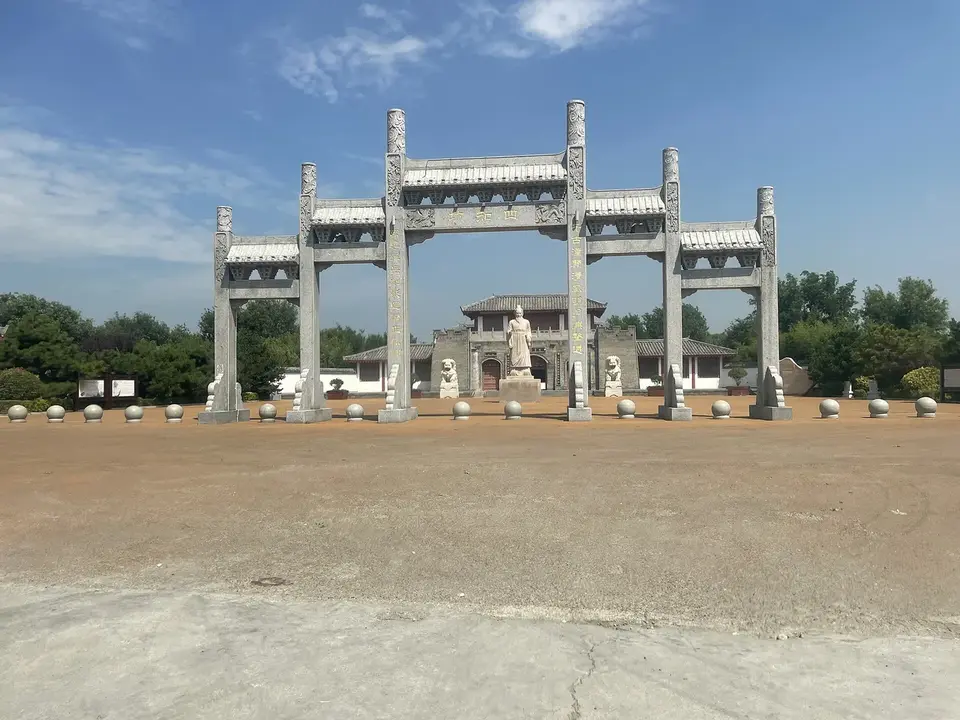
杨震
Yang Zhen (杨震, ? – 124 CE), courtesy name Boqi, was an eminent Confucian scholar, educator, and premier statesman of the mid-Eastern Han dynasty, hailing from Huayin in Hongnong Commandery (modern Huayin, Shaanxi Province). An eighth-generation descendant of Yang Xi (Marquis of Chiquan during the Western Han) and son of the scholarly recluse Yang Bao, Yang Zhen was venerated across the realm as the "Confucius of the Western…
Yang Zhen (杨震, ? – 124 CE), courtesy name Boqi, was an eminent Confucian scholar, educator, and premier statesman of the mid-Eastern Han dynasty, hailing from Huayin in Hongnong Commandery (modern Huayin, Shaanxi Province). An eighth-generation descendant of Yang Xi (Marquis of Chiquan during the Western Han) and son of the scholarly recluse Yang Bao, Yang Zhen was venerated across the realm as the "Confucius of the Western Pass" and the "Master of Four Knows." Renowned from youth for his mastery of the Book of Documents (Ouyang Shangshu), he taught thousands of disciples in Huayin and Hucheng for decades, refusing repeated regional invitations to enter official service. Only at the age of fifty did he accept a summons from Grand General Deng Zhi, subsequently serving with distinction as Inspector of Jingzhou, Administrator of Donglai, and Administrator of Zhuojun. While journeying to Donglai, he famously rejected a midnight gift of gold from his protege Wang Mi, uttering the immortal words: "Heaven knows, the gods know, I know, and you know," thereby establishing a timeless monument of administrative integrity. In 117 CE (Yuanzhu 4), Yang Zhen was summoned to the central court, serving as Chamberlain for the Palace Revenues and Minister of Ceremonies, where he rigorously rectified the academic exams of the Imperial Academy. In 120 CE, he rose to Situ, and in 123 CE he was elevated to Grand Commandant, head of the Three Excellencies. During his tenure at the pinnacle of executive governance, he stood as an incorruptible bulwark against surging palace corruption, refusing to yield to the private requests of powerful consort kinsmen Geng Bao and Yan Xian, while courageously submitting trenchant memorials impeaching Emperor An's wet nurse Wang Sheng, her daughter Baorong, and the corrupt palace eunuch Fan Feng. In 124 CE, framed by Fan Feng and Geng Bao, he was stripped of his seal and banished toward his hometown. Reaching Jiyang Pavilion west of Luoyang, he drank poison to fulfill his unyielding devotion to the dynasty. Emperor Shun later exonerated him with full imperial honors, reburying him at Tongting where a stone bird monument was erected to commemorate his martyrdom. His spotless family tradition founded the glorious century-long legacy of the Yang clan of Hongnong.
Born in Huayin, Hongnong; studied the Book of Documents under Huan Yu, establishing a famous academy in Hucheng where scholars hailed him as the "Confucius of the Western Pass."
Entered government service at age fifty upon the earnest recommendation of Grand General Deng Zhi; served as Inspector of Jingzhou with widespread popular acclaim.
While traveling to assume the governorship of Donglai, rejected a midnight bribe of ten catties of gold from Wang Mi, coining the renowned "Four Knows" declaration.
Reassigned as Administrator of Zhuojun; maintained strict probity, rejected all private entreaties, and instilled simple living to bequeath the reputation of an incorruptible lineage.
Summoned to the capital as Chamberlain for the Palace Revenues, later promoted to Minister of Ceremonies; reformed doctoral examinations and recommended scholar Yang Lun.
Elevated to Situ, entering the Three Excellencies; submitted blunt memorials urging Emperor An to banish his wet nurse Wang Sheng and end eunuch abuses, which were disregarded.
Appointed Grand Commandant; unyieldingly rebuffed nepotistic appointment demands from imperial uncle Geng Bao and empress's brother Yan Xian.
Uncovered forged imperial edicts used by eunuch Fan Feng to build luxurious mansions; slandered by palace factions, dismissed, and drank poison at Jiyang Pavilion, before being fully exonerated and reburied at Tongting by Emperor Shun in 125 CE.
Yang Zhen belonged to the prominent Yang clan of Huayin in Hongnong, tracing his ancestry back to Yang Xi, who had captured Xiang Yu and was ennobled as Marquis of Chiquan during the founding of the Western Han. His father Yang Bao had chosen a life of profound reclusion, dedicating himself to the study of the Ouyang Shangshu and declining imperial honors from Emperor Guangwu. Yang Zhen was orphaned at an early age and grew up in modest circumstances, yet he inherited the unbending moral discipline of his ancestors. He apprenticed himself to Minister of Ceremonies Huan Yu, thoroughly mastering the five classics with particular specialization in the Book of Documents.
After completing his studies, Yang Zhen took up residence in Hucheng (in modern Henan Province), where he opened an academy to teach the classics. His pedagogy emphasized moral introspection alongside textual precision. Aspiring scholars traveled from across the empire to study under his tutelage, and his disciples often numbered in the thousands. His reputation for moral purity and academic brilliance was so elevated that scholars throughout the realm unanimously acclaimed him as the "Confucius of the Western Pass." Despite repeated summons and generous gifts from commandery and provincial administrators, Yang Zhen remained content in his rustic school, declining official posts for several decades.
Local elders frequently urged him to accept government appointments, but Yang Zhen remained unmoved by worldly ambitions. According to historical tradition, during his teaching years a crested crane carrying three snake-headed fish flew down and dropped them in front of his lecture hall. His disciples joyfully declared that these fish represented the robes of high ministers, while the number three symbolized the Three Excellencies, foretelling his eventual rise to chancellor. Yang Zhen simply smiled, maintaining his devotion to scholarly life.
It was not until the early Yongchu era, when Yang Zhen had reached the age of fifty, that he was persuaded to enter officialdom following an earnest summons from Grand General Deng Zhi, who recognized his exceptional virtue and sponsored him as a Flourishing Talent. Deng Zhi held Yang Zhen in extraordinary esteem. Once in public service, Yang Zhen displayed remarkable administrative talent and moral firmness, receiving four rapid promotions and serving successively as Inspector of Jingzhou and Administrator of Donglai.
While traveling to take up his commandery governorship in Donglai, Yang Zhen passed through Changyi County. The local county magistrate, Wang Mi, had previously been discovered and recommended by Yang Zhen during his inspection of Jingzhou. Hearing that his former patron was passing through, Wang Mi visited him at the official courier station. Late at night, Wang Mi dismissed the attendants, secretly produced ten catties of gold from his robe, and offered it to Yang Zhen as an expression of personal gratitude.
Yang Zhen sternly declined the treasure, saying: "I recommended you because I knew your character, yet why do you not understand mine?" Wang Mi assumed that Yang Zhen merely feared public discovery, and whispered: "It is deep in the night; no one will ever know." Yang Zhen sharply retorted: "Heaven knows, the gods know, I know, and you know. How can you say that no one knows?" Stricken with remorse and profound shame, Wang Mi gathered his gold and fled into the night. Ever since, the phrase "Four Knows" has remained a timeless symbol of Chinese administrative vigilance and moral introspection.
Following his tenure in Donglai, Yang Zhen was reassigned as Administrator of Zhuojun along the northern frontier. In Zhuojun, he governed with strict impartiality and judicial fairness, adamantly refusing all private favors or informal correspondence. He lived in utter simplicity; his sons and grandsons consumed coarse grains, dressed in plain cloth, and traveled on foot like ordinary commoners.
When old acquaintances and clan elders urged him to purchase lands and estates for his heirs using his administrator's stipend, Yang Zhen firmly replied: "If future generations refer to my descendants as the children of an incorruptible official, and if I leave them such a spotless heritage, is that not the richest and most enduring legacy I could ever bestow?"
In 117 CE, Emperor An issued an imperial decree summoning Yang Zhen to the imperial capital of Luoyang. He was initially appointed Chamberlain for the Palace Revenues, overseeing royal carriages and stables, before being swiftly promoted to Minister of Ceremonies, in charge of imperial ancestral rites, rituals, and the empire's educational administration. Prior to his arrival, doctoral examinations and student selections at the Imperial Academy had degenerated into nepotism and superficial ostentation, with many appointees lacking genuine classical knowledge.
Upon assuming office, Yang Zhen instituted rigorous academic assessments, cleaned up examination corruption, and dismissed incompetent candidates. To re-establish orthodox Confucian scholarship, he personally recommended venerable scholars of authentic classical erudition, such as Yang Lun of Chenliu, to lecture at the Imperial Academy. Under his guidance, the academic environment underwent a total revitalization, earning widespread admiration from Confucian scholars throughout the realm.
In the autumn of 120 CE, following the resignation of Situ Liu Kai, Yang Zhen was elevated to the post of Situ, officially entering the supreme ranks of the Three Excellencies. Following the passing of Empress Dowager Deng in 121 CE, Emperor An began his direct personal rule, which quickly led to extreme political decay as consort kinsmen and palace eunuchs monopolized authority.
Emperor An had been raised by his wet nurse Wang Sheng, who leveraged her nurturing role to gain immense personal influence and accumulate vast riches. Her daughter Baorong moved freely through the imperial palace, soliciting enormous bribes from provincial officials and interfering in senior bureaucratic appointments. Witnessing the rapid usurpation of sovereign power by palace women and eunuchs, Yang Zhen submitted courageous memorials demanding reform.
In his memorial Petition to Expel Wet Nurse Wang Sheng, Yang Zhen cited the Classic of History and Classic of Poetry, arguing that state stability rested upon promoting the virtuous and strictly curbing palace interference. He pointed out that although Wang Sheng had served the emperor in childhood, her honors and wealth had already surpassed her merits a hundredfold. He warned that her insatiable greed was dragging the court into ruin and pleaded with the emperor to remove her from the palace. However, Emperor An rejected the memorial and showed it directly to Wang Sheng, making Yang Zhen the primary target of palace hostility.
Shortly thereafter, Baorong married Liu Gui, a distant cousin of the late Marquis of Chaoyang Liu Hu. To please his wet nurse, Emperor An violated the ancestral dynastic rule that "none without military merit shall be ennobled," bypassing Liu Hu's surviving brother Liu Wei and granting Liu Gui the marquisate and the rank of Palace Attendant. Yang Zhen once again submitted a trenchant memorial protesting this blatant subversion of dynastic law, but Emperor An completely ignored his counsel.
In 123 CE, Yang Zhen succeeded Liu Kai as Grand Commandant, the premier executive and military authority of the Han Empire. The arrogance of the imperial maternal kin grew even more unbridled. Emperor An's uncle, Grand Herald Geng Bao, personally visited the Grand Commandant's ministry to demand an appointment for the elder brother of Regular Mounted Attendant Li Run, hinting that this was the emperor's private desire. Yang Zhen replied with icy solemnity: "If the court wishes the Three Excellencies to recruit personnel, it must issue a formal decree from the Imperial Secretariat. How can private verbal requests suffice?" Geng Bao left in utter fury.
Subsequently, Empress Yan's brother, Bearer of the Gilded Mace Yan Xian, also dispatched private letters to secure offices for his associates, only to be sternly rebuffed by Yang Zhen. In contrast, Minister of Works Liu Shou immediately complied with their wishes, promoting their proteges within ten days. Yang Zhen's uncompromising integrity deepened the bitter resentment harbored against him by both eunuch and consort factions.
At that time, Emperor An ordered commissioners to construct a sprawling, lavish residential complex for Wang Sheng inside the Jincheng Gate of Luoyang, merging two entire municipal wards and displacing public roads. Middle Regular Attendant Fan Feng, along with Palace Attendants Zhou Guang and Xie Yun, formed a corrupt network across the empire, selling offices and amassing immense fortunes.
Deeply distressed by regional famines, recurring locust plagues, and continuous frontier warfare against Qiang tribes, Yang Zhen presented an extensive memorial. He denounced the squandering of tens of millions in state revenue during the summer farming season and exposed Fan Feng's syndicate for subverting ministerial appointments. Emboldened by Emperor An's indifference, Fan Feng forged imperial edicts to requisition timber and state funds from the Grand Minister of Agriculture to build private pleasure gardens.
When a severe earthquake struck the capital region followed by prolonged winter drought, Yang Zhen submitted Second Memorial on the Occasion of the Earthquake, interpreting the seismic disaster as a cosmic warning against eunuchs usurping sovereign power. Around the same time, a commoner named Zhao Teng was condemned to death for submitting a blunt critique of court policies. Yang Zhen intervened courageously, submitting a petition arguing that monarchs must encourage candid speech rather than execute critics. His plea was ignored, and Zhao Teng was beheaded.
In 124 CE, Emperor An undertook an eastern inspection tour to Mount Tai. Fan Feng and his cohort accelerated the construction of their lavish villas. Yang Zhen's subordinate official Gao Shu investigated the works bureau and seized documentary proof of Fan Feng's forged edicts. Yang Zhen prepared a comprehensive indictment to present upon the emperor's return.
Terrified of impending exposure and taking advantage of recent astrological anomalies, Fan Feng and his allies struck first, falsely accusing Yang Zhen of harboring subversive grudges over Zhao Teng's execution and conspiring with the remnants of Deng Zhi's former faction. When Emperor An returned to the Imperial Academy outside Luoyang, he dispatched an emissary deep in the night to strip Yang Zhen of his Grand Commandant seal.
Yang Zhen closed his gates and received no visitors. Fan Feng and Geng Bao, still unsatisfied, petitioned the emperor accusing Yang Zhen of insolence and disloyalty. Emperor An issued an edict banishing him back to Huayin. Reaching Jiyang Pavilion west of Luoyang, Yang Zhen summoned his sons and disciples and declared calmly: "Death is the common fate of all men. Having received supreme imperial favor as chancellor, I grieve that I could not eradicate wicked sycophants nor restrain treacherous favorites. How can I face the scholars of the world? After my death, use only plain wood for my coffin and a simple sheet to cover my body; do not return me to the ancestral graveyard, and offer no ancestral sacrifices." Having spoken, he drank poison and passed away, aged over seventy.
Following his death, Administrator of Hongnong Yi Liang, catering to Fan Feng's malice, dispatched soldiers to halt the funeral procession in Shan County. They forced the coffin to remain exposed by the roadside and compelled Yang Zhen's sons to perform menial courier labor, moving travelers along the highway to tears of sorrow.
In 125 CE, Emperor An passed away, and Emperor Shun (Liu Bao) ascended the throne. The consort Yan clique was overthrown and corrupt eunuchs such as Fan Feng and Zhou Guang were summarily executed. Yang Zhen's loyal disciples, including Yu Fang and Chen Yi, risked their lives to submit petitions to the imperial court, detailing the true circumstances of their master's tragic martyrdom.
The imperial court and civil ministers wept upon hearing the truth. Recognizing Yang Zhen's supreme loyalty, Emperor Shun issued an edict lamenting the tragedy of a great pillar of state being slandered by traitors and praised Yang Zhen as "a statesman of unswerving rectitude." The emperor appointed two of Yang Zhen's sons as gentlemen-of-the-palace, granted one million cash for funeral expenses, and ordered an imperial reburial at Tongting in Huayin with the solemn sacrificial rites of the Three Excellencies.
Legend records that more than ten days before the reburial, a giant crane standing over ten feet tall descended from the sky in front of Yang Zhen's coffin, crying mournfully toward heaven with tears soaking the earth, flying away only after the burial concluded. The commandery reported this portent to the court, and inspired by his loyalty, the local populace sculpted a great stone bird monument beside his tomb to honor his memory forever.
Yang Zhen's uncompromising martyrdom and spotless ethical standards forged the foundational spirit of the Yang clan of Hongnong. His son Yang Bing, grandson Yang Ci, and great-grandson Yang Biao all rose to the supreme cabinet rank of the Three Excellencies, establishing the legendary "Four Generations of Three Excellencies" that stood as a moral lighthouse in imperial Chinese history.
Yang Zhen's rejection of ten catties of gold offered by Changyi Magistrate Wang Mi under the cover of night represents one of the most celebrated moments in Chinese administrative history. When Wang Mi urged acceptance on the grounds that nobody would ever know in the dark, Yang Zhen dismantled the corrupt pretext with his famous declaration: "Heaven knows, the gods know, I know, and you know." This moral standard eliminated the moral compromise of secret bribery and established an enduring benchmark of personal conscience and ethical self-discipline.
Throughout his tenure as commandery administrator and chancellor, Yang Zhen maintained absolute incorruptibility in household governance. Living on modest fare without private lands or palatial residences, he explicitly stated that his greatest legacy to his descendants was the enduring reputation of being "children of an incorruptible official." This principle shaped generations of the Yang family, directly inspiring his son Yang Bing's famous rejection of three temptations (wine, women, and wealth) and sustaining their family honor across centuries.
During the mid-Eastern Han dynasty, the official appointment process for classical instructors had been compromised by bureaucratic favoritism and superficial prestige. Serving as Minister of Ceremonies, Yang Zhen launched sweeping administrative reforms across the Imperial Academy. He replaced nominal scholastic credentials with rigorous examinations focused on authentic mastery of the classics and upright personal conduct.
To restore pedagogical excellence, Yang Zhen bypassed conventional bureaucratic bottlenecks to appoint profound scholars such as Yang Lun of Chenliu. These appointments breathed vital scholarly life back into the imperial academy, replacing sterile memorization with deep philosophical inquiry. His educational reforms restored the social prestige of Confucian academics and trained a new generation of high-minded scholar-officials dedicated to public duty and institutional integrity.
Following Emperor An's assumption of direct rule, palace favorites such as wet nurse Wang Sheng, her daughter Baorong, and eunuch leader Fan Feng amassed immense power and subverted imperial administration. Serving as Situ and Grand Commandant, Yang Zhen submitted multiple extensive policy memorials, becoming the leading defender of constitutional propriety at court. His memorial Petition to Expel Wet Nurse Wang Sheng systematically exposed the destructive consequences of female interference in dynastic politics.
When Emperor An broke imperial precedent by ennobling Liu Gui, Yang Zhen protested that granting noble titles without military merit shattered dynastic law. Following an earthquake in the capital, he presented Second Memorial on the Occasion of the Earthquake, courageously connecting the natural disaster to the illegal squandering of public treasury funds by Fan Feng and palace sycophants. These memorials demonstrated the supreme moral responsibility of a Han chancellor in resisting autocratic decay.
In a political environment characterized by autocratic intimidation, an ordinary citizen named Zhao Teng was arrested and sentenced to death for submitting an impassioned critique of administrative abuses. While high officials remained silent out of fear of retribution, Grand Commandant Yang Zhen courageously stepped forward to submit a petition pleading for Zhao Teng's life.
In his memorial, Yang Zhen expounded upon the fundamental necessity of open communication between ruler and populace. Evoking ancient sage kings who erected boards for public criticism to solicit honest feedback, he argued that Zhao Teng's outspokenness was motivated by deep concern for the dynasty rather than criminal intent. Although Emperor An rejected his advice and executed Zhao Teng, Yang Zhen's fearless willingness to defend a humble citizen cemented his eternal legacy as a champion of public truth and ministerial duty.
FIGURES ASSOCIATED WITH THIS DYNASTY