Royal Birth
Born into the senior branch of the house of Chagatai as a great-great-grandson of Genghis Khan.
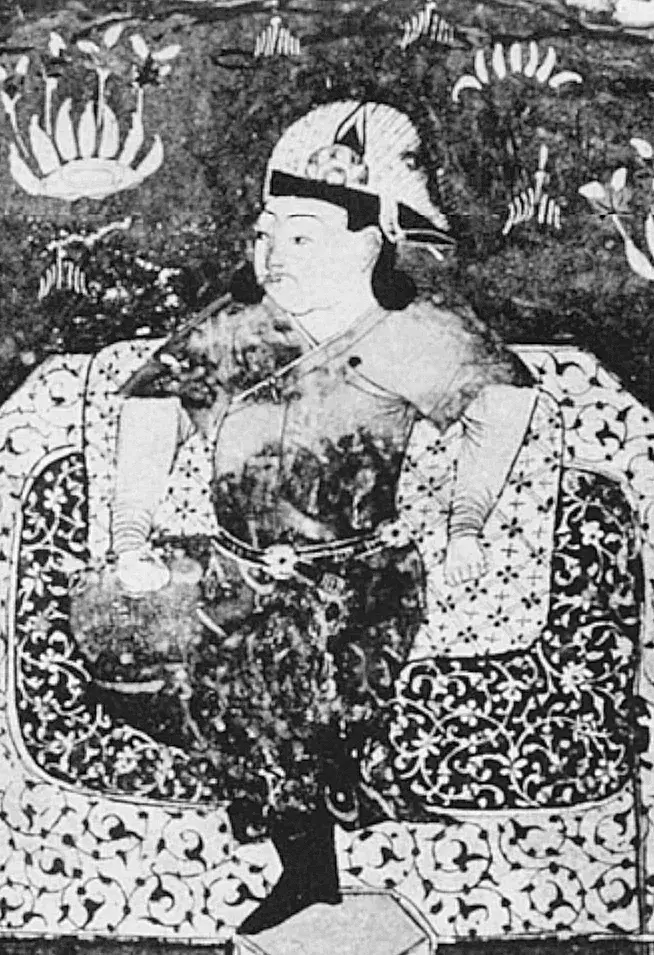
八剌
Baraq (八剌, ?–1271) was an imperial prince of the Mongol Empire and the seventh Khan of the Chagatai Khanate, reigning from 1266 until 1271. He was a great-grandson of Chagatai (the second son of Genghis Khan) through his eldest son Mutukan and grandson Yesunto'a. In his youth, Baraq served at the court of Kublai Khan in Dadu as a princely hostage and military companion. In 1266, following the death of the loyalist Chagatai…
Baraq (八剌, ?–1271) was an imperial prince of the Mongol Empire and the seventh Khan of the Chagatai Khanate, reigning from 1266 until 1271. He was a great-grandson of Chagatai (the second son of Genghis Khan) through his eldest son Mutukan and grandson Yesunto'a. In his youth, Baraq served at the court of Kublai Khan in Dadu as a princely hostage and military companion. In 1266, following the death of the loyalist Chagatai ruler Alghu, Kublai dispatched Baraq back to Central Asia to co-govern the realm alongside Mubarak Shah. Upon reaching Almalik, Baraq executed a swift military coup, deposing Mubarak Shah and demoting him to supreme judicial magistrate while installing himself as undisputed khan. Immediately thereafter, Baraq repudiated his allegiance to Kublai, expelling Yuan imperial commissioners and seizing lucrative agricultural oases in the Tarim Basin. Baraq subsequently clashed with Qaidu, the leader of the Ogodeid Khanate, over dominance in Transoxiana. After several destructive cavalry battles, Baraq, Qaidu, and Mengu-Timur of the Golden Horde convened the historic Talas Kurultai in the spring of 1269. The three monarchs entered a sacred alliance, dividing the pastures and urban revenues of Transoxiana while pledging joint resistance against Kublai's centralizing authority. Seeking additional wealth and encouraged by Qaidu, Baraq invaded the Ilkhanate across the Amu Darya in 1270. However, his army was annihilated by Abaqa Khan at the Battle of Herat. Retreating in disgrace to Bukhara under Qaidu's military encirclement, Baraq suffered a stroke and died in 1271, with contemporary sources suggesting he was secretly poisoned by Qaidu's agents.
Born into the senior branch of the house of Chagatai as a great-great-grandson of Genghis Khan.
Resided at the court of Kublai Khan during the Toluid civil war against Ariq Boke.
Dispatched to Central Asia by Kublai; overthrew Mubarak Shah to claim the Chagatai khanate.
Expelled Yuan imperial governors and fought border wars against Qaidu in Transoxiana.
Met Qaidu and Mengu-Timur at Talas, formalizing a coalition that rejected Kublai's paramount authority.
Invaded the Ilkhanate and suffered a catastrophic defeat against Abaqa Khan near Herat.
Paralyzed and besieged by Qaidu's forces in Bukhara, converted to Islam and died shortly thereafter.
Baraq belonged to the senior princely lineage of Chagatai. His grandfather Mutukan had been Chagatai's favorite son, slain during the siege of Bamiyan during Genghis Khan's western conquests. Bold, ambitious, and an expert in cavalry warfare, Baraq resided for years at the court of Kublai Khan in Dadu as an imperial hostage and officer in the royal bodyguard.
In 1266, Alghu Khan, who had maintained close ties with Kublai, died in Transoxiana. Princess Orghana Khatun enthroned her young son Mubarak Shah without imperial authorization. Determined to assert imperial oversight over Central Asia, Kublai conferred upon Baraq gold tablets of authority, royal decrees, and military retainers, instructing him to share governance with Mubarak Shah.
Upon arriving at the Chagatai winter encampment at Almalik, Baraq moved decisively. Persuading tribal grandees that an adult, seasoned warrior was required to defend the frontiers against Qaidu's encroachments, Baraq launched a palace coup. He stripped Mubarak Shah of royal rank, reassigning him to the subordinate role of chief judge (yarghuchi), and declared himself sovereign khan.
Immediately upon solidifying power, Baraq severed relations with the Great Khan. Recognizing that Dadu was too distant to enforce compliance, he arrested and expelled Kublai's resident administrators (darughachi) and seized control of the lucrative Uighur agricultural oases. Enraged by this defiance, Kublai condemned Baraq's perfidy and fortified the northwestern frontiers to contain him.
Baraq simultaneously faced a mortal rival in Qaidu, who had built a formidable power base in the Emil valley and was expanding into Transoxiana. Between 1267 and 1268, bitter warfare erupted along the Jaxartes River. Although Baraq won initial skirmishes, Qaidu secured reinforcements from the Golden Horde, crushing Baraq's army and driving him back to Samarkand and Bukhara.
Realizing that continued warfare would bleed Central Asia white and invite imperial intervention from Dadu, Qaidu extended an olive branch. In the spring of 1269, Baraq, Qaidu, and representatives of Mengu-Timur of the Golden Horde assembled on the verdant meadows along the Talas River for the momentous Talas Kurultai.
During celebratory banquets lasting a week, the three princes formed a brotherhood. They agreed to divide Transoxiana, allocating two-thirds of the agricultural and urban tax revenues to Baraq while dividing the remainder between Qaidu and Mengu-Timur. Crucially, the monarchs decreed that their nomadic warriors were strictly forbidden from pillaging peasant villages or devastating urban bazaars. Furthermore, they declared that Kublai had abandoned ancient nomadic traditions by adopting Chinese customs, formally rejecting his supreme authority over the western uluses.
Although the Talas partition granted Baraq substantial urban revenues, his pasturelands remained insufficient to support his massive nomadic tumens. Exploiting Baraq's financial stress, Qaidu urged him to direct his predatory ambitions southward across the Amu Darya into the prosperous Persian provinces of the Ilkhanate.
In the spring of 1270, Baraq led his full army across the frontier into Khorasan and northern Afghanistan. However, Ilkhan Abaqa Khan was thoroughly prepared. On July 22, 1270, the armies clashed near Herat. Abaqa's heavy cavalry executed a devastating flank envelopment, crushing the Chagatai forces. Tens of thousands of Baraq's men were killed or captured, his baggage trains were plundered, and Baraq escaped across the river with only a remnant of his personal guard.
The disaster destroyed Baraq's military standing. Retreating to Bukhara, he found himself surrounded by Qaidu's veteran units, who arrived under the pretext of providing protection. Stricken with panic and broken by defeat, Baraq suffered a paralytic stroke. Seeking to rally local Muslim support in his final days, he converted to Islam on his sickbed, taking the name Ghiyas-ud-din.
In the summer of 1271, Baraq died in his encampment near Bukhara. Persian chronicles record that Qaidu, wary of Baraq's unpredictable ambition should he recover, instructed his attending physicians to administer poison. Following his demise, Qaidu placed puppet rulers on the Chagatai throne, subordinating the khanate to Ogodeid hegemony for over three decades.
Successfully executed a political coup in 1266 upon returning from Dadu, displacing Mubarak Shah to become the seventh ruler of the Chagatai Khanate.
Repudiated allegiance to Kublai Khan, expelling imperial tax officials and securing independent sovereign control over the western territories.
Co-founded the historic Talas alliance alongside Qaidu and Mengu-Timur, partitioning Transoxiana and institutionalizing nomadic independence against Dadu.
Mobilized an invasion of the Ilkhanate in 1270, culminating in the monumental Battle of Herat that reshaped the geopolitical boundaries of Central Asia and Iran.
FIGURES ASSOCIATED WITH THIS DYNASTY