也速该
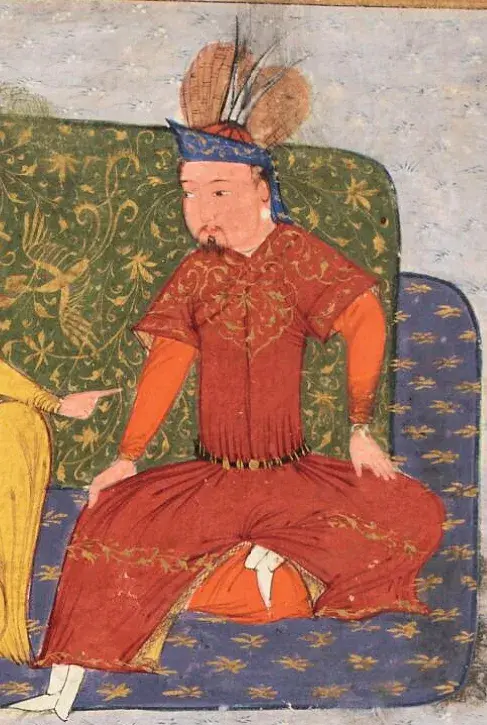
Historical portrait of Yesugei
Image creditsJami al-Tawarikh artist, 1420-1430 artist · Public domainImage source

Chieftain of the Kiyad Mongolsfather of Genghis Khan (Temüjin)

Yesügei (也速该)

也速该

Yesügei (Yesügei Ba'atur, 也速该, died 1170), belonging to the Borjigin clan, was the supreme chieftain of the Kiyad Mongols and a prominent warrior leader in twelfth-century Mongolian plateau history, revered as the father of Genghis Khan (Temüjin). Descended from the supreme Golden Family, he was the grandson of Khabul Khan—the first unified ruler to assume the title of khan over the Khamag Mongol—and the third son of Bartan…

Kiyad Mongols (蒙古乞颜部)

PROFILE

Yesügei (Yesügei Ba'atur, 也速该, died 1170), belonging to the Borjigin clan, was the supreme chieftain of the Kiyad Mongols and a prominent warrior leader in twelfth-century Mongolian plateau history, revered as the father of Genghis Khan (Temüjin). Descended from the supreme Golden Family, he was the grandson of Khabul Khan—the first unified ruler to assume the title of khan over the Khamag Mongol—and the third son of Bartan Ba'atur. Renowned across the steppes for his formidable combat prowess, martial valor, and equestrian mastery, he was honored by the tribes with the distinguished epithet "Ba'atur" (meaning hero or valiant warrior). During the turbulent era of intertribal warfare and territorial rivalry across the northern plateau, Yesügei led the Kiyad forces in protracted resistance against their archenemies, the Tatars, and the hostile machinations of the Jurchen Jin Dynasty. He married Lady Ö'elün from the Olkhonud sub-branch of the Onggirat tribe, fathering four renowned sons: Temüjin, Qasar, Hachiun, and Temüge. In 1170, after arranging a formal marriage alliance for his nine-year-old son Temüjin with Börte, daughter of Dei Sechen of the Onggirat tribe, Yesügei was treacherously poisoned by Tatar rivals during a feast on his return journey and passed away shortly after reaching his camp. Although his untimely death led to the dispersal of his clan under the pressure of the Tayichi'ud, his legacy and strategic alliances laid the bedrock for Temüjin's eventual reunification of the Mongolian tribes. In 1266 (the third year of the Zhiyuan era), Emperor Shizu of Yuan (Kublai Khan) posthumously honored Yesügei with the temple name Liezu and the posthumous title Emperor Shenyuan.

Nickname
Yesügei Ba'atur (也速该把阿秃儿)
Temple Name
Liezu (烈祖, posthumously honored by Kublai Khan)
Posthumous Name
Emperor Shenyuan (神元皇帝, posthumously honored by Kublai Khan)
Dynasty
Kiyad Mongols (蒙古乞颜部)
Date of Death
1170 (Qiandao 6, Song Xiaozong / Dading 10, Jin Shizong)
Highest Post & Noble Titles
Chieftain of the Kiyad Mongols, Ba'atur (Hero / Valiant Warrior), Posthumously honored as Emperor Shenyuan
Major Offices
Chieftain of the Kiyad, Commander of the Tribal Coalition
Identity
Chieftain of the Kiyad Mongols, father of Genghis Khan (Temüjin)

LIFE TIMELINE

Relationship graph

BIOGRAPHY

Life and Career

Lineage of the Golden Family

Yesügei was born along the banks of the Onon River into the ruling Borjigin aristocracy of the Khamag Mongol confederation. His grandfather, Khabul Khan, was celebrated as the first legendary leader to unite all Mongol tribes under a single khanate, earning renown through his fearless resistance against the Jurchen Jin court. Following Khabul Khan's demise, the supreme leadership passed to Ambaghai Khan of the Tayichi'ud lineage in accordance with steppe rotation customs. When Ambaghai Khan was subsequently captured by hostile Tatars while escorting his daughter to a bridal party and delivered to the Jin emperor for gruesome execution, Khabul's son Hotula Khan assumed the leadership and waged relentless punitive campaigns against the Tatars and Jin forces.

As the third son of Bartan Ba'atur (Khabul Khan's second son), Yesügei grew up amidst unceasing tribal combat and witnessed firsthand the irreconcilable generational enmity between the Mongols, the Tatars, and the Jin Dynasty. Endowed with extraordinary physical strength, fearless tactical acumen, and superb horsemanship, he achieved swift distinction on the battlefield, earning the prestigious tribal designation "Ba'atur." Following Hotula Khan's passing, the Mongol confederacy decentralized into rival clan groupings without an elected supreme khan, and Yesügei assumed supreme military command over the core Kiyad tribal branches.

Leadership of the Kiyad Clan

Upon assuming authority over the Kiyad, Yesügei confronted intense internal and external challenges. Internally, aristocratic rivals within the closely related Tayichi'ud clan grew envious of his swelling popularity and the expanding size of his pastoral herds. Externally, the formidable Tatar confederation, heavily subsidized and manipulated by the Jin court, mounted regular predatory raids into Mongol pastures. Yesügei demonstrated exceptional leadership, reorganizing tribal retinues, training dedicated vanguard warriors, and consolidating the core territories along the Onon and Kerulen rivers.

During his early chieftainship, while out hunting with a falcon along the Onon River, Yesügei encountered Chiledu, a nobleman of the Merkit tribe, escorting his newly wedded bride Ö'elün. Recognizing the strategic significance and noble lineage of the woman, Yesügei rode back to gather his elder brother Negün Taishi and younger brother Daritai Otchigin to intercept them. Seeing that resistance was impossible against three heavily armed warriors, Chiledu fled, and Ö'elün was escorted to Yesügei's encampment to become his primary wife. Lady Ö'elün proved to be a woman of great political wisdom, exceptional fortitude, and steadfast dignity, serving as Yesügei's chief counselor and familial pillar.

Campaigns Against the Tatars

During the early 1160s, the Tatars launched major incursions into Mongol grazing lands. Yesügei personally marshaled the Kiyad cavalry to confront the invading forces. Leading from the front line, he spearheaded devastating countercharges that shattered the Tatar ranks, capturing two of their foremost chieftains, Temüjin-üge and Kori-buqa. This resounding victory decisively checked Tatar expansion and elevated Yesügei's standing as the preeminent military leader across the eastern steppes.

At the exact moment of his triumphant return, Lady Ö'elün gave birth to their firstborn son at the Deli'ün Boldaq camp along the Onon River. The newborn infant emerged clutching a dark blood clot resembling a knucklebone in his right hand. Interpreting this omen as a divine sign of destined military dominion and in commemoration of his triumph over the enemy chieftain, Yesügei named his son Temüjin. In subsequent years, Ö'elün bore three more sons—Qasar, Hachiun, and Temüge—as well as a daughter named Temülün, while his secondary wife Sochigel gave birth to Bekter and Belgütei.

Betrothal and Tragic Poisoning

In 1170, when Temüjin reached nine years of age, Yesügei resolved to fulfill customary marital traditions by traveling southeast to seek a suitable bride from the Onggirat tribe, renowned for producing noble consorts. Along the journey near the Chekcher and Chikhurkhu mountains, Yesügei encountered Dei Sechen, an esteemed Onggirat chieftain. Impressed by young Temüjin's luminous countenance and clear gaze, Dei Sechen warmly welcomed the travelers to his encampment and offered his ten-year-old daughter Börte in betrothal. Delighted by the auspicious pairing, Yesügei presented his prized draft horse as a bridal pledge and left Temüjin at Dei Sechen's camp according to steppe custom, before embarking alone on his return journey to the Onon.

While traversing the Yellow Steppes (Sari-ke'er), Yesügei happened upon an assembly of Tatars holding a lavish tribal feast. Bound by the sacred desert custom of steppe hospitality, which forbade refusing travelers refreshment, he dismounted to share food and drink. However, the Tatars recognized the solitary guest as the dreaded Yesügei Ba'atur, who had repeatedly crushed their armies and slain their leaders. Concealing their malice, they secretly laced the mare's milk and roasted meat with lethal poison. Feeling internal agony shortly after departing, Yesügei rode desperately for three days until he reached his family yurt. Realizing his life was ending, he summoned his loyal household retainer Münglig from the Qongqotan clan to his bedside, entrusting his young widow and orphaned children to his care, and commanded him to retrieve Temüjin immediately. Having uttered these final wishes, Yesügei expired at the age of approximately thirty-seven.

Aftermath and Familial Ordeal

The sudden demise of Yesügei plunged the Kiyad confederation into immediate turmoil. Seizing upon the power vacuum, ambitious chieftains of the Tayichi'ud clan, led by Targhutai Kiriltuk, renounced their ancestral alliances and forcibly drove away the vast majority of the Kiyad herds and dependent families. Proclaiming that the deep waters had dried up and the shining stone had shattered, they abandoned Lady Ö'elün, the young Temüjin, and their infant siblings on the barren steppes to starve.

Despite these catastrophic privations, Lady Ö'elün gathered wild roots and game to sustain her family, while instilling in Temüjin the unwavering resolve to reclaim his father's heritage. The military prestige, wide alliances, and loyal retainers cultivated by Yesügei survived his death, providing the indispensable moral authority and political legitimacy that enabled Temüjin to rally dispersed clans and ultimately forge the world-conquering Mongol Empire.

Major Achievements

Consolidation of Kiyad Military Strength

Following the dissolution of the unified Khamag Mongol khanate, Yesügei successfully gathered dispersed lineages and revitalized the defensive readiness of the Kiyad clan. By recruiting elite horse archers into a loyal personal guard (nökör) and implementing flexible steppe maneuvers, he maintained a potent balance of power against the rival Tayichi'ud and secured the core pastures along the Onon River, preserving the territorial sovereignty of Khabul Khan's direct descendants.

Decisive Victories Over the Tatars

Confronting the persistent geopolitical menace of the Tatar confederation, Yesügei executed aggressive, proactive counter-campaigns. His crushing defeat of the Tatar vanguard and capture of chieftain Temüjin-üge dismantled immediate hostile incursions, halted foreign expansionism into the Mongolian heartland, and established a psychological deterrence that protected northern pastoral communities for over a decade.

Forging the Onggirat Strategic Alliance

Demonstrating profound diplomatic foresight, Yesügei recognized that lasting security required enduring matrimonial bonds beyond immediate tribal borders. By initiating the betrothal between Temüjin and Börte with Dei Sechen of the Onggirat, he established a vital political alliance with one of the most culturally refined and strategically located confederations on the plateau. This bond provided vital diplomatic backing, shelter, and material resources during the formative crises of Temüjin's early career.

Chronology

  • ca. 1134 (Dading 10, Jin) | Birth | Born into the Borjigin clan on the banks of the Onon River as the third son of Bartan Ba'atur.
  • ca. 1150 (Tiande Era, Jin) | Renowned Warrior | Campaigned under Hotula Khan, displaying supreme battlefield bravery and receiving the honorific title Ba'atur.
  • 1160 (Dading 1, Jin) | Tribal Chieftain | Assumed leadership over the Kiyad Mongols following the decentralization of the Khamag Mongol khanate.
  • 1161 (Dading 1, Jin) | Marriage to Lady Ö'elün | Intercepted Chiledu of the Merkit along the Onon River and wedded Lady Ö'elün as his primary consort.
  • 1162 (Dading 2, Jin) | Victory Over Tatars | Decisively defeated the Tatars and captured Temüjin-üge; celebrated the birth of his eldest son Temüjin.
  • 1164 (Dading 4, Jin) | Birth of Qasar | Lady Ö'elün gave birth to second son Qasar, strengthening family lineage.
  • 1166 (Dading 6, Jin) | Birth of Hachiun | Lady Ö'elün gave birth to third son Hachiun as pastoral wealth expanded.
  • 1168 (Dading 8, Jin) | Birth of Temüge | Lady Ö'elün gave birth to youngest son Temüge Otchigin.
  • 1170 (Dading 10, Jin) | Betrothal of Temüjin | Escorted nine-year-old Temüjin to the Onggirat tribe, arranging betrothal with Börte, daughter of Dei Sechen.
  • 1170 (Dading 10, Jin) | Fatal Poisoning | Traversed Tatar territory on return journey, consumed poisoned food, and died at his encampment; posthumously honored by Kublai Khan in 1266 with the temple name Liezu and the title Emperor Shenyuan.

Personal Relationships

  • Grandfather: Khabul Khan, first supreme khan to unify the Khamag Mongol confederation, renowned for resisting the Jurchen Jin court.
  • Father: Bartan Ba'atur, second son of Khabul Khan, prominent aristocrat and warrior of the Kiyad Mongols.
  • Primary Consort: Lady Ö'elün, daughter of the Olkhonud sub-branch of the Onggirat, wedded by Yesügei and mother of Temüjin, Qasar, Hachiun, Temüge, and Temülün, posthumously honored as Empress Xuanyi.
  • Secondary Consort: Sochigel, mother of Bekter and Belgütei.
  • Eldest Son: Borjigin Temüjin (Genghis Khan), founder and supreme Great Khan of the Mongol Empire.
  • Second Son: Qasar, legendary archer, prominent founding commander of the Mongol Empire, and progenitor of the Khorchin princes.
  • Third Son: Hachiun, capable prince and commander during the early unification wars.
  • Youngest Son: Temüge Otchigin, youngest brother of Genghis Khan who inherited and governed the eastern princely appanages.
  • Loyal Retainer: Münglig, nobleman of the Qongqotan clan, trusted confidant to whom Yesügei entrusted his family on his deathbed.
  • Allied In-law: Dei Sechen, chieftain of the Onggirat tribe and father of Börte, who agreed to the matrimonial alliance with Yesügei.
  • Rival Chieftain: Targhutai Kiriltuk, leader of the Tayichi'ud clan who abandoned Yesügei's widow and orphans after his death.

Historical Evaluation

  • The Secret History of the Mongols: "Yesügei Ba'atur was widely celebrated for his valor and martial authority; wherever his name was heard across the four quarters, all tribes paid him honor and deep respect." (Praising his exceptional personal combat prowess and steppe reputation).
  • Ke Shaomin (New History of Yuan): "Liezu was resolute, vigilant, and possessed far-reaching vision. At a time when the Jin Dynasty was at the zenith of its power and the tribes of the northern desert were divided and rebellious, Liezu stood firm with his military strength and laid the foundation for the ancestral dynasty. Though his life was cut short in his prime, his farsighted designs were profound, and the eventual rise of Taizu was truly anchored upon his deeds." (Evaluating his indispensable role in laying the strategic groundwork for the Mongol Empire).
  • Rashid al-Din (Jami al-Tawarikh): "After Khabul Khan and his sons, the one who governed the totality of the Mongol lineages and wielded the authority and majesty of a sovereign ruler was none other than Yesügei Ba'atur, the father of Temüjin." (Affirming his central political standing in the succession of steppe authority).

Related Entries

  • Lady Ö'elün
  • Genghis Khan
  • Khabul Khan
  • Temüjin
  • Kiyad
  • Secret History of the Mongols

FIGURES ASSOCIATED WITH THIS DYNASTY

Bibliography

  • Yuan Shi (History of Yuan), Volume 1, Basic Annals 1: Basic Annals of Taizu
  • Yuan Shi (History of Yuan), Volume 74, Treatise 24: Sacrifices III
  • Xin Yuan Shi (New History of Yuan), Volume 2, Basic Annals 2: Basic Annals of Liezu
  • The Secret History of the Mongols (translated and annotated by Igor de Rachewiltz)
  • Jami al-Tawarikh (Compendium of Chronicles), Volume 1: Tribes of the Mongols (by Rashid al-Din)