Birth
Born on the eighteenth day of the tenth month in Meixi Village, Yueqing County, Wenzhou.
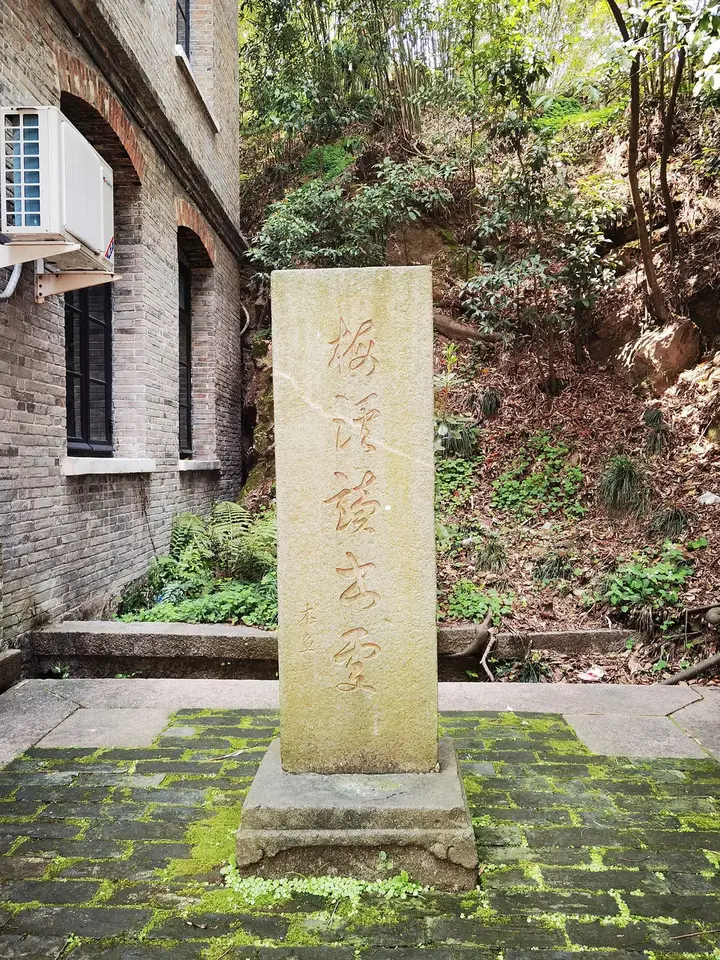
王十朋
Wang Shipeng (王十朋, November 9, 1112 – August 6, 1171), courtesy name Guiling, art name Meixi, a native of Meixi Village, Yueqing County, Wenzhou (modern Yueqing, Zhejiang Province), was a celebrated statesman, writer, and patriotic poet of the Southern Song dynasty. Gifted with a remarkable memory in youth, he was long barred from success in the civil service examinations due to his opposition to Qin Hui's peace policy and…
Wang Shipeng (王十朋, November 9, 1112 – August 6, 1171), courtesy name Guiling, art name Meixi, a native of Meixi Village, Yueqing County, Wenzhou (modern Yueqing, Zhejiang Province), was a celebrated statesman, writer, and patriotic poet of the Southern Song dynasty. Gifted with a remarkable memory in youth, he was long barred from success in the civil service examinations due to his opposition to Qin Hui's peace policy and founded the Meixi Academy in his hometown. Following Qin Hui's death in 1155, Wang Shipeng placed first in the palace examination of 1157 (27th year of the Shaoxing era) at the age of forty-six with an essay urging Emperor Gaozong to reclaim sovereign authority for national restoration. Upright and fearless at court, he championed resistance against the Jin dynasty, successfully urged the removal of Yang Cunzhong from military command, recommended veteran generals Zhang Jun and Liu Qi, and in 1163 (1st year of the Longxing era), as Attending Censor, impeached the pro-peace Chief Councillor Shi Hao on eight major charges, earning acclaim as a "True Censor." Subsequently serving as Prefect of Raozhou, Kuizhou, Huzhou, and Quanzhou, he promoted education, relieved famines, refused Chief Councillor Hong Kuo's request to annex old school lands, and blocked oppressive horse-transport corvée and fictitious tax arrears, winning such devotion that residents of Raozhou and Quanzhou dismantled bridges to keep him from departing. Appointed Household Counselor to the Heir Apparent in 1171, he retired shortly thereafter as Academician of the Longtu Hall and died at home in such poverty that his wife's coffin had remained unburied in Quanzhou for two years. Posthumously titled Zhongwen in 1192, he left behind the Collected Works of Master Meixi (Meixi Xiansheng Wenji).
Born on the eighteenth day of the tenth month in Meixi Village, Yueqing County, Wenzhou.
At age nineteen, composed renowned verses lamenting the Jingkang catastrophe and celebrating Emperor Gaozong's temporary stay in Wenzhou.
Founded the Meixi Academy in his hometown to teach students, entering the Imperial University the following year.
Placed first in the palace examination at age forty-six with a discourse on sovereign authority and restoration; initially appointed Staff Authorizer of Shaoxing Prefecture.
Appointed Collator in the Palace Library; opposed peace talks, urged the removal of Yang Cunzhong from military command, and recommended Zhang Jun and Liu Qi before retiring on a temple sinecure.
Promoted by Emperor Xiaozong to Attending Censor; impeached Chief Councillor Shi Hao on eight charges, leading to Shi's dismissal; after the setback at Fuli, memorialized against abandoning the northern expedition and went out as Prefect of Raozhou.
Served successively as Prefect of Kuizhou and Prefect of Huzhou, blocking hazardous Yangtze River horse transport in Kuizhou and refusing to collect fictitious tax arrears from flood victims.
Appointed Prefect of Quanzhou, instructing the seven county magistrates in benevolent governance; upon his departure in the winter of 1169, weeping citizens dismantled bridges to detain him.
Appointed Household Counselor to the Heir Apparent in the third month, soon retired as Academician of the Longtu Hall, and died at home in Yueqing on the third day of the seventh month at age sixty.
Conferred the posthumous title "Zhongwen" by Emperor Guangzong.
Wang Shipeng was born on November 9, 1112 (18th day of the 10th month of the 2nd year of the Zhenghe era of Emperor Huizong) in Meixi Village, Zuoyuan, Yueqing County, Wenzhou (modern Meixi Village, Danxi Town, Yueqing, Zhejiang Province). Intelligent and gifted with a retentive memory from childhood, he entered the village school at seven and studied successively at the Luyan village school, Jinxi academy, and Yueqing county school from age fourteen, mastering the Confucian classics and history. Growing up during the fall of the Northern Song and the capture of Emperors Huizong and Qinzong, he lamented the national crisis in verse at seventeen, and at nineteen won fame across southern Zhejiang with a poem written when Emperor Gaozong stayed in Wenzhou.
In 1144 (14th year of the Shaoxing era), at thirty-three, Wang Shipeng founded the Meixi Academy in his hometown to instruct students, entering the Imperial University in Lin'an the following year. Because Chief Councillor Qin Hui monopolized power and suppressed all advocates of northern recovery in the civil service examinations, Wang Shipeng repeatedly failed the metropolitan examinations and studied at the Imperial University for over a decade. Only after Qin Hui's death in 1155 did the political climate change. In the spring of 1157 (27th year of the Shaoxing era), at the age of forty-six, Wang Shipeng sat for the palace examination. Answering Emperor Gaozong's question on imperial governance, he submitted a ten-thousand-character essay criticizing the ministerial usurpation of power under Qin Hui and urging the sovereign to reclaim personal authority (lanquan) to achieve national restoration. Deeply impressed, Emperor Gaozong personally ranked him first among all Presented Scholars as Principal Graduate, appointing him Gentleman for Managing Affairs and Staff Authorizer of Shaoxing Prefecture.
Upon assuming office as Staff Authorizer in Shaoxing Prefecture (modern Shaoxing, Zhejiang Province), Wang Shipeng named his administrative hall the "Hall of Civilian Affairs" (Minshitang). When severe flooding struck Shaoxing, drowning residents, destroying hundreds of homes, and driving rice prices skyward across all eight counties, Wang Shipeng personally toured the disaster areas, interviewed clerks and villagers regarding their hardships, distributed relief grain, and secured tax exemptions while punishing corrupt officials who exploited the populace.
In late 1159 (29th year of the Shaoxing era), Wang Shipeng was summoned to the capital as Collator in the Palace Library and concurrently Elementary Instructor to the Household of Prince Jian (the future Emperor Xiaozong). At a time when the Jin ruler Wanyan Liang was preparing to invade the south while the Song court remained mired in complacency, Wang Shipeng submitted a memorial in response to an imperial decree, criticizing officials for holding office without fulfilling their duties and advising Emperor Gaozong to improve in employing worthy men, accepting remonstrance, and enforcing rewards and punishments. Firmly opposing peace talks, he warned against the excessive power of the Three Metropolitan Guard commanders, impeached the long-entrenched Palace Command chief Yang Cunzhong—leading to Yang's removal from military command—and urged the recall of veteran generals Zhang Jun and Liu Qi. Sidelined by pro-peace courtiers, he requested a temple sinecure and returned to Yueqing in 1160, naming his study the "Chamber of Non-Deception" (Buqishi, inscribed by Zhang Jun).
When Emperor Xiaozong ascended the throne in 1162 (32nd year of the Shaoxing era), he appointed his former tutor Wang Shipeng as Prefect of Yanzhou and summoned him to Lin'an before he took up the post, appointing him Bureau Vice Director of Honours, Vice Director of Education, Imperial Diarist, and in the third month of 1163 (1st year of the Longxing era), Attending Censor. Urging Emperor Xiaozong to launch a northern expedition, Wang Shipeng strongly backed Zhang Jun's military preparations in the Jiang-Huai region. When Chief Councillor Shi Hao obstructed Zhang Jun's plans, Wang Shipeng submitted a blistering impeachment charging Shi Hao with eight major crimes, including harboring deceit, monopolizing power, and undermining the state through appeasement. Emperor Xiaozong dismissed Shi Hao from the chief councillorship, and Wang Shipeng subsequently impeached Shi Hao's partisans Shi Zhengzhi and Lin Anzhai, earning nationwide renown as a "True Censor."
In the fifth month of 1163, after Zhang Jun's northern expedition suffered a setback at Fuli, the pro-peace faction clamored for renewed submission to the Jin. Wang Shipeng memorialized resolutely that the grand enterprise of national recovery must not be shaken by a single military defeat. As Emperor Xiaozong wavered and turned to pro-peace ministers such as Tang Situi, Wang Shipeng requested a provincial post and went out in the seventh month as Compiler in the Jiying Hall and Prefect of Raozhou (modern Poyang County, Jiangxi Province).
Over the next seven years, Wang Shipeng governed Raozhou, Kuizhou, Huzhou, and Quanzhou as a model of benevolent administration. In Raozhou (1163–1165), he prayed for rain during drought, repaired waterworks, restored the prefectural school, and relieved refugees. When Chief Councillor Hong Kuo, a native of Raozhou, returned home and asked Wang Shipeng to grant him the site of the old prefectural school to expand his private garden, Wang Shipeng refused flatly: "The school is the dwelling place of the Former Sage; how dare Shipeng give it away to anyone?" When Wang Shipeng was transferred to Kuizhou (modern Fengjie County, Chongqing) in 1165, the people of Raozhou wept, blocked the roads, and dismantled the bridge along his route to prevent his departure, forcing him to slip away by a side path.
During his two years as Prefect of Kuizhou and Pacification Commissioner of Kuizhou Circuit (1165–1167), Wang Shipeng piped mountain spring water into the city to build "Righteousness Wells" for residents and restored the shrines of Zhuge Liang and Du Fu. When court ministers proposed shipping Sichuan tribute horses by boat through the treacherous Yangtze Three Gorges, Wang Shipeng—together with Sichuan Imperial Commissioner Wang Yingchen—submitted two memorials defying imperial orders to expose the mortal danger and ruinous cost to the people, persuading Emperor Xiaozong to cancel the measure. Transferred to Prefect of Huzhou (modern Huzhou, Zhejiang Province) during severe floods in 1167, he was praised by Emperor Xiaozong as the only official capable of stabilizing the prefecture. In both Kuizhou and Huzhou, when the Ministry of Revenue pressed for 140,000 and 340,000 strings of fictitious accumulated tax arrears, Wang Shipeng twice offered his resignation rather than extort a single coin from the people. Appointed Prefect of Quanzhou (modern Quanzhou, Fujian Province) in 1168, he feasted the magistrates of its seven counties upon arrival, composing poems to admonish them to cherish the populace. When he left Quanzhou in the winter of 1169, weeping residents blocked the roads, dismantled the bridge (later rebuilt and named "Meixi Bridge"), and escorted him across the border to Fengting Post in Xianyou County.
Throughout his career, Wang Shipeng donated most of his salary to charity schools and poor relief. When his wife Lady Jia died in office in Quanzhou, his family was so poor that they could not afford to transport her coffin home to Yueqing, leaving it in a Quanzhou monastery for two years. Summoned to court in the third month of 1171 (7th year of the Qiandao era) as Household Counselor to the Heir Apparent, he was honored by Emperor Xiaozong with a seat at audience, a fur robe, and a golden belt. Gravely ill, he requested retirement as Academician of the Longtu Hall and died at home in Meixi Village on August 6, 1171 (3rd day of the 7th month) at the age of sixty. Citizens of Quanzhou gathered at Kaiyuan Monastery to mourn him and built the Shrine of Wang Zhongwen on East Street. In 1192 (3rd year of the Shaoxi era), his former pupil Emperor Guangzong conferred upon him the posthumous title "Zhongwen."
Wang Shipeng stood as a pillar of the pro-war camp during the transition from Emperor Gaozong to Emperor Xiaozong. As Collator in the Palace Library and Attending Censor, he prioritized military reform and northern recovery—securing the removal of Yang Cunzhong from the Palace Command, impeaching Chief Councillor Shi Hao to clear the way for the Longxing northern expedition, and steadfastly defending the cause of restoration even after the defeat at Fuli.
Across his tenures in Shaoxing, Raozhou, Kuizhou, Huzhou, and Quanzhou, Wang Shipeng exemplified the Confucian ideal of the upright official: rejecting Chief Councillor Hong Kuo's land grab in Raozhou, halting Yangtze River horse transport in Kuizhou, and staking his office to block hundreds of thousands of strings of abusive tax collections.
In scholarship and literature, Wang Shipeng studied the Spring and Autumn Annals, Analects, and Book of Documents with a focus on practical statecraft rather than empty speculation. He left over 1,700 poems, 46 memorials, 7 rhapsodies, and over 140 prose pieces collected in the 54-chapter Collected Works of Master Meixi (Meixi Xiansheng Wenji), as well as an influential annotated edition of Su Shi's poetry. Zhu Xi and Liu Gong ranked his moral character and literary vigor alongside Zhuge Liang, Du Fu, Yan Zhenqing, Han Yu, and Fan Zhongyan.
FIGURES ASSOCIATED WITH THIS DYNASTY