Born in Huangpi
Born on the fifteenth day of the first lunar month in Caomiao Lane, Huangpi County, displaying extraordinary precocity and filial devotion from infancy.
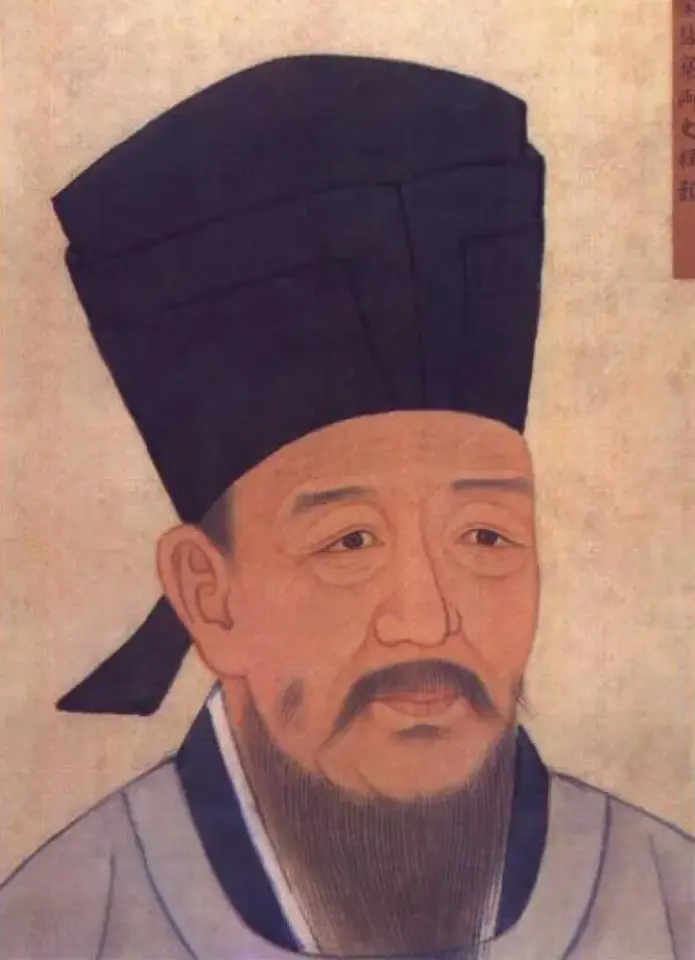
程颢
Cheng Hao (程颢, 1032–1085), courtesy name Bochun (伯淳) and revered as Master Mingdao (明道先生), was a native of Luoyang County, Henan Prefecture, and a prominent philosopher, educator, and foundational architect of Song Neo-Confucianism. Together with his younger brother Cheng Yi, they are celebrated in Chinese intellectual history as the Cheng brothers, and are counted among the Five Masters of the Northern Song…
Cheng Hao (程颢, 1032–1085), courtesy name Bochun (伯淳) and revered as Master Mingdao (明道先生), was a native of Luoyang County, Henan Prefecture, and a prominent philosopher, educator, and foundational architect of Song Neo-Confucianism. Together with his younger brother Cheng Yi, they are celebrated in Chinese intellectual history as the Cheng brothers, and are counted among the Five Masters of the Northern Song alongside Zhou Dunyi, Zhang Zai, and Shao Yong. Posthumously, he was ennobled as the Earl of Henan and later honored with the title Duke of Yu. In his youth, Cheng Hao studied under the Neo-Confucian pioneer Zhou Dunyi, dedicating himself to rediscovering the lost moral transmission of Confucius and Mencius. In 1057, he earned his jinshi degree in the same examination class as Su Shi, Su Zhe, and Zhang Zai. He served in local administration as Registrar of Hu County, Registrar of Shangyuan, and Magistrate of Jincheng, where he earned widespread popular renown for abolishing oppressive levies, establishing community schools, and governing with Confucian benevolence. Recalled to court in 1069 through the recommendation of Lv Gongzhu, he was appointed Attendant to the Heir Apparent and Acting Investigating Censor, submitting the Memorial Discussing Ten Matters and Memorial Discussing the Kingly and Hegemonic Ways to Emperor Shenzong. When Wang Anshi launched the New Policies, Cheng Hao counseled moderate reform and opposed coercive fiscal measures like the Green Sprouts Law, leading to his reassignment to provincial posts. In his later years, Cheng Hao retired to Luoyang, lecturing alongside Cheng Yi and establishing the influential Luo School. In philosophy, he posited that Heavenly Principle (tianli) is the self-generating natural order of the cosmos, declaring that "Heaven is Principle." In moral cultivation, he advocated the joyful apprehension that "the benevolent person is seamlessly one with all things" and the serene psychic composure of "being broad and completely impartial, responding spontaneously as affairs arrive." His warm, magnanimous presence was likened by contemporaries to a gentle spring breeze. His inward philosophical orientation directly prefigured the Lu-Wang School of Mind in subsequent centuries.
Born on the fifteenth day of the first lunar month in Caomiao Lane, Huangpi County, displaying extraordinary precocity and filial devotion from infancy.
Traveled with his brother Cheng Yi to study under Zhou Dunyi in Nan'an, grasping the joyful spiritual tranquility of Confucius and Yan Hui and dedicating his life to Confucian sagehood.
Passed the imperial examination under chief examiner Ouyang Xiu in the same class as Su Shi and Zhang Zai, receiving his first posting as Registrar of Hu County.
Reassigned as Registrar of Shangyuan in Jiankang Prefecture, equalizing tax burdens, curbing powerful landholders, and constructing extensive irrigation works.
Appointed Magistrate of Jincheng in Zezhou, establishing community schools, fostering sericulture, and pacifying local litigiousness through moral education.
Recommended by Lv Gongzhu, summoned to palace audience, and appointed Attendant to the Heir Apparent and Acting Investigating Censor, submitting the Memorial Discussing Ten Matters.
Opposed the coercive implementation of the Green Sprouts Law; having fundamental policy differences with Wang Anshi, he was reassigned as Judicial Officer of Zhenning Military Command.
Resided in Luoyang and established lecture halls at Songyang Academy with his brother Cheng Yi, attracting hundreds of devoted disciples.
Appointed Magistrate of Fugou, opening county academies, adjudicating disputes with impartiality, and earning high praise from local commoners.
Returned to Luoyang after mourning his father, receiving immense deference from senior statesman Wen Yanbo while instructing advanced disciples on moral nature.
Following Emperor Zhezong's accession, summoned as Assistant Director of the Imperial Clan Court; passed away in Luoyang on July 9 at age fifty-four before assuming office.
Cheng Hao's high great-grandfather Cheng Yu served as a military officer under Emperor Taizu of Song and later rose to Commissioner of the State Finance Commission under Emperor Taizong, receiving posthumous honors as Minister of Personnel. His great-grandfather Cheng Xizhen served as Vice Director of the Forestry and Crafts Bureau and relocated the family to Luoyang. His grandfather Cheng Yu rose to Minister of Personnel. His father Cheng Xiang entered public service through the ancestral privilege granted to descendants of distinguished founding statesmen, serving as magistrate of Huangpi and Xingguo and prefect of Hanzhou, eventually attaining the rank of Grand Master of Palace Accord.
On February 28, 1032 (1st year of Mingdao), Cheng Hao was born in Caomiao Lane, Huangpi County, Huangzhou. From early childhood, Cheng Hao showed exceptional intellectual brilliance and emotional maturity, mastering classical texts at sight and composing mature poetry by age ten. In 1047 (7th year of Qingli), he accompanied his father to Nan'an, where Cheng Xiang recognized the profound virtue of Zhou Dunyi, who was then serving as military staff officer, and placed Cheng Hao and his younger brother Cheng Yi under his tutelage. Zhou Dunyi guided the brothers away from sterile memorization and superficial rhetorical composition, encouraging them to seek the moral joy of Confucius and Yan Hui. Deeply inspired, Cheng Hao dedicated himself to rediscovering the fundamental ethical lineage of the ancient sages.
In his youth, Cheng Hao was not content with conventional textual commentaries. Driven by an intense thirst for existential truth, he spent over a decade exploring Daoist meditation and Buddhist metaphysics. However, through rigorous reflection, he concluded that Buddhist and Daoist teachings were fundamentally nihilistic, detaching human beings from natural social obligations and daily ethical duties. He consequently returned to the Six Classics and the teachings of Confucius and Mencius, anchoring his thought firmly in practical Confucian humanism.
In 1057 (2nd year of Jiayou), twenty-six-year-old Cheng Hao sat for the imperial examinations in Kaifeng. The eminent scholar Ouyang Xiu presided as chief examiner, deliberately rewarding essays characterized by ancient moral substance over ornate rhyming verse. Cheng Hao passed the jinshi examination in the same illustrious cohort as Su Shi, Su Zhe, and Zhang Zai. Following his graduation, the court appointed him Registrar of Hu County in modern Shaanxi, beginning his career in provincial governance.
As Registrar of Hu County, Cheng Hao quickly displayed remarkable administrative competence and moral courage. In the county, an ancient mountain weir crucial for agricultural irrigation had been illicitly seized by powerful local clans, leaving common farmers without water during droughts. Previous officials had turned a blind eye out of fear of influential lineages. Cheng Hao investigated the canal routes in person, inspected historical land deeds, and enforced equal distribution of water rights to all farmers. His impartial resolution restored thousands of acres of parched farmland, winning the lasting gratitude of the rural population.
In 1060 (5th year of Jiayou), Cheng Hao was reassigned as Registrar of Shangyuan in Jiankang Prefecture. Shangyuan was a major logistical hub along the Yangtze River, burdened by excessive corvée obligations and tax fraud, as wealthy landlords routinely shifted their tax liabilities onto impoverished smallholders. Cheng Hao conducted meticulous land resurveys, eliminated fraudulent registrations, and instituted fair labor service rosters. Concurrently, he supervised the dredging and repair of dozens of irrigation ponds and reservoirs across the county, ensuring regular harvests and establishing his reputation as an exemplary civil magistrate.
In 1065 (2nd year of Zhiping), Emperor Yingzong appointed Cheng Hao Magistrate of Jincheng in Zezhou. Situated in the rugged Taihang Mountains, Jincheng was known for its fierce popular temper and chronic civil litigation. Cheng Hao adopted a governing strategy centered on moral persuasion and community education. He traversed rural townships, establishing dozens of community schools and appointing virtuous elders to instruct local youths in filial piety and fraternal harmony.
In his magistrate court, Cheng Hao heard legal disputes with patient benevolence. Rather than resorting to corporal punishments, he explained moral principles to plaintiffs and defendants, frequently leading both parties to dissolve their suits in tears of mutual remorse. Banditry ceased throughout the territory, and the county prison remained empty for extended periods. When imperial inspectors conducted annual performance reviews, Cheng Hao's administration was ranked among the foremost in the empire.
In 1068 (1st year of Xining), Emperor Shenzong ascended the throne, determined to enrich the state, strengthen the military, and overhaul the dynastic bureaucracy. In 1069, Censor-in-Chief Lv Gongzhu recommended Cheng Hao to the throne as a scholar of exceptional moral integrity and practical capability. Emperor Shenzong granted Cheng Hao an audience in his private quarters, seeking his counsel on grand governance. Cheng Hao responded with profound clarity, emphasizing that a sovereign must move the world through supreme sincerity and model his reign after the benevolent rule of the ancient sage kings. Highly impressed, Shenzong immediately appointed him Attendant to the Heir Apparent and Acting Investigating Censor.
Assuming his duties in the Censorate, Cheng Hao submitted his Memorial Discussing Ten Matters and Memorial Discussing the Kingly and Hegemonic Ways, offering a comprehensive framework for national administration. He urged the emperor to distinguish between the moral Kingly Way and utilitarian Hegemony, establish trustworthy ministerial counseling, select principled censorial critics, ease taxes on commoners, and enforce strict military discipline. Shenzong held Cheng Hao in extraordinary esteem, often dismissing attendants to hold private discussions with him.
During this period, Vice Grand Councilor Wang Anshi initiated sweeping fiscal reforms, including the Equal Transport Law and the Green Sprouts Law. Cheng Hao had long been a close personal friend of Wang Anshi. Aware of the mounting social tensions generated by rapid reform, Cheng Hao urged Wang Anshi to proceed with moderation, heed popular sentiment, and avoid factional intolerance. During fierce court debates, Cheng Hao maintained a serene demeanor and advised Wang Anshi that the affairs of the realm belonged to the entire commonwealth rather than any single faction.
However, as the Green Sprouts Law was aggressively implemented across the provinces, local officials turned agricultural loans into coercive revenue-generating mechanisms, burdening peasant households with heavy debt. As a censorial official, Cheng Hao submitted forthright memorials warning that rapid bureaucratic enforcement violated natural human inclinations and stirred popular grievance. Recognizing that his philosophical disagreements with Wang Anshi could not be reconciled, Cheng Hao requested a provincial reassignment in 1070, departing the capital as Judicial Officer of Zhenning Military Command.
After leaving the capital, Cheng Hao served as judicial officer in Zhenning and later as Magistrate of Fugou. In Fugou, he continued his benevolent administration, establishing county schools and governing with compassion. In 1077 (10th year of Xining), his father Cheng Xiang retired from official service due to advanced age, and Cheng Hao resigned his post to return to Luoyang to attend to his parents. Between Songyang Academy on Mount Song and his residence in Luoyang, Cheng Hao joined his brother Cheng Yi in full-time lecturing, ushering in the golden age of the Luo School.
Cheng Hao's personality was gentle, magnanimous, and serene. In instructing his students, he never displayed harshness or irritation, and his disciples described studying under him as like "bathing in a warm spring breeze." Prominent scholars from across China, including Xie Liangzuo, Yang Shi, You Zuo, and Lv Dalin, gathered at his gate, abandoning competitive civil examination prose to dedicate themselves to internal moral realization and cosmological truth.
During his residence in Luoyang, retired senior statesmen such as Wen Yanbo, Fu Bi, and Sima Guang treated Cheng Hao with profound reverence, regularly visiting his academy to seek his insights on statecraft. Though retired from active office, Cheng Hao remained concerned for dynastic welfare. In his final years, Grand Councilor Han Zhen privately asked his opinion regarding Sima Guang and Lv Gongzhu's prospective assumption of power. Cheng Hao presciently warned that future chief ministers must govern with magnanimity and avoid partisan retribution, warning that dividing officials into hostile factions would plunge the dynasty into disaster.
In March 1085 (8th year of Yuanfeng), Emperor Shenzong passed away, and Emperor Zhezong took the throne under the regency of Grand Empress Dowager Gao. The conservative faction assumed control, and Sima Guang and Lv Gongzhu jointly petitioned the court to summon Cheng Hao, resulting in his appointment as Assistant Director of the Imperial Clan Court. However, by the time the imperial decree arrived in Luoyang, Cheng Hao was already gravely ill.
On July 9, 1085, Cheng Hao passed away peacefully at his Luoyang residence at the age of fifty-four. Scholars and disciples throughout the empire mourned his loss with deep grief. Grand Commander Wen Yanbo personally attended his funeral and inscribed the title "Master Mingdao" upon his tomb monument. His brother Cheng Yi composed the moving Tomb Inscription for Master Mingdao, eulogizing his singular historical achievement: "Since the passing of Mencius, to bring the teachings of the sages to resplendent clarity once more across the world, he stands alone."
Cheng Hao's most monumental contribution to Chinese philosophy was establishing "Heavenly Principle" (tianli) as the supreme ontological source and foundational order of the universe. Cheng Hao famously reflected: "Although my learning received guidance from teachers, the two words 'Heavenly Principle' were apprehended through my own experiential discovery." This declaration marked the formal crystallization of the Neo-Confucian philosophical paradigm.
In Cheng Hao's metaphysics, Heavenly Principle unified the natural cosmological order with human moral norms. He maintained that the continuous, creative generation of the cosmos and the cyclical alternation of seasons were expressions of Heavenly Principle; similarly, fundamental human virtues—filial piety, loyalty, righteousness, and benevolence—were the natural manifestations of this same cosmic Principle within human society. Formulating the core thesis that "Heaven is Principle," he swept away traditional superstitious notions of Heaven as an anthropomorphic deity that dispensed miraculous rewards or punitive catastrophes.
On the relationship between mind and principle, Cheng Hao posited that "the mind is Heavenly Principle." He argued that Principle is not an external, alien entity imposed upon human consciousness; rather, it is inherently fully present within the human mind. By preserving one's innate moral mind and shedding selfish distortions, one naturally accords with cosmic Principle. This insight bridged the ancient Mencian tradition of investigating the mind to understand human nature with Song cosmological metaphysics, exerting a profound formative influence on the subsequent School of Mind developed by Lu Jiuyuan and Wang Shouren.
Cheng Hao placed special emphasis on the "vital impulse of continuous generation" (shengsheng zhi yi) inherent in Heavenly Principle. He contemplated the vigorous growth of plants and animals as vivid manifestations of universal benevolence. He kept small fish in his pond to observe their natural vitality, and left green grass unweeded outside his study window, remarking that its vibrant growth mirrored the creative impulses of his own heart. This dynamic, life-affirming aesthetic infused early Neo-Confucianism with radiant warmth and vitality.
In ethical thought and spiritual realization, Cheng Hao authored the celebrated Essay on Recognizing Humanity, articulating the sublime doctrine that "the benevolent person is seamlessly one with all things." This short treatise became one of the foundational ethical credos of the Neo-Confucian movement.
Cheng Hao wrote: "The scholar must first recognize benevolence. The benevolent person is seamlessly one with all things; righteousness, propriety, wisdom, and fidelity are all expressions of benevolence." Drawing an analogy from traditional medicine, he noted that physicians referred to paralyzed, insensitive limbs as "numb and unfeeling" (buren, literally "unbenevolent"), because the flow of vital energy was obstructed. Similarly, when an individual acts with callous selfishness and regards the world as separate from oneself, they suffer from spiritual paralysis. A truly benevolent person realizes that all beings share the same vital breath of Heaven and Earth, feeling the joys and suffering of others as intimately as their own flesh.
Regarding spiritual cultivation, Cheng Hao cautioned against over-deliberate intellectual strain and anxious self-monitoring. He stated: "Once this principle is recognized, preserve it with sincere reverence; there is no need for anxious prevention or exhaustive calculation." He argued that when reverence is genuinely maintained, innate benevolence naturally blossoms, whereas excessive suspicion and self-conscious striving merely introduce artificial obstacles.
Cheng Hao's vision of universal benevolence elevated Confucian ethics to a profound cosmological level. It transformed personal moral self-cultivation into an active ecological and social empathy, endowing literati with an enduring sense of universal responsibility and humanitarian concern that sustained Confucian ethical culture across centuries.
To resolve the psychological anxiety and emotional volatility often experienced by scholars during self-cultivation, Cheng Hao composed his famous Letter on Calming Human Nature in response to inquiries from fellow philosopher Zhang Zai.
Zhang Zai had inquired how one could maintain emotional serenity in both activity and stillness without being ensnared by external disturbances. In his reply, Cheng Hao stated: "What is meant by calmness is being calm both in movement and in rest; there is neither internal nor external, neither anticipating nor pursuing. When external things arrive, one simply responds spontaneously." He illuminated that true psychic composure did not mean retreating into quietist meditation or suppressing emotional responses, but rather maintaining clear, unimpeded awareness amidst active daily engagements.
Cheng Hao proposed the cultivation ideal of "being broad and completely impartial, responding spontaneously as affairs arrive." He observed that sages were not devoid of emotions, but their minds functioned like spotless mirrors: reflecting objects accurately when they appeared, and retaining no lingering attachments once they departed. Emotional suffering arose not from outward circumstances, but from subjective egoism and selfish calculation that distorted spontaneous moral responses.
The Letter on Calming Human Nature integrated Confucian social engagement with the soaring equanimity of Zhuangzi. By teaching scholars to temper their moral consciousness within the flow of worldly affairs rather than in monastic isolation, Cheng Hao provided generations of literati with a practical psychological discipline for maintaining inner peace amidst political upheaval and domestic stress.
In classical scholarship, Cheng Hao rejected the pedantic philological commentary and rote memorization that had characterized Han and Tang scholarship, establishing the transformative Song paradigm that "classics are the vehicles of the Dao." He argued that scholars should read the classics to grasp their overarching ethical principles, utilizing textual insights to awaken their own innate moral discernment.
Cheng Hao advocated using the Four Books—the Great Learning, Doctrine of the Mean, Analects, and Mencius—as the essential gateway for students before progressing to the Six Classics. His exegetical lectures were accessible and lively, focusing on applying classical wisdom to contemporary governance and personal conduct, creating the curricular foundation that Zhu Xi later codified into standard examination learning.
As an educator, Cheng Hao possessed an extraordinary ability to inspire students through warm personal charisma. He adapted his guidance to each student's temperament, encouraging independent reflection. Disciples such as Yang Shi, Xie Liangzuo, You Zuo, and Lv Dalin emerged as leading intellectual figures who transmitted the Luo School across China.
Following his death, his writings and oral teachings were collected by his brother Cheng Yi and subsequent disciples, eventually published in the Complete Works of the Two Chengs and Works of the Cheng Brothers. Cheng Hao's poetry, such as Spring Day Composition, celebrated the effortless joy of living in harmony with nature: "Pale clouds and light wind near midday, strolling past flowers and following willows across the stream; contemporaries understand not the joy in my heart, thinking I am merely idling like a youth." His verses reflected the serene harmony of a master who had achieved total spiritual unity with the cosmos.
FIGURES ASSOCIATED WITH THIS DYNASTY