Castration in Youth
Born into a destitute peasant family in Qing County, Zhili; underwent voluntary castration and entered the palace as an apprentice eunuch.
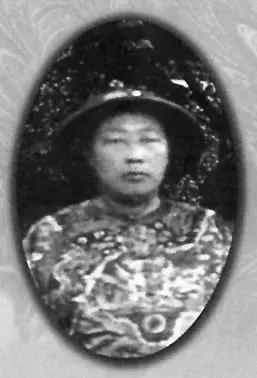
安德海
An Dehai (安德海; c. 1844–1869), commonly known as "Xiao Anzi," was a native of Qing County, Zhili (present-day Qing County, Hebei Province). He was the Chief Palace Eunuch during the early Tongzhi reign and the most powerful early personal favorite of Empress Dowager Cixi. Castrated in youth due to extreme family poverty, he entered the imperial court and rapidly gained the favor of Noble Consort Yi (the future Empress…
An Dehai (安德海; c. 1844–1869), commonly known as "Xiao Anzi," was a native of Qing County, Zhili (present-day Qing County, Hebei Province). He was the Chief Palace Eunuch during the early Tongzhi reign and the most powerful early personal favorite of Empress Dowager Cixi. Castrated in youth due to extreme family poverty, he entered the imperial court and rapidly gained the favor of Noble Consort Yi (the future Empress Dowager Cixi) through his quick wit and cunning discernment. Following the death of the Xianfeng Emperor at the Rehe Mountain Resort in 1861, Cixi conspired with Prince Gong (Yixin) to seize power; An Dehai acted as the vital clandestine courier between Rehe and Beijing, carrying secret decrees that made the Xinyou Coup a success and overthrew the Eight Regent Ministers headed by Sushun. Elevated to Chief Palace Eunuch with the sixth-rank blue feather, An Dehai wielded unprecedented influence within the inner court. In 1865, he collaborated with Cixi to orchestrate the political demotion of Prince Gong, stripping him of the title of Prince Counselor (Yizheng Wang). Arrogant and power-hungry, he sowed discord between the young Tongzhi Emperor and his mother, earning the deep enmity of both the emperor and court ministers. In 1869, An Dehai used the pretext of procuring dragon robes and luxury silks for the Tongzhi Emperor’s upcoming wedding to embark on an unauthorized luxury cruise down the Grand Canal, directly violating dynastic ancestral laws that strictly prohibited eunuchs from leaving the imperial precincts on penalty of death. Traveling aboard lavishly adorned barges displaying prohibited imperial dragon-and-phoenix flags, and lacking official documentation or military passports, he was reported by Dezhou Prefect Zhao Xin. Shandong Governor Ding Baozhen dispatched secret memorials enumerating An's five capital crimes and arrested him in Tai'an. Empress Dowager Ci'an and Prince Gong swiftly issued secret Grand Council instructions commanding summary execution. On September 12, 1869, Ding Baozhen had An Dehai beheaded in Jinan, striking a powerful blow against eunuch encroachment and winning universal acclaim from both court and populace.
Born into a destitute peasant family in Qing County, Zhili; underwent voluntary castration and entered the palace as an apprentice eunuch.
Assigned to the Palace of Eternal Spring to serve Noble Consort Yi (Cixi); won her deepest trust through flattering devotion.
Traveled covertly between Rehe and Beijing to coordinate the Xinyou Coup with Prince Gong, securing Cixi's regency.
Promoted to sixth-rank blue feather eunuch and Chief Palace Eunuch; exercised enormous influence over the inner court.
Conspired with Cixi to strip Prince Gong of his Prince Counselor title, consolidating Cixi's sole executive dominance.
Defied imperial taboos by publicly celebrating a lavish marriage to a 19-year-old opera actress in Beijing, shocking society.
Departed Beijing on pleasure barges under the pretext of procuring wedding silks, openly violating imperial ancestral prohibitions.
Reached Shandong without official passports or ministerial seals; reported to Governor Ding Baozhen by Dezhou Magistrate Zhao Xin.
Captured in Tai'an County by forces dispatched by Ding Baozhen following an urgent imperial memorial to the Grand Council.
Beheaded outside the West Gate of Jinan on September 12 on secret imperial orders, putting an end to his tyrannical influence.
An Dehai hailed from an impoverished peasant household in Qing County, Zhili Province. His family had resided for generations in Tangzhuangzi Village, struggling under chronic agrarian poverty. As the second son in the family, An Dehai suffered from severe deprivation and, with his family's consent, submitted to voluntary castration before entering the Forbidden City as an apprentice eunuch.
Once inside the palace, An demonstrated exceptional resourcefulness and political intuition. He attached himself to Chief Eunuch Huang Cheng'en, mastering court rituals and protocol while acquiring basic literacy and administrative cunning. During the early Xianfeng reign, when Lady Yehenara (the future Empress Dowager Cixi) entered the palace as Noble Consort Yi and resided in the Palace of Eternal Spring, An Dehai ingratiated himself into her service. Attentive to her slightest desires and completely devoted to her interests, he rapidly became her most indispensable domestic attendant.
In August 1861, the Xianfeng Emperor died at the Rehe Mountain Resort in Chengde, leaving the five-year-old heir Zaichun (the Tongzhi Emperor) on the throne. Before his death, the emperor appointed an eight-man regency council led by princes Zaiyuan and Duanhua and grand minister Sushun, intentionally excluding the young emperor’s mother from state affairs. Deep hostility quickly erupted between the regent council and Empress Dowager Cixi.
Isolated in Rehe, Cixi resolved to form a secret alliance with Prince Gong (Yixin), the late emperor’s capable half-brother stationed in Beijing. To circumvent the strict surveillance imposed by the Eight Regents, Cixi selected the astute An Dehai to carry secret instructions to Beijing. Disguised as a common traveler, An slipped out of Chengde, evaded ministerial patrols, and safely delivered Cixi’s personal summons to Prince Gong. An then made the hazardous return trek, carrying Prince Gong’s reciprocal agreement to come to Rehe under the pretext of funeral condolences.
In October 1861, following the imperial cortege’s return to Beijing, Cixi and Prince Gong launched the swift Xinyou Coup. Sushun was publicly beheaded at Caishikou, while Zaiyuan and Duanhua were permitted to hang themselves. In the aftermath, the two empress dowagers initiated their coregency behind the curtain, and Prince Gong was appointed Prince Counselor. In recognition of his indispensable intelligence courier role, Cixi elevated An Dehai to the sixth rank with a blue feather, appointing him Chief Palace Eunuch in charge of palace communications.
As Chief Palace Eunuch, An Dehai wielded enormous power over palace access, rapidly becoming an aggressive partisan in court politics. By 1865, Cixi sought to curb the expanding executive power of Prince Gong. In March of that year, An conspired with Cixi to exploit a minor censorial impeachment, prompting Cixi to issue an imperial decree stripping Prince Gong of his title of Prince Counselor and administrative appointments. Although Prince Gong was reinstated as Grand Councilor a month later, his supreme authority was decisively curtailed.
Emboldened by Cixi’s unwavering favor, An grew insufferably arrogant. Although merely a sixth-rank inner servant, he treated senior court officials with undisguised contempt and openly disregarded the authority of the adolescent Tongzhi Emperor. He routinely carried malicious gossip to Cixi, triggering bitter reprimands against the young emperor. Zaichun came to loathe him profoundly, privately vowing that once he assumed personal rule, he would have the eunuch executed.
In his personal affairs, An accumulated immense wealth through extortion, establishing pawnshops and banks across Beijing. In the winter of 1868, he caused widespread public outrage by hosting an opulent traditional wedding to a nineteen-year-old opera actress, forcing high-ranking imperial kinsmen and ministers to send expensive congratulatory gifts to his private residence.
In the summer of 1869, weary of palace confinement and eager to extort regional treasuries in southern China, An Dehai devised a scheme to leave the capital. Claiming that the Tongzhi Emperor’s forthcoming royal wedding required the finest imperial dragon robes and silks woven exclusively in Jiangnan, he repeatedly petitioned Cixi for permission to conduct a purchasing expedition. Indulgent toward her favorite, Cixi gave her private assent.
Under dynastic house laws established in the early Qing, eunuchs were strictly prohibited from exiting the imperial palace gates without formal government authorizations; unauthorized departures were punishable by mandatory death. Ignoring these iron statutes, An set out along the Grand Canal with a retinue of dozens of retainers, opera singers, and luxury barges flying imperial dragon-and-phoenix banners, but carrying neither Board of War passports nor Grand Council dispatches.
When the barges entered Dezhou in Shandong, local magistrate Zhao Xin immediately noted the irregularities: imperial commissioners were required to have official Grand Council notifications, and retainers purchasing supplies were mandated to carry Board of War travel credentials. Recognizing the grave constitutional violation, Zhao Xin dispatched an emergency courier report to Shandong Governor Ding Baozhen in Jinan.
Governor Ding Baozhen was an incorruptible and fearless administrator who despised eunuch interference in imperial statecraft. Concluding that An’s journey lacked legal sanction, Ding drafted an urgent eight-hundred-li confidential memorial to the throne, enumerating An’s five capital transgressions: imperial precedent barred eunuchs from regional travel; palace dragon robes were routinely handled by established imperial textile bureaus; An carried no official ministerial permits; he unlawfully displayed prohibited royal dragon flags; and he traveled with female opera performers, degrading state dignity.
When the memorial reached Beijing, Cixi was temporarily incapacitated by illness. Empress Dowager Ci'an convened Prince Gong and Grand Councilors Wenxiang and Baojun. Taking advantage of Cixi’s absence, Prince Gong drafted an urgent court directive ordering Ding Baozhen to arrest the eunuch, verify his identity through his retinue, and execute him immediately on the spot without trial.
On August 2, forces under Tai'an Magistrate He Yufu surrounded and captured An Dehai and his entourage, escorting them under heavy guard to Jinan. On September 11, the secret Grand Council directive reached Ding Baozhen. The following morning, September 12, 1869, having verified An's identity, Ding ordered An Dehai dragged to the execution grounds outside the West Gate of Jinan and publicly beheaded. His body was displayed for three days, and his criminal retainers were executed or exiled. Ding Baozhen's resolute execution of An Dehai eliminated a dangerous source of court corruption and was celebrated throughout the empire.
An Dehai exploited the political turmoil of the Xinyou Coup to rise from domestic servitude to supreme palace power. Combining sharp cunning with overbearing hubris, he undermined court harmony and violated fundamental dynastic statutes, ultimately paying for his reckless arrogance with his life.
"Eunuch corruption has inflicted grievous wounds across successive dynasties. An Dehai began as a humble servant, exploited the coregency coup to seize authority, and showed blatant disregard for sovereign and ministers alike. Ding Baozhen’s resolute execution purged dynastic law and delighted the entire empire." — Zhao Erxun, Chief Editor, Draft History of Qing (Qing Shi Gao), Volume 448, Biographies 235, "Biography of Ding Baozhen"
"An Dehai traveled outside the capital with outrageous display, walking directly into the net of justice. Governor Ding enforced the law with iron resolve, executing him in the Jinan marketplace before palace patronage could intervene; the realm celebrated him as an exemplary governor." — Xu Ke, Qing Dynasty scholar, Categorized Anthology of Qing Unofficial Notes (Qingbai Leichao)
FIGURES ASSOCIATED WITH THIS DYNASTY