Recommended by Su Shi
Originally a minor clerical attendant to Su Shi, recommended by Su Shi to Commandant-Escort Wang Shen prior to Su's departure to govern Dingzhou
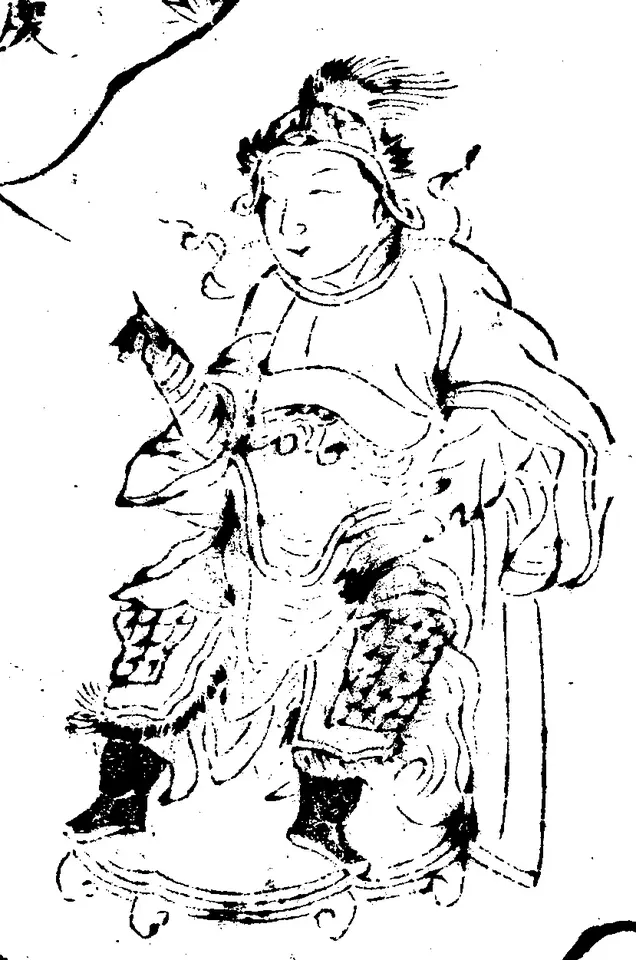
高俅
Gao Qiu (高俅, ?–1126), whose birth year is unrecorded in historical sources, was a native of Kaifeng (present-day Kaifeng City, Henan Province) and a favored courtier and supreme commander of the imperial guards during the reign of Emperor Huizong in the late Northern Song dynasty. According to the Southern Song historian Wang Mingqing's Huizhu Houlu, Gao Qiu originally served in his youth as a minor clerical attendant…
Gao Qiu (高俅, ?–1126), whose birth year is unrecorded in historical sources, was a native of Kaifeng (present-day Kaifeng City, Henan Province) and a favored courtier and supreme commander of the imperial guards during the reign of Emperor Huizong in the late Northern Song dynasty. According to the Southern Song historian Wang Mingqing's Huizhu Houlu, Gao Qiu originally served in his youth as a minor clerical attendant (xiaoshi) to the literary master Su Shi, excelling in calligraphy and clerical drafting while possessing some skill in poetry, martial arts, and especially cuju (ancient Chinese football). In the eighth year of the Yuanyou era (1093), before departing to govern Dingzhou, Su Shi recommended him to his close friend Wang Shen (Commandant-Escort Wang). In the third year of the Yuanfu era (1100), sent by Wang Shen to deliver a comb-knife to the residence of Zhao Ji, Prince of Duan, Gao Qiu was invited to play cuju with the prince; displaying extraordinary skill, he was retained in the princely household as a close confidant. When Zhao Ji ascended the throne that same year as Emperor Huizong, Gao Qiu rose rapidly to prominence as a former retainer of the imperial prince's residence. From the Chongning to Zhenghe eras, Gao Qiu accompanied Lin Shu on a diplomatic mission to the Liao dynasty and was sent by Emperor Huizong to serve on the staff of the northwestern frontier commander Liu Zhongwu to accumulate military credentials. Within a few years he was appointed Military Commissioner and rose to Commander-in-Chief of the Palace Command, Grand Marshal (Taiwei), and Commander Unequaled in Honor, commanding the Three Metropolitan Guard Commands for twenty years. While remembering past kindnesses—generously supporting Su Shi's descendants and promoting Liu Zhongwu and his son Liu Qi—Gao Qiu was corrupt and avaricious: he seized military camp land to build private mansions, used hundreds of thousands of imperial guardsmen as private laborers and artisans, exempted paying soldiers from drill while forcing poor soldiers to hire themselves out for cash, and staged elaborate water pageants to please Emperor Huizong, reducing the capital guards to utter military uselessness. When Jin forces crossed the Yellow River in the first year of the Jingkang era (1126), Gao Qiu accompanied Emperor Huizong southward to Sizhou, where a dispute with Tong Guan prompted him to return to Kaifeng on the pretext of illness. Dying of illness at home in the fifth month, he escaped execution alongside Tong Guan and Liang Shicheng, but following memorials of impeachment by Imperial University Doctor Li Ruoshui, Emperor Qinzong posthumously stripped him of all official ranks in the eleventh month of that year.
Originally a minor clerical attendant to Su Shi, recommended by Su Shi to Commandant-Escort Wang Shen prior to Su's departure to govern Dingzhou
Sent by Wang Shen to deliver a comb-knife to Zhao Ji, Prince of Duan; retained in the prince's household for his superb cuju skill and rose rapidly after Zhao Ji became Emperor Huizong
Served as deputy envoy with the title of Visitors' Bureau Commissioner accompanying chief envoy Lin Shu on a diplomatic mission to the Liao court
Attached to northwestern frontier commander Liu Zhongwu's headquarters to gain military credentials, receiving a military commission within a few years and taking command of the Three Guards
Promoted to Commander-in-Chief of the Palace Command and Grand Marshal, the highest martial prestige rank of the Northern Song, dominating the imperial guards
Granted the rank of Commander Unequaled in Honor, while his father Gao Dunfu, brothers Gao Shen and Gao Jie, and three sons all attained high offices through his patronage
Accompanied Emperor Huizong south to Sizhou in the first month before returning to Kaifeng due to illness after clashing with Tong Guan; died in the fifth month and was posthumously stripped of all ranks in the eleventh month following Li Ruoshui's impeachments
According to Scroll 7 of the Southern Song historian Wang Mingqing's Huizhu Houlu, Gao Qiu was originally a minor clerical attendant (xiaoshi) in the household of the renowned Northern Song literary figure Su Shi (Su Dongpo). Clever and adaptable, he wrote a fine brush hand, possessed some grounding in poetry and prose, knew basic staff and spear techniques, and was exceptionally skilled at cuju (kickball). In the eighth year of the Yuanyou era (1093) under Emperor Zhezong, as Su Shi prepared to leave the capital to govern Dingzhou, he entrusted Gao Qiu to his close friend Wang Shen (courtesy name Jinqing, Commandant-Escort to Emperor Yingzong's daughter).
Wang Shen was the brother-in-law of Emperor Shenzong and the uncle by marriage of Zhao Ji, Prince of Duan (the future Emperor Huizong), as well as an accomplished painter and calligrapher who associated closely with Prince Duan. Early in the third year of the Yuanfu era (1100), while waiting outside the palace gate for morning audience, Prince Duan forgot his comb-knife (bizidao) for tidying his sideburns and borrowed one from Wang Shen. When Prince Duan admired its exquisite design, Wang Shen promised to send him an unused matching knife he had recently had made. That evening, Wang Shen sent Gao Qiu to the residence of Prince Duan to deliver the comb-knife. Prince Duan happened to be playing cuju in his garden, and Gao Qiu stood watching by the side with a slightly unimpressed expression. Noticing his demeanor, Zhao Ji asked, "Do you also know how to kick?" Bold and energetic, Gao Qiu replied that he did. Ordered to join the game, Gao Qiu displayed his full skill, keeping the ball as if glued to his body with fish-glue. Delighted, Zhao Ji immediately sent a messenger to tell Wang Shen: "Thank you for the comb-knife you gave me; together with the man you sent to deliver it, I have accepted both!" Retained in the princely residence, Gao Qiu became Zhao Ji's inseparable confidant. Just over a month later, Emperor Zhezong died without an heir, and Prince Duan ascended the throne as Emperor Huizong, launching Gao Qiu's meteoric rise at court.
Although Emperor Huizong was eager to promote Gao Qiu, Northern Song institutional precedent barred anyone without frontier military merit from commanding the Three Metropolitan Guards or receiving a military commission. Accordingly, after appointing Gao Qiu as Visitors' Bureau Commissioner and sending him as deputy envoy alongside chief envoy Lin Shu on an embassy to the Liao dynasty in the fourth year of the Chongning era (1105), Emperor Huizong assigned Gao Qiu to the northwestern frontier headquarters of General Liu Zhongwu. Liu Zhongwu campaigned in the Xihe and Qinfeng regions against the Tibetan leader Zhao Huaide and Western Xia, and in the second year of the Daguan era (1108), under Tong Guan's overall command, recovered Jishi Military Prefecture and accepted the surrender of the Qiang prince Zangzhengpuge. Fully understanding why Emperor Huizong had sent Gao Qiu to his army, Liu Zhongwu generously magnified Gao Qiu's contributions in his victory reports.
Armed with these frontier military credentials, Gao Qiu received a military commission within a few years, rose to the status of Military Commissioner-Prime Minister, and successively commanded the Three Metropolitan Guard Commands for twenty years. When Liu Zhongwu led a hundred thousand troops against Western Xia's Zangdi River Fort in the fifth year of the Zhenghe era (1115) and suffered a disastrous defeat in which the entire Third Command of Qinfeng perished, Gao Qiu spoke up for him at court, sparing Liu Zhongwu from punishment; after Liu Zhongwu's death, Gao Qiu strongly recommended his sons Liu Xi and the future anti-Jin general Liu Qi to Emperor Huizong. Moreover, throughout his decades of power, Gao Qiu never forgot his former master Su Shi: whenever members of the Su family came to the capital, Gao Qiu provided for them generously, winning favorable comment from several contemporaries.
In the first month of the seventh year of the Zhenghe era (1117), Emperor Huizong promoted Gao Qiu, Commander-in-Chief of the Palace Command, to Grand Marshal (Taiwei, the highest military prestige rank); in the fifth month of the fourth year of the Xuanhe era (1122), he was further granted the rank of Commander Unequaled in Honor. Through his influence, his father Gao Dunfu was appointed Military Commissioner of Jianwu Army in 1120, his brother Gao Shen rose to Grand Academician of the Xuanhe Hall, his brother Gao Jie became Grand General of the Jinwu Guard, and his sons Gao Yaoqing, Gao Yaofu, and Gao Yaokang held high military posts. Operating in tandem with the eunuch Tong Guan—who commanded field armies abroad while Gao Qiu controlled the imperial guards at home—Gao Qiu dominated Song military administration.
During his twenty years commanding the Palace Command and Metropolitan Guards, Gao Qiu reduced military training to theatrical pageantry. As recorded in Meng Yuanlao's Dongjing Menghua Lu, the naval competition overseen by Gao Qiu on Jinming Pool featured four painted barges carrying soldiers performing acrobatics, lion-and-leopard dances, broadswords, shields, and farces accompanied by two music boats, executing formations such as "Whirling Net" and "Eye of the Sea" to delight Emperor Huizong. Meanwhile, Censorate memorials in the Jingkang era exposed how Gao Qiu seized military camp grounds to build private mansions and used imperial guardsmen as private laborers and artisans. Skilled soldiers built houses and furniture for his family; wealthy soldiers paid bribes to be excused from drill; and poor soldiers had to hire themselves out in the city to pay fees, leaving discipline ruined and the hundreds of thousands of capital guards utterly incapable of fighting when the Jin invasion came.
In the first month of the first year of the Jingkang era (1126), after Jin forces crossed the Yellow River, Emperor Huizong abdicated in favor of Emperor Qinzong and fled south to Sizhou (northwest of present-day Xuyi, Jiangsu). Tong Guan and Gao Qiu each led three thousand troops to join him at Sizhou, where the two favorites soon clashed for power. Tong Guan escorted Emperor Huizong across the Huai River with three thousand Shengjie troops while leaving Gao Qiu behind at Sizhou with three thousand imperial guards under the pretext of guarding the Huai crossing. Pleading illness, Gao Qiu returned to Kaifeng instead. By detaching himself early from Huizong's southern entourage, Gao Qiu escaped the purge that soon claimed the lives of Tong Guan, Cai You, and Liang Shicheng, dying of illness in his bed in Kaifeng in the fifth month of 1126. When the court prepared to hold customary imperial mourning rites for him, Imperial University Doctor Li Ruoshui submitted two memorials condemning Gao Qiu for rising through favoritism and ruining the army on par with Tong Guan. Emperor Qinzong canceled the mourning rites and, in the eleventh month, issued an edict posthumously stripping Gao Qiu of all official ranks and demolishing his family's usurped mansions.
FIGURES ASSOCIATED WITH THIS DYNASTY