Entering Court Service
Recognized for deep mastery of Chinese classical law, receiving aristocratic rank and office in the Asuka court.
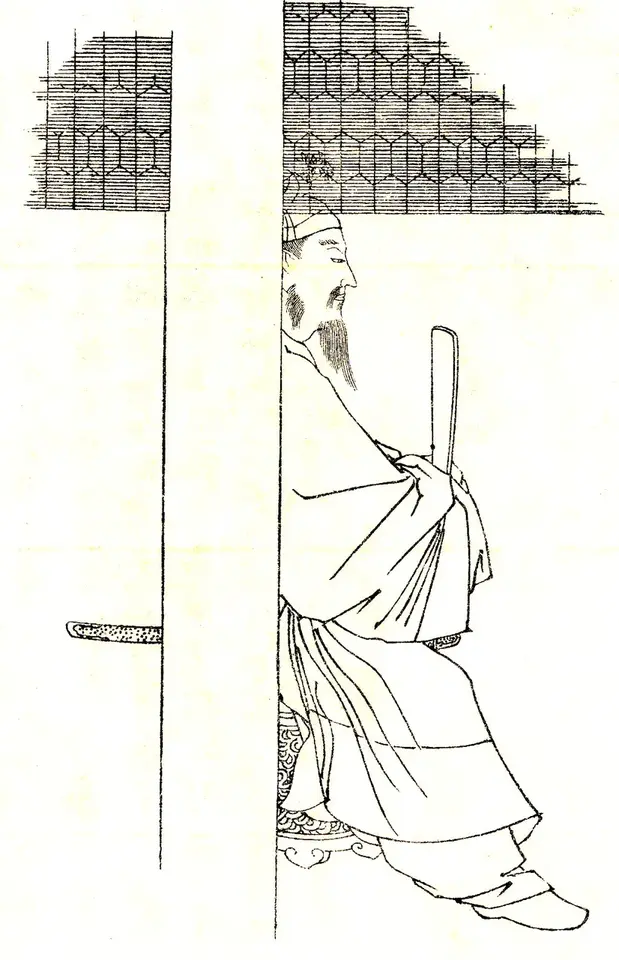
粟田真人
Awata no Mahito (died 719) was an eminent Japanese statesman, jurist, and diplomat spanning the Asuka and early Nara periods. He rose to the Senior Third Rank and held paramount offices including Middle Counselor, Governor-General of Dazaifu, Minister of Popular Affairs, and Minister of Ceremonial. Serving as the seventh Japanese Ambassador Plenipotentiary to Tang China, he was the historic figure who secured official…
Awata no Mahito (died 719) was an eminent Japanese statesman, jurist, and diplomat spanning the Asuka and early Nara periods. He rose to the Senior Third Rank and held paramount offices including Middle Counselor, Governor-General of Dazaifu, Minister of Popular Affairs, and Minister of Ceremonial. Serving as the seventh Japanese Ambassador Plenipotentiary to Tang China, he was the historic figure who secured official recognition of the national name "Nihon" (Japan) from the Chinese imperial court, and acted as the chief legislative architect of the seminal Taiho Code. Renowned for his profound erudition in classical Chinese histories and literature, Awata no Mahito was widely celebrated for his stately elegance and refined, courteous demeanor. In 701, he led the compilation of the Taiho Code under Emperor Monmu, establishing the foundational legal framework that transformed Japan into a centralized bureaucratic state. In 702, he was commissioned as Ambassador Plenipotentiary, leading an embassy of over five hundred members across four large vessels. Departing from the southern islands of Satsuma, he pioneered the challenging Southern Island Route across the East China Sea, becoming the first Japanese envoy to successfully complete this maritime passage. In the autumn of 702, the mission landed in Yancheng County, Chuzhou, and proceeded the following spring to the Eastern Capital Luoyang for an imperial audience with Empress Regnant Wu Zetian. Dressed in ceremonial flower-topped caps, purple robes, and silk sashes, his dignified aristocratic manners and lucid fluency in Chinese classics deeply impressed the empress and imperial courtiers. Awata no Mahito formally presented the newly promulgated Taiho Code, explained the philosophical and geographic reasons for altering their state title from "Wa" to "Nihon" (Origin of the Sun), and won Wu Zetian's admiration. The empress hosted a grand imperial banquet in the Linde Hall, awarded him the high Chinese bureaucratic title of Director of the Court of Imperial Feasts, and formally decreed that the imperial court would officially address the realm as "Nihon" rather than "Wa." Upon returning home in 704, he supervised the planning and construction of the new capital Heijo-kyo (modern Nara) modeled after Luoyang and Chang'an, directly introducing the architectural layout of the Tang Hanyuan Hall into the Japanese Great Imperial Audience Hall. Passing away in 719, he is honored in both Chinese and Japanese dynastic histories as an exemplary prime counselor of the "Realm of Gentlemen."
Recognized for deep mastery of Chinese classical law, receiving aristocratic rank and office in the Asuka court.
Appointed to ritual and legislative bodies, actively promoting the implementation of the Asuka Kiyomihara Code.
Commissioned alongside Prince Osakabe to compile national laws, serving as the chief jurist crafting the Taiho Code.
Promulgated the Taiho Code; appointed by Emperor Monmu as Ambassador Plenipotentiary for the 7th Embassy to Tang.
Led five hundred men across the East China Sea via southern islands, landing at Yancheng, Chuzhou, to confirm state status.
Granted an audience in Luoyang; Wu Zetian praised his noble bearing, granted him the rank of Director of Feasts, and recognized Japan.
Returned to Naniwa with repatriated prisoners; promoted to Senior Fourth Rank Lower and awarded tax fiefs.
Appointed Minister of Popular Affairs; directed urban planning of Heijo-kyo, adopting High Tang imperial palace architecture.
Promoted to Senior Third Rank and Middle Counselor, concurrently serving as Governor-General of Dazaifu to supervise diplomacy.
Passed away in Kyoto; the imperial court bestowed extraordinary funeral honors, lamenting the loss of an exemplary statesman.
Awata no Mahito belonged to the noble Awata lineage, a distinguished aristocratic house rooted in the Yamato Province of central Japan. In his youth, he immersed himself in the Confucian classics, pre-Qin philosophical discourses, and the administrative statutes of Chinese dynasties. During the reigns of Emperor Tenmu and Empress Jito, Japan underwent a monumental institutional transformation, moving away from archaic clan chieftain structures toward a centralized state governed by imperial law. Benefiting from his profound command of classical Chinese and juridical science, Awata no Mahito distinguished himself within the Asuka imperial bureaucracy and received repeated commendations from Emperor Tenmu.
Following the accession of Emperor Monmu, the imperial court resolved to draft an all-encompassing legal code that could regulate penal administration, central bureaucracy, and provincial land distribution. In 700, the court established a legislative bureau chaired by Imperial Prince Osakabe, with Awata no Mahito functioning as the chief jurisprudential draftsman. Leading a select council of sinologists and legal experts, he systematically studied the Tang Dynasty Yonghui Code and related Chinese administrative texts, adapting them to Japanese social conditions.
In 701, this monumental legislative endeavor culminated in the promulgation of the Taiho Code. The code established the two departments and eight ministries central government, provincial commanderies, and equal-field agrarian systems, signifying the formal birth of Japan's ancient legalist state. For his central contribution to this legislative breakthrough, Awata no Mahito was celebrated by peers as the foremost legalist mind of the realm.
Having completed its legal foundation, the Japanese court urgently sought to overcome the prolonged diplomatic estrangement that followed the Battle of Baekgang four decades earlier, aiming to restore formal relations with the Chinese empire and obtain sovereign recognition for its revamped state title. In the autumn of 701, Emperor Monmu solemnly appointed Awata no Mahito as Ambassador Plenipotentiary, bestowing upon him the ceremonial staff of authority and commissioning an embassy of more than five hundred members, including scribes, scholars, and Buddhist monks.
At the time, the traditional northern coastal route along the Korean Peninsula was completely severed due to geopolitical tensions with Silla. Demonstrating extraordinary maritime bravery and navigational vision, Awata no Mahito chose an unprecedented passage. In the sixth month of 702, he led four large embassy ships sailing southwest from the Satsuma islands, charting a bold course through the Ryukyu archipelago and striking straight westward across the vast East China Sea. After enduring four months of raging oceanic typhoons and navigational perils, the fleet achieved a historic landfall in the tenth month of 702 along the beaches of Yancheng County in Chuzhou (modern Jiangsu Province), marking the first successful crossing of the southern oceanic route in East Asian history.
Following the landing, local Tang officials rushed to inspect the foreign ships, initiating a celebrated exchange preserved in historical annals. Asked who they were, Awata no Mahito stood with composed majesty and replied that they were envoys of the State of Nihon (Japan). He then inquired regarding the empire's boundaries and why the dynastic title had altered from Great Tang to Great Zhou. The officials explained that following the passing of Emperor Gaozong, the empress dowager had ascended the throne as Holy and Divine Emperor, renaming the dynasty Zhou. In response, Awata no Mahito quoted classical prose with exquisite elegance. Observing the spotless attire and graceful demeanor of the embassy, the Tang officials marveled that they had long heard of a great island kingdom across the eastern sea called the Realm of Gentlemen, whose people were prosperous and deeply observant of ritual propriety, and that witnessing the ambassador's demeanor confirmed this truth beyond all doubt.
In the spring of 703, guided by Vice Ministers of Rites Du Sixian and Li Huaiyuan, Awata no Mahito and his embassy sailed up the Grand Canal to Eastern Capital Luoyang. Inside the majestic Linde Hall of the imperial palace, Empress Regnant Wu Zetian hosted a solemn state banquet for the overseas delegation.
Awata no Mahito wore a traditional ceremonial cap adorned with four-petaled floral carvings, a flowing purple noble robe, and an embroidered silk sash. His noble posture, refined physical countenance, and articulate discussions on Confucian statecraft captivated the civil and military elite of the Zhou court. Taking advantage of this favorable reception, Awata no Mahito formally presented a deluxe calligraphic transcript of the Taiho Code, showcasing Japan's thorough adoption of civilized Chinese jurisprudence, and respectfully petitioned for formal imperial recognition of their changed national title.
Previously, Japanese envoys had repeatedly petitioned to abandon the archaic name "Wa" in favor of "Nihon," but their requests were rejected or misunderstood due to linguistic confusion and imprecise translation. Awata no Mahito clarified the rationale in polished classical Chinese: the archipelago lay at the eastern extremity where the sun rises, hence adopting the auspicious title "Origin of the Sun" (Nihon), while finding the ancient character "Wa" crude and demeaning. Delighted by his refined rhetoric and being naturally inclined toward innovative institutions, Wu Zetian granted the petition, commanding the Court of Imperial Regalia and dynastic historians to officially adopt the title "Japan." In an extraordinary mark of favor, she bestowed upon Awata no Mahito the official fourth-rank Chinese court appointment of Director of the Court of Imperial Feasts and rewarded the mission with lavish gifts of silk and gold.
In the summer of 704, Awata no Mahito took leave of Luoyang and embarked on his return voyage, carrying vast collections of Chinese classics, ritual paraphernalia, architectural blueprints, and fine textiles. In the seventh month, the embassy reached Naniwa safely. Alongside diplomatic glory, Awata no Mahito brought back numerous Japanese soldiers captured during the Battle of Baekgang and returning student monks, prompting nationwide rejoicing.
Emperor Monmu rewarded him with promotion to Senior Fourth Rank Lower, granting twenty cho of fertile rice paddies in Omi Province and fifty households of sustenance fief. Back in court, Awata no Mahito threw himself into implementing Tang-style civil institutions. In 708, Empress Genmei decreed the relocation of the capital from Fujiwara-kyo to Heijo-kyo (modern Nara), appointing Awata no Mahito as Minister of Popular Affairs to supervise the urban planning and architectural construction of the new capital.
Drawing upon his personal surveys of Luoyang and Chang'an, Awata no Mahito cast aside traditional symmetrical balance, introducing the dynamic palace spatial planning of Wu Zhou imperial centers. In constructing the Great Imperial Audience Hall (Daigokuden), he instructed master carpenters to model the eaves, brackets, and stone terraces directly after the grandiose Hanyuan Hall of Daming Palace in Chang'an, turning Heijo-kyo into a living mirror of High Tang metropolitan civilization.
Alongside his architectural and legislative contributions, Awata no Mahito occupied top cabinet roles in his later years. In 715, he reached the Senior Third Rank and became Middle Counselor, concurrently serving as Governor-General of Dazaifu, the paramount administrative headquarters governing western maritime defense and foreign trade.
At Dazaifu, he reorganized coastal watchtowers and naval fortifications, while instituting hospitable commercial policies toward visiting merchants and Buddhist clerics from the continent, transforming Hakata Port into a bustling international commercial hub. Within the imperial court, his upright integrity, modesty, and patient mentorship of junior scholars earned him universal reverence as the consummate model of aristocratic virtue.
In 719, Awata no Mahito passed away peacefully in Kyoto. The imperial court issued decrees of deep condolence, dispatching envoys to conduct solemn state funeral rites. The cultural and political bridge he constructed across the ocean decisively accelerated Japan's institutional development, while his aristocratic elegance in the imperial halls of Luoyang permanently established the reputation of his homeland as a civilized "Realm of Gentlemen."
Prior to Awata no Mahito's mission, Chinese dynasties had designated the Japanese archipelago as "Wa" for centuries, repeatedly dismissing previous petitions due to awkward translations and diplomatic miscommunication. During his 703 audience with Wu Zetian, Awata no Mahito used flawless classical Chinese eloquence and presented the Taiho Code to demonstrate the advanced civilizational level of his state, persuading Wu Zetian to formally decree that the official diplomatic name be changed from "Wa" to "Japan," thereby establishing the legitimate international identity of Japan in East Asian historiography.
Confronting the severance of the traditional northern route via the Korean Peninsula, Awata no Mahito exhibited remarkable maritime daring in 702 by leading his four ships across the southern waters from Satsuma through the Ryukyu islands and across the East China Sea to Yancheng. This feat opened the historic "Southern Route," which served as the principal maritime conduit for cultural, religious, and commercial exchanges between China and Japan for the subsequent century.
As the primary jurist and draftsman behind the 701 Taiho Code, Awata no Mahito laid the cornerstone of ancient Japan's legalist state. By synthesizing the sophisticated penal and administrative codes of the Sui and Tang Dynasties with Japanese indigenous customs, he created the two departments and eight ministries governmental structure that anchored Japan's classical imperial governance for centuries.
Upon returning in 704, Awata no Mahito utilized his firsthand observations of Chang'an and Luoyang to direct the construction of the new capital Heijo-kyo. He incorporated the architectural layout and construction techniques of the Tang imperial palaces—most notably modeling the Great Imperial Audience Hall after the celebrated Hanyuan Hall of Daming Palace—thereby elevating early Japanese monumental architecture to international standards.
FIGURES ASSOCIATED WITH THIS DYNASTY