阿睦尔撒纳
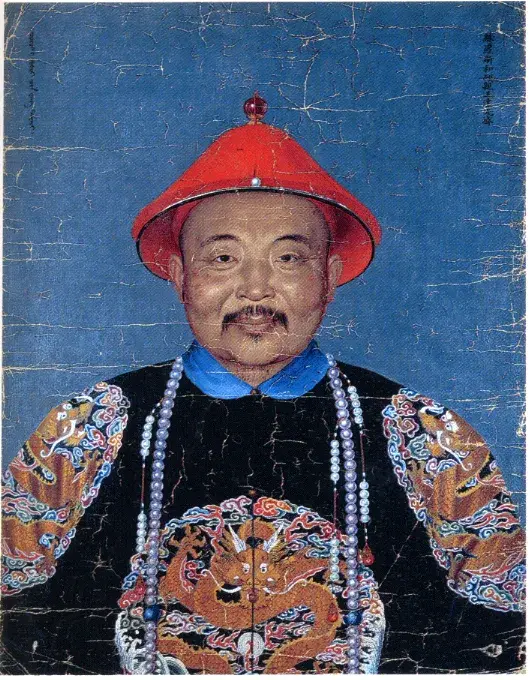
Historical portrait of Amursana
Image creditsJean Denis Attiret · Public domainImage source

Historical figure

Amursana (阿睦尔撒纳)

阿睦尔撒纳

Amursana (阿睦尔撒纳, 1723–1757) was a Taiji of the Khoit tribe of Oirat Mongols, the son of Namjal Eldeng and maternal grandson of Dzungar ruler Tsewang Rabtan. Active during the Qianlong reign, he was an audacious nomadic military leader who turned into the arch-rebel of northwestern China. Originally pasturing along the Altai Mountains, he conspired with Choros aristocrat Dawachi in 1750 to assassinate Lama Dorji and install…

Qing Dynasty

PROFILE

Amursana (阿睦尔撒纳, 1723–1757) was a Taiji of the Khoit tribe of Oirat Mongols, the son of Namjal Eldeng and maternal grandson of Dzungar ruler Tsewang Rabtan. Active during the Qianlong reign, he was an audacious nomadic military leader who turned into the arch-rebel of northwestern China. Originally pasturing along the Altai Mountains, he conspired with Choros aristocrat Dawachi in 1750 to assassinate Lama Dorji and install Dawachi as Khan of the Dzungar Khanate. When Dawachi subsequent tyranny and paranoia alienated him, Amursana was routed in internal warfare and led twenty thousand followers across the Altai Mountains to defect to the Qing Empire in 1754. The Qianlong Emperor welcomed Amursana with extraordinary honors, creating him a double first-rank prince and appointing him Left Vice General in the 1755 spring expedition against Ili. Amursana vanguard facilitated the lightning capture of Ili and the dethronement of Dawachi. However, Amursana had defected solely to leverage Qing military might to usurp supreme hegemony over all four Oirat tribes. When the Qing court implemented a decentralization policy creating four separate khans, Amursana ambitions were thwarted. Taking advantage of the main Qing army withdrawal, he launched a sudden rebellion in the autumn of 1755, murdering garrison general Bandi. The Qianlong Emperor dispatched punitive armies under General Zhaohui, decisively breaking the rebellion in 1757. Amursana fled across the border to Tsarist Russia, succumbing to smallpox at Tobolsk later that autumn at age thirty-five.

Native Place
Khoit Tribe, Oirat Mongols (Altai Mountains Region)
Dynasty
Qing Dynasty
Birth Date
1723 (First Year of Yongzheng)
Death Date
1757 (Twenty-Second Year of Qianlong)
Age at Death
35
Highest Identity
Taiji of the Khoit Oirats, Double First-Rank Prince of the Qing, Left Vice General for Pacifying the Borders
Accurate Identity Positioning
Aristocratic Leader of the Khoit Mongols, Crucial Defector in the Qing Conquest of Dzungaria, Supreme Leader of the Anti-Qing Insurrection

LIFE TIMELINE

Relationship graph

BIOGRAPHY

Chronology

  • 1723 (First Year of the Yongzheng Reign) | Birth in the West | Born in the Altai mountains into the Khoit aristocracy, grandson of Tsewang Rabtan.
  • 1750 (Fifteenth Year of the Qianlong Reign) | Enthrroning Dawachi | Staged a palace coup in Ili, executing Lama Dorji and establishing Dawachi as ruler.
  • 1754 (Nineteenth Year of the Qianlong Reign) | Defection to Qing | Following defeat by Dawachi, crossed the Altai with twenty thousand adherents to surrender to the Qing.
  • 1755 (Twentieth Year of the Qianlong Reign - Spring) | Capture of Ili | Served as imperial vanguard commander, leading Qing divisions into Ili to capture Dawachi.
  • 1755 (Twentieth Year of the Qianlong Reign - Autumn) | Rebellion at Ili | Frustrated in his bid for universal khanate, launched armed rebellion and massacred the Qing garrison.
  • 1757 (Twenty-Second Year of the Qianlong Reign) | Flight and Demise | Decisively crushed by General Zhaohui; fled into Siberia and died of smallpox at Tobolsk.

Life and Career

Aristocratic Lineage and Alliance with Dawachi

Amursana was born in 1723 in the nomadic pastures of the Altai Mountains. His father, Namjal Eldeng, was chief of the Khoit division of the Western Mongols, while his mother, Borotala, was the daughter of Dzungar ruler Tsewang Rabtan. Combining noble Oirat pedigree with sharp political cunning and military dexterity, Amursana early developed boundless personal ambitions.

Following the death of Galdan Tseren in 1745, fratricidal succession wars destabilized the Dzungar Khanate. In 1750, illegitimate claimant Lama Dorji seized power through assassination. Amursana forged a secret pact with Choros nobleman Dawachi, executing an audacious nighttime assault on Ili to assassinate Lama Dorji and install Dawachi as sovereign. However, Dawachi descended into debauchery and viewed the capable Amursana with jealousy. In 1754, Dawachi mobilized thirty thousand troops against the Khoit pastures, inflicting a crushing defeat. Recognizing the imminent annihilation of his clan, Amursana took the fateful step of leading three thousand families—comprising over twenty thousand people and immense herds—across the Altai crests to seek imperial sanctuary in China.

Imperial Favor at Chengde and the Fall of Ili

The Qianlong Emperor recognized Amursana arrival as the decisive historical opening to conclude seven decades of frontier confrontation. Summoning the nomadic chieftain to the Chengde Mountain Resort, the emperor hosted banquets in the Garden of Ten Thousand Trees, granting Amursana the exceptional rank of double first-rank prince along with lavish imperial gifts.

In the spring of 1755, the Qing court launched fifty thousand troops in two columns to conquer Ili. General Bandi took overall command, with Amursana designated Left Vice General commanding the northern vanguard. Leveraging his knowledge of regional geography and tribal relationships, Amursana secured the submission of local chieftains, enabling imperial columns to cross the desert without resistance. By May 1755, Qing troops reached the Ili River. Dawachi fled south through the Tianshan passes into Ush-Turpan, where he was captured by Uyghur Beg Khojis and delivered to Qing custody. The century-old Dzungar nomadic empire ceased to exist.

Treason at Ili and Demise in Siberian Exile

However, Amursana had never intended to become a submissive imperial subject. His ambition was to utilize the Qing army to eliminate Dawachi, anticipating that the court would install him as supreme khan over all four Oirat federations (Choros, Khoit, Dorbet, and Khoshut). But the Qianlong Emperor adopted the divide-and-rule principle of establishing four separate khanates. Amursana was confirmed merely as Khan of the Khoits, dashing his imperial aspirations.

Seething with grievance, Amursana bided his time until the main Qing expeditionary army withdrew to the Central Plains in the autumn of 1755, leaving General Bandi with a token garrison of five hundred troops in Ili. Amursana mobilized thousands of disgruntled nomadic warriors and encircled the imperial headquarters. Overwhelmed, Bandi committed suicide. Amursana proclaimed himself universal khan, throwing northern Xinjiang back into war.

Infuriated by the betrayal, the Qianlong Emperor dispatched punitive armies under Generals Celeng and Zhaohui in 1756 and 1757. The Eight Banner cavalry shattered rebel resistance across Urumqi and the Ili valley. Alienated by his deceitful maneuvers, Amursana allies deserted him. In the summer of 1757, General Zhaohui annihilated his remaining troops at the Battle of the Emil River. Accompanied by only a handful of attendants, Amursana swam the Irtysh River and sought refuge in Tsarist Russian territory at Tobolsk, where Russian authorities detained him under armed guard. In the autumn of 1757, Amursana contracted virulent smallpox and died at age thirty-five. To avoid armed conflict with China, Russian officials transported his body to the border post of Kyakhta, where Qing commissioners verified his identity. The long Qing-Dzungar conflict ended, and Qing direct administration was consolidated across Xinjiang.
Interpersonal Connections

  • Maternal Grandfather: Tsewang Rabtan (Celebrated ruler of the Dzungar Khanate)
  • Ally and Adversary: Dawachi (Last supreme ruler of the Dzungars, allied with and overthrown by Amursana)
  • Qing Imperial Casualty: Bandi (Qing Minister and General for Pacifying the North, martyred during Amursana insurrection)
  • Punitive Commander: Zhaohui (Qing General for Pacifying the Borders who destroyed Amursana forces)

Historical Evaluations

  • The Draft History of Qing (Qing Shi Gao), Biography of Amursana, recorded: "Amursana was treacherous and deceitful. Employing imperial power to destroy Dawachi, his intent was to dominate the Dzungar realm. When his wishes were thwarted, rebellion followed. Emperor Gaozong dispatched great armies to punish him, driving him to die in exile in Russia, whereafter the western borders attained peace."
  • Wei Yuan in Sheng Wu Ji noted: "The Dzungars constituted a frontier peril for over a century, brought to an end in the reign of Gaozong. Amursana abused imperial arms for selfish ambition, dying as a treacherous rebel; yet his role in guiding imperial forces across the Western Regions was an extraordinary historical irony."

Related Entries

  • Dawachi
  • Bandi
  • Zhaohui

FIGURES ASSOCIATED WITH THIS DYNASTY

Bibliography

  • Zhao Erxun et al., Draft History of Qing (Qing Shi Gao), Volume 316, Biographies 103: Biography of Amursana.
  • Wei Yuan, Sheng Wu Ji (Military History of the Sacred Dynasty), Volume 3: Chronicle of Qianlong Pacification of Dzungars.