Birth in Somerset
Born into an aristocratic family in Bath, nephew of Field Marshal Jeffrey Amherst.
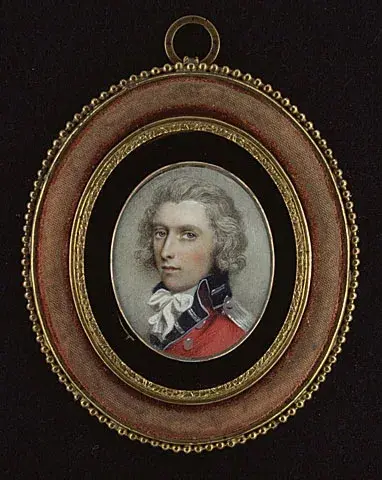
阿美士德
William Pitt Amherst, First Earl Amherst (January 14, 1773 – March 13, 1857), was a prominent British diplomat, peer, and colonial administrator. Educated at Christ Church, Oxford, Amherst served as Lord of the Bedchamber and British envoy to the royal court of Naples. In 1816 (the twenty-first year of the Jiaqing reign), the British Government appointed Lord Amherst as Ambassador Extraordinary to China to negotiate…
William Pitt Amherst, First Earl Amherst (January 14, 1773 – March 13, 1857), was a prominent British diplomat, peer, and colonial administrator. Educated at Christ Church, Oxford, Amherst served as Lord of the Bedchamber and British envoy to the royal court of Naples. In 1816 (the twenty-first year of the Jiaqing reign), the British Government appointed Lord Amherst as Ambassador Extraordinary to China to negotiate commercial concessions, open secondary ports, and eliminate the restrictive Canton Cohong monopoly. Arriving in Tianjin, the embassy became embroiled in an intractable diplomatic dispute over imperial audience etiquette. Qing imperial commissioners demanded that the ambassador perform the full Kowtow (three kneelings and nine prostrations), whereas Amherst, upholding European principles of sovereign diplomatic equality, steadfastly refused. On the dawn of August 29, 1816, the embassy was rushed from Tongzhou directly to the imperial gates of the Old Summer Palace (Yuanmingyuan). When court chamberlains urged him to enter the imperial presence immediately in travel-stained clothes without his diplomatic regalia, Amherst excused himself on grounds of sudden illness. Highly displeased by this perceived insolence, the Jiaqing Emperor issued an immediate decree expelling the entire embassy from the capital. Escorted under guard along the Grand Canal to Guangzhou, the mission sailed home. On his return journey, following a shipwreck in the Gaspar Strait, Amherst visited the exiled Napoleon Bonaparte on Saint Helena. Between 1823 and 1828, Amherst served as Governor-General of India, directing the First Anglo-Burmese War which annexed Assam, Arakan, and Tenasserim to the British Empire. He was created Earl Amherst in 1826 and retired to Kent, passing away in 1857 at the age of 84.
Born into an aristocratic family in Bath, nephew of Field Marshal Jeffrey Amherst.
Graduated with a Bachelor of Arts from Christ Church, Oxford, receiving his Master of Arts in 1797.
Succeeded his uncle as second Baron Amherst, taking his seat in the House of Lords.
Dispatched as British royal envoy to the Bourbon court of the Two Sicilies at Naples.
Appointed a member of the British Privy Council in the aftermath of the Napoleonic Wars.
Commissioned as Ambassador Extraordinary to China to negotiate bilateral commercial relations.
Reached Tianjin and resisted Qing demands to perform the traditional three kneelings and nine prostrations.
Rushed to Yuanmingyuan and expelled by imperial edict following a protocol breakdown over court dress.
Survived shipwreck in the East Indies and met Napoleon Bonaparte on Saint Helena during his return.
Appointed Governor-General of India, prosecuting the First Anglo-Burmese War.
Elevated to Earl Amherst and Viscount Holmesdale in recognition of his Indian administration.
Passed away at Knole House in Kent at the age of 84.
William Pitt Amherst was born on January 14, 1773, in Bath, Somerset, England. His father was Lieutenant-General William Amherst, and his uncle was Field Marshal Jeffrey Amherst, First Baron Amherst, the renowned commander-in-chief in North America during the Seven Years' War. Amherst entered Christ Church, Oxford, in 1789, obtaining his Bachelor of Arts in 1793 and Master of Arts in 1797. In 1797, following his uncle's death without direct male issue, Amherst succeeded to the barony as the second Baron Amherst under a special remainder. Between 1804 and 1813, Lord Amherst served as Lord of the Bedchamber to King George III. From 1809 to 1811, he was appointed British envoy extraordinary to the court of Ferdinand IV of the Two Sicilies at Naples and Palermo, gaining practical diplomatic experience amidst the Napoleonic conflicts.
Following the Congress of Vienna and the conclusion of the Napoleonic Wars in 1815, the British Government and the East India Company resolved to dispatch a second major diplomatic embassy to the Qing Empire. The principal objectives were to seek relief from exactions imposed on the Canton trade, eliminate the monopoly of the Cohong merchants, secure direct communication with the central court in Beijing, and obtain permission to trade at northern ports such as Xiamen, Ningbo, and Zhoushan. On January 20, 1816, Lord Amherst was officially appointed Ambassador Extraordinary and Plenipotentiary to China. His mission was accompanied by two senior commissioners: Henry Ellis as second commissioner and Sir George Thomas Staunton, a senior official of the Canton factory who had accompanied the Macartney embassy in 1793 as a youth and was fluent in Chinese. The embassy embarked from Portsmouth in February 1816 aboard HMS Alceste.
On August 13, 1816, the embassy arrived off Dagu and proceeded to Tianjin, where they were received by Minister of Works Suleng'e and imperial banquet officials. The Qing officials immediately raised the issue of imperial ceremonial court protocol, insisting that Lord Amherst perform the San Gui Jiu Kou (three kneelings and nine prostrations) upon entering the presence of the Jiaqing Emperor.
Amherst, heavily advised by George Staunton, firmly refused, arguing that an ambassador representing the British Crown could only perform the reverential bows customary in European royal courts—specifically nine deep inclinations of the head—unless a Qing grandee of equal rank performed the identical prostration before a portrait of King George III. Protracted and heated conferences took place in Tianjin and Tongzhou. Although Qing commissioners falsely reported to Beijing that the ambassador was rehearsing the Kowtow and that his compliance was acceptable, the diplomatic impasse remained unresolved.
On the afternoon of August 28, 1816, the embassy was hurried out of Tongzhou in horse-drawn carriages, traveling throughout the night along poorly paved roads toward the imperial palace. The exhausted party arrived outside the palace gates of Yuanmingyuan at dawn on August 29.
Immediately upon arrival, Imperial Commissioner Heshetai (brother-in-law to the Jiaqing Emperor) urged Amherst to enter the palace hall without delay, as the Emperor had already convened the grand council. Amherst declined, explaining that his official court dress, credential dispatches, and luggage were still delayed leagues behind in carriage transit, and that he was physically unwell following the grueling overnight journey.
Misinterpreting Amherst's hesitation as willful contumacy, and discovering that the ambassador had not donned ceremonial robes, court chamberlains reported to the Emperor that the British envoy was refusing the audience under false pretenses of sickness. Deeply affronted, the Jiaqing Emperor cancelled the audience and issued an imperial decree ordering the British embassy to be expelled from Beijing that very morning. The embassy was turned around within hours and escorted back toward Tianjin under armed surveillance.
Although the audience was aborted, the Jiaqing Emperor soon discovered through internal inquiries that Heshetai and imperial reception officials had suppressed the truth regarding the ambassador's travel fatigue and missing luggage. The Emperor issued reprimands and demotions to his ministers, while ordering provincial governors along the Grand Canal to treat the departing embassy with civil propriety.
The embassy proceeded south along the Grand Canal through Shandong, Jiangsu, and Jiangxi, escorted by imperial marshals. Liangjiang Viceroy Jiang Youxian hosted the embassy courteously in Jiangning (Nanjing), and the mission reached Guangzhou in January 1817, boarding HMS Alceste to depart China.
During the voyage home, HMS Alceste struck an uncharted reef in the Gaspar Strait near Java on February 18, 1817, and foundered. Lord Amherst and the embassy staff escaped in lifeboats to Batavia, where they secured passage back to Britain aboard an East Indiaman. En route, the vessel stopped at the island of Saint Helena in July 1817, where Amherst was granted an interview with the exiled Napoleon Bonaparte. Napoleon famously criticized Amherst's refusal to Kowtow, observing that diplomats should conform to local court rituals if substantial commercial advantages could be obtained.
In 1823, Amherst succeeded Lord Hastings as Governor-General of India. His administration was dominated by the First Anglo-Burmese War (1824–1826), provoked by Burmese border clashes in Assam and Chittagong. Following prolonged riverine warfare, the Treaty of Yandabo was concluded in 1826, by which Burma ceded Assam, Manipur, Arakan, and Tenasserim to the British East India Company. In recognition of these annexations, Amherst was created Earl Amherst of Arracan and Viscount Holmesdale. He retired to England in 1828 and died at Knole House in Kent on March 13, 1857, aged 84.
FIGURES ASSOCIATED WITH THIS DYNASTY