Arrival in Chang'an
Traversed the Silk Road carrying scriptures and icons; Chancellor Fang Xuanling welcomed him in the suburbs.
阿罗本
Alopen (阿罗本, active mid-7th century), also rendered as Aluopan, was a missionary from Daqin (the Roman Orient, encompassing Syria or Persia) and a high-ranking cleric of the Church of the East (historically designated as "Jingjiao" or the Luminous Religion in Tang China). He was the historic pioneer who introduced Nestorian Christianity into China and formally established its ecclesiastical organization. In 635 (the ninth…
Alopen (阿罗本, active mid-7th century), also rendered as Aluopan, was a missionary from Daqin (the Roman Orient, encompassing Syria or Persia) and a high-ranking cleric of the Church of the East (historically designated as "Jingjiao" or the Luminous Religion in Tang China). He was the historic pioneer who introduced Nestorian Christianity into China and formally established its ecclesiastical organization. In 635 (the ninth year of the Zhenguan reign of Emperor Taizong), Alopen traversed tens of thousands of li along the Silk Road to arrive at the Tang capital of Chang'an. Emperor Taizong (Li Shimin) accorded this foreign religious delegation extraordinary diplomatic honors, dispatching Chancellor Fang Xuanling at the head of an imperial guard of honor to the western suburbs to welcome Alopen into the palace. Following theological inquiries within the imperial precincts, Emperor Taizong commended the Christian doctrine as "beneficial to all living beings and worthy of propagation across the realm," issuing an imperial decree in 638 authorizing its propagation and funding the construction of a monastery in the Yining Ward of Chang'an, ordaining twenty-one priests. Alopen supervised the translation of Xuting Mishi Suo Jing (Treatise on Jesus Messiah), China's earliest Chinese-language Christian treatise, pioneering the contextualization of Western theological doctrines through Confucian, Daoist, and Buddhist concepts. Following his accession, Emperor Gaozong elevated Alopen to the rank of "Great Lord of the Law for Preserving the State," decreeing the construction of monasteries across the provinces and initiating a golden age where the religion spread through ten circuits and filled hundreds of cities. His deeds are inscribed on the Nestorian Stele unearthed in Xi'an, standing as an enduring monument in the history of cultural exchange between China and the West.
Traversed the Silk Road carrying scriptures and icons; Chancellor Fang Xuanling welcomed him in the suburbs.
Presented Christian scriptures and icons to Emperor Taizong, who inquired into its doctrines with deep favor.
Emperor Taizong commissioned translations of Alopen's scriptures in the imperial library, producing the Messiah treatise.
Emperor Taizong issued an official edict authorizing propagation, proclaiming its tenets beneficial to humanity.
The state funded the construction of a monastery in the Yining Ward in Chang'an, ordaining twenty-one priests.
Emperor Gaozong succeeded to the throne, conferring upon Alopen the title "Great Lord of the Law for Preserving the State."
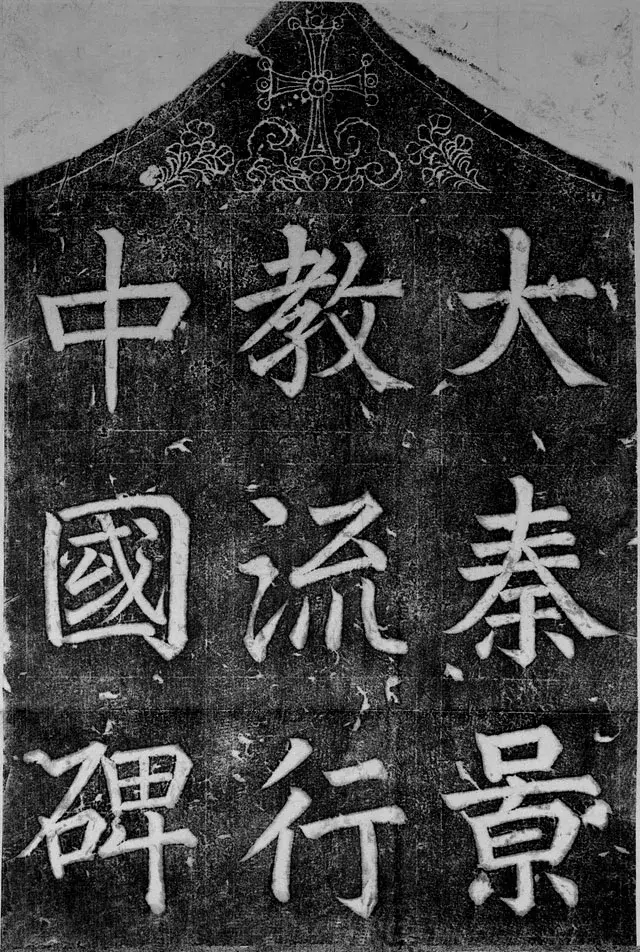
Priest Jingjing erected the Nestorian Stele at the Daqin Monastery in Chang'an, recording Alopen's pioneering mission.
In ancient Chinese chronicles, Alopen's ancestral homeland was broadly referred to as "Daqin." Modern scholars demonstrate that Daqin denoted Syria under Byzantine rule or the Persian territories administered by the Syriac Church of the East. Alopen belonged to the East Syriac Church, historically termed the Nestorian branch, which parted from the Western Roman and Byzantine orthodoxies following theological disputes at the Council of Ephesus in 431 CE. The Church of the East subsequently flourished across Persia and Central Asia, establishing a missionary presence throughout the East.
In the early seventh century, the Tang dynasty consolidated rule over China, inaugurating the prosperous Zhenguan era characterized by institutional vigor and cultural cosmopolitanism. Securing the northern and southern branches of the Silk Road through Central Asia, the Tang made Chang'an a world metropolis where foreign merchants, envoys, and scholars congregated. Appointed as an emissary of the Church of the East, Alopen was entrusted with pioneering an East Asian diocese. Carrying Syriac scriptural codices, Christian crucifixes, and painted icons, he navigated the deserts, oases, and mountain passes of the Pamirs, traveling thousands of li toward the capital of Chang'an.
In 635, Alopen's delegation arrived at the western frontier of the Tang empire. Demonstrating the open-minded cosmopolitanism of the early Tang court, Emperor Taizong extended exceptional diplomatic reception to this religious delegation. The emperor commanded Chancellor Fang Xuanling (Duke of Liang) to lead the imperial guard of honor to the Kaiyuan Gate in the western suburbs of Chang'an, escorting Alopen into the city and quartering him in imperial diplomatic residences.
Shortly thereafter, Emperor Taizong granted Alopen a formal audience within the imperial palace. Alopen presented parchment codices of the Syriac Scriptures, cross-embroidered standards, and painted portraits of Christ. Keenly interested in foreign philosophical and religious systems, Emperor Taizong questioned Alopen regarding the Christian doctrine of creation, redemption, ethical commandments, and liturgical rites. Eloquent and learned, Alopen expounded the theology of the Triune Creator God (Elohim/Aluohe), emphasizing purity of heart, charitable deeds, compassion for humanity, and loyalty to parents and sovereign. Satisfied that these doctrines complemented Confucian benevolence, Daoist non-action, and Buddhist compassion, Emperor Taizong directed that the scriptures be deposited in the imperial library, ordering court scholars to assist Alopen in translating them into classical Chinese.
Following three years of translation, linguistic scrutiny, and doctrinal review, the Tang government concluded that the Christian teachings encouraged virtue and presented no threat to civic peace or dynastic legitimacy. In the seventh lunar month of 638, Emperor Taizong issued an edict of religious toleration that remains an important document in international religious history. The edict declared: "The Way has no constant name, and the Sage has no constant form; according to regional needs, teachings are established, secretly benefiting all living beings. The Great Virtue Alopen of Daqin has brought scriptures and images from afar to offer them at our supreme capital. Examining the tenets of this teaching, we find it profound and serene, emphasizing creation and vital preservation, beneficial to all living beings and worthy of propagation across the realm." This imperial decree granted Nestorian Christianity official legal recognition and royal protection throughout the empire.
To provide Alopen with an institutional base, Emperor Taizong allocated state treasury funds to construct an expansive monastery in the prosperous Yining Ward of Chang'an. Initially designated as the "Persian Monastery" due to the geographic origin of the missionaries, it was formally redesignated as the "Daqin Monastery" during the Tianbao era under Emperor Xuanzong. The throne authorized the ordination of twenty-one resident priests, with Alopen serving as its inaugural prior and bishop. Establishing altars, sounding wooden semantrons for worship, chanting the seven daily offices, and dispensing medical charity to the needy, Alopen embedded the Church of the East into the capital's civic fabric, attracting foreign Sogdian merchants, immigrant communities, and Chinese officials.
While ministering in Chang'an, Alopen realized that for a foreign faith to take root in China, it had to overcome linguistic barriers and translate its Syriac theological terminology into classical Chinese. Leading a collaborative translation bureau, Alopen produced China's earliest surviving Christian treatise, Xuting Mishi Suo Jing (Treatise on Jesus Messiah), during the late Zhenguan era. In this pioneering work, Alopen adapted Chinese philosophical terms such as "Heaven," "the Way," "Divine Spirit," and "Sage" to explain creation, the virgin birth, Christ's crucifixion, and resurrection, while integrating Confucian filial piety, loyalty to the sovereign, and Buddhist prohibitions against taking life, establishing a sophisticated cross-cultural theological translation framework.
Following Emperor Taizong's death in 649, Emperor Gaozong (Li Zhi) ascended the throne, continuing his father's protective policies toward the Luminous Religion. Commending Alopen's pastoral service and moral integrity, Emperor Gaozong conferred upon him the title "Great Lord of the Law for Preserving the State" (Zhenguo Dafa Zhu), elevating him to supreme ecclesiastical authority over all Chinese parishes. Concurrently, Gaozong authorized the founding of Christian monasteries in prefectures across the realm. The faith spread from Chang'an and Luoyang to Lingwu, Guangzhou, Chengdu, and the Silk Road oases, inaugurating a golden age celebrated on the Nestorian Stele: "The Law flowed through the ten circuits, and the state became prosperous and serene; monasteries filled a hundred cities, and households flourished in spiritual blessings." Alopen remained in Chang'an for the remainder of his life, passing away peacefully in the capital.
Alopen holds an esteemed position in Chinese cultural history and world ecclesiastical annals. Prior to his arrival in Chang'an in 635, while maritime and terrestrial silk routes had maintained trade with the Roman Orient for centuries, Christianity had never established an institutional presence or entered the official historical records of the Central Plains. Alopen's mission inaugurated the first wave of Christian transmission into China—the Tang Nestorian era.
Beyond his role as an intrepid missionary, Alopen was a gifted ecclesiastical administrator. Supported by the Tang imperial court, he established China's first regular Christian church and monastic community in the Yining Ward of Chang'an. He structured a formal hierarchy of bishops, presbyters, and deacons, formulated daily liturgical rules, and transformed an expatriate merchant religion into a recognized community that ministered across Tang society. His institutional foundations sustained the Church of the East in China through the reigns of six successive emperors across more than two centuries, contributing to the cultural pluralism of the Tang dynasty.
Alopen's major academic contribution was his leadership in translating the Xuting Mishi Suo Jing (Treatise on Jesus Messiah), China's earliest Christian text, which established the prototype for Christian contextualization in East Asia.
Faced with a complete absence of direct equivalents for Western theological concepts in classical Chinese, Alopen engaged with the philosophical vocabularies of Confucianism, Daoism, and Buddhism. He translated God (Elohim) as "Tianzun" (Heavenly Venerable) or "Aluohe," the Holy Spirit as "Cool Wind" (Liangfeng), baptism as "Receiving Water" (Shoushui), and angels as "Heavenly Spirits" (Zhutianshen). In moral theology, he emphasized the Ten Commandments' call for filial piety and civic duty, noting that "whoever obeys the Heavenly Venerable must honor their parents and serve their sovereign." This strategy of utilizing indigenous terminology allowed foreign theological concepts to be understood by Tang scholars, anticipating the accommodation policies employed by Matteo Ricci and the Jesuits a millennium later.
Emperor Taizong's edict of 638, issued after his review of Alopen's doctrines, remains a historic testament to imperial toleration. Its declaration that "the Way has no constant name, and the Sage has no constant form; according to regional needs, teachings are established, secretly benefiting all living beings" reflected the cosmopolitan worldview of the Tang imperium.
Alopen's conduct and commitment to public welfare won the trust of Emperor Taizong and Chancellor Fang Xuanling. Under his influence, the Tang central government extended protection to the Luminous Religion on equal terms with Buddhism, Daoism, Islam, Zoroastrianism, and Manichaeism. The state treasury directly financed monasteries and supported clergy for foreign missionaries, an act of intellectual pluralism without parallel in contemporary early medieval Europe. Alopen's successful mission stood as an enduring symbol of the cultural openness of the Tang dynasty.
While the Church of the East suffered during Emperor Wuzong's Huichang persecution in 845 and the collapse of the Tang dynasty, Alopen's mission was preserved for posterity through the celebrated Nestorian Stele (Stele on the Transmission of the Luminous Religion from Daqin to China), erected in 781 at the Daqin Monastery in Chang'an by the priest Jingjing and inscribed by calligrapher Lü Xiuyan.
Unearthed in 1623 during the Tianqi reign of the Ming dynasty in the western outskirts of Xi'an, this monument aroused international interest in Tang church history. In parallel columns of classical Chinese and Syriac script, the stele detailed the arrival of Alopen in 635: "In the kingdom of Daqin there was a man of Great Virtue named Alopen, who, observing the azure clouds and bearing the true scriptures, watched the harmony of the winds and braved perils and hardships, arriving at Chang'an in the ninth year of the Zhenguan reign. The Emperor dispatched Chancellor Fang Xuanling with an imperial escort to the western suburbs to welcome him into the palace." The text transcribed Emperor Taizong's edict in full. This discovery provided concrete evidence that profound theological dialogue and peaceful engagement had flourished between East and West in seventh-century Chang'an, securing Alopen's legacy in the global history of intercultural exchange.
FIGURES ASSOCIATED WITH THIS DYNASTY