Birth on the Steppe
Born along the Onon River in Outer Mongolia as the seventh son of Tolui.
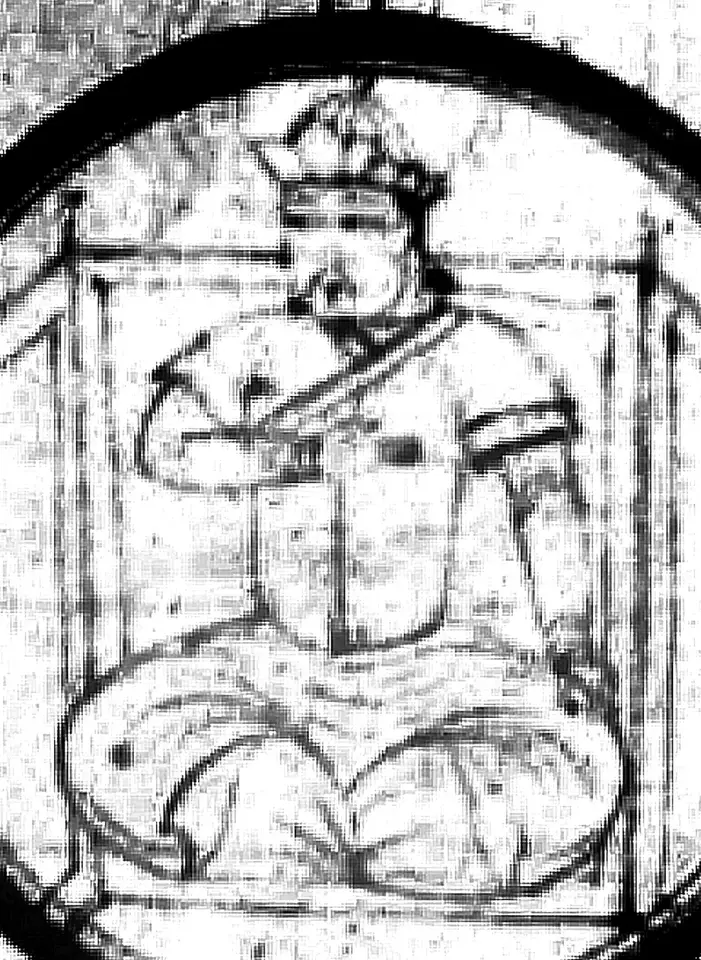
阿里不哥
Ariq Böke, 1219–1266 (阿里不哥) was an imperial prince of the Mongol Borjigin clan, a grandson of Genghis Khan, the seventh son of Tolui, and the youngest son of Sorghaghtani Beki. As full brother to Mongke Khagan and Kublai Khan, Ariq Böke held a revered status rooted in traditional Mongol nomadic customs, where the youngest son served as the hearth-preserver (odchigin) entrusted with guarding ancestral domains, camp households,…
Ariq Böke, 1219–1266 (阿里不哥) was an imperial prince of the Mongol Borjigin clan, a grandson of Genghis Khan, the seventh son of Tolui, and the youngest son of Sorghaghtani Beki. As full brother to Mongke Khagan and Kublai Khan, Ariq Böke held a revered status rooted in traditional Mongol nomadic customs, where the youngest son served as the hearth-preserver (odchigin) entrusted with guarding ancestral domains, camp households, and homeland herds. During Mongke's southern campaigns against the Southern Song dynasty, Ariq Böke was appointed supreme commander-in-chief in Karakorum, the imperial capital, administering homeland civilian governance, military logistics, and treasury stockpiles. Following Mongke's sudden demise in Sichuan in 1259, conservative Mongol aristocrats and senior commanders led by Alamdar and Qunduqhai backed Ariq Böke, electing him Khagan at a traditional kurultai held along the Orkhon River. Meanwhile, Kublai proclaimed himself Khagan at Kaiping, precipitating a devastating four-year civil war across northern Eurasia. Despite drawing broad initial support from steppe traditionalists, the Golden Horde, and Chagatai princes, Ariq Böke suffered fatal logistical blockades, field defeats at Liangzhou and Lake Shimutu, and an escalating rupture with Chagatai ruler Alghu. Stranded without grain and deserted by key allies, he submitted to Kublai in 1264 and spent his final days under confinement in Dadu, passing away in 1266. His failed bid marked the permanent institutional disintegration of the unified Mongol Empire into four autonomous successor khanates.
Born along the Onon River in Outer Mongolia as the seventh son of Tolui.
Tolui passed away; Ariq Böke assisted his mother Sorghaghtani Beki in maintaining family ordos and ancestral lands under nomadic hearth-preserving traditions.
Mongke ascended the throne as the fourth Khagan; Ariq Böke received territorial fiefs safeguarding the Mongolian homeland.
Appointed imperial regent in Karakorum to govern the home territories while Mongke commanded the Song invasion force.
Mongke died at Diaoyu Fortress; Alamdar and Tuolichi mobilized troops across northern pastures to promote Ariq Böke's succession.
Kublai ascended the throne in Kaiping while Ariq Böke convened a kurultai in Karakorum, igniting open civil conflict.
Western partisans were crushed at Guzang; Alamdar and Qunduqhai were executed, eliminating Ariq Böke's southern spearhead.
Kublai commanded imperial forces personally, repulsing Ariq Böke's southern cavalry advance at Lake Shimutu.
Ariq Böke broke alliance with Alghu, capturing Almaliq but losing military cohesion due to harsh famine and harsh rule.
Deprived of grain reserves and allied reinforcements, Ariq Böke journeyed to Kaiping to make his formal submission.
Passed away under imperial custody in Dadu at the age of forty-eight.
Ariq Böke was the youngest son of Tolui and the illustrious princess Sorghaghtani Beki. Under ancient steppe nomadic traditions, the youngest son was designated as the keeper of the ancestral hearth, inheriting paternal herds, pasture grounds, and homeland camp domains. After Tolui's sudden death during his northern return in 1232, Sorghaghtani Beki skillfully organized family assets and guided her sons. When Mongke ascended the imperial throne in 1251 with the backing of Batu Khan, Kublai was delegated governance over the sedentary lands south of the Gobi, while Ariq Böke remained established at Karakorum to oversee traditional pastoral tribes.
In 1258, Mongke initiated his extensive campaign against the Southern Song, leading the western vanguard into Sichuan and directing Kublai to march toward Ezhou. Ariq Böke was formally entrusted with imperial regency in Karakorum. In this role, he controlled the central treasury, state storehouses, royal ordos, and the core nomadic aristocracy in the Mongolian heartland, securing immense leverage for future sovereign disputes.
In the autumn of 1259, Mongke Khagan succumbed to disease during the siege of Diaoyu Fortress in Hezhou, leaving behind no definitive succession testament. Alamdar, who managed northern revenues and feared punitive reckonings under Kublai, forged a pact with commanders including Qunduqhai, Tuohuosi, and Boluohuan to champion Ariq Böke. Alamdar mustered cavalry across northern grasslands while Tuolichi carried out forced conscriptions across southern borders. Informed by his chief consort Tegulen via covert messengers, Kublai swiftly concluded armistice overtures on the Yangtze, returned north, disbanded forced levies, and held an emergency assembly at Kaiping in March 1260 to declare himself Khagan.
Reacting to Kublai's unilateral move, Ariq Böke summoned a grand kurultai on the Antan River west of Karakorum. He garnered widespread allegiances from conservative Mongol princes, including Ogodei scion Qaidu, Mongke's sons Asudai and Yulongdash, Chagatai grandson Alghu, and Dowager Khatun Qutughtai of the Golden Horde. Ariq Böke formally proclaimed his own enthronement in Karakorum, precipitating a protracted civil confrontation between the traditional northern grasslands and the Sinicized southern governance system.
At the onset of hostilies, Ariq Böke sought to conquer the vital grain belts and transport arteries of Shaanxi and Gansu. Mongke had previously stationed substantial supply reserves in the Liupan Mountains under General Qunduqhai, while deployed forces held eastern and western Sichuan under allied commanders. Ariq Böke dispatched representatives to establish rival administrative bureaus in Chang'an. Kublai responded by dispatching pacification commissioner Lian Xixian, who promptly arrested and executed rival emissaries in the provincial capital.
In response, Qunduqhai raised an insurrection in Liupan, linking his forces with Alamdar's southern cavalry vanguard near Xiliang. Kublai directed royal princes Qadan and Qabichi along with Chinese general Wang Liangchen to suppress the uprising. In September 1260, the opposing armies clashed outside Guzang in Liangzhou. Utilizing a sudden sandstorm, Wang Liangchen led surprise cavalry maneuvers around the enemy flank while imperial princes charged the center. Alamdar and Qunduqhai were both killed in battle, completely annihilating Ariq Böke's forward foothold in the Hexi corridor.
With his southern offensive repelled, Ariq Böke withdrew his main camp to Qianqian Prefecture in the Tannu Mountains, employing evasive diplomatic gestures while rebuilding cavalry reserves. Kublai stationed royal prince Yesunge in Karakorum before marching back to Kaiping. In the autumn of 1261, Ariq Böke seized on diminished garrison defenses to launch a counteroffensive, driving Yesunge out of Karakorum and reoccupying the city. Emboldened by victory, he marshaled tens of thousands of horsemen across the Gobi Desert to strike at Kaiping directly.
Kublai personally assumed command of imperial reinforcements, deploying prince Qadan, Prince Tacharr, and consort Nachen. In November 1261, the two armies met at Lake Shimutu in eastern Inner Mongolia. Imperial cavalry overwhelmed Ariq Böke's forward units, killing his top commander Qadan Qoyurqui. Although Ariq Böke halted his retreat ten days later to mount a fierce defensive stand at A'erte, an inconclusive day-long engagement drained his remaining fighting strength, compelling another comprehensive withdrawal into the northern steppe.
Facing repeated setbacks in the east, Ariq Böke's fragile alliance with Chagatai prince Alghu fractured completely. Ariq Böke had elevated Alghu to power in Central Asia to collect revenues and logistical provisions for Karakorum. Once entrenched, Alghu refused to transfer taxes, executed Ariq Böke's tax envoys, and opened diplomatic channels with Kublai. In 1262, Ariq Böke redirected his surviving cavalry westward against the Chagatai realm.
Although his commander Qarabugha fell in battle at Bula, Ariq Böke launched a massive assault led by Asudai, capturing the Chagatai capital of Almaliq and forcing Alghu to flee south beyond the Tian Shan Mountains to Khotan and Samarkand. However, Ariq Böke's occupation forces indulged in widespread pillaging and executions of nomadic kinsmen. An extraordinarily harsh winter combined with famine led to extensive peasant flight and severe starvation among soldiers. Dismayed by Ariq Böke's cruelty, prince Yulongdash abandoned the camp with his division to join Kublai, triggering wide-scale desertions throughout the army.
By the spring of 1264, Ariq Böke had depleted his supplies and was completely isolated across Eurasian steppes. Acknowledging total operational collapse, he sent emissaries to Kaiping offering unconditional surrender. Kublai accepted his capitulation and supplied extensive relief grain and clothing to the starving nomad regiments. In July 1264, Ariq Böke arrived at Shangdu accompanied by royal princes Yulongdash, Asudai, and Shirigi to present his formal submission.
When Kublai asked his younger brother who was truly in the right during the bitter succession contest, Ariq Böke candidly replied that he was in the right previously, but Kublai was right now through victory. Kublai convened a council of princes and ministers to determine accountability. While loyal veteran commanders insisted on taking personal blame, Kublai ordered the execution of key conspirators including Boluohuan and Tuman, while pardoning Ariq Böke and allied royal princes. Ariq Böke was placed under house detention in Dadu, where he passed away from illness in 1266 at the age of forty-eight.
FIGURES ASSOCIATED WITH THIS DYNASTY