Birth in Southern Fujian
Born into a poor farming clan in Baijiao Village, Tong'an County; began elementary studies at the local Wenpu Academy.
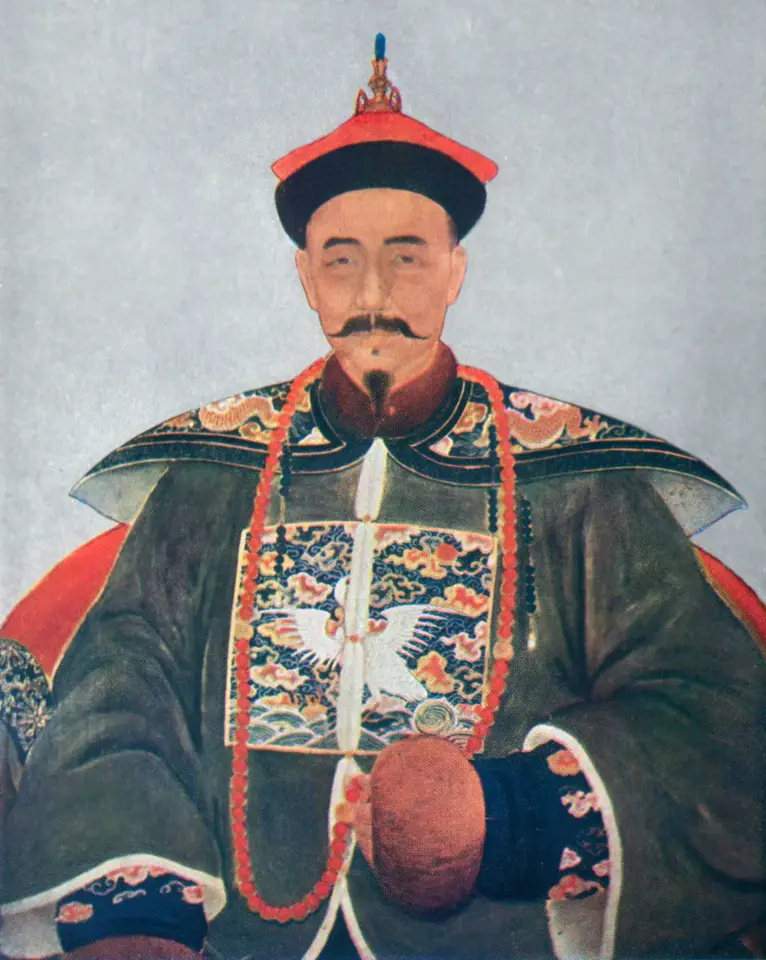
潘振承
Pan Zhencheng (潘振承, 1714 – January 10, 1788), also known as Pan Qi (潘启), courtesy name Xunxian (逊贤) and art name Wenyan (文岩), universally known to Western traders as "Puankhequa" (潘启官), was a native of Baijiao Village, Tong'an County, Quanzhou Prefecture, Fujian. He was a monumental 18th-century international commercial pioneer, leading merchant of the Canton Cohong, and founder of the Tongwen Foreign Hong. Western…
Pan Zhencheng (潘振承, 1714 – January 10, 1788), also known as Pan Qi (潘启), courtesy name Xunxian (逊贤) and art name Wenyan (文岩), universally known to Western traders as "Puankhequa" (潘启官), was a native of Baijiao Village, Tong'an County, Quanzhou Prefecture, Fujian. He was a monumental 18th-century international commercial pioneer, leading merchant of the Canton Cohong, and founder of the Tongwen Foreign Hong. Western publications of his era and modern historical analyses have recognized him as the wealthiest merchant in the world during the late eighteenth century. Born into an impoverished agrarian family in southern Fujian, Pan was forced to leave school early to work as a maritime boat hand. Following the lifting of coastal trade bans under Emperor Yongzheng, he made three seafaring trading voyages to Luzon (the Spanish Philippines), transporting tea and silk while teaching himself Spanish, Portuguese, and English. In the early Qianlong reign, he relocated to Guangzhou, the sole permitted maritime gateway of the Qing Empire, where his integrity and multilingual talents earned him the management of a Fujian merchant's trading hong. In 1742, he established the Tongwen Hong. Following the 1757 imperial decree restricting foreign maritime commerce exclusively to the port of Guangzhou ("Canton Single-Port System"), Pan capitalized on his linguistic mastery and impeccable reputation to establish sweeping monopolies over raw silk and tea exports with the British East India Company, the Swedish East India Company, and continental European merchants. In 1760, Pan Zhencheng was elected Senior Merchant (Chief of the Cohong), directing the imperial guild that regulated all Western trade with China for over three decades. He pioneered the adoption of commercial promissory notes and bills of exchange to replace cumbersome silver bullion settlements, instituted mandatory full-value compensation for damaged export tea to safeguard Chinese commercial credit, resolutely prohibited the illicit opium trade, and contributed hundreds of thousands of silver taels toward state military logistics and public famine relief. A dedicated Confucian merchant, he invested heavily in classical family education, producing generations of imperial degree-holders and transforming his clan into one of the most prominent cultural lineages in modern Guangdong. He passed away in Guangzhou in 1788 at age seventy-five.
Born into a poor farming clan in Baijiao Village, Tong'an County; began elementary studies at the local Wenpu Academy.
Left school following the imperial relaxation of maritime bans, working as a shiphand and training to become an accomplished offshore helmsman.
Braved oceanic storms and pirate perils to sail three times to Manila, trading tea and silk while mastering Spanish, Portuguese, and English.
Moved to the primary foreign trading port of Guangzhou, working as chief foreign trade accountant for a Fujian merchant's firm.
Acquired official mercantile clearance from the maritime customs to establish the Tongwen Hong, launching an independent foreign trading business.
Concluded an unprecedented export contract with the British East India Company for over one thousand piculs of raw silk, winning European acclaim.
Benefited from the imperial decree closing northern customs ports, gaining a dominant monopoly over silk and tea trade under the Cohong system.
Elected Senior Merchant (Chief Director) of the newly established Canton Cohong guild, directing national external commerce.
Negotiated annual exclusive delivery contracts for 1,000 to 2,000 piculs of raw silk with the British East India Company.
Negotiated with the Superintendent of Guangdong Customs to stabilize raw silk export quotas, guaranteeing steady overseas shipping.
Reimbursed the British East India Company for 1,402 crates of spoiled tea returned from London, establishing an international Cohong precedent.
Passed away at his Haizhu estate on the third day of the twelfth lunar month at age seventy-five; interred at Mount Wenpu in his hometown.
Pan Zhencheng was born in 1714 in Baijiao Village, Tong'an County, Quanzhou Prefecture, Fujian Province. His family had cultivated the rocky soil of southern Fujian for generations. His father, Pan Xiang, worked relentlessly from dawn to dusk to finance the elementary schooling of his five sons at the Wenpu Academy, a classical retreat where Southern Song philosopher Zhu Xi had once lectured. There, Pan Zhencheng absorbed early moral lessons in classical integrity, diligence, and filial piety.
Following the Ming-Qing transition and the devastation of coastal border evacuations, the once-thriving maritime port of Yuegang had fallen into steep decay. When Emperor Yongzheng lifted coastal maritime bans in 1727, the fourteen-year-old Pan Zhencheng left school to labor as a deckhand on coastal merchant junks. Reflecting the local proverb that "riding horses and sailing ships risks three-tenths of one's life," Pan embraced the hardships of maritime life. His stamina and navigation skills soon earned him promotion to principal helmsman. Reaching adulthood, Pan ventured beyond coastal waters, sailing across the South China Sea three times to Spanish-governed Luzon (modern Philippines) with cargoes of tea, porcelain, and silk.
During the era of sailing vessels, foreign merchants had to remain in port for months awaiting favorable seasonal monsoon winds to return home. Pan utilized his prolonged stays in Manila to engage directly with Spanish merchants, Portuguese sailors, and British supercargoes. Transcribing foreign phonetics into Minnan vernacular characters, he taught himself conversational and commercial Spanish, Portuguese, and English. His rare linguistic fluency provided him with an immense competitive advantage upon entering the cosmopolitan merchant circles of Guangzhou.
Equipped with savings accumulated from his Philippine voyages, Pan Zhencheng relocated in 1738 to Guangzhou, the sole domestic port hosting sustained European shipping. He entered the service of a fellow Fujian merchant named Chen, assuming responsibility for foreign accounts and daily warehouse management. Pan proved exceptionally diligent and transparent; his ledgers matched cargo inventories down to the ounce, and his ability to converse directly with Western captains enabled him to resolve disputes swiftly. Recognizing his talent, Chen entrusted him with the full management of the enterprise.
When the senior merchant retired with substantial profits, Pan grasped the historical opportunity. In 1742, he secured imperial clearance from the Guangdong Customs Superintendent to establish the Tongwen Hong as an independent trading house along the Pearl River. Pan retained Chen's existing foreign clientele and relocated his first wife, Lady Huang, from Fujian to manage his estate in Haizhu. With domestic harmony secured, Pan focused entirely on expanding cross-cultural commercial operations.
In the eighteenth-century China trade, relations between Chinese merchants and foreign companies were chronically hindered by language barriers and dishonest third-party translators. Pan eliminated this friction by conducting business discussions face-to-face with Western supercargoes. More significantly, he adopted an uncompromising standard of commercial honesty: whenever shipments arrived damp, broken, or substandard, Pan promptly offered full refunds or exchanges without dispute. European captains and trading councils came to regard him as the single most dependable merchant in East Asia.
Recognizing his reliability, Western trading companies frequently advanced large cash deposits to Pan, often exceeding 100,000 taels of silver and on one occasion reaching 601,500 taels. In 1753, Pan secured a monumental contract with the British East India Company for 1,192 piculs of raw silk, 1,900 pieces of woven silk textiles, and 1,500 bolts of Nanking cloth, with raw silk sales alone exceeding 200,000 taels. In 1757, Emperor Qianlong ordered the closure of maritime customs in Fujian, Zhejiang, and Jiangsu, establishing Guangzhou as the sole port for Western maritime trade under the "Canton System." Designated as an authorized guild merchant, Pan's enterprise enjoyed exclusive trading privileges over the world's most lucrative commercial corridor.
In 1760, looking to stabilize pricing and counter concerted purchasing pressure from European trading cartels, Guangzhou's foreign merchants formed the Cohong monopoly guild with imperial approval. Pan Zhencheng was unanimously elected Senior Merchant (Cohong Leader). He retained this preeminent post for over three decades, becoming the most enduring and respected leader in the history of the Canton trade, known respectfully to all foreign factors as "Puankhequa."
Leveraging his leadership of the Cohong, Pan consolidated his control over the raw silk export market, contracting to deliver between 1,000 and 2,000 piculs of top-grade silk annually to the British East India Company. According to an eyewitness account published in Paris by Le Journal de Paris, Pan's opulent walled estate on Haizhu Island covered dozens of acres, featuring pavilions, ornamental lakes, and sprawling warehouses. The journal estimated his household's annual expenditures at over three million French francs, observing that his personal wealth surpassed the private domains of European monarchs and designating him as the richest individual in the world.
Possessing exceptional financial foresight, Pan recognized that physical shipments of Spanish silver dollars imposed grave risks and delayed cargo turnaround. He pioneered the use of commercial promissory notes and bills of exchange in Canton foreign transactions, allowing foreign factors to issue corporate credit against London and European banking houses. This mechanism minimized silver loss at sea and dramatically accelerated capital turnover, integrating Guangzhou into early modern global financial systems. In 1783, when the British East India Company returned 1,402 chests of tea that had spoiled during transit to London, Pan personally compensated the company over 10,000 silver dollars, proclaiming that national commercial reputation far outweighed temporary monetary loss. His action established an enduring standard for fair trade across the Cohong.
Throughout his lifetime, Pan adhered strictly to Qing legal statutes, adamantly refusing to trade in contraband opium despite lucrative profits. He paid an annual customs tribute of 55,000 silver taels without delinquency and contributed vast sums to imperial military campaigns, including a single donation of 300,000 taels for frontier military grain, for which he received the third-rank court insignia. Believing that enduring family prosperity required classical culture, he funded the education of his children, enabling his second son Pan Youwei to attain the jinshi degree and participate in compiling the Complete Library of the Four Treasuries, while his fourth son Pan Youdu succeeded him as Cohong leader.
On January 10, 1788 (the third day of the twelfth lunar month), Pan Zhencheng passed away peacefully at his Haizhu estate at the age of seventy-five. The Swedish East India Company, which had traded with Pan aboard the celebrated merchant ship Gotheborg, preserved a painted glass portrait that Pan had gifted to its captain. Today, this portrait remains on permanent exhibition at the Gothenburg City Museum, serving as the sole surviving oil-on-glass likeness of an early Qing merchant preserved in Europe.
Following the foundation of the Tongwen Hong in 1742 and the inception of the 1757 Canton Single-Port System, Pan Zhencheng transformed his firm into the dominant commercial nexus between Qing China and the West. Exploiting his fluency in European languages, he negotiated direct supply contracts with the British East India Company, delivering between 1,000 and 2,000 piculs of high-grade Jiangnan raw silk each year, with annual sales exceeding 200,000 taels. His commercial network supplied vast European markets with raw silk, porcelain, and black and green teas, establishing the Tongwen Hong as the premier commercial house in eighteenth-century Asia.
Upon his election as Senior Merchant of the Cohong in 1760, Pan revolutionized maritime commercial finance. Confronting the hazards and delays of shipping physical Spanish silver dollars across global oceans, he introduced the use of commercial promissory notes and bills of exchange in Guangzhou. Under Pan's financial guarantee, foreign supercargoes were permitted to draw corporate bills against London banking houses upon receiving shipments. This system drastically reduced shipping transit risks, accelerated trade clearing cycles, and linked Chinese export commerce directly to modern international credit markets.
Pan achieved historical renown by subordinating immediate profits to long-term commercial trust. In 1783, the British East India Company shipped back 1,402 chests of export tea that had deteriorated during the six-month voyage to England. While previous practice disclaimed liability once ships departed port, Pan stepped forward as Cohong leader to refund the company more than 10,000 silver dollars from his private funds. He maintained that preserving Chinese commercial integrity in global markets was paramount, establishing full refund policies for defective goods as a mandatory trade rule across the Canton Cohong.
Throughout his commercial career, Pan resolutely rejected Western proposals to smuggle illicit opium through his trading channels, forbidding his firm from engaging in narcotics trafficking. He maintained impeccable tax records, remitting over 55,000 silver taels annually to the Guangdong Customs. When imperial campaigns in the northwest and flood mitigation works along the Yangtze required emergency funding, Pan repeatedly made massive patriotic contributions, including an extraordinary personal gift of 300,000 silver taels to support imperial military grain reserves.
Recognizing that mercantile fortune was fleeting without ethical and intellectual grounding, Pan invested his trade revenues into family academies, hiring prominent scholars to instruct his descendants in the Confucian classics. His second son, Pan Youwei, passed the imperial metropolitan examination as a jinshi in 1772, served as Senior Secretary in the Grand Secretariat, assisted in editing the Complete Library of the Four Treasuries, and became a renowned art connoisseur. His fourth son, Pan Youdu, directed the Cohong for over a decade. Over two centuries, the Pan lineage produced twenty-four figures documented in the Dictionary of Historical Figures in Guangdong, becoming one of the most distinguished cultural clans in southern China.
Pan's extraordinary commercial success earned him global renown during the high Qing era. He served as the primary business partner for the Swedish East India Company, whose flagship Gotheborg traded repeatedly at his wharves. French accounts in Le Journal de Paris documented his sprawling riverfront mansion and estimated his annual consumption at over three million francs, declaring him the wealthiest individual on earth. In 2001, The Asian Wall Street Journal selected the fifty richest individuals of the past millennium; among only six Chinese entries—alongside Genghis Khan, Kublai Khan, Heshen, Liu Jin, and T.V. Soong—Pan Zhencheng was the sole private merchant who accumulated his fortune through international market enterprise.
FIGURES ASSOCIATED WITH THIS DYNASTY