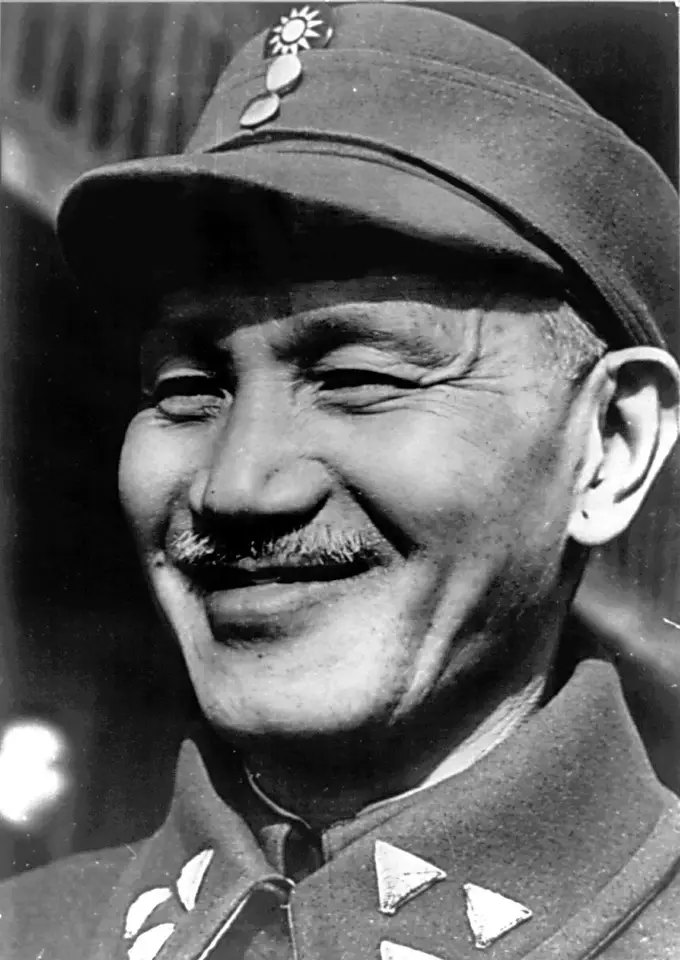
Life and Career
Early Career and the Kyakhta Negotiations
Songyun was born in Beijing in 1752 during the seventeenth year of the Qianlong reign into an established Mongol Plain Blue Banner lineage. From an early age, he applied himself diligently to classical literature, historical chronicles, and the administrative traditions of the empire, mastering Manchu, Mongolian, and Chinese. In 1772, at the age of twenty, Songyun passed the rigorous imperial translation examinations and was appointed as a translation clerk (bithesi) in the Court of Colonial Affairs (Lifanyuan). Recognized for his sharp drafting acumen, methodical deliberation, and procedural accuracy, he was soon transferred to the Grand Council as a secretary (Junji Zhangjing), where his efficiency drew the close notice of the Qianlong Emperor.
Over the following decade, Songyun rose through consecutive posts to become an assistant department director in the Ministry of Revenue's silver vaults. His meticulous supervision of treasury receipts and disbursements established his reputation for unimpeachable honesty. In 1783, at the age of thirty-one, he was granted an extraordinary promotion to Sub-Chancellor of the Grand Secretariat concurrently serving as Vice Minister of Rites and Banner Vice-Commander, emerging as one of the most promising young bannermen in central government.
In 1785, long-simmering border tensions flared between the Qing court and Tsarist Russia. Russian-subject Buryats had plundered Mongolian merchant caravans near Urga, yet Russian frontier authorities violated bilateral extradition conventions, refusing to surrender the brigands and imposing only nominal fines and distant exile. Incensed by this breach of faith, Emperor Qianlong ordered the indefinite closure of the border trading post at Kyakhta. To untangle this complex diplomatic deadlock, the emperor appointed Songyun as Imperial Agent at Urga (Kulun).
Arriving on the northern frontier, Songyun enforced strict border controls to suppress illicit smuggling while prohibiting local troops from harassing law-abiding frontiersmen. Toward Russian merchants and travelers, he displayed scrupulous courtesy and goodwill. When a West Torgut lama named Samailin was accused of carrying counterfeit correspondence alleging a Russian conspiracy to stir rebellion among the Mongols, Songyun conducted an exhaustive investigation, reporting to the throne that the letters were fraudulent and Russian authorities had remained peaceful. Reassured by Songyun's fairness, the Russian court replaced corrupt border officials and petitioned for the resumption of trade. In 1792, Songyun hosted a summit at Kyakhta, entering the Russian encampment unarmed to attend banquets and establish terms of mutual trust. The resulting supplementary agreement brought eight years of border tension to a peaceful conclusion, earning Songyun promotion to Vice Minister of Revenue and appointment as Grand Council Secretary and Imperial Presence Bodyguard.
Moral Fortitude and Administration in Tibet
In early 1794, Songyun was assigned to inspect the garrison administration of Jilin, followed by a commission to investigate taxation practices in Jingzhou, Hubei. Traversing Weihui Prefecture in Henan during torrential summer floods that breached river dikes, Songyun acted without awaiting imperial authorization, ordering magistrates to throw open state granaries and commandeer boats to rescue stranded villagers, saving thousands of lives and earning high imperial praise.
In July 1794, Songyun was granted the title of Minister of Works and appointed Imperial Commissioner to Tibet (Amban). At this juncture, the imperial court was dominated by the all-powerful grand councillor Heshen, whose web of patronage and bribery ensnared central and provincial officialdom. Songyun alone maintained an incorruptible distance, refusing to offer bribes or pay court to the favorite. Spited by his independence, Heshen maneuvered to keep Songyun stationed in the remote, high-altitude Tibetan plateau for five consecutive years.
In Tibet, Songyun distinguished himself through enlightened and sympathetic governance. When rumors circulated that Gurkha forces were massing along the southwestern frontier, Songyun rode out in person to inspect the passes, discovering that foreign tribesmen were merely seeking the repayment of commercial debts. He defused the panic, borrowed five thousand taels from the Sichuan provincial treasury to provide emergency grain relief for impoverished Tibetan commoners, and fortified border checkposts (karun) along strategic alpine routes. His benevolent administration won the lasting veneration of both the Dalai Lama's court and the common populace.
Viceroyalty of Shaan-Gan and the Green Fields of Ili
In spring 1799, following the death of Emperor Qianlong, the Jiaqing Emperor swiftly arrested and executed Heshen, immediately summoning the honest and capable Songyun back to Beijing as Minister of Revenue. At the time, the White Lotus rebellion raged across Sichuan, Shaanxi, and Hubei, severely disrupting imperial supply corridors. The emperor appointed Songyun as Viceroy of Shaan-Gan with the honorary rank of Junior Guardian to the Crown Prince, stationing him in Hanzhong to oversee grain transportation for hundreds of thousands of fighting troops. Songyun cracked down on military corruption, streamlined depot relay stations, and ensured that frontline armies under Eledengbao and Delengtai never lacked provisions.
In 1802, Songyun was elevated to General of Ili, supreme military and civil commander of Xinjiang. While previous emperors had repeatedly called for agricultural military colonization (tuntian) in Ili, earlier generals had deemed large-scale irrigation unfeasible due to rapid glacier melt and porous sandy terrain. Determined to eliminate the territory's dependency on annual grain subsidies from the central provinces, Songyun committed himself to comprehensive reclamation. He drew up precise operational plans to reclaim eighty thousand mu around Huiyuan and forty thousand mu around Huining, both fed by canals diverted from the Ili River.
Braving blizzards and desert heat, Songyun personally surveyed the river channels, directing thousands of banner soldiers, Green Standard infantry, and civilian pioneers in excavating a grand irrigation canal extending for dozens of li, supplemented by channels tapping northwestern artesian springs. By the end of his first tenure, more than 64,000 mu of barren gravel had been transformed into fertile, well-watered agricultural land. The resulting harvests fed the garrisons and their families, saving imperial coffers millions of taels annually and transforming the Ili River valley into a thriving breadbasket.
In late 1808, when dozens of penal military exiles plotted an insurrection, Songyun dispatched commanders under the pretext of inspecting gold mines to arrest and execute the ringleaders. However, when he summarily ordered the execution of 169 implicated soldiers en route to penal colonies without formal judicial interrogation, Emperor Jiaqing censured him for violating legal protocol, demoting him to Assistant Councillor of Kashgar.
High Secretariat and Coastal Commands
In 1811, Songyun was restored to imperial favor and appointed Viceroy of Liangguang, concurrently serving as Associate Grand Secretary and Minister of the Household. In Guangzhou, he enforced strict prohibitions on the illegal importation of opium, fortified coastal batteries along the Pearl River estuary, and regulated the conduct of European trade factors, barring foreign merchants from infringing upon Qing territorial waters. Recalled to the capital as Minister of Personnel, he was dispatched in 1812 to inspect imperial ancestral tombs in Shengjing and supervise the relocation of banner clan branches, returning that autumn to resume duties as a Grand Councillor.
In 1813, during the crisis of the Tianli Sect uprising that saw rebels infiltrate the Forbidden City and capture Huaxian, Songyun coordinated troop mobilizations and logistics within the Grand Council, earning promotion to Grand Secretary of the Dongge Hall and subsequently Grand Secretary of the Wuying Palace, alongside the rank of Senior Guardian to the Crown Prince. Later that year, he was appointed to his second term as General of Ili, where he deepened agrarian reforms, improved grain storage systems, and sponsored the systematic cartographic and historical documentation of the Western Regions.
Moral Remonstrance and Political Volatility
Throughout his life, Songyun was renowned for his absolute moral courage and fearless devotion to the welfare of the people. In 1817, the northern provinces suffered from prolonged droughts, leaving millions of peasants facing severe starvation. When Emperor Jiaqing issued an edict preparing for a grand imperial pilgrimage to the ancestral tombs in Shengjing, Songyun submitted an impassioned memorial warning that the colossal expenditure of an imperial tour would exhaust state treasuries and burden famine-stricken populations, urging the monarch to suspend the journey. Incensed by this blunt opposition, Emperor Jiaqing stripped Songyun of his grand secretaryship and ministerial titles, exiling him to serve as Lieutenant-General of Chahar.
In 1818, Songyun was appointed acting General of Suiyuan. That winter, his only surviving son, Xichang, Vice Minister of Justice, passed away in Beijing. Deeply moved by the elderly statesman's bereavement after decades of selfless imperial service, Emperor Jiaqing recalled him to the capital as Lieutenant-General of the Plain White Banner, restored his first-rank insignia, granted him permission to ride horses within the Forbidden City, and appointed him Minister of Rites and subsequently Minister of War. In early 1820, when the Ministry of War's official seal was discovered missing from earlier records, Songyun was held administratively responsible and demoted to Vice-Commander of Shanhaiguan, and subsequently reduced to the humble status of Banner Cavalry Lieutenant (Xiaoqixiao), illustrating the extraordinary volatility of his public career.
Daoguang Reinstatement and Final Years
In autumn 1820, Emperor Jiaqing passed away at the Chengde Mountain Resort. Escorting the imperial coffin back to Beijing, the newly enthroned Daoguang Emperor spotted the aged, white-haired Songyun kneeling by the roadside among welcoming officials. Moved to tears by the spectacle of the venerable statesman's misfortunes, the emperor stepped forward, took Songyun's arm, and wept openly. The following morning, Daoguang elevated Songyun to Senior Vice Censor-in-Chief, advancing him to Censor-in-Chief a month later, and shortly appointing him Commander of the Rehe garrison.
In 1821, Songyun was summoned to Beijing as Minister of War, Minister of Personnel, and Grand Councillor. In 1822, while serving as acting Viceroy of Zhili, he was demoted to department director after altering official submissions concerning Uliastai without ministerial concurrence, though his rank was steadily restored in subsequent years. In 1830, approaching eighty years of age, Songyun requested retirement on grounds of illness, yet shortly petitioned for active frontier service, prompting an imperial reprimand for erratic conduct and his retirement with third-rank honors.
In 1832, when the Kokand Khanate dispatched envoys seeking commercial privileges in southern Xinjiang, Emperor Daoguang recalled Songyun's earlier prophetic counsel that "granting regular commerce to Kokand will ensure peace along the western borders." Vindicated by history, Songyun had his first-rank insignia restored and was appointed acting Banner Vice-Commander. In 1834, at age eighty-two, he officially retired from all duties. Passing away peacefully at his Beijing residence in 1835 at age eighty-three, he was posthumously granted the title Senior Guardian to the Crown Prince and the posthumous name Wenqing, with special sacrifices decreed at the Temple of Eminent Officials in Ili.
Major Achievements
Resolving the Kyakhta Impasse and Establishing Border Precedents
Songyun's foremost diplomatic achievement was his peaceful, durable resolution of the Kyakhta trading dispute with the Russian Empire during the late Qianlong reign. Following years of armed friction and total commercial severance along thousands of li of frontier, northern border communities faced economic ruin while military tensions escalated.
Commanding the negotiations at Urga and Kyakhta, Songyun combined uncompromising territorial defense with transparent good faith. He dismantled the provocative conspiracy of Samailin, who had attempted to spark war through forged correspondence, and personally crossed into the Russian lines to conduct cordial face-to-face negotiations. His efforts culminated in the ratification of the 1792 Supplementary Treaty of Kyakhta, securing stable commercial relations and northern frontier peace for over half a century while establishing foundational conventions for Qing border diplomacy.
Agrarian Irrigation and Border Colonization in Ili
Songyun's two tenures as General of Ili resulted in the most extensive and successful agrarian colonization program in modern Xinjiang history. Recognizing that an imperial frontier reliant upon annual silver shipments from interior provinces was inherently fragile, Songyun committed himself to achieving agricultural self-sufficiency.
Mobilizing banner units, local garrisons, and civilian settlers, Songyun engineered the diversion of the Ili River through a massive main canal dozens of li in length, overcoming shifting sands and frozen soils. By the conclusion of his service, more than 64,000 mu of virgin land had been converted into irrigated farms. This transformed the Ili River basin into an enduring logistical base, providing the essential agricultural surplus that sustained imperial garrisons through later nineteenth-century western rebellions.
Pioneering Northwest Frontier Historiography
Songyun was a central patron of the scholarly movement that integrated classical philology with empirical frontier geography. Aware of the profound ignorance among interior scholar-officials regarding the ethnic landscapes, strategic topography, and political history of the western territories, he actively commissioned and directed comprehensive surveys.
During his second administration in Ili, Songyun engaged the exiled scholar Xu Song to direct the compilation of Overview of the Presidential Administration of Ili, which was subsequently expanded and published as the twelve-volume classic Xinjiang Shilüe (Overview of Xinjiang). Illustrated with detailed cartography and meticulous documentation of mountain ranges, oasis towns, fiscal policies, and local ethnic customs, the work became the foundational handbook for nineteenth-century northwest geography. In addition, Songyun authored Suifu Jilüe, Pinjie Lu, and Baifu Ji, providing invaluable eyewitness accounts of late imperial diplomacy and frontier statecraft.
Uncompromising Moral Remonstrance
Throughout the Qing bureaucracy, Songyun was revered as the archetype of the incorruptible, fearless imperial remonstrator. Confronted with the omnipotent patronage of Heshen during the Qianlong era, he chose five years of harsh frontier service in Tibet over moral compromise. Under Emperor Jiaqing, he risked execution by opposing an extravagant imperial pilgrimage during a catastrophic drought, prioritizing peasant survival over court vanity.
Experiencing frequent demotions that saw him oscillate between grand secretary and junior cavalry officer, Songyun remained entirely indifferent to personal fortune. He distributed the majority of his official salary to impoverished soldiers and starving commoners, leaving no private wealth upon his death. Revered by the Daoguang Emperor as a "statesman of solitary loyalty and towering virtue," Songyun remains one of the most noble, universally respected figures of late imperial Chinese history.