Birth in Hebei
Born into a prominent gentry lineage in Raoyang County, mastering canonical history and prose composition from early youth.
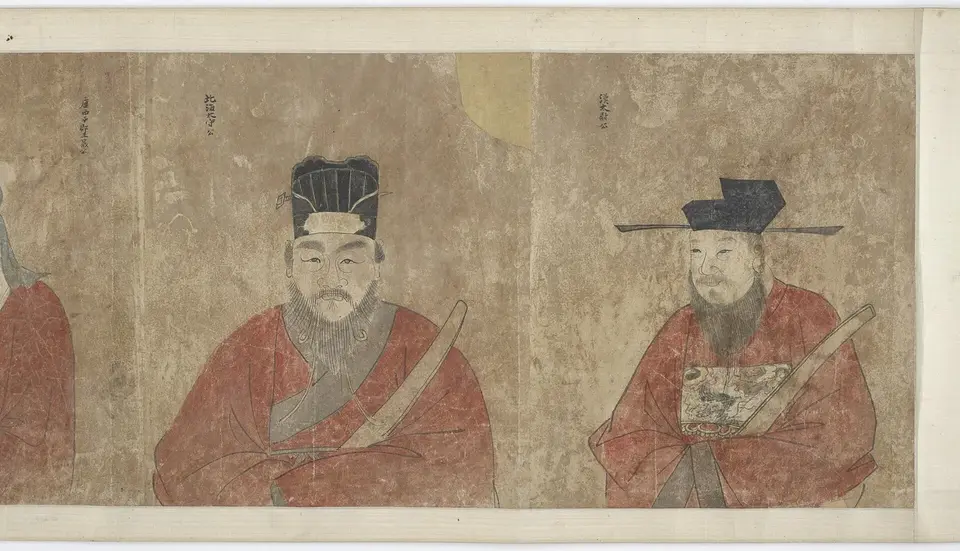
李昉
Li Fang (李昉, 925–996), courtesy name Mingyuan (明远), posthumously honored as Wenzheng (文正), was a native of Raoyang County, Shenzhou (modern Raoyang County, Hengshui City, Hebei Province). He was an illustrious chancellor, classical scholar, and supreme compiler of state encyclopedic collections during the Five Dynasties and early Northern Song dynasty. Originating from a respected northern scholar-official clan, Li gained…
Li Fang (李昉, 925–996), courtesy name Mingyuan (明远), posthumously honored as Wenzheng (文正), was a native of Raoyang County, Shenzhou (modern Raoyang County, Hengshui City, Hebei Province). He was an illustrious chancellor, classical scholar, and supreme compiler of state encyclopedic collections during the Five Dynasties and early Northern Song dynasty. Originating from a respected northern scholar-official clan, Li gained bureaucratic entry through hereditary privilege before passing the imperial civil service examination as jinshi during the Qianyou era of Later Han. Serving as staff secretary to Chancellor Li Gu during Later Zhou's military campaigns against Southern Tang in the Huai River basin, his eloquent dispatches impressed Emperor Shizong, who appointed him Hanlin Academician and Drafter of Imperial Edicts. Following the founding of the Northern Song in 960, Li served under Emperor Taizu as Secretariat Drafter and Chief Hanlin Academician. Under Emperor Taizong, Li Fang was promoted to Assistant Chancellor and subsequently elevated in 983 to Vice Director of the Secretariat, Minister of Civil Personnel, and Chancellor (Joint Manager of Affairs with the Secretariat-Chancellery), serving two separate tenures as prime minister to guide the empire's transition to civilian Confucian governance. Li's most monumental historical achievement was his leadership in compiling three of the Song dynasty's "Four Great Books" (Song Si Da Shu). Beginning in 977, under imperial decree, he directed scholars such as Xu Xuan, Hu Meng, and Song Bai to compile the 1,000-volume imperial encyclopedia Imperial Readings of the Taiping Era (Taiping Yulan), the 500-volume anthology of anomaly tales Extensive Records of the Taiping Era (Taiping Guangji), and the 1,000-volume literary compendium Finest Blossoms in the Garden of Literature (Wenyuan Yinghua). Encompassing 2,500 fascicles, this colossal editorial enterprise preserved thousands of pre-Song ancient texts that would otherwise have perished. Passing away in 996 at seventy-two, Li was posthumously granted the titles of Grand Preceptor and Director of the Palace Secretariat with the supreme posthumous name Wenzheng.
Born into a prominent gentry lineage in Raoyang County, mastering canonical history and prose composition from early youth.
Passed the imperial jinshi examination under Later Han, appointed proofreader in the Palace Library and editor in Jixian Hall.
Accompanied Chancellor Li Gu on campaign against Southern Tang, authoring dispatches that won appointment as Hanlin Academician.
Entered Northern Song administration as Secretariat Drafter and Chief Hanlin Academician Recipient of Edicts under Emperor Taizu.
Elevated by newly enthroned Emperor Taizong to Assistant Chancellor (Participant in Governmental Affairs), advancing Confucian statecraft.
Commissioned by imperial decree to direct the compilation of Taiping Yulan and Taiping Guangji at the Chongwen Academy.
Promoted to Vice Director of the Secretariat and Chancellor, while completing the 1,000-volume Taiping Yulan.
Commissioned to lead the compilation of the massive 1,000-volume imperial literary anthology Wenyuan Yinghua.
Reappointed as Chancellor alongside Lyu Mengzheng, guiding court governance with serene magnanimity.
Passed away in his Kaifeng residence on February 22 at age seventy-two; posthumously honored as Grand Preceptor and Wenzheng.
Li Fang was born during the chaotic warfare of the Five Dynasties in Raoyang County, Shenzhou. Naturally contemplative and intellectually precocious, he immersed himself in classical treatises, historical annals, and literary composition from boyhood.
Initially entering the bureaucracy through ancestral privilege as a ritual acolyte in the Imperial Ancestral Temple, he pursued academic distinction by sitting for the imperial examinations during the Qianyou era of Later Han. Passing the jinshi degree with high marks in 948, he was appointed proofreader in the Palace Library, vice director in the Chancellery, and editor in the Jixian Hall of Scholarly Worthies.
Following the rise of the Later Zhou dynasty, Chancellor Li Gu, admiring Li Fang's administrative judgment and elegant literary prose, enlisted him as private secretarial advisor. In 956 (the 3rd year of the Xiande era), Emperor Shizong launched his southern expedition against Southern Tang, with Li Gu commanding the vanguard armies. Li Fang took charge of military correspondence and strategic proclamations. Reading his dispatches in camp, Emperor Shizong was captivated by their rhetorical majesty, immediately promoting him to vice director of receptions, drafter of edicts, and Hanlin Academician.
In 960, the Chenqiao mutiny established the Northern Song dynasty under Emperor Taizu (Zhao Kuangyin). Recognized for his distinguished literary record, Li Fang was confirmed as Secretariat Drafter and Chief Hanlin Academician Recipient of Edicts, drafting foundation edicts and diplomatic treaties.
Following Emperor Taizong's enthronement in 976, the monarch prioritized civil Confucian governance over military dominance. Appreciating Li's spotless integrity and deep knowledge of court institutions, Taizong appointed him Assistant Chancellor (Participant in Determining Governmental Affairs).
In 983 (the 8th year of the Taiping Xingguo era), Li Fang was elevated to Vice Director of the Secretariat, Minister of Civil Personnel, and Chancellor (Joint Manager of Affairs with the Secretariat-Chancellery). As chief minister, Li served with quiet dignity and profound magnanimity. Aware that the newly consolidated Song state had only recently emerged from decades of militarized coups, he encouraged Emperor Taizong to patronize scholars, restore civil examinations, and fund prefectural academies, steadily solidifying the civil bureaucratic state.
Li Fang's most enduring historical legacy lies in his leadership over the monumental compilation projects of the Northern Song. Having reunified central and southern China, Emperor Taizong assembled tens of thousands of rare manuscripts into the imperial Chongwen Academy.
Determined to showcase civil majesty through comprehensive literary codification, Emperor Taizong issued an imperial edict in 977 appointing Li Fang director of the grand encyclopedic project. Li supervised dozens of prominent scholars, including Xu Xuan, Hu Meng, Song Bai, and Lyu Wenzhong, establishing rigorous editorial criteria.
Working tirelessly over seven years, Li completed the monumental Imperial Readings of the Taiping Era (Taiping Yulan) in 1,000 fascicles in 983. Encompassing 55 categories and citing over 1,600 ancient texts, it formed the largest encyclopedia assembled to that point. Concurrently, Li directed the compilation of Extensive Records of the Taiping Era (Taiping Guangji) in 500 fascicles, creating the definitive collection of ancient and medieval Chinese anomaly tales and fiction.
In 986, Emperor Taizong issued a further decree ordering Li to compile the vast literary anthology Finest Blossoms in the Garden of Literature (Wenyuan Yinghua) in 1,000 fascicles. Selecting and editing masterpieces of prose and poetry spanning from the Han through the Five Dynasties, Li completed the third pillar of Song encyclopedism, successfully rescuing invaluable ancient texts from historical oblivion.
In 988, Li resigned from the chancellorship due to advancing age, being appointed Right Grand Executive Censor. In 991, seeking veteran counsel to harmonize court factions, Emperor Taizong recalled Li to serve a second chancellorship alongside Lyu Mengzheng. Li's calm temperament brought widespread stability to central administration.
Throughout his life, Li Fang was renowned for benevolence and charity. He nurtured gifted younger scholars, protecting outspoken figures such as Wang Yucheng and Kou Zhun from factional reprisals. Living frugally in his chancellery residence, he used his salaries to purchase land and provide stipends for hundreds of impoverished clan members and widows of deceased colleagues.
In 993, Li was permitted to retire with the exalted rank of Grand Minister of Works (Sikong). On February 22, 996 (the 1st day of the 2nd lunar month of the 2nd year of the Zhidao era), he passed away peacefully in Kaifeng at seventy-two. Emperor Taizong grieved profoundly, suspending court for three days, composing an imperial elegiac poem, and posthumously conferring the supreme offices of Grand Preceptor (Taishi) and Director of the Palace Secretariat (Zhongshu Ling), with the preeminent posthumous name Wenzheng.
Li Fang's monumental editorial leadership produced Taiping Yulan (1,000 fascicles), Taiping Guangji (500 fascicles), and Wenyuan Yinghua (1,000 fascicles), representing three-quarters of the famed Song Four Great Books.
Because over seventy percent of the ancient books cited in Taiping Yulan and Taiping Guangji have since disappeared, modern scholars owe the reconstruction of Zhou, Qin, Han, and Tang literature directly to Li's anthologies. His encyclopedic vision preserved the core heritage of ancient Chinese literature and history.
Serving as Chancellor during Emperor Taizong's reign, Li helped oversee the historic transition of the Song state from a militarized regime to a refined civil meritocracy.
By expanding civil examination quotas, founding prefectural academies, and curbing the arbitrary authority of regional commanders, his gentle and measured chancellorship fostered mutual trust between the throne and the emerging literati class.
Li Fang served in exalted offices for half a century without ever uttering a malicious word or participating in factional intrigue. He used his immense stature to discover and protect brilliant talents such as Su Yijian and Wang Yucheng.
His personal philanthropy supported hundreds of clan dependents, establishing an enduring moral benchmark for the scholar-official class that earned him the peerless posthumous honor of Wenzheng.
FIGURES ASSOCIATED WITH THIS DYNASTY