Travel to Yizhou
Traveled to Shu with his clan uncle Fei Boren, remaining in Chengdu to study classics alongside Dong Yun and Xu Shulong.
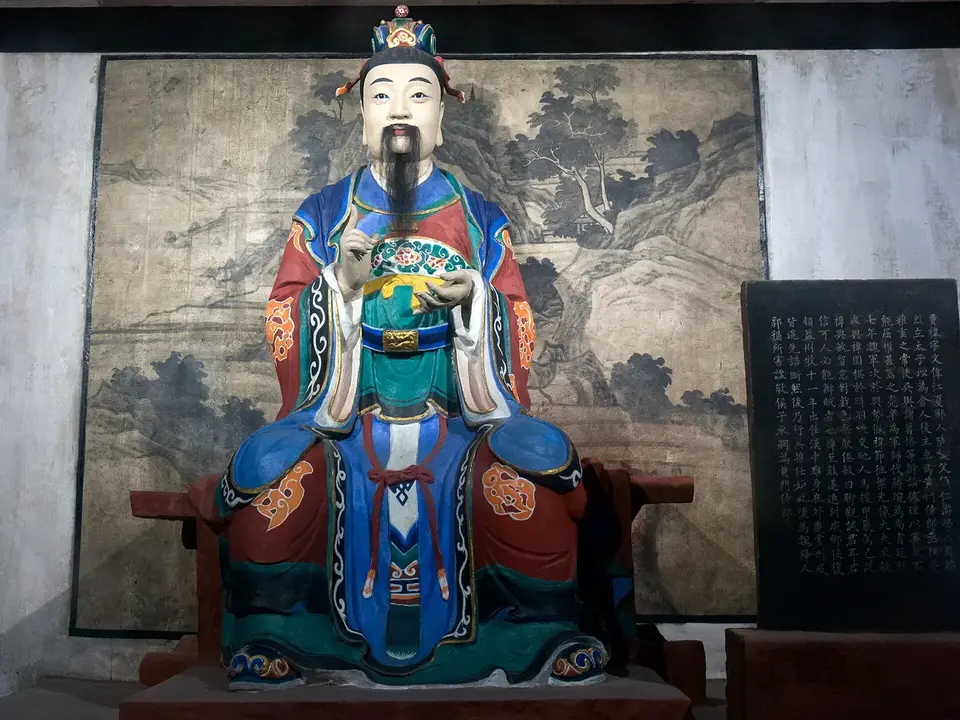
费祎
Fei Yi (费祎, ?–253), courtesy name Wenwei (文伟), was an eminent statesman, diplomat, and supreme military commander of the Shu Han state during the Three Kingdoms Period. Along with Zhuge Liang, Jiang Wan, and Dong Yun, he was revered as one of the Four Chancellors of Shu Han who safeguarded the southwest empire across four decades. Orphaned at a young age, Fei Yi accompanied his paternal relative Fei Boren to Shu,…
Fei Yi (费祎, ?–253), courtesy name Wenwei (文伟), was an eminent statesman, diplomat, and supreme military commander of the Shu Han state during the Three Kingdoms Period. Along with Zhuge Liang, Jiang Wan, and Dong Yun, he was revered as one of the Four Chancellors of Shu Han who safeguarded the southwest empire across four decades. Orphaned at a young age, Fei Yi accompanied his paternal relative Fei Boren to Shu, remaining in Yizhou after Liu Bei established control. Renowned for his intellectual agility, moral composure, and unpretentious character, he entered public service as a personal retainer to the crown prince before rising rapidly through the imperial bureaucracy. During the chancellorship of Zhuge Liang, Fei Yi served as a principal diplomat to Eastern Wu. Facing pointed philosophical debates and aggressive cross-examinations from Sun Quan and intellectual courtiers such as Zhuge Ke, Fei Yi articulated principled rebuttals with calm eloquence, winning Sun Quan's profound respect and reinforcing the critical Wu-Shu diplomatic alliance. Following Zhuge Liang's death, Fei Yi assumed leadership over the central administration as Prefect of the Masters of Writing and later supreme General-in-Chief. In 244, when Cao Wei regent Cao Shuang led one hundred thousand troops into Hanzhong, Fei Yi orchestrated the decisive victory at the Battle of Xingshi, shattering the northern invasion. In governance, he championed economic recovery, maintained administrative efficiency, and prudently restrained Jiang Wei's aggressive military expeditions. In 253, Fei Yi was assassinated at a New Year assembly by Guo Xun, a surrendered Wei general, and was posthumously honored as Marquis Jing.
Traveled to Shu with his clan uncle Fei Boren, remaining in Chengdu to study classics alongside Dong Yun and Xu Shulong.
Appointed Heir Apparent's Retainer upon the installation of Liu Shan as crown prince under Emperor Zhaolie (Liu Bei).
Promoted to Gentleman of the Yellow Gate following Liu Shan's enthronement, serving as a trusted personal attendant within the palace.
Honored by Zhuge Liang upon the southern triumph, appointed Resolute Faith Colonel, and dispatched as envoy to Eastern Wu.
Commended in the First Memorial on the Expedition and named Army Advisor, coordinating communications between Chengdu and Hanzhong.
Appointed Central Protective General and Senior Clerk, consistently mediating intense rivalries between Wei Yan and Yang Yi.
Managed the orderly retreat of imperial armies following Zhuge Liang's death, neutralized Wei Yan's rebellion, and became Rear Army Commander.
Elevated to Prefect of the Masters of Writing, directing central administrative governance while Jiang Wan garrisoned Hanzhong.
Rushed elite reinforcements to Hanzhong and routed Cao Shuang's hundred-thousand-strong host at Mount Xingshi, receiving the title Marquis of Chengxiang.
Assassinated during a New Year banquet in Hanshou by surrendered Wei officer Guo Xun; posthumously designated Marquis Jing.
Fei Yi was born in Meng County, Jiangxia Commandery. His father died during his early childhood, leaving him under the guardianship of his clan relative Fei Boren. Fei Boren's paternal aunt was the mother of Liu Zhang, the Governor of Yizhou, which provided the family with influential regional ties. In 214, Liu Zhang dispatched an escort to bring Fei Boren to Chengdu, and young Fei Yi traveled with him to study in Shu. When Liu Bei conquered the province later that year, Fei Yi decided to settle permanently in the region, cultivating lifelong intellectual friendships with fellow scholars such as Dong Yun of Nan Commandery and Xu Shulong of Runan.
Dong Yun's father, Dong He, held the high office of General Who Controls the Army in Liu Bei's central headquarters. When Xu Shulong suffered the loss of his son, Dong Yun and Fei Yi arranged to attend the funeral together. Dong Yun requested a carriage from his father, but Dong He deliberately assigned them an antiquated, rustic deer cart. Dong Yun appeared visibly embarrassed and reluctant, fearing public humiliation before fashionable society, whereas Fei Yi stepped forward with calm composure and boarded the primitive cart without hesitation. Upon reaching the memorial hall, prominent court dignitaries and Zhuge Liang were already in attendance, surrounded by splendid carriages and grand retinues. Dong Yun remained self-conscious and ill at ease, while Fei Yi interacted cordially with the guests, exhibiting absolute tranquility. When the carriage driver recounted the scene, Dong He remarked to his son: "I used to wonder which of you possessed superior character, but from this day forth, my doubts have been entirely resolved."
In 221, when Liu Bei established the imperial dynasty and invested Liu Shan as heir apparent, Fei Yi and Dong Yun were selected as retainers to the crown prince. Following Liu Shan's accession in 223, Fei Yi was reassigned as Gentleman of the Yellow Gate, attending the young sovereign in the inner halls with exceptional discretion and prudence.
In the autumn of 225, Chancellor Zhuge Liang returned to the capital following the pacification of the southern commanderies. Hundreds of civil and military officials gathered dozens of leagues outside Chengdu to welcome the victorious army. Although many senior ministers surpassed Fei Yi in age, official seniority, and court status, Zhuge Liang publicly invited Fei Yi to share his personal carriage, an extraordinary honor that caused the entire court to regard the young official with immense respect.
Shortly thereafter, Zhuge Liang appointed Fei Yi as Resolute Faith Colonel and sent him on an official embassy to the court of Eastern Wu to restore bilateral strategic trust. Recognizing Fei Yi's youth, Wu statesmen sought to test his resolve. Intellectual luminaries such as Zhuge Ke, Zhang Yan, and Yang Zhi mounted relentless philosophical challenges during formal banquets, firing questions with sharp wit. Fei Yi replied with natural elegance and steadfast reasoning, maintaining complete poise and never yielding ground. On one occasion, an intoxicated Sun Quan bluntly inquired: "Yang Yi and Wei Yan are petty herd-boys. Once the Chancellor passes, they will bring disaster upon your house; why do you gentlemen fail to take precautions?" Fei Yi was taken aback, but his deputy Dong Hui quickly signaled him and remarked that while the two men held personal grudges, neither harbored treasonous designs like Han Xin or Peng Yue, and that abandoning them for fear of future strife was akin to discarding boats for fear of river currents. Sun Quan laughed heartily and accepted the logic. Later, Sun Quan plied Fei Yi with wine before interrogating him on intricate national strategies. Fei Yi gracefully excused himself on grounds of intoxication, returned to his lodgings to write comprehensive analyses, and presented detailed, flawless answers before the assembly the following morning.
Sun Quan was thoroughly captivated by Fei Yi's towering intellect and moral bearing. During a banquet, the Wu monarch unbuckled his personal treasured sword and bestowed it upon Fei Yi. Fei Yi accepted the gift respectfully, declaring: "A sword is an instrument forged to chastise rebellion and suppress violence. May Your Majesty achieve glorious deeds and assist our Han house, so that my humble mission shall not have been in vain." Sun Quan praised him warmly: "You possess the finest virtues under heaven and are destined to become a pillar of the Shu government; I fear you will not be able to visit our eastern lands often." Fei Yi's brilliant diplomacy eliminated mutual suspicions, transforming the Wu-Shu entente into an enduring strategic alliance.
In 227, Zhuge Liang established his military headquarters in Hanzhong to launch the northern campaigns. In his renowned First Memorial on the Expedition, he highlighted Fei Yi, Guo Youzhi, and Dong Yun as exemplars of loyalty and integrity, entreating the sovereign to entrust them with internal affairs. Zhuge Liang recruited Fei Yi as an Army Advisor, stationing him between the front lines and the imperial court to coordinate military directives and imperial memorials.
Within Zhuge Liang's field administration, Vanguard Commander Wei Yan was a peerless warrior renowned for battlefield valor, while Senior Clerk Yang Yi was an administrative genius who handled supplies and organizational logistics. However, the two men despised each other intensely, frequently drawing blades during staff meetings. Zhuge Liang was deeply distressed by their mutual hatred yet unable to resolve it. Fei Yi frequently visited their quarters, sitting between them during meals and conferences, utilizing his impartiality and diplomatic tact to reconcile their disputes. Through Fei Yi's mediation, both Wei Yan's martial bravery and Yang Yi's operational brilliance were harnessed effectively for the northern expeditions. In 231, acting as Central Protective General and Lieutenant General, Fei Yi co-signed the formal memorial that impeached and dismissed Li Yan for neglecting military logistics.
In 234, Zhuge Liang succumbed to illness at the Wuzhang Plains. Confronted with the sudden loss of the supreme commander, Yang Yi concealed the death and dispatched Fei Yi to probe Wei Yan's intentions. Wei Yan obstinately insisted on continuing the campaign independently under his own authority. Fei Yi feigned compliance by offering to co-sign an order, slipped away on horseback, and returned to the main encampment to assist Yang Yi in organizing an orderly retreat. When Wei Yan rebelled and burned the gallery roads, Fei Yi coordinated with Dong Yun to pacify internal panic, swiftly suppressing Wei Yan's uprising and ensuring the survival of the imperial expeditionary force during a period of grave peril.
Following Zhuge Liang's passing, the Shu Han administration navigated the succession smoothly. Emperor Liu Shan appointed Jiang Wan as supreme minister and named Fei Yi Rear Army Commander. In 239, when Jiang Wan led armies north to prepare an amphibious offensive along the Han River, Fei Yi was appointed Prefect of the Masters of Writing, managing central policy in Chengdu. Fei Yi possessed extraordinary administrative aptitude. He could absorb official reports at extraordinary speed, retaining complete comprehension while deciding complex legal matters in a single morning. In the afternoons, he entertained guests and played chess without ever neglecting state business. When Dong Yun succeeded him as Prefect of the Masters of Writing, he attempted to replicate Fei Yi's daily routine, but within ten days public memorials piled up, prompting Dong Yun to exclaim: "Human talent varies so immensely; I can never equal Wenwei's brilliance!" In 243, Fei Yi rose to General-in-Chief and Manager of the Affairs of the Masters of Writing, wielding supreme military and civil authority. The following year, Jiang Wan relinquished the post of Inspector of Yizhou to Fei Yi due to chronic illness, establishing Fei Yi as the supreme head of the empire.
In the spring of 244, Cao Wei regent Cao Shuang led one hundred thousand elite cavalry and infantry through the Luogu Pass toward Hanzhong. The garrison under Wang Ping was vastly outnumbered, creating immense panic. Fei Yi calmly gathered imperial reinforcements and marched north from Chengdu. Prior to departure, Grandee of the Imperial Splendor Lai Min visited his pavilion and invited him to a game of Go. Fei Yi remained completely composed, playing the match to completion. Lai Min sighed with admiration: "I merely tested your resolve; seeing your calm demeanor, I know the enemy will certainly be crushed!"
Arriving at the front line, Fei Yi linked up with Wang Ping and leveraged the rugged terrain of Mount Xingshi to seal the valley exits and wage scorched-earth warfare. Deep within the mountains, the Wei supply trains collapsed, resulting in heavy starvation among pack animals and soldiers. Recognizing the critical turning point, Fei Yi led elite shock divisions to sever the Luogu retreat path and launched coordinated ambushes. The Wei army suffered a devastating rout with tens of thousands of casualties, and Cao Shuang barely escaped. For his decisive leadership at Xingshi, Fei Yi was ennobled as Marquis of Chengxiang.
In 245, Fei Yi returned to Chengdu to consolidate internal administration. In governance, he advocated unpretentious frugality, administrative benevolence, and popular recuperation. Despite holding supreme executive and military authority, he lived in absolute modesty, accumulating no private wealth. His children wore plain coarse garments, ate simple grain, and walked on foot without retinue, indistinguishable from ordinary commoners. When Meng Guang publicly admonished him in 246 for implementing amnesties contrary to classical Confucian jurisprudence, Fei Yi humbly apologized and accepted the critique with sincere grace.
In foreign strategy, Fei Yi recognized that Shu Han's limited territory and depleted resources were vastly inferior to those of Cao Wei. When General of the Guards Jiang Wei repeatedly demanded authorization to launch full-scale northern invasions with the entire army, Fei Yi consistently capped Jiang Wei's troop allocations at ten thousand men. Fei Yi cautioned him: "Our abilities do not equal those of Chancellor Zhuge, yet even he was unable to pacify the Central Plains. How can we expect to succeed? It is far better to protect our frontiers, nurture our population, and await political transformations across the empire, rather than risking the state on a single roll of the dice." Under Fei Yi's steady leadership, the southwestern borders enjoyed lasting security, and the regional economy steadily revived.
In 251, Fei Yi relocated his headquarters to Hanshou and was formally granted full staff-opening privileges. However, his openhearted and forgiving nature led him to disregard personal security. On the New Year of 253, Fei Yi hosted a lavish holiday banquet at Hanshou for civil and military subordinates. Guo Xun, a former Wei general who had surrendered to Shu Han, harbored murderous intentions. Taking advantage of the festive atmosphere and the relaxed guard while Fei Yi was drinking, Guo Xun approached under the guise of offering a toast and suddenly stabbed him with a concealed blade. Fei Yi succumbed to his wounds shortly afterward. The imperial court was plunged into profound mourning, and Emperor Liu Shan wept over his bier, granting him the posthumous title of Marquis Jing and interring him near the western altar of Hanshou.
Fei Yi's diplomatic mission to Eastern Wu in 225 represented a defining milestone in Three Kingdoms foreign relations. Following the catastrophic defeat at Yiling, the strategic partnership between Wu and Shu Han was crippled by profound mutual distrust. Operating as Resolute Faith Colonel, Fei Yi represented the Shu court with dignity and exceptional intelligence.
Engaging with Sun Quan and brilliant Wu courtiers such as Zhuge Ke, Fei Yi maintained unmatched rhetorical elegance and persuasive logic. He not only defended Shu Han's sovereign integrity but also forged an enduring personal bond of mutual admiration with Sun Quan. Sun Quan's presentation of his personal sword signified the full restoration of interstate trust, establishing a stable strategic partnership that shielded Shu Han's eastern flank and enabled focused northern defense for decades.
Within the complex military administration of Zhuge Liang, the personal feud between Wei Yan and Yang Yi presented an explosive internal danger. Throughout the northern campaigns, Fei Yi operated as an indispensable mediator, consistently containing their mutual animosity and preserving operational cohesion during crucial wartime phases.
During the critical transition following Zhuge Liang's death in 234, Fei Yi acted with remarkable decisiveness. He outmaneuvered Wei Yan's attempt to usurp total command, safely reported back to Yang Yi, and organized the retreat of the entire expeditionary force back to Hanzhong. His skillful crisis management prevented the imperial army from collapsing into civil war, preserving the foundational survival of Shu Han.
The Battle of Xingshi in 244 was one of the greatest defensive military victories in Shu Han history. When Wei regent Cao Shuang led one hundred thousand troops south to overwhelm the frontier garrisons, Fei Yi demonstrated peerless strategic resolve and tactical precision.
Arriving at Hanzhong, Fei Yi exploited the logistical vulnerability of the Wei army stranded along the narrow mountain corridors. By occupying the strategic exits of the Luogu Pass and executing coordinated mountain ambushes, he shattered the northern expedition, inflicting massive casualties and capturing vast military stores. This triumph completely eliminated Cao Wei's offensive ambitions against Hanzhong for a generation, securing enduring peace along the northern border.
Fei Yi faithfully preserved the administrative traditions of Zhuge Liang and Jiang Wan, emphasizing popular welfare, institutional discipline, and fiscal restraint. Aware of the immense disparity in demographic and agricultural resources between Shu and Wei, he resolutely rejected reckless expansionism.
By restricting Jiang Wei's northern offensives to limited raids under ten thousand troops, Fei Yi prevented the exhaustion of provincial treasuries and spared the populace from crushing military conscription. His pragmatic stewardship fostered commercial revitalization and social harmony, earning him universal historical praise as an exemplary chancellor who placed the welfare of the people above martial vainglory.
FIGURES ASSOCIATED WITH THIS DYNASTY