Born in Fuqing, Fuzhou, later settling in Xitang, Fuqing, and becoming known as Master Xitang
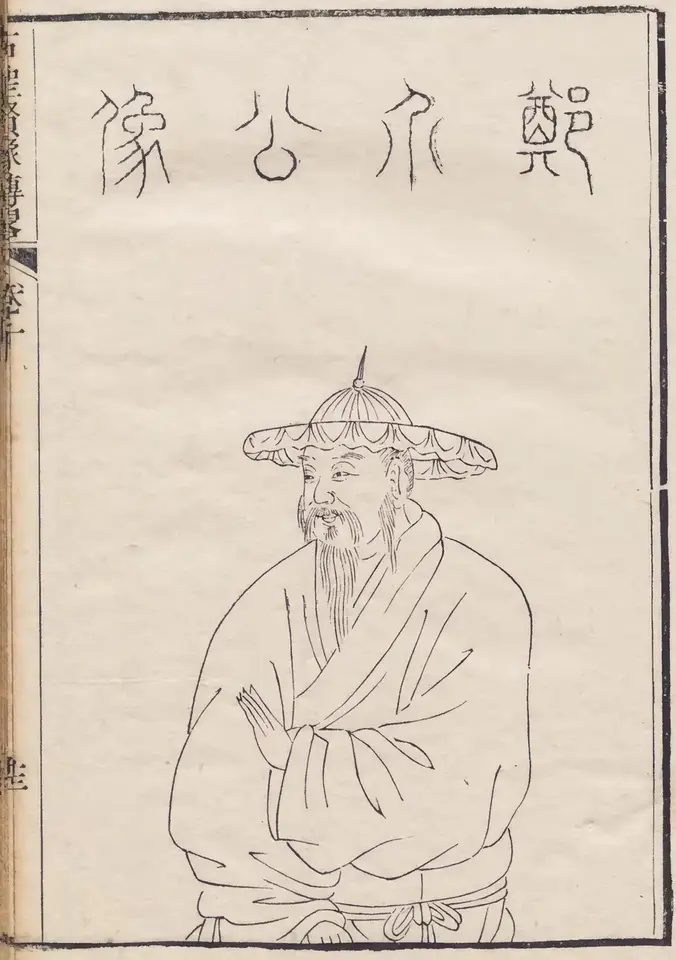
Renowned Remonstrating Official and Poet of the Northern Song Dynasty
Zheng Xia (郑侠)
郑侠
Zheng Xia (郑侠, 1041–1119), courtesy name Jiefu, self-styled Yifu Jushi ("Layman of a Single Whisk") and Daqing Jushi, and respectfully known as "Master Xitang" after settling in Xitang, Fuqing, was a native of Fuqing, Fuzhou (present-day Fuqing City, Fujian Province) and a celebrated remonstrating official and poet of the mid-Northern Song dynasty. Studying diligently at Qingliang Monastery in Jiangning in his youth while…
Northern Song (北宋)
PROFILE
Zheng Xia (郑侠, 1041–1119), courtesy name Jiefu, self-styled Yifu Jushi ("Layman of a Single Whisk") and Daqing Jushi, and respectfully known as "Master Xitang" after settling in Xitang, Fuqing, was a native of Fuqing, Fuzhou (present-day Fuqing City, Fujian Province) and a celebrated remonstrating official and poet of the mid-Northern Song dynasty. Studying diligently at Qingliang Monastery in Jiangning in his youth while accompanying his father, he won the high regard of Jiangning Prefect Wang Anshi. Passing the jinshi examination in the fourth year of the Zhiping era (1067), he served as Judicial Administrator of Guangzhou, where all his rulings on difficult cases were approved by Executive Minister Wang Anshi. However, upon returning to the capital in the fifth year of the Xining era (1072), having witnessed how the Green Sprouts, Service Exemption, Market Exchange, and Baojia New Policies harassed the populace in the provinces, Zheng Xia firmly refused to advance via examination on the New Policies, repeatedly remonstrated with Wang Anshi against their abuses, and was assigned as minor Gate Supervisor of Anshang Gate in the capital. During the severe northern drought of 1073–1074, witnessing starving refugees at Anshang Gate wearing fetters and selling off tiles, timber, and land to repay Green Sprouts government loans, Zheng Xia painted the Painting of Refugees (Liumin Tu) and sent it with a memorial via emergency horse post directly to the Silver Terrace Office for Emperor Shenzong. Sleepless after viewing the painting, Emperor Shenzong issued eighteen measures the next day suspending several New Policies, followed three days later by heavy rain and Wang Anshi's first resignation as prime minister. When reformist partisans Lü Huiqing and Deng Wan counterattacked, Zheng Xia submitted two further paintings contrasting upright ministers of state with sycophantic villains to denounce Lü Huiqing, resulting in his banishment to Yingzhou. Recommended by Su Shi and Sun Jue early in the Yuanyou era as Prefectural School Instructor of Quanzhou, he was banished to Yingzhou a second time during the Shaosheng era and inscribed on the Yuanyou Partisan Stele in the Daguan era, living in honorable poverty at home until his death in the first year of the Xuanhe era (1119) at age seventy-nine. He left behind the Collected Works of Master Xitang and was granted the posthumous name "Jie" in 1213.
- Courtesy Name
- Jiefu (介夫)
- Pseudonym
- Yifu Jushi (一拂居士), Daqing Jushi (大庆居士)
- Alternate Name
- Master Xitang (西塘先生)
- Posthumous Name
- Jie (介)
- Dynasty
- Northern Song (北宋)
- Native Place
- Fuqing, Fuzhou (present-day Fuqing City, Fujian Province) (福州福清)
- Birth Date
- 1041 (1st year of the Qingli era)
- Death Date
- 1119 (1st year of the Xuanhe era)
- Age at Death
- 79
- Official Posts
- Judicial Administrator of Guangzhou (光州司法参军), Gate Supervisor of Anshang Gate (监安上门), Prefectural School Instructor of Quanzhou (泉州州学教授), Gentleman for Court Service (朝奉郎, posthumous)
- Identity
- Renowned Remonstrating Official and Poet of the Northern Song Dynasty
LIFE TIMELINE
Studied in Poverty
Accompanied his father Zheng Hui, Alcohol and Tax Supervisor of Jiangning, studying diligently amid family poverty
Recognized by Wang Anshi
Studied in seclusion at Qingliang Monastery in Jiangning, winning the admiration of Jiangning Prefect Wang Anshi, who sent his disciple Yang Ji to study alongside him
Passed the Jinshi Examination
Passed the jinshi examination at age twenty-seven and was appointed Judicial Administrator of Guangzhou in 1069, earning Wang Anshi's approval for his judicial rulings
Refused New Policies Exam
Returned to the capital upon completing his term, declined promotion through the New Policies examination, remonstrated with Wang Anshi against policy abuses, and became Gate Supervisor of Anshang Gate
Presented the Painting of Refugees
Submitted the Painting of Refugees via emergency post in the third month, prompting Emperor Shenzong to suspend eighteen New Policy measures before Lü Huiqing had him exiled to Yingzhou
Pardoned and Appointed Instructor
Pardoned upon Emperor Zhezong's accession and appointed Prefectural School Instructor of Quanzhou on the joint recommendation of Su Shi and Sun Jue
Second Exile to Yingzhou
Stripped of office and banished to Yingzhou a second time during Prime Minister Zhang Dun's purge of Yuanyou partisans
Restored Under Emperor Huizong
Pardoned and restored to his former rank as Instructor of Quanzhou upon Emperor Huizong's accession
Listed on the Partisan Stele
Listed fifteenth among remaining officials on Cai Jing's Yuanyou Partisan Stele, stripped of official status, and lived in retirement at home for twelve years
Died at Home
Died in the eighth month at age seventy-nine; posthumously named Gentleman for Court Service in 1192 and granted the posthumous name Jie in 1213
Relationship graph
BIOGRAPHY
Biography
Diligent Study at Qingliang Monastery and Judicial Service in Guangzhou
Zheng Xia was born in the first year of the Qingli era (1041) in Fuqing, Fuzhou (present-day Fuqing City, Fujian Province), and later moved with his family to Xitang in Fuqing, earning the scholarly title "Master Xitang." In the fourth year of the Jiayou era (1059), his father Zheng Hui served as Alcohol and Tax Supervisor in Jiangning Prefecture (present-day Nanjing, Jiangsu Province). Because his father held a minor post with a meager salary and maintained strict integrity while supporting many younger children, the family lived in poverty, spurring Zheng Xia to devote himself to study. In the second year of the Zhiping era (1065), Zheng Xia joined his father in Jiangning and studied in seclusion at Qingliang Monastery. Wang Anshi, then Prefect of Jiangning, heard of his literary talent, invited him for an interview, encouraged him to become a pillar of the state, and sent his student Yang Ji to study alongside him at Qingliang Monastery.
In the fourth year of the Zhiping era (1067), Zheng Xia passed the jinshi examination in the upper ranks at age twenty-seven. When Wang Anshi became Participant in Determining Governmental Matters in the second year of the Xining era (1069) and launched the Xining Reforms, he promoted Zheng Xia to Judicial Administrator of Guangzhou (present-day Huangchuan County, Henan Province). Every difficult case investigated and reported by Zheng Xia was approved by Wang Anshi as proposed, filling Zheng Xia with gratitude and a resolve to repay Wang Anshi's patronage with utter candor and loyalty.
Remonstrating Against New Policy Abuses and Supervising Anshang Gate
In the fifth year of the Xining era (1072), upon completing his term in Guangzhou and reporting to the capital, Zheng Xia called upon Prime Minister Wang Anshi. At that time, the court had instituted special examinations on the New Policies to promote officials rapidly to capital posts, and Wang Anshi intended to advance Zheng Xia through this channel. Having witnessed firsthand the hardships caused by the New Policies in the provinces, Zheng Xia declined on the pretext that he had not mastered the new statutes. In subsequent meetings, when Wang Anshi asked what he had observed, Zheng Xia frankly detailed how the Green Sprouts, Service Exemption, Baojia, and Market Exchange policies, alongside frontier military campaigns, were harassing the common people in implementation. When Wang Anshi made no reply, Zheng Xia ceased visiting in person but continued sending letters urging reform, resulting in his assignment as minor Gate Supervisor of Anshang Gate in Kaifeng.
Still valuing his integrity, Wang Anshi sent his son Wang Pang and later his retainer Li Dongmei to offer Zheng Xia the post of Examining Editor in the newly established Bureau for the Revision of the Classics. Zheng Xia declined: "I have read too little to fill the important post of Examining Editor. I came to study at the Prime Minister's gate to broaden my knowledge for the benefit of the people, yet the Prime Minister speaks only of official rank first—how shallow a way to treat a scholar of the state! If the Prime Minister truly wishes to advance me, why not adopt one or two of my proposals that benefit the people so that I may accept promotion without shame?" When the Market Exchange Law forced even water-carriers, barbers, and porridge- and tea-peddlers in the capital to pay commercial taxes exceeding their capital, Zheng Xia relayed their plight through Li Dongmei, persuading Wang Anshi to exempt petty vendors and reduce heavy merchant taxes by seventy percent.
Submitting the Painting of Refugees and Twice Exiled to Yingzhou
From the autumn of the sixth year (1073) to the third month of the seventh year (1074) of the Xining era, a severe drought parched northern China. Streams of starving refugees fled down the roads while local officials ruthlessly pressed them to repay Green Sprouts loans with interest. On duty at Anshang Gate, Zheng Xia witnessed ragged refugees eating wheat bran or tree bark and grass roots while wearing iron chains and wooden cangues, tearing down their own roof tiles and timbers and selling their land and children to pay government debts. Knowing Wang Anshi would no longer listen, Zheng Xia painted the scenes he witnessed into the Painting of Refugees (Liumin Tu) and composed a memorial begging the court to abolish the harmful policies. Refused by the Postern Office, Zheng Xia risked his life by sending the package via emergency military horse post directly to the Silver Terrace Office for Emperor Shenzong, vowing in his memorial: "If Your Majesty puts my words into practice and it does not rain within ten days, I beg to be beheaded outside the Xuande Gate for the crime of deceiving the sovereign!"
Unrolling the Painting of Refugees repeatedly and sighing deeply, Emperor Shenzong carried the scroll into his bedchamber inside his sleeve and could not sleep that night. The next morning, he ordered Kaifeng Prefecture to remit guild exemption fees, the State Finance Commission to investigate the Market Exchange Office, the Court of Agricultural Supervision to open Ever-Normal Granaries for relief, the military commands to report on the Xihe campaign, and the circuits to report on refugee displacement, while suspending Green Sprouts and Service Exemption collections and abolishing the Square Fields and Baojia laws—eighteen measures in all—followed by an edict of self-reproach seeking frank counsel. Three days later, heavy rain fell across Kaifeng. When the executive ministers entered to offer congratulations, Emperor Shenzong showed them Zheng Xia's painting and memorial and rebuked them; the ministers bowed twice in apology, and Wang Anshi requested dismissal as prime minister.
Furious upon learning that a minor gate supervisor had prompted the suspension of the New Policies, reformist partisans handed Zheng Xia over to the Censorate forunauthorized use of the emergency horse post. Lü Huiqing and Deng Wan wept before Emperor Shenzong until the emperor restored the New Policies. Seeing Wang Anshi recommend Lü Huiqing as Participant in Determining Governmental Matters upon stepping down, Zheng Xia submitted another memorial accompanied by two paintings—Upright Gentlemen and Ministers of State (depicting Wei Zheng, Yao Chong, and Song Jing) and Crooked Villains and Sycophantic Ministers (depicting Li Linfu and Lu Qi)—likening Lü Huiqing to Li Linfu and Lu Qi. Enraged, Lü Huiqing had Zheng Xia sentenced to restricted residence in Tingzhou for slander and then recalled him at Taikang County with the aim of putting him to death. Emperor Shenzong intervened: "What Zheng Xia spoke was not for himself; his loyalty is commendable—how can he be severely punished?" Exiled instead to Yingzhou (present-day Yingde, Guangdong Province), Zheng Xia lived in a dilapidated monk's hut, where local residents rich and poor alike revered him, sent their sons to study under him, and built him a house. Returning home later with only a single fly-whisk in his baggage, he styled himself "Yifu Jushi."
Inscribed on the Partisan Stele and Lasting Legacy
Pardoned upon Emperor Zhezong's accession in the first year of the Yuanyou era (1086), Zheng Xia returned to Fuqing and, on the joint recommendation of Su Shi and Sun Jue, was appointed Prefectural School Instructor of Quanzhou. When Prime Minister Zhang Dun purged the "Yuanyou Partisans" in the fourth month of the first year of the Shaosheng era (1094), Zheng Xia was stripped of office and banished to Yingzhou a second time.
Restored to his former rank upon Emperor Huizong's accession in 1100, Zheng Xia was listed fifteenth among remaining officials when Cai Jing erected the Yuanyou Partisan Stele in the first year of the Daguan era (1107), stripping him of official status. Living in quiet poverty at home in Xitang, Fuqing, for twelve years, he remarked: "Having no merit toward the state and no virtue toward the people, if I wore fine clothes and ate delicacies, how would I differ from a thief?" He died in the eighth month of the first year of the Xuanhe era (1119) at age seventy-nine, leaving the twenty-scroll Collected Works of Xitang. In 1192 Emperor Guangzong posthumously conferred upon him the rank of Gentleman for Court Service and appointed his grandson Zheng Jiazheng as Magistrate's Aide of Shanyin, and in 1213 Emperor Ningzong granted him the posthumous name "Jie."
Personal Relationships
- Father: Zheng Hui (Northern Song official who served as Alcohol and Tax Supervisor of Jiangning Prefecture with strict integrity)
- Grandson: Zheng Jiazheng (Southern Song official appointed Magistrate's Aide of Shanyin in 1192 when the court honored Zheng Xia's loyalty)
- Patron and Political Counterpart: Wang Anshi (Northern Song prime minister who admired and promoted Zheng Xia in Jiangning and Guangzhou before breaking with him over the Xining Reforms)
- Monarch: Zhao Xu (Emperor Shenzong of Song, who suspended eighteen New Policy measures upon viewing Zheng Xia's Painting of Refugees and spared his life against Lü Huiqing)
- Political Opponent: Lü Huiqing (Northern Song Participant in Determining Governmental Matters whom Zheng Xia likened to Li Linfu and Lu Qi and who had Zheng Xia exiled to Yingzhou)
- Political Ally: Su Shi (Northern Song literary master and statesman who admired Zheng Xia's integrity and jointly recommended him with Sun Jue as Instructor of Quanzhou)
Historical Evaluations
- Emperor Shenzong Zhao Xu defended Zheng Xia's loyalty when Lü Huiqing sought to have him executed: "What Xia spoke was not for his own person; his loyalty and sincerity are commendable—how could he be severely punished?"
- The Yuan dynasty historians Tuotuo et al. recorded in the Biography of Zheng Xia in the Song Shi: "After Xia was banished to Yingzhou, the people of Yingzhou, whether rich or poor, all respected him, sending their sons and younger brothers to study under him and building a house for him to dwell in."
- The Ming dynasty Grand Secretary Ye Xianggao composed a couplet for the Shrine of Master Yifu in Fuqing praising Zheng Xia: "His remonstrance drafts ran to thousands of words, proving at last that a painting could awaken the sovereign; his returning baggage held only a single fly-whisk, showing for the first time that even a zither and a crane are an encumbrance."
- The Qing dynasty critic Wang Shizhen commented on his poetry in Juyi Lu: "Zheng Xia's poetry stands between Bai Juyi and Meng Jiao."
Related Entries
- Wang Anshi
- Xining Reforms
- Zhao Xu
- Lü Huiqing
- Su Shi
FIGURES ASSOCIATED WITH THIS DYNASTY
Bibliography
- Tuotuo et al. (Yuan), Song Shi (History of Song), Scroll 321, Biography of Zheng Xia, Beijing: Zhonghua Book Company, 1977.
- Zheng Xia (Song), Xitang Ji (Collected Works of Xitang), Wenyuange Siku Quanshu edition, Taipei: Taiwan Commercial Press, 1986.
- Li Tao (Song), Xu Zizhi Tongjian Changbian (Extended Continuation to the Comprehensive Mirror in Aid of Governance), Beijing: Zhonghua Book Company, 2004.