Birth in Nanfeng
Born into a family of scholars in Nanfeng, exhibiting exceptional memory and reading thousands of volumes from infancy.
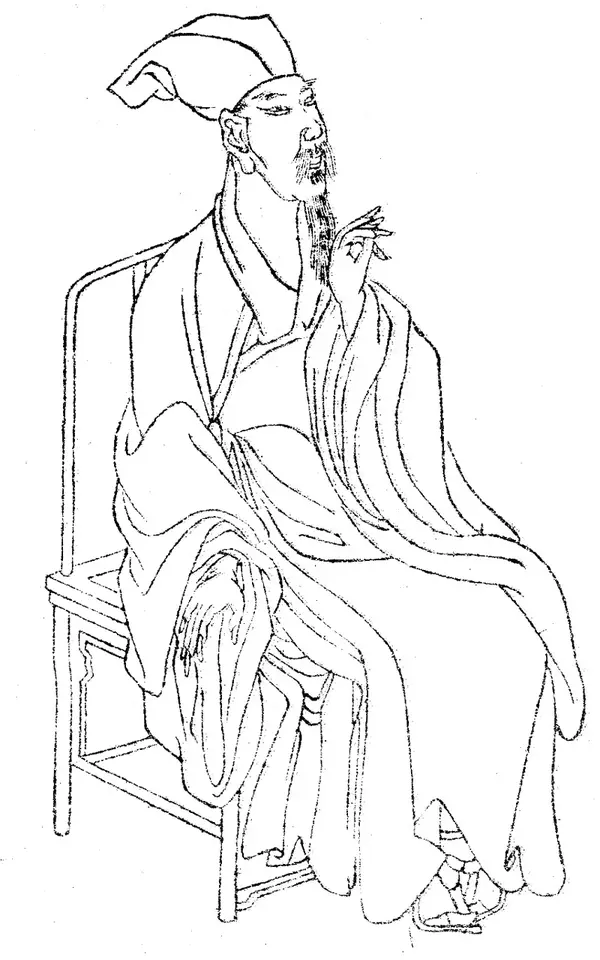
曾巩
Zeng Gong (曾巩, 1019–1083), courtesy name Ziguo (子固), posthumous name Wending (文定), scholarly revered as the "Master of Nanfeng" (Nanfeng Xiansheng), was a renowned Northern Song literary master, historian, and statesman celebrated as one of the Eight Great Masters of the Tang and Song. Born into a prominent family of Confucian scholars in Nanfeng, Jiangxi, he demonstrated extraordinary memory and intellectual brilliance…
Zeng Gong (曾巩, 1019–1083), courtesy name Ziguo (子固), posthumous name Wending (文定), scholarly revered as the "Master of Nanfeng" (Nanfeng Xiansheng), was a renowned Northern Song literary master, historian, and statesman celebrated as one of the Eight Great Masters of the Tang and Song. Born into a prominent family of Confucian scholars in Nanfeng, Jiangxi, he demonstrated extraordinary memory and intellectual brilliance from early childhood, mastering thousands of classical texts and composing extensive essays such as the Six Discourses (Liu Lun) by the age of twelve. In his youth, he journeyed to Kaifeng, where he presented his Policy Essays on Current Affairs (Shiwu Ce), formed a lifelong friendship with Wang Anshi, and was warmly received by the literary leader Ouyang Xiu, who praised his writings—including masterpieces like Record of the Pavilion for Refreshing the Mind (Xingxinting Ji)—and championed him as a foremost vanguard of the Ancient Prose Movement; his writings were later compiled into the fifty-volume Collected Works of the Yuanfeng Era (Yuanfeng Leigao). In the civil examinations, Zeng Gong repeatedly encountered setbacks due to the reigning fashion for ornate and parallel prose, until 1057, when Ouyang Xiu presided over the imperial examinations to reform literary standards, allowing Zeng Gong, his younger brother Zeng Bu, and other kin to pass the jinshi examinations simultaneously. In his early official career, Zeng Gong served in the imperial academies for more than a decade, directing the collation, textual criticism, and restoration of numerous classical works from the pre-Qin, Han, and Six Dynasties periods, including Strategies of the Warring States, Garden of Stories, and New Prefaces, thereby making foundational contributions to Chinese bibliography and textual scholarship. In local governance, Zeng Gong served as prefectural administrator across Yue, Qi, Xiang, Hong, Fu, Ming, and Bo prefectures. He was celebrated for his administrative rigor, incorruptibility, and humanitarian relief measures. In Yue Prefecture, he instituted an innovative grain stabilization and famine relief system that saved tens of thousands of lives during severe drought; in Qi Prefecture, he dismantled entrenched criminal networks and eradicated local bandits through rigorous community defense systems; and in Hong Prefecture, he transformed public residences into medical isolation centers during an epidemic, providing state-funded medicines and meals. In his later years, Emperor Shenzong summoned him to court, praised his fiscal philosophy of state austerity, appointed him to compile the dynastic history of the Five Reigns, and elevated him to Secretariat Drafter. His prose, renowned for its clarity, moral gravitas, and structural precision, exerted a profound influence on subsequent Chinese literary traditions.
Born into a family of scholars in Nanfeng, exhibiting exceptional memory and reading thousands of volumes from infancy.
Accompanied his father to Kaifeng, forged an intimate friendship with Wang Anshi, and submitted political essays to Ouyang Xiu.
Returned to his hometown upon his father's death to observe mourning, shoulder family debts, and educate his younger brothers and sisters.
Passed the metropolitan examination under Ouyang Xiu alongside his brothers Zeng Bu and Zeng Mou, astonishing the capital.
Recommended by Ouyang Xiu to serve as Academy Auxiliary, collating and editing rare ancient manuscripts in imperial archives.
Appointed Vice Prefect of Yue Prefecture during severe famine, introducing market-based price stabilization and saving tens of thousands.
Promoted to Prefect of Qi Prefecture, rigorously executing entrenched crime syndicates and establishing effective neighborhood patrol watches.
Administered Hong Prefecture during a virulent plague, converting government buildings into isolation clinics with free state medicine.
Granted audience by Emperor Shenzong en route to Cang Prefecture, impressing the sovereign with proposals on imperial austerity.
Appointed to oversee the Compilation Institute to draft the Official History of the Five Reigns, and promoted to Secretariat Drafter.
Passed away in Jiangning at the age of sixty-five; later honored with the posthumous title of Wending.
Zeng Gong was born in 1019 in Nanfeng, Jianchang Military Prefecture. His family was renowned across southern China for Confucian scholarship; his grandfather Zeng Zhanyao had served as Bureau Director in the Ministry of Revenue in the early Song and was famous for unyielding remonstrance, while his father Zeng Yizhan attained the jinshi degree and served as Court Gentleman for Ceremonial and local magistrate. Reared in this intellectually disciplined environment, Zeng Gong demonstrated precocious intelligence, committing classical commentaries to memory with singular speed and drafting essays marked by dignified prose.
At the age of twelve, Zeng Gong composed Six Treatises, which astonished local scholars with its penetrating historical insights and logical coherence. While his father served in Rugaoxian, prominent scholars recognized the boy as an extraordinary talent destined for state service. Throughout his adolescence, Zeng Gong devoted himself to practical statecraft and classical exegesis, rejecting superficial literary ornamentation in favor of moral clarity and social utility.
In 1037, the eighteen-year-old Zeng Gong accompanied his father to the capital of Kaifeng. There, he encountered the writings of Wang Anshi, whose profound intellect and unconventional spirit matched his own. The two young scholars quickly developed an enduring bond of mutual respect. During his studies at the Imperial Academy, Zeng Gong submitted his political treatises to Ouyang Xiu, who was then leading the vanguard against ornate literary styles.
Ouyang Xiu was immensely impressed by Zeng Gong's writings, praising his prose as surpassing contemporary scholars and inviting him into his intellectual circle. In turn, Zeng Gong introduced Wang Anshi to Ouyang Xiu, inaugurating an influential collaborative epoch in Song intellectual history. Despite his early literary renown, Zeng Gong's straightforward and analytical prose diverged from the elaborate parallel phrasing demanded by conservative examiners, causing him to fail multiple early examination attempts. He endured these disappointments with tranquility, continuing his historical studies and moral cultivation.
In 1047, when Zeng Gong was twenty-nine years old, his father died while holding local office. The family was plunged into severe financial hardship. As the eldest son, Zeng Gong immediately renounced personal examination ambitions, escorted his father's coffin back to Nanfeng, and assumed the full burden of providing for his stepmother, four younger brothers, and nine unmarried sisters.
During a decade of domestic seclusion, Zeng Gong engaged in personal farming while observing mourning rites with absolute filial devotion. He personally instructed his younger siblings in classical literature and moral conduct under dim oil lamps every evening. Under his rigorous tutelage, his brothers Zeng Bu, Zeng Zhao, and Zeng Mou developed outstanding literary and scholarly capabilities, ultimately elevating the Nanfeng Zeng family into one of the most prominent bureaucratic clans of the Northern Song.
In 1057, Ouyang Xiu was appointed chief examiner of the metropolitan examinations and decisively eliminated ornate parallel prose in favor of direct, substantive argumentation. Zeng Gong, together with his brothers Zeng Bu and Zeng Mou and his cousin Zeng Fu, passed the examination with high honors, creating a celebrated literary sensation in Kaifeng.
Following an initial posting as Staff Supervisor in Taiping Prefecture, where he distinguished himself through fair judicial decisions, Zeng Gong was summoned to the capital in 1060 upon the recommendation of Ouyang Xiu. He was appointed Editorial Examiner in the Institutes and Archives and subsequently Academy Auxiliary. Over the next decade, he immersed himself in the imperial libraries, collating, correcting, and restoring centuries of damaged classical texts that had suffered corruption during the Five Dynasties.
He edited authoritative editions of Strategies of the Warring States, Garden of Stories, New Prefaces, Biographies of Exemplary Women, History of Liang, History of Chen, and ancient legal codes. For each major work, he authored extensive scholarly prefaces that analyzed textual transmission, ideological lineage, and historical accuracy, establishing foundational standards for Chinese philology and critical bibliography.
In 1069, following his service in compiling the Imperial Records of Emperor Yingzong, Zeng Gong was assigned as Vice Prefect of Yue Prefecture. Soon after his arrival, the region was struck by catastrophic drought, leading to widespread harvest failures and severe starvation among tenant farmers.
Rather than relying solely on slow bureaucratic relief from the central court, Zeng Gong promptly required all wealthy landholders and merchants across subordinate counties to submit audited declarations of their private grain reserves within three days. The resulting tally revealed over one hundred and fifty thousand piculs of stored grain. Zeng Gong persuaded these wealthy families to release their reserves into the market at stabilized prices slightly below normal commercial rates, preventing hoarding and speculative price inflation. Simultaneously, he distributed grain from state granaries and organized public soup kitchens for the destitute, while employing able-bodied refugees in dredging urban canals. Through these measures, Yue Prefecture survived the disaster without casualties from starvation.
In 1072, Zeng Gong was elevated to Prefect of Qi Prefecture in modern Shandong. The region was notoriously turbulent, plagued by endemic banditry and powerful local crime rings that intimidated judicial officers and terrorized commoners. Chief among these was the Zhang Ba syndicate, which had dominated the region for decades through violence, extortion, and official corruption.
Upon assuming office, Zeng Gong defied threats from influential patrons, secretly collected evidence through trustworthy deputies, and apprehended Zhang Ba along with thirty principal conspirators in a swift strike. The ringleaders were executed, and their accomplices were banished to border garrisons. To ensure long-term stability, Zeng Gong reorganized the baojia mutual surveillance system, training civilian neighborhood defense groups to mount night patrols and establishing systematic guest registries in all inns and monasteries. Within months, violent crime ceased entirely, and the population enjoyed unprecedented peace.
Zeng Gong subsequently governed Xiang, Hong, Fu, Ming, and Bo prefectures, leaving a consistent record of benevolent and disciplined administration. In Fu Prefecture, he conducted thorough cadastral surveys to uncover hidden monastic estates, relieving ordinary peasants from disproportionate taxation. In Ming Prefecture, he directed the reinforcement of coastal seawalls and dredged strategic waterways to protect agricultural lands against ocean surges.
In 1077, during his tenure as Prefect of Hong Prefecture, a severe epidemic erupted amid hot weather and the rotation of military garrisons, infecting thousands of soldiers and civilians. Zeng Gong immediately requisitioned vacant public offices, private villas, and Buddhist monasteries, transforming them into clean isolation centers. He mobilized medical officers, financed the purchase of medicinal herbs from the prefectural treasury, and provided prepared decoctions three times daily. He also established communal kitchens providing free congee and organized sanitary teams to disinfect public spaces. His systematic quarantine measures rapidly curbed the outbreak, saving countless lives.
In 1080, while traveling to assume the prefecture of Cang Prefecture, Zeng Gong was granted an imperial audience by Emperor Shenzong in Kaifeng. The emperor extensively questioned him regarding imperial finances, administrative reform, and defense policy. Zeng Gong candidly argued that sound fiscal governance required reducing unnecessary imperial expenditure and avoiding aggressive tax extraction from the populace, summarizing his view with the principle that institutional frugality is the foundation of wealth.
Emperor Shenzong was deeply impressed, retaining Zeng Gong in the capital as Controller of the Office of the Three Ranks and Auxiliary in the Longtu Pavilion. In 1081, the court initiated the compilation of the Official History of the Five Reigns. Recognizing Zeng Gong's immense historical erudition and impartiality, the emperor appointed him Imperial Diarist and Compiler and Supervisor of the Compilation Institute. Shortly thereafter, he was elevated to Secretariat Drafter, drafting imperial edicts noted for their solemnity, elegance, and balance.
In 1082, weakened by decades of relentless administrative labor and profound grief following the death of his stepmother, Zeng Gong requested relief from central duties and retired to Jiangning to seek medical treatment. He passed away peacefully in the fourth month of 1083 at the age of sixty-five.
Emperor Shenzong expressed deep sorrow, dispatching an imperial envoy to offer sacrifices and granting him the posthumous title of Grand Master for Pure Discussion. During the Southern Song Shaoxing era, the court conferred upon him the posthumous name of Wending. His collected works, Yuanfeng Leigao, became an essential text of classical Chinese prose, securing his place as an enduring pillar of Chinese literary history.
Zeng Gong's most profound scholarly contribution was his decade-long restoration and critical editing of fragmented ancient literature in the imperial archives. Following the chaos of the Five Dynasties, imperial collections suffered from severe textual corruption, lost bamboo slips, and scribal errors. Zeng Gong applied rigorous philological scrutiny, collating divergent editions and correcting thousands of historical discrepancies.
In restoring Strategies of the Warring States, he searched public and private collections to establish a coherent chronology of Warring States diplomatic maneuvers. In revising Liu Xiang's Garden of Stories, New Prefaces, and Biographies of Exemplary Women, he reconstructed obscured historical anecdotes and textual genealogies. Crucially, he composed comprehensive prefaces for each edition, elucidating the authors' historical context, textual transmission, and philosophical significance, thereby establishing modern standards for Chinese bibliographical research.
During the devastating famine in Yue Prefecture in 1069, Zeng Gong demonstrated sophisticated economic insight. Recognizing that arbitrary state price controls or forcible seizures would cause merchants to conceal supplies, he used compulsory grain auditing to deter hoarding while using public reserves to inject supply into the market at reasonable rates.
He stratified impoverished households into three administrative tiers, providing low-interest grain loans to struggling farmers while granting unconditional relief to the disabled and elderly. Concurrently, he mobilized able-bodied laborers to dredge urban moats and repair regional irrigation channels, paying wages in food to prevent civil unrest while improving local agricultural infrastructure for future years.
In Qi Prefecture, Zeng Gong tackled the deep-seated problem of rural gangsterism aligned with corrupt local clerks. The entrenched Zhang Ba crime syndicate had maintained local dominance through bribery and violence. Zeng Gong personally conducted discreet inquiries, secured unassailable legal testimony, and dismantled the network in a single coordinated operation.
To prevent the recurrence of lawlessness, he institutionalized an interlocking mutual responsibility system. Ten households formed a primary mutual security unit under an elected elder who conducted scheduled patrols. Inns and monasteries were mandated to maintain rigorous registers of travelers, which were reviewed daily by prefectural magistrates. These measures deprived criminal elements of concealment, restoring civil tranquility to northern trade corridors.
Zeng Gong's response to the 1077 epidemic in Hong Prefecture represents one of the earliest recorded examples of institutionalized urban quarantine in Chinese history. Recognizing that overcrowding fueled contagion, he converted hundreds of vacant public chambers and suburban temples into dedicated medical wards.
He centralized the procurement and distribution of pharmaceuticals under the municipal treasury, ensuring that doctors dispensed standard remedies rather than fraudulent nostrums. Dedicated public workers delivered cooked meals and boiled water directly to quarantined patients, while sanitizing facilities with medicinal herbs. This coordinated municipal intervention halted disease transmission within weeks.
As a prominent member of the Eight Great Masters of the Tang and Song, Zeng Gong championed the doctrine that literature must serve moral truth and practical statecraft. In concert with Ouyang Xiu and Wang Anshi, he resisted empty stylistic vanity in favor of clear, persuasive, and logically coherent prose.
His distinctive literary style, celebrated as Nanfeng prose, was characterized by balanced syntax, analytical depth, and moral equilibrium. Whether drafting monumental political petitions such as First Letter to Academician Ouyang or composing reflective narrative essays such as Record of the Ink Pond and Record of the Awakening Heart Pavilion, he demonstrated that prose could achieve supreme elegance through structural rigor and substantive sincerity.
FIGURES ASSOCIATED WITH THIS DYNASTY