Birth in Xingyang
Born into a minor branch of the imperial house in Zhengzhou, raised amid modest scholarly traditions.
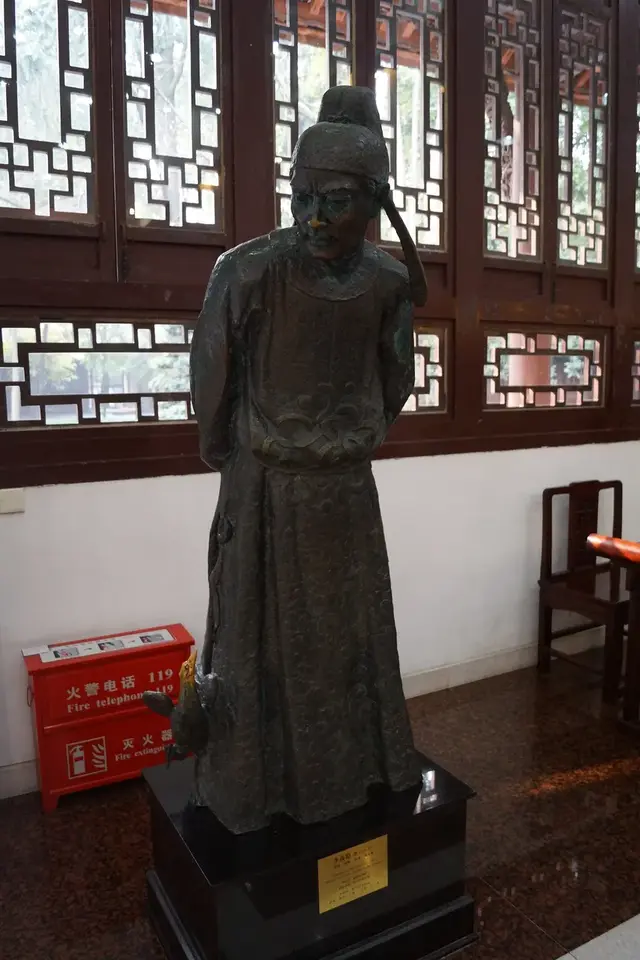
李商隐
Li Shangyin (李商隐, c. 813 – c. 858), courtesy name Yishan (义山), also known historically as Li Yishan (李义山), art names Yuxisheng (玉谿生) and Fannansheng (樊南生), was a native of Henei, Huaizhou (present-day Qinyang, Henan Province), born in Xingyang, Zhengzhou. He stands as one of the most brilliant and enigmatic poets and parallel prose masters of the late Tang Dynasty, celebrated alongside his contemporary Du…
Li Shangyin (李商隐, c. 813 – c. 858), courtesy name Yishan (义山), also known historically as Li Yishan (李义山), art names Yuxisheng (玉谿生) and Fannansheng (樊南生), was a native of Henei, Huaizhou (present-day Qinyang, Henan Province), born in Xingyang, Zhengzhou. He stands as one of the most brilliant and enigmatic poets and parallel prose masters of the late Tang Dynasty, celebrated alongside his contemporary Du Mu as the "Lesser Li-Du" (Xiao Li-Du) and with Wen Tingyun as "Wen-Li". Originating from a faded branch of the imperial Tang royal house, he lost his father at the age of ten and endured extreme youth poverty, supporting his widowed mother and younger siblings through manual copying and grain milling. Recognizing his literary genius, Linghu Chu, Military Governor of the Tianping Circuit, took the young scholar under his wing, instructing him in parallel prose composition, providing financial patronage, and introducing him to capital circles. In 837, bolstered by the recommendation of Linghu Chu's son Linghu Tao, Li Shangyin achieved success in the metropolitan examinations (jinshi examination). However, his marital alliance soon plunged him into catastrophe. In 838, Li Shangyin accepted appointment under Wang Maoyuan, Military Governor of Jingyuan, who was so impressed by his talents that he gave him his daughter in marriage. At the time, the Tang court was torn by the vicious Niu-Li factional struggle: the Linghu family led the Niu faction, while Wang Maoyuan was aligned with Li Deyu's Li faction. Condemned by former patrons as an ungrateful defector who betrayed his mentor's clan for political gain, Li Shangyin became trapped in a partisan crossfire. For the remainder of his life, he was marginalized by both factions, drifting through regional military secretariats in Guilin, Xuzhou, and Zizhou, never rising above minor subordinate offices such as Collator in the Palace Library, Sheriff of Hongnong, and regional circuit judge. Following the untimely death of his beloved wife Lady Wang in 851, he embraced Chan Buddhism, passing away in poverty in his home region around 858 at the age of forty-six. Renowned for dense allusions, musical resonance, and haunting emotional ambiguity, his poetry—most famously his Untitled (Wuti) poems and the labyrinthine masterpiece Jinse—established a summit of symbolic lyricism in world literature.
Born into a minor branch of the imperial house in Zhengzhou, raised amid modest scholarly traditions.
Following his father Li Si's death in office in Zhejiang, the ten-year-old boy escorted the coffin home and worked as a copyist.
Relocated to Luoyang, studying the ancient classics and historical canons under his recluse cousin-uncle.
Patronized by Military Governor Linghu Chu in Yunzhou, receiving rigorous instruction in parallel prose and court memorials.
Retreated to Mount Wangwu to study Daoist philosophy, forming a romantic attachment with a court maiden at Yuyang Peak.
Passed the metropolitan civil service examinations through the patronage of Linghu Tao; mourned the death of Linghu Chu later that winter.
Joined the staff of Jingyuan Governor Wang Maoyuan and married his daughter; ostracized by Niu faction partisans.
Appointed Collator in the Palace Library and reassigned as Sheriff of Hongnong; resigned after defending wrongfully condemned prisoners.
Observed filial mourning in Xingyang following his mother's death, enduring severe economic destitution.
Reappointed to court office under Li Deyu's administration; marginalized again when Emperor Wuzong died in 846.
Served as assistant commissioner under Zheng Ya in the remote southern circuit of Guilin.
Recruited by Military Governor Lu Hongzhi to serve as staff judge in Xuzhou, managing military correspondences.
His wife Lady Wang passed away in Chang'an; entered the staff of Liu Zhongying in Zizhou, Sichuan.
Accompanied Liu Zhongying back to Chang'an, receiving an appointment as Circuit Judge for the Salt and Iron Monopoly.
Resigned from public service due to failing health, passing away in his native Xingyang at age forty-six.
Li Shangyin was born around 813 in Xingyang, Zhengzhou (modern Xingyang City, Henan Province), during the mid-Tang restoration under Emperor Xianzong. In personal genealogies and inscriptions, Li claimed descent from the prestigious Guzang branch of the Longxi Li clan, tracing his lineage to Western Liang ruler Li Gao and Tang imperial clan ancestor Li Shuliang. His grandfather, Li Shuhong, had achieved the jinshi degree at nineteen, while his father, Li Si, served as Palace Censor and county magistrate before joining administrative secretariats in eastern Zhejiang. However, by the early ninth century, this lineage had declined into severe penury.
Around 816, three-year-old Li Shangyin accompanied his father to his official post in coastal Zhejiang, experiencing the scenic beauty of the southern waterways. In 822, when Li Shangyin was only ten years old, Li Si died in office. As the eldest son, young Li Shangyin escorted his father's coffin across hundreds of miles back to the ancestral cemetery in Xingyang. The sudden loss of their breadwinner plunged the household into destitution, leaving the family without influential kin to rely upon.
To sustain his ailing mother and younger siblings, Li Shangyin performed humble manual labors, copying bureaucratic manuscripts and grinding grain for local patrons. Despite freezing winter temperatures, he copied texts late into the night, earning modest wages. During this period, he received foundational classical training from a reclusive cousin-uncle in Luoyang who had studied at the Imperial University. This scholarly hermit instructed the boy in ancient prose and Confucian canons, teaching him to master the historical syntax of the Zuo Zhuan, Guoyu, Shiji, and Hanshu.
Despite poverty, Li Shangyin took intense pride in his imperial lineage, viewing himself as an heir to the noble spirit of Qu Yuan. His early hardships cultivated an extraordinary emotional sensitivity, an unbending sense of dignity, and profound compassion for vulnerable individuals, providing the foundational moral texture for his later literary achievements.
In 829, sixteen-year-old Li Shangyin traveled to Luoyang, where his brilliant compositions attracted the admiration of literary luminaries such as Bai Juyi and Pei Du. That same year, eminent statesman Linghu Chu, Military Governor of the Tianping Circuit, was stationed at Yunzhou. A celebrated master of four-six parallel prose, Linghu Chu read Li's writings and recognized his genius, immediately recruiting the youth into his regional secretariat.
Linghu Chu treated Li Shangyin with paternal tenderness, providing financial allowances to relieve his family's poverty and inviting him to study alongside his sons, including Linghu Tao. When testing the young scholar, Linghu Chu commanded him to draft the commemorative essay Gaohan Ting Ji, which Li produced impromptu with astonishing elegance. Recognizing that Li excelled in ancient prose but lacked polish in contemporary examination styles, Linghu Chu personally instructed him in the compositional techniques, antithetical structures, and tonal cadences of four-six parallel prose.
In 832, when Linghu Chu was transferred to govern Taiyuan, Li Shangyin accompanied the military staff to Shanxi. Standing upon the fortress walls overlooking the Fen River, he composed border verses and assisted the governor in drafting confidential memorials to the throne. Linghu Chu's patronage not only perfected Li's literary craft but also introduced the obscure commoner into high political society in Chang'an.
In 833, after Linghu Chu was recalled to ministerial office in Chang'an, Li Shangyin returned home following setbacks in the preliminary examinations. Yearning for spiritual transcendence, he journeyed to Mount Wangwu in Jiyuan between 834 and 835, secluding himself in a rustic hut on Yuyang Peak to study Daoist scriptures and alchemical texts. Mount Wangwu, revered as the foremost of the Ten Great Grotto Heavens, was dotted with royal shrines and monastic sanctuaries.
During his mountain retreat, Li Shangyin experienced a clandestine romance that transformed his inner life. An imperial princess had entered the Lingdu Convent on Mount Wangwu as an ordained nun, accompanied by an entourage of court maidens and young priestesses. Li Shangyin encountered a young Daoist nun named Song Huayang, who served in the princess's retinue. The two shared an intense intellectual and emotional connection, conducting secret nocturnal meetings amid the mountain groves.
However, the rigid monastic regulations of the imperial convent and their disparate social stations rendered their love perilous and unsustainable. When the princess completed her vows and returned to Chang'an, Song Huayang departed, severing their connection. The trauma of separation and the mystical atmosphere of Mount Wangwu infused Li Shangyin's imagination with celestial motifs—goddesses, blue seas, jade smoke, and phoenix wings. These haunting memories inspired his famous poems Yueli Chongji Song Huayang Zimei and formed the emotional genesis of his immortal Untitled (Wuti) cycle.
In 836, Li Shangyin returned to Chang'an to sit for the metropolitan examinations. Linghu Chu was serving as chancellor, while his son Linghu Tao held influential ministerial appointments. Linghu Tao enthusiastically recommended Li Shangyin to chief examiner Gao Kai, praising his unmatched compositional mastery. Consequently, in the spring of 837, twenty-five-year-old Li Shangyin passed the jinshi examination.
His success was celebrated during the traditional banquets at the Qujiang Pool and Apricot Garden. Yet his triumph was overshadowed by tragedy. In November 837, his mentor Linghu Chu fell mortally ill at his military post in Xingyuan. Li Shangyin rode day and night through winter storms to reach his dying patron. At his bedside, Linghu Chu entrusted Li with drafting his final political memorial to the throne. Weeping bitterly, Li composed the eloquent Dai Linghu Xianggong Yibiao, subsequently donning coarse mourning garments to escort the casket back to Chang'an for burial, winning widespread admiration for his filial loyalty.
In the spring of 838, awaiting substantive court appointment, Li Shangyin accepted an invitation from Wang Maoyuan, Military Governor of Jingyuan, to serve as administrative secretary in modern Gansu. Impressed by Li's brilliance and gentle character, Wang offered his daughter in marriage. Li Shangyin gratefully accepted the union, entering a devoted marriage with Lady Wang.
While Li Shangyin's marriage brought domestic happiness, it destroyed his public career. The Tang bureaucracy was locked in the bitter "Niu-Li Factional Conflict" that paralyzed governance for decades. The Niu faction was led by Niu Sengru, Li Zongmin, and the Linghu family, while the Li faction centered upon aristocratic statesman Li Deyu. Unbeknownst to Li Shangyin, who possessed little political cynicism, Wang Maoyuan was an intimate political ally of Li Deyu.
To the Niu faction, Li Shangyin's marriage to Wang's daughter was viewed as betrayal of his primary benefactors. Linghu Tao felt personally insulted, while Niu partisans branded Li an opportunistic turncoat who deserted his school for marital gain. During subsequent civil service selection reviews, Niu faction examiners struck Li's name from official lists, declaring his moral character compromised. Forever burdened with this partisan stigma, Li Shangyin was mistrusted by both sides, trapped in a factional crossfire throughout his remaining career.
In the spring of 839, Li Shangyin passed the ministerial selection exam and received an appointment as Collator in the Palace Library (secondary ninth rank upper). His duties entailed reviewing imperial archives and historical manuscripts in the forbidden palace, granting him access to rare Six Dynasties literary treasures. However, within months, partisan hostility prompted his reassignment away from the capital as Sheriff of Hongnong (secondary ninth rank lower).
As county sheriff, Li was tasked with judicial investigations and tax collection. Despite the lowly rank, he remained committed to judicial integrity. While inspecting local detention cells, he uncovered numerous cases where innocent civilians had been tortured into false confessions by corrupt magistrates. Li boldly overturned these convictions, refusing to execute unlawful death warrants.
When Surveillance Commissioner Sun Jian rebuked him for insubordination, Li Shangyin refused to compromise, resigning his post in protest with the declaration: "If they claim I should die, I will die to save these innocent men!" His principled defense of commoners won deep respect, though his resignation plunged his household back into severe financial peril.
In 842, Li Shangyin's mother passed away in Xingyang. In accordance with ritual statutes, he retired from public life to observe twenty-seven months of filial mourning beside her tumulus. During this period, his father-in-law Wang Maoyuan died on campaign, causing the Wang family's fortunes to decline and leaving Li without regional patronage.
In 845, having completed his mourning obligations, Li Shangyin returned to Chang'an. Chancellor Li Deyu was executing sweeping administrative reforms, and recognizing Li's connection to the late Wang Maoyuan, appointed him Corrector in the Palace Library (secondary ninth rank upper). Yet this modest recovery was short-lived. In April 846, Emperor Wuzong died, and the newly enthroned Emperor Xuanzong exiled Li Deyu to Hainan Island, restoring Niu partisans to power and leaving Li Shangyin completely exposed to political retribution.
In 847, facing administrative exile in Chang'an, Li Shangyin accepted an invitation from Zheng Ya, Surveillance Commissioner of Guilin, to serve as assistant commissioner in Guangxi. In Guilin, he marveled at the karst peaks and clear waters of the Li River, while composing heartfelt elegies for his late companion Liu Fen, who had died in southern exile after denouncing eunuch usurpations.
When Zheng Ya was demoted in 848, his secretariat disbanded, forcing Li Shangyin to trek back to the capital. In 849, Military Governor Lu Hongzhi invited him to join the Wuning Circuit in Xuzhou as staff judge. Lu entrusted Li with drafting all regional military dispatches. Yet in early 851, Lu Hongzhi died unexpectedly in camp, casting Li into unemployment for the third time.
In the summer of 851, Li Shangyin returned to Chang'an, where he was met with shattering grief. His beloved wife Lady Wang had died weeks earlier after long illness. Left to care for his young children, Li poured his anguish into mourning poems such as Fangzhong Qu and Daowang.
In late 851, righteous statesman Liu Zhongying was appointed Military Governor of Eastern Sichuan (Dongchuan). Revered for integrity, Liu invited Li Shangyin to serve as staff judge and recording secretary in Zizhou. To earn funds for his wife's burial and children's upbringing, Li parted from his family and journeyed across the plank roads into Sichuan.
During four years in Zizhou (851–855), Liu Zhongying treated Li with deep respect, providing a secluded residence where the poet studied Buddhist scriptures and composed verse. In the mountain rains of Sichuan, Li penned his masterpiece Yeyu Jibei: "You ask when I return, but no date is set; the night rain of Mount Ba swells the autumn pools. When shall we trim the candle by the west window together, and talk of this night rain on Mount Ba?" In Zizhou, Li took monastic lay vows under Chan master Fazhun, finding spiritual solace in meditation.
In the autumn of 855, Liu Zhongying returned to Chang'an as Vice Minister of Personnel, and Li Shangyin accompanied his entourage back to the capital. He was assigned as Circuit Judge for the Salt and Iron Monopoly, auditing grain and salt accounts along the Yangtze.
Worn down by chronic illness, political disillusionment, and grief, Li Shangyin retired from government service in 856, returning to his ancestral estate in Xingyang. There, he organized his collected writings into Fannan Yiji. Around 858, the great poet passed away in quiet reclusion at the age of forty-six, laid to rest in his family's cemetery at Danshan in Xingyang.
Li Shangyin was the crowning master of high Tang poetic form, standing alongside Du Mu as the "Lesser Li-Du" and with Wen Tingyun as "Wen-Li". Blending the syntactic density of Du Fu with the spectral imagery of Li He, he created the "Thirty-Six Style", noted for exquisite parallelisms and haunting tonal cadence.
Ming critic Hu Yinglin declared in Shisou: "In seven-character regulated verse since Du Fu, Li Shangyin stands alone. His genius was transcendent, his structure immaculate; none in the late Tang could rival him." His poetry profoundly shaped the early Song Xikun school, where court scholars compiled the Xikun Chouchang Ji in direct emulation of his style.
Li Shangyin's sixteen Untitled (Wuti) poems represent an unprecedented innovation in classical Chinese aesthetics. Rather than providing topical titles that tethered verse to specific historical events, Li pioneered an ambiguous, symbolist medium exploring psychological yearning, memory, and existential sorrow.
Immortal lines such as "Having no colorful phoenix wings to fly together, yet our hearts commune through the wondrous rhinoceros horn" and "The spring silkworm spins silk until death; the candle turns to ash before its tears run dry" operate on multiple interpretive levels. Qing critic Ye Xie praised his craft: "His seven-character regulated verse reached saintly heights, using vast erudition to sustain deep, transcendent spirit."
His seven-character regulated masterpiece Jinse (Brocade Zither) remains the most celebrated and debated lyric in Chinese literature: "The brocade zither for no reason has fifty strings; each string, each bridge recalls youth's bloom. Master Zhuang's dawn dream confused the butterfly; King Wang's spring heart entrusted the cuckoo. Over the azure sea the moon shines bright as pearls shed tears; in the warm sun of Mount Lantian, fine jade breathes mist. Can this feeling await memory to become poignant? Even at that moment, it was already lost in sorrow."
Weaving myths of Zhuangzi's butterfly, Emperor Wang's cuckoo, crying mermaids, and glowing jade, the poem synthesizes the illusion of worldly ambition, the heartbreak of lost love, and the transience of human life. Scholar Liang Qichao noted: "Reading Yishan's Jinse, I cannot fully define what it describes, yet reading it moves me profoundly—it is the supreme pinnacle of pure aesthetic emotion."
Beyond love poetry, Li Shangyin produced piercing political satires in his historical quatrains. Observing eunuch tyranny, dynastic decay, and imperial vanity, he used classical episodes to critique contemporary rulers.
In Jia Sheng, he attacked the hypocrisy of imperial scholarship: "The Xuanshi Hall sought out the banished minister, for Master Jia's talent had no peer. How pitiful that at midnight the emperor leaned forward, asking not of commoners, but of ghosts and spirits!" In Sui Gong and Mawei, he dismantled imperial vanity, condemning rulers who squandered empires on personal pleasure.
In prose, Li Shangyin was the supreme master of Tang four-six parallel prose (siliu). Inheriting the techniques of Linghu Chu, he purged parallel prose of Southern Dynasties superficiality, infusing it with historical substance and moral earnestness.
His collected prose works, Fannan Jiaji and Fannan Yiji, preserved hundreds of official memorials, prayers, and private correspondence. Song scholar Ouyang Xiu observed: "Among those who excelled in four-six parallel prose across history, none surpassed Fannansheng."
Li Shangyin's life stands as a tragic emblem of the intellectual caught within factional politics. Possessing exceptional talent and Confucian idealism, he was crushed between the Niu and Li factions through accidental associations. Refusing sycophancy, he channeled his disillusionment into timeless aesthetic creation, transforming personal misfortune into transcendent art.
FIGURES ASSOCIATED WITH THIS DYNASTY