Birth into Prominence
Born into the prestigious Wang lineage of Taiyuan as the second son of Grand Commandant Wang Shen.
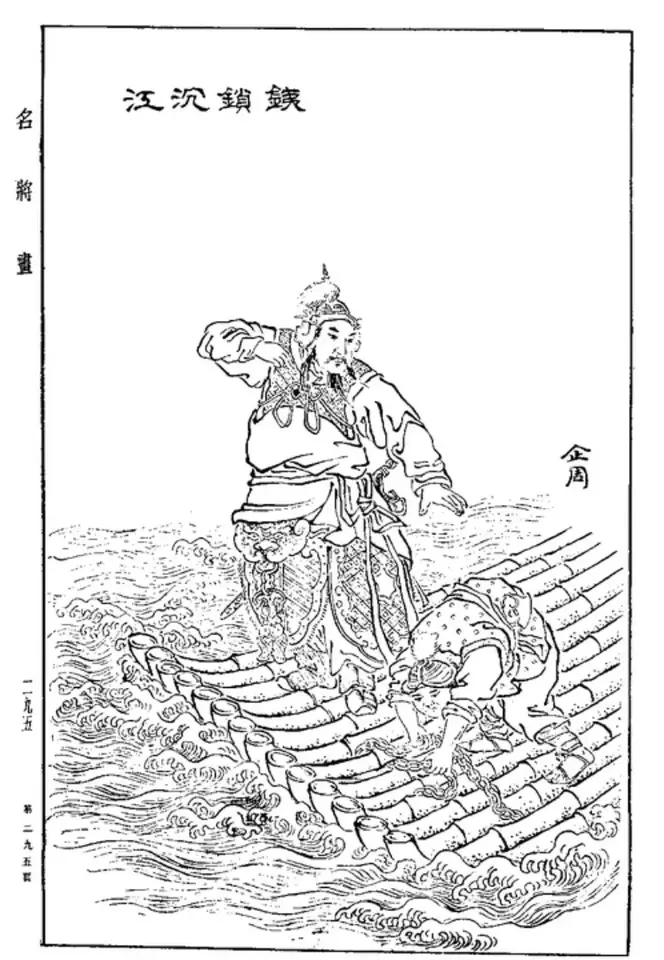
王浚
Wang Jun (252–314), courtesy name Pengzu, was a native of Linji, Taiyuan Commandery (present-day Jinyuan District, Taiyuan, Shanxi Province). He was a prominent military commander, warlord, and imperial clansman by marriage during the Western Jin dynasty. The second son of Grand Commandant Wang Shen, Wang Jun leveraged powerful aristocratic ties and personal ambition to establish autonomous military dominance over Youzhou…
Wang Jun (252–314), courtesy name Pengzu, was a native of Linji, Taiyuan Commandery (present-day Jinyuan District, Taiyuan, Shanxi Province). He was a prominent military commander, warlord, and imperial clansman by marriage during the Western Jin dynasty. The second son of Grand Commandant Wang Shen, Wang Jun leveraged powerful aristocratic ties and personal ambition to establish autonomous military dominance over Youzhou during the catastrophic upheavals of the War of the Eight Princes. He was enfeoffed as Duke of Boling and served as Commander-in-Chief of Military Affairs in Youzhou and Shepherd of Youzhou. Operating from Jicheng (modern Beijing), Wang Jun recruited elite Xianbei cavalry commanded by Murong Huyi and Duan Wuwuchen, wielding devastating martial power against central Jin rivals. In 304, he allied with Sima Teng to crush Chengdu King Sima Ying, storming and plundering the imperial capital of Ye. Following the collapse of imperial authority and the barbarian invasions of the Disaster of Yongjia, Wang Jun harbored monarchical ambitions, governing autocratically and alienating both regional elites and pastoral allies. In 314, he fell victim to a deceptive diplomatic ruse engineered by the Jie warlord Shi Le, who captured Youzhou and executed Wang Jun at Xiangguo, marking the definitive collapse of Jin administrative power in the northern frontier.
Born into the prestigious Wang lineage of Taiyuan as the second son of Grand Commandant Wang Shen.
Married the daughter of powerful consort kin Jia Mi and served successively as Master of Writing and Intendant of Henan.
Appointed General Who Calms the North and Commander-in-Chief of Youzhou Military Affairs following the downfall of the Jia clan.
Allied with Sima Teng and summoned Xianbei cavalry to crush Sima Ying's vanguard, subsequent sack of Ye.
Elevated to Duke of Boling and Advanced General of Chariots and Cavalry upon Sima Yue's restoration of Emperor Hui.
Assumed supreme military stewardship over northern regions following the fall of Luoyang to Han-Zhao forces.
Established imperial bureaucracy at Jicheng, alienated Xianbei confederates, and entertained imperial coronation.
Deceived by Shi Le's feigned submission, ambushed at Jicheng, and beheaded at Xiangguo.
Wang Jun hailed from the prominent Wang clan of Taiyuan, an illustrious aristocratic lineage that wielded formidable political influence throughout the Cao Wei and Jin dynasties. His father, Wang Shen, was a founding merit statesman of the Western Jin who attained the exalted office of Grand Commandant. As an aristocratic youth, Wang Jun was noted for his sharp intellect, unbridled ambition, and flamboyant lifestyle. Rather than confining himself strictly to classical studies, he associated widely with martial retainers and exhibited an assertive, self-aggrandizing disposition.
Leveraging his family prestige, Wang Jun entered officialdom through traditional aristocratic channels, serving successively as Gentleman of the Yellow Gates and Attendant Gentleman. He strategically aligned himself with the reigning empress Jia Nanfeng's maternal faction by taking the daughter of Jia Chong's relative as his wife. This intimate marriage alliance propelled him rapidly through high metropolitan posts, including Master of Writing and Intendant of Henan. Following the sudden extermination of the Jia faction in 300, Wang Jun avoided purge through his political adaptability and was dispatched to the northern frontier as General Who Calms the North and Commander-in-Chief of Military Affairs in Youzhou.
Upon arriving at his frontier command in Jicheng, Wang Jun recognized that imperial governance was rapidly dissolving in central China amid the War of the Eight Princes. To secure autonomous territorial control, he cultivated strategic marital alliances with powerful non-Han tribal chieftains in northern Hebei and Liaodong. He married his daughters to Duan Wuwuchen, chieftain of the Duan Xianbei, and Murong Huyi, securing tens of thousands of elite mounted archers under his direct operational authority.
In 304, Prince Sima Ying of Chengdu, stationed at Ye, sought to eliminate Wang Jun by orchestrating an assassination plot with regional allies. Wang Jun preempted the offensive by forging an alliance with Dongying Company King Sima Teng, commander of Bingzhou. Marshalling his elite Wuhuan and Xianbei horsemen alongside regional provincial troops, Wang Jun launched a devastating preemptive strike against Sima Ying's vanguard forces led by Lu Zhi and Shi Chao. Wang Jun's coalition routed Sima Ying's grand army, compelling Sima Ying to flee Ye for Luoyang. Entering Ye in triumph, Wang Jun's barbarian cavalry unleashed an infamous sack upon the ancient capital, massacring civilian populations and plundering imperial riches before withdrawing back north laden with immense spoils.
With Sima Yue consolidating supremacy over the Jin court, Wang Jun was rewarded for his military assistance with elevation to General of Chariots and Cavalry, Duke of Boling, and eventually Commander-in-Chief of Six Frontier Provinces. He firmly consolidated Youzhou as a virtually independent state, commanding extensive civil taxation, appointing magistrates arbitrarily, and issuing imperial-style edicts. His frontier capital at Jicheng became a vital sanctuary for northern aristocratic refugees fleeing the devastated Yellow River plains.
However, Wang Jun's success bred overweening hubris. Following the fall of the imperial capitals Luoyang and Chang'an to the Xiongnu-led Han-Zhao dynasty between 311 and 313, Wang Jun concluded that the Mandate of Heaven had abandoned the House of Sima. Ignoring the desperate appeals of the Jin court in Chang'an, he began fabricating omens, manufacturing imperial seals, and preparing ceremonial altars to proclaim himself emperor. His administration degenerated into severe autocracy, levying crushing taxes on border inhabitants and alienating local Confucian gentry such as Liu Kun and the Duan Xianbei leadership.
Wang Jun's political blindness proved fatal when confronting the ascendant warlord Shi Le, the supreme military commander of the Han-Zhao dynasty. Aware of Wang Jun's delusions of imperial ascension, Shi Le executed a calculated diplomatic trap in 313. Shi Le sent emissaries bearing magnificent tributes and submissive memorials, proclaiming his unreserved loyalty to Wang Jun and urging him to immediately assume the imperial throne. Intoxicated by flattery, Wang Jun disregarded the urgent warnings of his military advisers, dismissed defensive readiness, and welcomed Shi Le's approaching entourage with open gates.
In the third month of 314, Shi Le led an elite strike force directly to Jicheng under the guise of paying imperial homage. Entering the administrative palace unopposed, Shi Le's soldiers swiftly seized Wang Jun while he was preparing court regalia. Shi Le denounced Wang Jun for treason against the Jin dynasty, extortion of the northern population, and betrayal of the imperial realm. Wang Jun was bound and transported south to Shi Le's base at Xiangguo, where he was publicly decapitated at the age of sixty-three. His execution marked the complete dissolution of Jin governance in Youzhou, opening the entire northern plain to Jie consolidation.
Wang Jun played a transformative role in northern frontier military dynamics by pioneering systematic political alliances with the Duan Xianbei and Murong Xianbei. By arranging high-level diplomatic marriages and granting generous commercial trade privileges, he organized one of the most formidable multi-ethnic cavalry forces of the early fourth century. This cavalry coalition radically altered the balance of power during the War of the Eight Princes, allowing frontier regional forces to decisively intervene in central dynastic struggles and overwhelm imperial metropolitan armies.
During the chaotic dissolution of Western Jin authority across northern China, Wang Jun maintained administrative and social stability in Youzhou for over a decade. His capital at Jicheng served as an essential geopolitical stronghold that absorbed hundreds of thousands of displaced scholars, artisans, and peasant households from the war-torn central plains. This concentration of human and economic resources preserved institutional structures, agricultural techniques, and classical culture in the northeastern frontier during the early phase of the Disaster of Yongjia.
Official historiography consistently depicts Wang Jun as a tragic archetype of warlord ambition whose tactical military acumen was ultimately undermined by hubris and political myopia. The Book of Jin (Jin Shu) records that while Wang Jun possessed the resourcefulness to mobilize fierce frontier confederacies, his governance lacked moral legitimacy and institutional restraint. His merciless plundering of Ye permanently damaged his standing among aristocratic contemporaries, and his refusal to aid the beleaguered Western Jin court alienated steadfast loyalists like Liu Kun. Modern historical scholarship evaluates Wang Jun as a pivotal transition figure whose opportunistic recruitment of Xianbei cavalry established the operational model for non-Han military ascendancy in northern China during the Sixteen Kingdoms era.
FIGURES ASSOCIATED WITH THIS DYNASTY