Noble Birth
Born into a prominent northern lineage, grandson of Northern Qi Chancellor Tang Yong and son of Sui official Tang Jian.
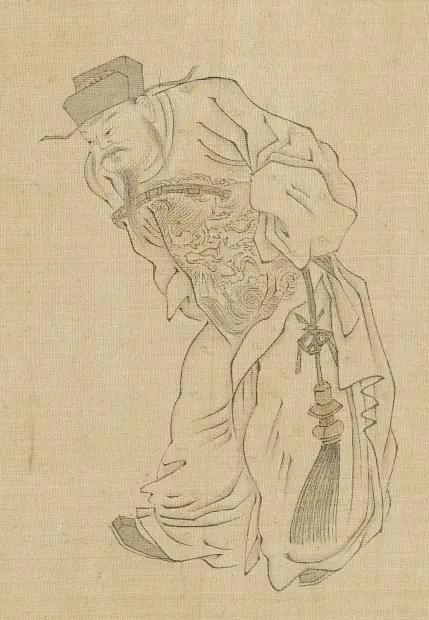
唐俭
Tang Jian (唐俭, 579–656), courtesy name Maoyue, was a native of Jinyang County, Bingzhou (present-day Taiyuan, Shanxi), with ancestral roots in Pingshou County, Beihai Commandery. Descended from northern aristocratic nobility, he was the grandson of Tang Yong, Vice Director of the Left in the Department of State Affairs of Northern Qi, and the son of Tang Jian, Sui Dynasty Prefect of Rongzhou. His father served alongside Li…
Tang Jian (唐俭, 579–656), courtesy name Maoyue, was a native of Jinyang County, Bingzhou (present-day Taiyuan, Shanxi), with ancestral roots in Pingshou County, Beihai Commandery. Descended from northern aristocratic nobility, he was the grandson of Tang Yong, Vice Director of the Left in the Department of State Affairs of Northern Qi, and the son of Tang Jian, Sui Dynasty Prefect of Rongzhou. His father served alongside Li Yuan, the future Emperor Gaozu of Tang, in commanding imperial palace guards, establishing an enduring family friendship. Consequently, Tang Jian developed an intimate bond with Li Shimin, the future Emperor Taizong, during their youth in Taiyuan, becoming a primary planner of the Taiyuan uprising and an immortalized statesman in the Lingyan Pavilion. Amid the crumbling authority of the late Sui Dynasty, Tang Jian took the lead in urging Li Shimin and Li Yuan to seize the historical mandate and launch an armed insurrection. He formulated the overarching grand strategy of marching south to conquer Changan and securing the strategic heartland of the Guanzhong plain. Upon the establishment of the Grand General Headquarters, Tang Jian served as Military Secretariat Drafter and Chief of Staff of the Weibei Marshal Command, assisting in the pacification of the capital. In the second year of the Wude era (619), while on an imperial diplomatic mission, he was captured by the warlord Liu Wuzhou. While imprisoned in the enemy camp, he uncovered an imminent treasonous conspiracy orchestrated by Dugu Huai'en, Minister of Works, who plotted to assassinate Emperor Gaozu. Tang Jian dispatched a trusted servant on a daring escape to alert the court, rescuing the emperor at the brink of disaster. Emperor Gaozu rewarded his heroic loyalty by bestowing upon him the entire confiscated estate of the rebel and appointing him Minister of Rites and Duke of Ju. In the fourth year of the Zhenguan era (630), Tang Taizong appointed Tang Jian as imperial commissioner to negotiate the surrender of Illig Qaghan of the Eastern Turks. Journeying into the nomadic heartland, Tang Jian used his oratorical skill to disarm the vigilance of the nomadic leaders, creating the ideal diversion for General Li Jing to launch a surprise attack at Yinshan. Tang Jian miraculously escaped unharmed during the chaotic battle. He later served as Minister of Revenue, known for his frank personality and insightful admonitions, famously urging the emperor to prioritize dynastic stability over hunting thrills. Tang Jian passed away in the first year of the Xianqing era (656) at the age of seventy-eight, and was awarded an auxiliary burial at Zhaoling with the posthumous name Xiang.
Born into a prominent northern lineage, grandson of Northern Qi Chancellor Tang Yong and son of Sui official Tang Jian.
Formed a close bond with Li Shimin in Taiyuan, covertly discussing strategies to rescue the realm from Sui misrule.
Urged Li Yuan to raise troops in Jinyang, providing strategic blueprints and serving as Military Secretariat Drafter.
Participated in the capture of Changan, appointed Secretariat Drafter and created Duke of Jinchang Commandery.
Captured by warlord Liu Wuzhou; discovered Dugu Huai'en's assassination conspiracy and secretly alerted the throne to save the emperor.
Rescued following Li Shimin's victory, granted the rebel's property, and appointed Minister of Rites and Chief Administrator.
Assisted Li Shimin in securing the throne, advanced to Duke of Ju and Acting Vice Director of the Chancellery.
Dispatched to pacify Illig Qaghan, relaxing nomadic defenses to enable Li Jing's victory, escaping unharmed.
Appointed Minister of Revenue; bravely shielded the emperor from a charging wild boar and admonished against hazardous royal sports.
Commemorated among the Twenty-Four Meritorious Officials in the Lingyan Pavilion portraits.
Passed away at seventy-eight; posthumously granted Specially Advanced and Commander-in-Chief of Bingzhou, buried at Zhaoling with the posthumous name Xiang.
Tang Jian belonged to an illustrious clan originating from Pingshou in Beihai, whose members had held high office across successive northern dynasties. His grandfather, Tang Yong, held supreme civil and military responsibilities in Northern Qi as Vice Director of the Left, Palace Attendant, and Prince of Jinchang, celebrated for his extraordinary strategic acumen and administrative precision. His father, Tang Jian, served the Sui Dynasty as Prefect of Rongzhou and had once commanded the palace guards alongside Li Yuan, forging a profound generational bond. Due to this long-standing friendship between both houses, Tang Jian frequented the Li household in his youth, forming an intimate personal bond with Li Yuan's second son, Li Shimin.
In his bearing, Tang Jian was generous, uninhibited, and disdainful of rigid etiquette, yet he was deeply revered across the realm for his exceptional filial devotion toward his parents. Near the close of the Daye era of the Sui Dynasty, as banditry and rebellions erupted across the country, Li Yuan was appointed Garrison Commander of Taiyuan. Tang Jian recognized that the Sui mandate was shattered beyond repair and held confidential discussions with Li Shimin, urging him to seize the initiative. When Li Yuan summoned him to discuss the geopolitical situation, Tang Jian pointed out that Li Yuan possessed celestial marks and fulfilled ancient prophecies, advising him to ally with northern nomadic tribes, recruit local stalwarts, and march south into Guanzhong to achieve a founding enterprise worthy of ancient sage kings.
Li Yuan was deeply moved by his counsel and resolved to rebel. In the thirteenth year of the Daye era (617), Li Yuan raised the banner of righteous rebellion in Jinyang, establishing the Grand General Headquarters and appointing Tang Jian as Military Secretariat Drafter and Chief of Staff of the Weibei Marshal Command. Tang Jian accompanied the army south across the Yellow River, drafting military edicts, advising on strategic movements, and helping the rebel forces capture Daxing (Changan). Following the founding of the Tang Dynasty, Tang Jian was named Secretariat Drafter of the Prime Minister's Bureau and enfeoffed as Duke of Jinchang Commandery.
In the second year of the Wude era (619), while the newly founded Tang Dynasty was fighting on multiple fronts, Lu Chongmao staged a revolt in Xia County, Hedong, allying with northern warlord Liu Wuzhou. Emperor Gaozu dispatched Prince Li Xiaoji of Yong'an as commander, supported by Minister of Works Dugu Huai'en and Prefect Yu Yun. Tang Jian joined the army as imperial commissioner to deliver royal directives. However, Li Xiaoji suffered a disastrous defeat, and the Tang commanders, including Tang Jian and Dugu Huai'en, were captured and interned in the enemy camp.
Dugu Huai'en, a cousin of Emperor Gaozu who commanded troops at Puzhou, had secretly conspired with his officer Yuan Junshi to overthrow the Tang dynasty, and his recent defeat was caused by his hesitant delays. Soon afterward, Dugu Huai'en managed to escape captivity and returned to Puzhou. Emperor Gaozu, unaware of his perfidy, ordered him to resume command of the strategic city. While interned in Liu Wuzhou's camp, Yuan Junshi lamented to Tang Jian that Dugu Huai'en had been captured due to his hesitation, but asserted that upon returning to Puzhou, Dugu would inevitably carry out his assassination plot against the emperor.
Tang Jian was horrified by this disclosure. At that very moment, Emperor Gaozu was preparing to travel in person to Puzhou to review the garrison; entering Puzhou would deliver the emperor straight into Dugu Huai'en's trap, jeopardizing the survival of the infant dynasty. Although imprisoned under close surveillance, Tang Jian bribed his captors and dispatched a loyal servant who escaped through enemy lines and rode night and day to Changan. The servant reported the conspiracy to Emperor Gaozu, who immediately arrested and executed Dugu Huai'en and his cabal, narrowly averting a catastrophic imperial disaster.
In the third year of the Wude era (620), the Prince of Qin crushed Liu Wuzhou and recaptured Hedong, liberating Tang Jian. Emperor Gaozu held Tang Jian's hand in profound gratitude, praising him as a loyal minister who had braved mortal danger to save the throne. By imperial decree, Emperor Gaozu transferred the entire wealth and estate of Dugu Huai'en to Tang Jian, promoting him to Minister of Rites, Chief Administrator of the Prince of Qin's Headquarters, and Acting Vice Director of the Chancellery, elevating his peerage to Duke of Ju.
In the early Zhenguan era, Emperor Taizong resolved to eradicate the long-standing border menace posed by the Eastern Turks. In the fourth year of the Zhenguan era (630), Emperor Taizong dispatched Tang Jian as special imperial commissioner to the nomadic encampment of Illig Qaghan, ostensibly to negotiate a formal surrender and imperial marriage alliance, but strategically to disarm enemy vigilance. Tang Jian accepted the dangerous mission without hesitation, traveling by post carriage into the frozen steppes.
Arriving at the qaghan's camp, Tang Jian delivered imperial speeches with consummate diplomatic grace, persuading Illig Qaghan to submit to Tang suzerainty. Convinced of the empire's peaceful intentions, the nomadic forces dismantled their defensive outposts and indulged in celebrations. While the nomadic camp was entirely unready, General Li Jing led three thousand elite cavalry through a blizzard to launch a surprise attack on Yinshan. The Turkish camp collapsed into panic, and Illig Qaghan fled. Amid the chaos and fury of combat, Tang Jian maintained his composure, mounted an abandoned horse, broke through the melee, and returned to Changan unharmed. Emperor Taizong praised his extraordinary courage and appointed him Minister of Revenue.
In the fifth year of the Zhenguan era (631), Tang Jian assumed direction of the Ministry of Revenue. While accompanying Emperor Taizong on a royal hunt in the imperial park at Luoyang, a herd of wild boars suddenly charged from the dense thicket. Emperor Taizong drew his bow and fired in rapid succession, slaying four boars with four arrows. However, a wounded boar lunged violently at the emperor's stirrup. Tang Jian immediately vaulted off his mount to tackle the animal with his blade, allowing Emperor Taizong to draw his sword and slay the beast. Turning to Tang Jian, the emperor boasted, "Did you doubt my ability to slay the beast?" Tang Jian bowed solemnly and replied, "Emperor Gaozu won the empire on horseback, but he did not govern it from horseback. When Your Majesty risks your august person against ferocious beasts, in the event of an accident, to whom shall the altars of state turn? That is the sole cause of my anxiety!" Emperor Taizong recognized the wisdom of the reprimand and ordered the hunt terminated, treating Tang Jian with heightened respect.
Tang Jian was relaxed by temperament, often delegating routine bureaucratic minutiae to his staff while devoting his leisure to wine, poetry, and chess. On one occasion while playing chess with Emperor Taizong, Tang Jian contested every advantage with uncompromising aggression, seizing a commanding board position. The emperor took offense at his irreverence and demoted him to Prefect of Tanzhou. In lingering annoyance, the emperor claimed to Yuchi Jingde that Tang Jian had voiced treasonous arrogance and instructed Yuchi Jingde to provide supporting testimony. The next morning at court, Yuchi Jingde bowed to the floor and firmly declared that Tang Jian had never spoken an improper word. Emperor Taizong laughed in delight, pardoning Tang Jian and rewarding Yuchi Jingde for his incorruptible integrity.
In the seventeenth year of the Zhenguan era (643), Emperor Taizong commissioned the master court painter Yan Liben to execute portraits of twenty-four founding heroes in the Lingyan Pavilion adjacent to the imperial palace. Tang Jian was ranked twenty-second among these dynastic titans, his image and legacy permanently enshrined in imperial memory.
At the beginning of the Yonghui era under Emperor Gaozong, Tang Jian retired from active service due to advanced age. Emperor Gaozong treated the veteran statesman with extraordinary deference, bestowing upon him the prestigious title of Specially Advanced. In his final years, Tang Jian lived in serene tranquility, delighting in music, wine, and family companionship. In the first year of the Xianqing era (656), Tang Jian passed away peacefully at the age of seventy-eight. Emperor Gaozong mourned his passing deeply, issuing an imperial decree posthumously conferring the honors of Specially Advanced with Open Office and Commander-in-Chief of Bingzhou, granting an auxiliary burial at Zhaoling and the posthumous name Xiang.
During the turbulent collapse of the Sui Dynasty, Tang Jian played a decisive role as a strategic instigator of the Jinyang rebellion. Recognizing the imperial potential of Li Yuan and Li Shimin, Tang Jian held secret conferences in Taiyuan to forge an alliance for dynastic renewal. When summoned to consult on grand strategy, he formulated the core geopolitical doctrine: appeasing the northern nomadic tribes to secure the rear, consolidating the northeastern warlords to expand manpower, and crossing the river to seize Guanzhong. This strategic framework became the foundation of early Tang state-building, establishing Tang Jian as an indispensable architect of the dynasty.
In 619, while captured and held in Liu Wuzhou's camp, Tang Jian discovered the assassination conspiracy plotted by Minister of Works Dugu Huai'en. Knowing that Emperor Gaozu was personally traveling toward Puzhou, Tang Jian defied immense personal danger to bribe his guards and dispatch a messenger through enemy territory to warn the court. This daring alert saved the sovereign's life and prevented the collapse of the Guanzhong base, demonstrating unswerving loyalty that placed state survival above personal safety.
During the northern campaign against the Eastern Turks in 630, Tang Jian accepted the hazardous role of imperial envoy to Illig Qaghan's headquarters. Using exquisite diplomacy, he successfully convinced the nomadic leadership of Tang sincerity, causing them to neglect basic battlefield security. This diplomatic ruse created the essential tactical opening for General Li Jing's devastating surprise offensive at Yinshan, resulting in the annihilation of the Eastern Turkic Khanate and the capture of its qaghan. Tang Jian's miraculous escape from the melee solidified his reputation as an intrepid and brilliant diplomat.
While serving as Minister of Revenue, Tang Jian fearlessly intervened when a wild boar lunged at Emperor Taizong's horse during a hunt in Luoyang. Following the beast's dispatch, Tang Jian countered the emperor's boastful remarks by invoking the historical lesson that an empire cannot be governed from the saddle, warning the sovereign against risking the dynastic succession for frivolous thrills. His words persuaded Emperor Taizong to abandon hazardous pastimes and rededicate himself to governance, providing an enduring model of loyal remonstrance during the Zhenguan era.
FIGURES ASSOCIATED WITH THIS DYNASTY