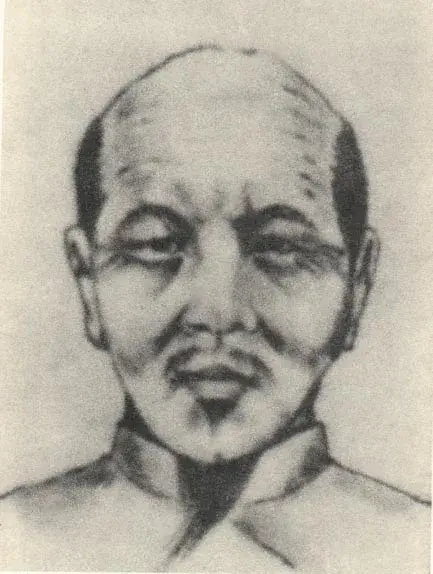
Biography
Distinguished Lineage and Classical Erudition
Gong Zizhen was born on August 22, 1792, in Mapo Lane in the eastern district of Hangzhou, Zhejiang Province. He was born into an eminent scholar-official family of high cultural renown. His grandfather Gong Tishen and great-uncle Gong Jingshen were metropolitan graduates of the 1769 class who served in the Grand Secretariat and provincial administrations. His father, Gong Lizheng (courtesy name Yonggong), achieved the jinshi degree in 1796 and served successively as Secretary in the Ministry of Works, Prefect of Huizhou, and Judicial Commissioner of Jiangsu, earning high praise for administrative integrity and philological learning. His mother, Duan Xun (courtesy name Guilin), was an accomplished poet whose collected works Verses from Lvhua Studio were widely admired. Most importantly, Duan Xun was the second daughter of Duan Yucai, the foremost philological giant of the Qianlong and Jiaqing reigns and the author of the definitive commentary on the Shuowen Jiezi.
Surrounded by eminent scholars and rare manuscripts, Gong received an exceptional education from early childhood. His mother taught him Tang and Song poetry and classical prose. Blessed with a precocious intellect, Gong had read through the Four Books, the Five Classics, and the Great Learning by the age of eight. In 1803, at the age of twelve, he accompanied his mother to Jintan to study directly under his maternal grandfather Duan Yucai. Duan recognized his grandson's uncommon brilliance and personally instructed him in ancient scriptology, historical phonology, and evidentiary philology. This rigorous grounding equipped Gong with formidable philological precision and immense command over classical texts, endowing his prose with the archaic solidity of bronze and stone inscriptions.
However, Gong refused to confine his intellectual life to the dusty margins of textual pedantry. At thirteen, while touring scenic sites around Zhenjiang and Mount Jiao with his grandfather, he expanded his reading into pre-Qin philosophical treatises and military strategy. By fifteen, he had composed over a hundred poems marked by striking imaginative vitality; by sixteen, he was examining Qing administrative institutions and dynastic archives, demonstrating deep concern for public welfare and imperial security.
Examination Setbacks and Devotion to the New Text School
In 1810, at the age of eighteen, Gong sat for the Shuntian provincial examinations in Beijing, qualifying on the supplementary honor list. During this period, he mingled with prominent literati in the capital, publishing refined lyrics that garnered wide admiration in poetic circles. Yet his path through the imperial examinations proved exceptionally rocky. In 1813, he failed the Shuntian provincial examinations; in the seventh lunar month of the same year, his first wife, Lady Xu, died in the prefectural office of Huizhou after receiving mistaken treatment from a physician. Bearing her coffin back to Hangzhou for burial, the grieving young scholar was plunged into profound reflection.
In 1814, at the age of twenty-two, Gong channeled his grief and indignation into four essays entitled Discourse on Enlightened Sovereigns and Worthy Ministers (Mingliang Lun). In this incisive work, Gong targeted the autocratic root of imperial despotism, delivering a devastating critique of the court's policy of demanding complete servility from its officials. He argued that the Qing bureaucracy had reduced officialdom to passive opportunism and blind obedience, extinguishing independent civic courage. His grandfather Duan Yucai was stunned by the boldness of the essays, joyfully annotating the manuscript and declaring that Gong had grasped the essential crisis of the age.
In 1818, at twenty-six, Gong returned to Zhejiang and secured the juren degree, examined by the renowned philologist Wang Yinzhi. However, in the subsequent metropolitan examinations, Gong encountered chronic disappointment. Between 1819 and 1826, he sat for the national exams five times, repeatedly rejected because his reformist essays struck conservative examiners as dangerously unorthodox. Undeterred, Gong met fellow reform-minded scholar Wei Yuan in Beijing. In 1819, both men enrolled under Liu Fenglu, the leading figure of the Changzhou School of New Text Classics. The New Text tradition, focused on the Gongyang Commentary to the Spring and Autumn Annals, emphasized the evolutionary stages of history and the moral necessity of reforming institutions to fit changing times, providing Gong with a powerful theoretical framework to challenge stagnant orthodoxy.
Service in the Central Bureaucracy and Statecraft Treatises
In 1820, following another setback in the metropolitan exam, Gong was appointed Secretary of the Grand Secretariat (Neige Zhongshu) based on his provincial degree. Beginning in 1821, he served concurrently as Proofreader in the State Historiography Institute. The Grand Secretariat served as the administrative nerve center of the Qing Empire, housing vast repositories of state documents. For nearly two decades, Gong immersed himself in secret memorials, boundary surveys, taxation ledgers, and hydrological records. He investigated historical patterns of dynastic decline and participated in the compilation of the Imperial Comprehensive Gazetteer of the Qing (Da Qing Yitong Zhi), acquiring encyclopedic knowledge of imperial geography and administration.
In 1829, at thirty-eight, Gong undertook his sixth attempt at the metropolitan examinations and finally attained the jinshi degree. In the imperial palace examination before Emperor Daoguang, Gong emulated the reformist boldness of Song statesman Wang Anshi, submitting a memorial entitled Court Essay on Pacifying Frontiers and Reconciling Remote Regions (Yushi Anbian Fuyuan Shu). He urged the central government to formalize provincial administrative control over the northwestern frontier following the suppression of Jahangir's rebellion, advocating the abolition of feudal chieftains, the dispatch of regular magistrates, and the organization of state-sponsored agricultural colonies. Offended by his critical tone, conservative presiding examiners demoted his ranking to the third class (tong jinshi chushen), barring him from the Hanlin Academy.
Though denied a prominent academic post, Gong remained unyielding in his public commitment. He was transferred to the Court of the Imperial Clan in 1835 and to the Ministry of Rites in 1837. During his tenure, he published foundational strategic essays, including Proposal for Establishing a Province in the Western Regions and Discourse on Mongolian Tribute Reform, becoming the earliest Qing intellectual to advocate converting Xinjiang into an official province. As British merchants flooded China with illicit opium, precipitating massive silver outflows and physical debilitation, Gong vigorously advocated total prohibition, maintaining close communication with Imperial Commissioner Lin Zexu and advising him on coastal defense measures prior to the Opium War.
Southward Journey in the Jihai Year and Poetic Masterpiece
Gong was known for his fierce independence and contempt for bureaucratic hypocrisy. In the Grand Secretariat and Ministry of Rites, he repeatedly attacked corrupt officials and criticized the appeasement faction led by Grand Councilor Mujangga. In doing so, he alienated his administrative superiors and faced severe isolation within court circles. By the spring of 1839, sensing that dynastic decline was accelerating beyond peaceful repair within the existing bureaucracy, the forty-eight-year-old scholar resigned his office and resolved to return south.
On June 4, 1839 (the twenty-third day of the fourth lunar month), Gong departed Beijing accompanied only by a servant and a horse. In September, he traveled back north to fetch his family before returning to Hangzhou. During these two lengthy journeys across northern and central China, Gong witnessed agrarian ruin, bureaucratic venality, and the gathering storm of Western imperialism. Moved by national grief and personal disillusionment, he composed poems continuously in carriages and roadside inns. The result was Jihai Miscellaneous Poems, an extraordinary sequence of 315 seven-character quatrains.
Jihai Miscellaneous Poems stands as a peak achievement of nineteenth-century Chinese poetry. Combining profound philosophical meditation, sharp political satire, romantic pathos, and apocalyptic foreboding, the collection shook the stagnant literary world. It included famous verses of selfless civic devotion, such as "Fallen blossoms are not heartless things; transformed into spring soil, they nourish future blooms," alongside passionate appeals for institutional transformation: "The vitality of the nine provinces depends on wind and thunder; how tragic that ten thousand horses stand in fearful silence! I beseech Heaven to shake itself awake once more, and bestow talents without adhering to rigid forms." Through this work, Gong ignited an intellectual and literary awakening that paved the way for modern Chinese literature.
Teaching at Academies and Untimely Passing
In the winter of 1839, having permanently severed ties with the bureaucracy, Gong settled in Hangzhou. Renowned across the empire, he accepted invitations to head Yunyang Academy in Danyang and Tinglin Academy in Kunshan. In the lecture hall, Gong rejected the rote memorization of Confucian dogmas, introducing students to practical statecraft, frontier administration, and international politics. He urged the younger generation to open their eyes to global affairs and break free from imperial examination constraints, mentoring numerous reform-minded scholars.
While teaching, Gong prepared his life writings for publication, compiling Collected Works of Ding'an (Ding'an Wenji). In the spring of 1841, the First Opium War intensified as British forces captured Dinghai and advanced up the Yangzi River. Deeply alarmed, Gong closely followed military bulletins from Danyang, sending urgent letters to military commanders proposing defense measures and planning civilian defense units in his hometown.
Tragically, on September 26, 1841 (the twelfth day of the eighth lunar month), Gong succumbed to a sudden and violent illness at his quarters in Yunyang Academy at the age of fifty. Later sensational novelists concocted scandalous tales linking his death to a court intrigue involving the Manchu poetess Gu Taiqing, but modern historical scholarship has conclusively refuted these fabrications as groundless gossip. Gong died on the eve of China's fateful confrontation with modern imperialism. His body was transported back to Hangzhou and buried in the family cemetery in Mapo Lane. His untimely passing removed one of the most brilliant and prescient minds of nineteenth-century China.
Major Achievements
Pioneering Advocacy of Institutional Reform and Enlightenment
At the critical historical transition from traditional dynastic rule to the modern era, Gong Zizhen stood as the foremost prophet of institutional reform in China. Living during the transition from the Qianlong and Jiaqing reigns to the Daoguang era, he accurately diagnosed the systemic crises latent beneath the facade of imperial prosperity.
In classic treatises such as Discourse on Enlightened Sovereigns and Worthy Ministers, Treatises on the Interregnum of Yi and Bing, and Record of the Hall of Sick Plum Trees (Bingmeiguan Ji), Gong exposed the autocratic nature of absolute monarchy with incisive clarity. In Record of the Hall of Sick Plum Trees, he employed the metaphor of pruning plum branches into twisted shapes to denounce the examination system and Neo-Confucian dogmas that mutilated intellectual creativity and human individuality, declaring his lifelong wish to liberate and heal China's suppressed talents.
Rejecting static conservatism, Gong formulated a dynamic philosophy of historical evolution, famously asserting that "from ancient times to the present, no law remains unchanged, no momentum fails to accumulate, no precedent avoids transition, and no social atmosphere remains immutable." He declared that institutional transformation was an unavoidable historical necessity, warning that continued repression would inevitably lead to revolutionary upheavals. His philosophy of practical reform shattered intellectual stagnation and provided the direct ideological catalyst for later reformers, including Wei Yuan, Kang Youwei, Liang Qichao, and Tan Sitong.
Integration of Gongyang New Text Learning and Practical Statecraft
Gong Zizhen, in close partnership with Wei Yuan, reoriented Qianlong-Jiaqing scholarship from pedantic textual antiquarianism toward practical statecraft, utilizing the Gongyang Commentary to the Spring and Autumn Annals as an ideological engine of national salvation.
Scholars of the Han Learning school had largely buried themselves in phonetic and philological minutiae to avoid imperial persecution. Gong, having mastered evidentiary scholarship under Duan Yucai, refused to remain imprisoned within textual trivia. Under Liu Fenglu's guidance, he adopted the New Text doctrines of "esoteric words with great principles" (weiyan dayi) and the "Three Evolutionary Ages" (san shi), transforming ancient scriptures into potent arguments for sociopolitical change.
Gong insisted that classical scholarship must directly serve public welfare and national survival, arguing that "a true scholar's vocation is to shoulder the responsibilities of the world." He called for comprehensive mastery of astronomy, geography, military strategy, hydrology, and fiscal economics. By transforming Confucian classics from instruments of dynastic control into weapons of social critique, Gong laid the ideological groundwork for the late-Qing Hundred Days' Reform.
Strategic Frontier Thought and Proposal for Xinjiang Provincial Status
Gong was an extraordinary pioneer of modern Chinese geopolitics and frontier statecraft. At a time when court officials dismissed the northwestern borderlands as desolate and expendable, Gong recognized the existential strategic importance of the inner Asian frontiers.
Drawing upon confidential archives in the Grand Secretariat, Gong composed visionary policy documents, including Proposal for Establishing a Province in the Western Regions, Court Essay on Pacifying Frontiers and Reconciling Remote Regions, and Discourse on Mongolian Tribute Reform. He argued that the northwestern border constituted the vital shield of the Chinese heartland, warning that neglect of the frontier would inevitably destabilize the central plains.
Gong detailed a comprehensive roadmap for transforming Xinjiang: abolishing the hereditary beg system, instituting regular civilian prefectures and counties, encouraging interior farming migrants to cultivate border lands, constructing transportation arteries and postal stations, and establishing bilingual academies to foster interethnic unity. Gong's strategic proposal was fully realized half a century later when General Zuo Zongtang reclaimed Xinjiang and established it as a formal province in 1884, confirming Gong's geopolitical foresight.
Creation of Jihai Miscellaneous Poems and Revolution in Poetics
In literature, Gong Zizhen stands as the preeminent transitional figure between classical and modern Chinese poetry, widely celebrated as the founding father of modern Chinese verse. His 1839 poetic cycle, Jihai Miscellaneous Poems (315 quatrains), constitutes a singular masterpiece of nineteenth-century literature.
Gong completely broke away from the hollow imitation of Tang and Song models that paralyzed late-Qing poetry. Using a dynamic romantic style, he merged acute historical tragedy with visionary idealism. The cycle spans a panoramic range of themes: grief over autocratic decay, alarm over foreign encroachment, passionate demands for intellectual liberation, self-deprecating confessions of personal fallibility, and tender personal affections.
His poetic diction was richly imaginative, employing mythological metaphors, dramatic rhythms, and profound emotional resonance. His lines, "The vitality of the nine provinces depends on wind and thunder; how tragic that ten thousand horses stand in fearful silence! I beseech Heaven to shake itself awake once more, and bestow talents without adhering to rigid forms," became the rallying cry of modern Chinese patriotism. His dedication to truth and civic passion sparked the "Poetics Revolution" (Shijie Geming), providing enduring inspiration to Huang Zunxian, Liang Qichao, and Lu Xun.