Birth in Wannian
Born in Wannian of Jingzhao to the illustrious Langya Yan clan; orphaned at age three and educated by his mother Lady Yin.
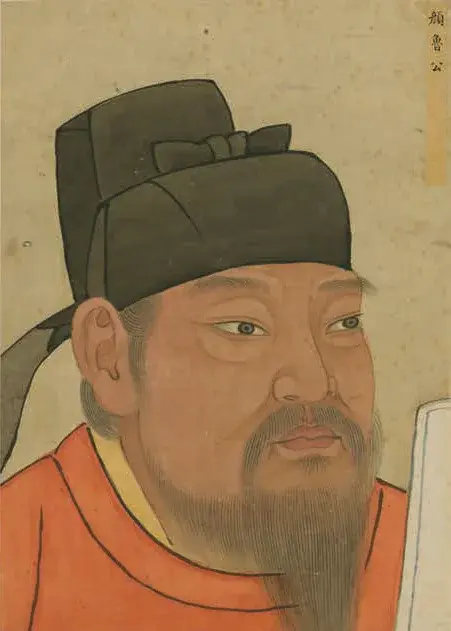
颜真卿
Yan Zhenqing (颜真卿) (709 – 784 AD), styled Qingchen (清臣), sobriquet Yingfang (应方), historically celebrated as Duke of Lu and Governor Yan of Pingyuan, was ancestral to Linyi in Langya (modern Linyi, Shandong Province) and born in Wannian of Jingzhao (modern Xi'an, Shaanxi Province). He was an eminent calligrapher, statesman, loyalist martyr, and military commander of the Tang dynasty, the thirty-fifth generation descendant of…
Yan Zhenqing (颜真卿) (709 – 784 AD), styled Qingchen (清臣), sobriquet Yingfang (应方), historically celebrated as Duke of Lu and Governor Yan of Pingyuan, was ancestral to Linyi in Langya (modern Linyi, Shandong Province) and born in Wannian of Jingzhao (modern Xi'an, Shaanxi Province). He was an eminent calligrapher, statesman, loyalist martyr, and military commander of the Tang dynasty, the thirty-fifth generation descendant of Yan Hui (the foremost disciple of Confucius) and the fifth-generation descendant of Northern Qi scholar Yan Zhitui. Orphaned at age three, he was raised under the strict tutelage of his mother Lady Yin, applying himself diligently to classical literature. In 734 AD, he passed the imperial civil examinations, serving in supervisory posts including Investigating Censor and Palace Censor, renowned for judicial fairness and defiance of corrupt aristocrats. In 753 AD, targeted by chief minister Yang Guozhong, Yan was dispatched as Prefect of Pingyuan. Discerning An Lushan's treasonous ambitions, he secretly reinforced city ramparts, deepened moats, accumulated grain stores, and trained thousands of volunteers. When the An Lushan Rebellion erupted in 755 AD and the prefectures of Hebei fell in swift succession, Pingyuan stood alone in unyielding defense. Yan allied with his cousin Yan Gaoqing, Prefect of Changshan, rallying seventeen commanderies to sever the supply lines of the northern rebels. Following the martyrdom of Yan Gaoqing and his clan, Yan Zhenqing channeled his anguish into the immortal running-script masterpiece Draft of a Requiem to My Nephew, celebrated across centuries as the second greatest running script under heaven. During the Suzong and Daizong reigns, Yan rose to Minister of Justice, Minister of Personnel, and Junior Preceptor of the Heir Apparent, ennobled as Duke of Lu Commandery. Frequently reprimanding powerful ministers Yuan Zai and Lu Qi, he was repeatedly sent into provincial exile. In 783 AD, when military governor Li Xilie rebelled in Huaixi, Chancellor Lu Qi maliciously engineered an edict sending seventy-five-year-old Yan Zhenqing alone to admonish the rebels. Confronted by flashing swords, threatened with burial alive, and facing pyres of blazing timber, Yan stood resolute, rebuking the traitors and refusing all overtures. In the eighth month of 784 AD, realizing he could never be turned, Li Xilie had him strangled at Longxing Temple in Caizhou. Upon learning of his death, Emperor Dezong suspended court for five days, conferring upon him the posthumous rank of Minister of Education and the canonical title Wenzhong. Exemplifying the consummate union of artistic genius and heroic martyrdom, Yan Zhenqing built an eternal monument in Chinese calligraphy and ethical culture.
Born in Wannian of Jingzhao to the illustrious Langya Yan clan; orphaned at age three and educated by his mother Lady Yin.
Passed the imperial jinshi examination; appointed Collator in the Palace Library, later serving as Defender of Liquan County.
Promoted to Palace Censor and Circuit Surveillance Judge; prosecuted corrupt magnates with unbending judicial impartiality.
Banished by Yang Guozhong to Pingyuan; foresaw An Lushan's rebellion and secretly renovated defenses and stockpiled grain.
An Lushan rebelled; Yan rallied seventeen northern commanderies to sever rebel rear communications, acclaimed by Emperor Xuanzong.
Dispatched Yan Quanming to retrieve the severed skull of Yan Jiming; authored the monumental running script Draft of a Requiem to My Nephew.
Promoted to Vice Minister of Personnel and created Duke of Lu Commandery; exiled to Xiachou after clashing with Chancellor Yuan Zai over ancestral rites.
Recalled to court after Yuan Zai's execution; appointed Minister of Personnel and composed the stele inscription Yan Qinli Stele.
Framed by Chancellor Lu Qi and dispatched alone to admonish rebel leader Li Xilie; captured and interned in Caizhou, refusing to submit.
Strangled at Longxing Temple in Caizhou after rejecting rebel overtures; posthumously awarded Minister of Education and canonized as Wenzhong.
Yan Zhenqing was born in Dunhua Ward of Wannian County in Jingzhao Superior Prefecture (modern Xi'an, Shaanxi Province) in the third year of the Jinglong era of Emperor Zhongzong of Tang (709 AD). The Yan clan traced its lineage directly from Yan Hui, the most revered disciple of Confucius. Following the aristocratic migration southward during the Eastern Jin period, the family served in prominent administrative posts along the Yangtze. During the Northern and Southern Dynasties, his fifth-generation ancestor Yan Zhitui—author of the celebrated ethical treatise Family Instructions of Master Yan—migrated to the northern courts, settling his descendants in Chang'an. His great-great-grandfather, Yan Shigu, stood as one of the preeminent classical commentators of the early Tang, authoring the standard commentary on the Book of Han.
Despite this distinguished ancestry, Yan experienced acute deprivation in childhood. His father, Yan Weizhen, died when he was only three years old, depriving the family of regular income. Yan grew up entirely under the watchful instruction of his mother Lady Yin, the sister of renowned scholar Yin Jianyou. Demonstrating extraordinary filial piety and intellect in poverty, he practiced calligraphy by dipping brushes into clay-colored water to write on dilapidated walls because paper and ink were beyond his means. He thoroughly mastered classical scriptures, canonical rites, and historical annals. In 733 AD, he sequestered himself in Fushan Monastery in Chang'an for rigorous preparation, passing the imperial jinshi examination the following spring at the age of twenty-six.
Beyond classical scholarship, Yan was devoted to the arts of stone inscriptions and calligraphy. In 737 AD and the early Tianbao era, taking advantage of official missions, he visited Luoyang twice to seek instruction from the legendary master Zhang Xu, acclaimed as the Sage of Cursive Script. Recognizing Yan's unyielding sincerity, Zhang Xu shared his twelve secrets of brushwork and the profound principles of moving the brush like an awl carving sand or a seal pressing clay. Enriched by this instruction, Yan diligently synthesized the robust center-tip techniques of pre-Qin seal and clerical scripts into standard regular characters, laying the foundational aesthetic for the monumental Yan style.
Following his examination victory, Yan passed the ministerial selection and was appointed Collator in the Palace Library. In 736 AD, he passed the challenging Decree Examination, earning assignment as Defender of Liquan County, where he established a reputation for untangling complex legal disputes and shielding commoners from bullying landlords. In 750 AD (the ninth year of the Tianbao era), Yan was elevated to Palace Censor concurrent with Surveillance Judge for the Eastern Capital Region. At that time, Emperor Xuanzong's court was increasingly compromised by chief minister Yang Guozhong and Vice Censor-in-Chief Ji Wen, who fabricated charges against political opponents. Fearless in executing his supervisory mandate, Yan repeatedly impeached corrupt magistrates, refusing to compromise even when prosecuting Zhang Yuangui, an influential favorite of Yang Guozhong.
During his tenure as an investigating censor inspecting the Huainan Circuit, Yan investigated local abuses where predatory magistrates colluded with wealthy lineages to incarcerate innocent peasants. Undaunted by local intimidation, he reviewed old dossiers and exonerated dozens of falsely imprisoned citizens. Local accounts recorded that during his inspection of Wuhe County amidst a severe summer drought, rain fell abundantly on the very day he cleared an innocent victim of a false murder charge, prompting joyful commoners to acclaim the rain as the Censor's Rain. In 752 AD, he transcribed the celebrated Duobao Pagoda Stele for Monk Chujin of Qianfu Temple in Chang'an, captivating the literati with its balanced grace and making his calligraphy the most sought-after in the capital.
In 753 AD, Yang Guozhong was appointed Prime Minister and dominated the imperial court. Loathing Yan's unyielding independence, Yang maneuvered to expel him from the metropolitan administration, appointing him Prefect of Pingyuan Commandery (modern Lingcheng District, Dezhou City, Shandong Province). Pingyuan lay north of the Yellow River within the military sphere of An Lushan, who held three frontier governorships. Observing An Lushan's lavish military preparations and private troop recruitment, most neighboring governors curried favor with the warlord. Yan alone recognized that rebellion was imminent and prepared active resistance.
Upon arriving in Pingyuan, Yan adopted an outward posture of poetic leisurely seclusion, frequently boating on rivers with literati to lull An Lushan's spies into complacency. Concurrently, using the pretext of repairing seasonal flood damages, he organized local labor to raise city walls, deepen defensive moats, accumulate grain stores, and train ten thousand volunteer soldiers. When An Lushan sent undercover agents to inspect the commandery, they found an apparently frail civil administrator immersed in wine and calligraphy, leading the rebel warlord to dismiss Pingyuan as a negligible threat.
In the eleventh month of 755 AD, An Lushan launched his rebellion with one hundred and fifty thousand nomadic and border troops, marching south in what became the An Lushan Rebellion. Due to decades of northern peace, imperial defenses collapsed: twenty-four northern commanderies surrendered or abandoned their posts within weeks. Pingyuan alone shut its gates and resisted. Yan immediately executed rebel supply envoys, performed solemn sacrifices on the ramparts, and unfurled the loyalist banner of the Tang dynasty. Simultaneously, he contacted his cousin Yan Gaoqing, Prefect of Changshan (modern Zhengding, Hebei Province), coordinating pincer operations that cut rebel communications between Luoyang and the northern supply bases.
Seventeen northern commanderies rallied behind Yan's leadership, electing him commander-in-chief of a combined volunteer force of two hundred thousand soldiers. This unexpected resistance immobilized rebel communications and thwarted An Lushan's plan for a rapid conquest of the Guanzhong basin. In Chang'an, Emperor Xuanzong, despairing over reports that all northern prefectures had capitulated, rejoiced upon receiving Yan's dispatch, declaring: "I have never seen Yan Zhenqing in person; how could he display such extraordinary valor!" The emperor immediately elevated Yan to Vice Minister of Revenue concurrent with Governor of Pingyuan and Military Commissioner of Hebei.
In the first month of 756 AD, An Lushan dispatched rebel generals Shi Siming and Cai Xide to encircle Changshan Commandery. Yan Gaoqing and his son Yan Jiming defended the citadel for six days against overwhelming odds. Out of ammunition and isolated when jealous neighboring commanders withheld reinforcements, Changshan was breached. Yan Jiming was beheaded on the spot, and Yan Gaoqing was transported in chains to Luoyang. When brought before An Lushan, Gaoqing spat blood and cursed the rebel leader relentlessly. In fury, An Lushan ordered him chained to the pillars of Tianjin Bridge, severed his tongue, and dismembered him alive. Over thirty members of the Yan household perished in the slaughter, leaving an indelible monument of familial sacrifice.
Following the fall of Changshan, Yan Zhenqing collaborated with Li E of Qinghe to defeat twenty thousand rebel troops at Tangyi, later coordinating with imperial generals Guo Ziyi and Li Guangbi to recapture Changshan. By 757 AD, however, rebel counter-offensives isolated Pingyuan, forcing Yan to break out across the Yellow River and trek across thousands of li to join the court of Emperor Suzong at Fengxiang. Deeply moved, Suzong appointed him Minister of Justice and later Censor-in-Chief.
In 758 AD, while serving as Prefect of Puzhou, Yan dispatched his nephew Yan Quanming across devastated battlefields to recover family remains in Changshan and Luoyang. Quanming returned with only the severed skull of young Yan Jiming and a single foot bone of Yan Gaoqing. Confronted with the skeletal remains of his nephew and remembering the destruction of his family, fifty-year-old Yan Zhenqing wept tears of blood. In overwhelming grief and fury, he seized a brush and composed Draft of a Requiem to My Nephew. Written in raw, uncalculated haste, the calligraphy transformed from somber solemnity into turbulent, sweeping cursive rhythms, marked by corrections, blotting, and dry ink strokes. Universally acclaimed as the second greatest running script under heaven, the text represents the pinnacle of emotional authenticity in world art.
Following the accession of Emperor Daizong in 762 AD, Yan was appointed Vice Minister of Personnel and created Duke of Lu Commandery, becoming widely known as Duke Yan of Lu. Operating with classical rigor, he insisted that all court rituals adhere strictly to canonical etiquette. When Chancellor Yuan Zai attempted to monopolize political authority by mandating that all imperial memorials receive chancellor approval prior to reaching the throne, Yan challenged him openly in court, accusing him of obstructing honest counsel. Bearing deep resentment, Yuan Zai repeatedly engineered Yan's demotion, banishing him as Vice Prefect of Xiachou and Prefect of Fuzhou and Huzhou.
During his administration as Prefect of Huzhou from 773 to 777 AD, Yan governed with notable benevolence: repairing city walls, managing water networks, and alleviating tax burdens. In leisure hours, he welcomed literary scholars, constructing the Sanguan Pavilion along Mount Bian and cultivating close associations with tea master Lu Yu and Buddhist poet Jiaoran. Furthermore, Yan mobilized local scholars to compile Mirror of the Ocean of Rhymes in 360 fascicles, a monumental rhyming dictionary cataloging over 26,000 characters, reflecting his profound philological learning.
In 777 AD, Emperor Daizong executed Yuan Zai and recalled Yan to the capital as Minister of Justice, promoting him to Minister of Personnel the following year. When Emperor Dezong ascended the throne in 779 AD, Yan was appointed Junior Preceptor of the Heir Apparent. A master of ritual precedents, he supervised state ceremonies with unmatched accuracy. However, Emperor Dezong placed executive authority in the hands of Lu Qi, a malevolent and vindictive chancellor who viewed Yan's moral authority as an intolerable obstacle to his own ascendancy.
In the first month of 783 AD (the fourth year of the Jianzhong era), Li Xilie, military governor of Huaixi, rebelled against the central government, assuming the title of Supreme General and capturing Ruzhou. Panic seized the metropolitan court. Recognizing an opportunity to eliminate his rival, Chancellor Lu Qi secretly advised Emperor Dezong: "Li Xilie is young and his troops are hesitant; if a senior statesman of universally recognized prestige is dispatched to admonish him, peace can be achieved without military force. Junior Preceptor Yan Zhenqing is a venerable pillar of three reigns whose righteousness commands the respect of the empire; he is the ideal envoy." In his credulity, the emperor ordered seventy-five-year-old Yan to travel to Huaixi to pacify the rebels.
Court officials were appalled, understanding that Lu Qi was using the rebels as an executioner. Colleagues urged Yan to refuse on grounds of age and illness. Yan remained serene, stating: "When a ruler issues a command, an official cannot hesitate. In a moment of national peril, how can I preserve my remaining years!" Without armed escort, accompanied only by a few servants, he rode into Li Xilie's encampment at Xuzhou. To intimidate the imperial envoy, Li Xilie ordered a thousand armed retainers to encircle the court with naked blades, shouting death threats. Yan stood composed and dignified, showing no sign of fear.
Thwarted in his attempts to terrify the envoy, Li Xilie placed Yan under house arrest, offering him the rank of prime minister in his rebel government. Yan denounced the warlord: "Have you not heard of Yan Gaoqing of Changshan? He was my elder brother! When An Lushan rebelled, my brother cursed the traitor until death, preserving his eternal honor! I am near eighty years of age, have attained supreme ministerial rank, and will gladly die to preserve my loyalty. How could I accept the tainted office of rebels!" Li Xilie transferred him to Caizhou, confining him in the rear compound of Longxing Temple. During his prolonged imprisonment, rebel guards excavated a trench in the courtyard, threatening to bury him alive, and piled firewood soaked in oil, threatening to burn him to ash. Laughing at their folly, Yan leaped directly toward the pyre, forcing terrified guards to pull him back. Convinced that martyrdom was imminent, he composed his farewell memorials, epitaph, and funeral instructions on the temple walls.
On the third day of the eighth lunar month in the first year of the Xingyuan era (784 AD), with imperial armies closing in and recognizing that Yan would never submit, Li Xilie dispatched an assassin to Longxing Temple. Facing his executioner, Yan straightened his imperial robes, bowed twice toward the north in homage to the Tang emperor, and submitted to strangulation at the age of seventy-six. When the rebellion was crushed in 785 AD, his coffin was returned to Chang'an. Emperor Dezong wept in bitter remorse, suspending court audiences for five days, authoring a memorial poem, conferring the posthumous title of Minister of Education, and bestowing the canonical name Wenzhong. Through his unshakable moral courage and monumental calligraphy, Yan Zhenqing created an eternal standard of righteousness in Chinese history.
Yan Zhenqing stands alongside Wang Xizhi as the most transformative master in Chinese calligraphic history. Prior to his innovations, the calligraphic tradition had followed the graceful, delicate, and aristocratic aesthetic of the Two Wangs, which continued through early Tang masters such as Ouyang Xun, Yu Shinan, and Chu Suiliang. Yan broke free from these courtly constraints, drawing upon ancient seal and clerical scripts to integrate the rounded, muscular strength of archaic epigraphy into regular script. He established the Yan style, distinguished by monumental architecture, muscular strokes, expansive internal space, and upright composure. Masterpieces such as Duobao Pagoda Stele, Yan Qinli Stele, and Record of Magu's Altar represent the zenith of Tang regular script, establishing him among the Four Masters of Regular Script.
Yan Zhenqing's Draft of a Requiem to My Nephew is celebrated by generations of calligraphers as the second greatest running script under heaven, ranked alongside Wang Xizhi's Preface to the Orchid Pavilion. Composed in an agony of grief upon receiving the severed skull of his martyr nephew Yan Jiming, the draft disregards ornamental finish, its brushwork rising and falling with the raw tempest of human emotion. Beginning in somber composure, the script surges into sweeping strokes, dry ink marks, and visceral erasures, creating an unmatched unity of human anguish, familial loyalty, and transcendent calligraphic art.
Yan Zhenqing performed legendary strategic service in defending the Tang dynasty during the catastrophic An Lushan Rebellion. When Hebei fell in swift collapse and central authority was paralyzed, Yan's foresight enabled Pingyuan to resist. Mobilizing seventeen northern commanderies to muster two hundred thousand troops behind enemy lines, he severed An Lushan's southward supply corridor. This crucial intervention prevented the rebel host from seizing the agricultural wealth of the lower Yangtze, purchasing indispensable strategic time for Emperor Suzong to reassemble the dynastic armies and save the empire from annihilation.
Yan Zhenqing's conduct when confronted with execution in Caizhou represents the supreme realization of classical Confucian ethics. Dispatched into rebel captivity through Lu Qi's treachery, the seventy-five-year-old statesman faced armed intimidation, burial pits, and execution pyres with unswerving dignity, choosing strangulation over moral compromise. Celebrated by Wen Tianxiang in his Song of Righteousness, Yan Zhenqing and his brother Yan Gaoqing embody the traditional ideal of sacrificing one's physical existence to fulfill fundamental moral righteousness (shashen chenren), establishing an enduring spiritual standard for the Chinese nation.
FIGURES ASSOCIATED WITH THIS DYNASTY