First Jurchen Zhuangyuan
Won first place in the inaugural Jurchen-language civil service examination under Emperor Shizong, appointed prefectural professor.
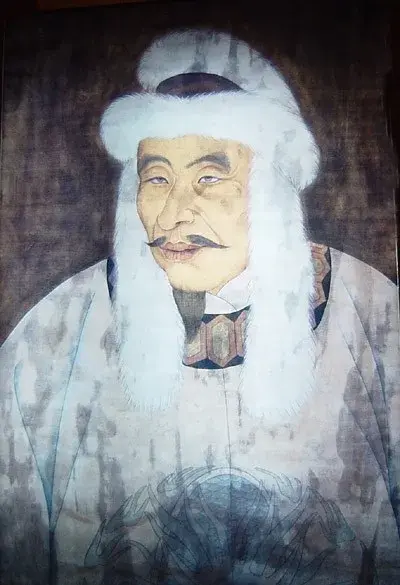
徒单镒
Tudan Yi (徒单镒, died 1214), original Jurchen name Anchu (按出), posthumously honored as Wending (文定), originated from the Susubaozi Meng'an of the Shangjing Route (modern Acheng District, Harbin City, Heilongjiang Province). He was an illustrious chancellor, classical scholar, and strategic visionary who served across four imperial reigns—Emperor Shizong, Emperor Zhangzong, Prince Weishao (Wanyan Yongji), and Emperor…
Tudan Yi (徒单镒, died 1214), original Jurchen name Anchu (按出), posthumously honored as Wending (文定), originated from the Susubaozi Meng'an of the Shangjing Route (modern Acheng District, Harbin City, Heilongjiang Province). He was an illustrious chancellor, classical scholar, and strategic visionary who served across four imperial reigns—Emperor Shizong, Emperor Zhangzong, Prince Weishao (Wanyan Yongji), and Emperor Xuanzong—of the Jurchen Jin dynasty. In 1173 (the 13th year of the Dading era), when Emperor Shizong inaugurated the Jurchen-language civil service examinations to elevate literati learning among the Jurchen nobility, Tudan Yi earned first place (valedictorian/zhuangyuan) in policy dissertations, becoming the first Jurchen examination graduate in imperial Chinese history. He served in the National Academy and Historiographical Institute before rising under Emperor Zhangzong to Senior Remonstrator, Vice Minister of Personnel, Censor-in-Chief, and Right Vice Chancellor of State Affairs. When Genghis Khan unified the nomadic tribes of the Mongolian plateau and launched his catastrophic invasion of northern China, the main Jin field army was annihilated at the Battle of Yehuling in 1211, and Mongol cavalry besieged the imperial capital of Zhongdu (Beijing). Confronting imminent collapse, Prince Weishao recalled Tudan Yi to supreme command, appointing him Right Chancellor of State Affairs. Tudan Yi demonstrated extraordinary strategic acumen: he urged the court to abandon the indefensible frontier capital of Zhongdu and relocate immediately southward to Kaifeng (Nanjing), utilizing the natural defense of the Yellow River and central agrarian wealth to wage a protracted war of attrition. He also warned the throne against trusting the mutinous warlord Heshilie Zhizhong (Hushahu). Prince Weishao ignored both warnings, leading to his assassination by Hushahu in 1213. Following the accession of Emperor Xuanzong, Tudan Yi was appointed Left Chancellor and ennobled as Prince of Jinyuan. In 1214, when the court officially adopted his strategic blueprint and relocated to Kaifeng, Tudan Yi succumbed to exhaustion on campaign, being posthumously granted the title Grand Preceptor and Prince of Guangping.
Won first place in the inaugural Jurchen-language civil service examination under Emperor Shizong, appointed prefectural professor.
Promoted to assistant tutor in the National Academy and editor in the Historiographical Institute, translating classical texts into Jurchen.
Promoted under newly enthroned Emperor Zhangzong to Senior Remonstrator and Vice Minister of Civil Personnel.
Appointed Censor-in-Chief, Participant in Determining Governmental Affairs, and Right Vice Chancellor, combating bureaucratic redundancies.
Demoted after outspoken remonstrances against court favorites, serving as governor of Jinan, Dongping, and Zhending.
Recalled to the capital by Prince Weishao as Mongol armies approached, appointed Participant in Determining Governmental Affairs.
Appointed Right Chancellor following the Yehuling disaster, formulating the grand strategy of southern relocation to Kaifeng.
Following Hushahu's coup and the accession of Emperor Xuanzong, elevated to Left Chancellor and ennobled as Prince of Jinyuan.
Passed away from illness in the fifth lunar month during the southern transfer to Kaifeng; posthumously honored as Grand Preceptor and Prince of Guangping.
Tudan Yi belonged to the prominent Tudan clan, one of the oldest noble lineages of the Jurchen people. Gifted with extraordinary intellect, he immersed himself in literature from boyhood, achieving complete bilingual mastery over the Jurchen script and classical Chinese, reading extensively in Confucian classics and dynastic treatises.
In 1173 (the 13th year of the Dading era), Emperor Shizong instituted the Jurchen-language civil service examinations (policy dissertation degree) to encourage tribal nobles to master statecraft and preserve their native language. Tudan Yi participated in the metropolitan examinations, submitting brilliant policy dissertations that thoroughly analyzed the historical rise and fall of ancient states. Emperor Shizong personally reviewed his scrolls, awarding him first place (zhuangyuan).
Following his examination triumph, Tudan was appointed professor in Zhongdu, assistant tutor in the National University, and compiler in the Historiographical Institute. He participated in compiling the dynastic veritable records and directed the systematic translation of the Five Classics into Jurchen, winning universal acclaim as the intellectual pioneer of the Jurchen aristocracy.
Upon ascending the throne, Emperor Zhangzong promoted Tudan Yi to Senior Remonstrator and Vice Minister of Civil Personnel, elevating him in 1190 to Censor-in-Chief. As the supreme judicial monitor, Tudan enforced statutory law without regard to royal lineage, impeaching corrupt officials and royal princes who misappropriated public funds.
Advancing to Participant in Determining Governmental Affairs and Right Vice Chancellor of State Affairs, Tudan strove to curtail reckless imperial expenditures and reform the agrarian grain reserves. However, as Emperor Zhangzong indulged in luxurious pursuits and patronized flatterers, Tudan submitted fearless remonstrances that alienated powerful courtiers. Consequently, he was transferred out of the central ministries.
For nearly a decade during the Cheng'an and Taihe eras, Tudan governed pivotal northern prefectures, including Jinan, Dongping, and Zhending. In regional administration, he eliminated predatory exactions, cleared judicial backlogs, constructed flood-control dikes along the Yellow River, and settled displaced refugees, earning deep affection from both Han and Jurchen populations across Shandong and Hebei.
In 1208 (the 8th year of the Taihe era), Prince Weishao (Wanyan Yongji) mounted the throne. Across the Gobi desert, Genghis Khan united the Mongol tribes and launched a massive war of conquest against the Jin Empire.
In 1211 (the 3rd year of the Da'an era), the catastrophic Battle of Yehuling resulted in the slaughter of over three hundred thousand elite Jin soldiers. Mongol cavalry breached the Great Wall, and their advance scouts reached the gates of Zhongdu. Facing imperial panic, Prince Weishao recalled the veteran statesman Tudan Yi to head the government as Right Chancellor of State Affairs.
Tudan Yi analyzed the geopolitical disaster with acute realism. He submitted a memorial to Prince Weishao, arguing: "Zhongdu is located close to the northern desert, lacking natural barriers. The Mongol cavalry excels at mobile operations in open plains; if they sever the Taihang mountain passes, the capital will be starved into submission. The true agrarian foundation of our state lies in Henan. Kaifeng (Nanjing) is shielded to the north by the Yellow River and backed by the fertile Huai valley. We must immediately relocate the court to Kaifeng, using the Yellow River as an impregnable barrier to wage a protracted war of attrition."
However, Prince Weishao was indecisive, and conservative nobles refused to abandon their estates in Yanjing. Tudan's visionary proposal was shelved.
Simultaneously, Tudan Yi perceived the treachery of General Heshilie Zhizhong (Hushahu). Having abandoned the western capital of Datong to the Mongols, Hushahu retreated to Zhongdu with mutinous troops. Prince Weishao contemplated placing him in command of the imperial capital defense.
Tudan Yi pleaded with the emperor: "Hushahu abandoned his garrison, demonstrating lethal insubordination. He is a traitor who must be executed under military law. Placing armed troops in his hands will bring ruin upon the ancestral altars!" Weishao dismissed Tudan's counsel, confirming Hushahu's military command.
In the eighth lunar month of 1213, Hushahu launched a palace coup, surrounded the traveling palace, murdered Prince Weishao, and enthroned Emperor Xuanzong (Wanyan Xun). Appreciating Tudan's spotless stature, Emperor Xuanzong appointed him Left Chancellor of State Affairs and ennobled him as Prince of Jinyuan.
Confronting total Mongol blockade, Emperor Xuanzong recognized the undeniable wisdom of Tudan's strategic analysis and officially decreed the relocation of the capital to Kaifeng in the spring of 1214. Tudan labored day and night to coordinate the imperial transfer. Overcome by relentless physical exhaustion, Tudan passed away in the fifth lunar month of 1214. Emperor Xuanzong wept bitterly, conferring the posthumous rank of Grand Preceptor, ennobling him as Prince of Guangping, and bestowing the posthumous name Wending.
In 1173, Tudan Yi made history by placing first in the inaugural Jurchen-language civil service examination created by Emperor Shizong.
His literary triumph catalyzed an intellectual awakening among the Jurchen ruling class, proving that northern pastoral elites could achieve parity with classical Han literati in Confucian jurisprudence and political philosophy.
During the extreme crisis following the Yehuling disaster, Tudan was the sole statesman who formulated a viable grand strategy for national survival.
By proposing the strategic evacuation of Zhongdu and the fortification of Kaifeng behind the natural moat of the Yellow River, his blueprint enabled the Jin dynasty to sustain organized resistance against the Mongol armies for two additional decades.
Tudan demonstrated remarkable psychological insight and political courage in demanding the execution of the treacherous general Hushahu.
His unheeded warnings to Prince Weishao, followed swiftly by the sovereign's tragic assassination, vindicated his reputation among dynastic chroniclers as a prophetic statesman of unmatched discernment.
FIGURES ASSOCIATED WITH THIS DYNASTY